We use cookies on our website to give you an improved browser experience. View our Privacy Policy for more information. Please make your selection to opt in or out of ALL cookies here: Accept or Decline
Finding reliable lumber yards for global sourcing requires more than comparing prices and product photos. A trustworthy supplier must demonstrate legal origin, consistent grading, moisture control, export experience, and clear communication. The FAO Global Forest Resources Assessment 2020 reports that forests cover approximately 31% of the world’s land area. It also records about 420 million hectares of forest loss between 1990 and 2020. These figures make responsible timber verification essential, not optional.
Look for lumber yards that can provide species information, harvest-region details, treatment records, and recognized chain-of-custody documentation. FSC and PEFC certification can support traceability, although certification alone does not guarantee perfect performance. Ask for recent inspection reports, batch photographs, kiln-drying records, and references from international buyers. Small details matter. Check bundle labels. Request moisture readings.
The ITTO Annual Review and Assessment of the World Timber Situation highlights continuing changes in timber production, trade, and market demand. These changes can affect availability, lead times, and pricing across regions. The World Bank’s Logistics Performance Index 2023 also shows why transport reliability differs significantly between sourcing countries. A low quoted price may become expensive after port delays, damaged packaging, or inconsistent dimensions.
A careful sourcing process should compare at least three lumber yards. Use the same technical specification for each quotation. Confirm Incoterms, loading methods, tolerances, claims procedures, and replacement policies in writing. No directory is flawless. A supplier may look reliable online yet fail during peak season. Therefore, combine documents with a small trial order, independent inspection, and direct factory communication. Reliability is proven gradually, shipment by shipment.
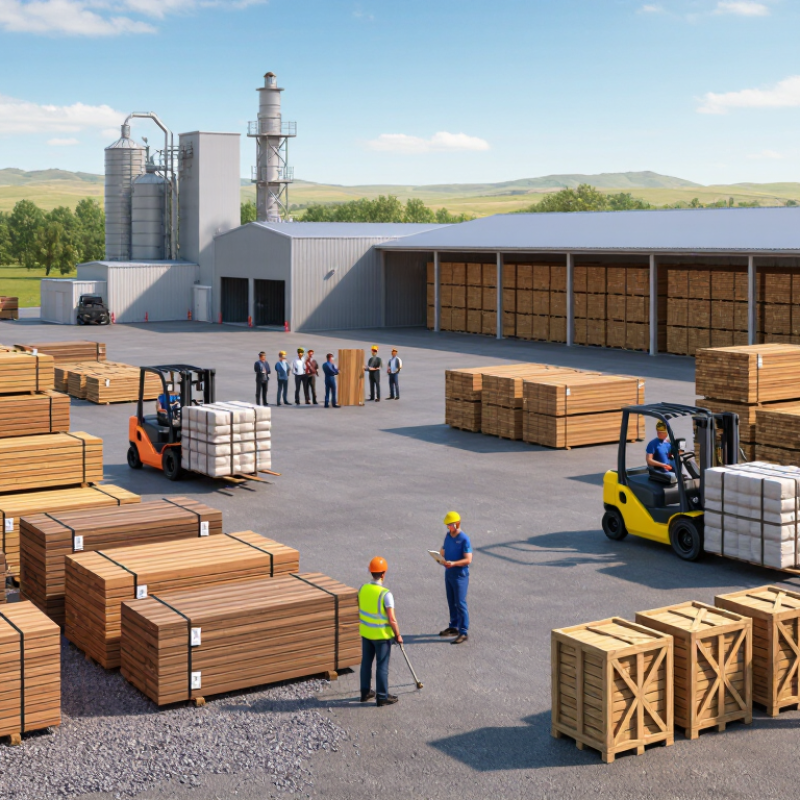
Reliable global sourcing begins with a precise definition of your lumber requirements. State the wood species, intended use, dimensions, grade, moisture range, and acceptable defect levels. A construction project may require kiln-dried boards below 19% moisture, while indoor furniture needs tighter control. Specify thickness and width tolerances in millimeters. Vague terms create expensive disputes.
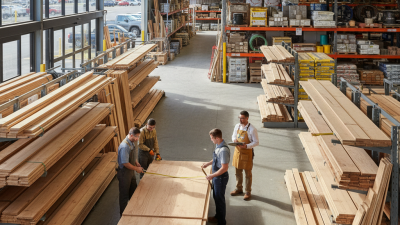
Ask each lumber yard for recent inspection records, grading rules, origin details, and treatment documentation. Request clear photos of end grain, board faces, stacking methods, and storage conditions. A moisture meter reading from one board proves little. Test samples from several bundles instead. Check for warping, blue stain, insect damage, splits, and inconsistent coloring. The yard should explain how it handles rejected material and replacement claims. That answer matters.
A written sample approval can protect both sides. Include reference pieces, packaging requirements, loading conditions, and inspection timing. Independent inspection is useful for larger orders, especially when quality differences are difficult to judge remotely. Still, paperwork is not enough. A perfect checklist can miss careless storage after inspection. Recheck moisture when goods arrive. Leave room for honest review: even a trusted supplier may show variation between harvests, seasons, or production batches. Reliable sourcing depends on measurable standards and repeated verification.
A reliable lumber yard begins with careful research, not a polished website. Search regional directories, trade associations, and verified export records. Request the yard’s business license, production address, and recent customer references. Then check whether those references describe consistent quality and communication. A short video tour can reveal drying rooms, storage conditions, and loading areas. Look for covered stacks, clear labels, and clean ground surfaces.
Build a comparison sheet for every potential supplier. Record wood species, grades, dimensions, moisture targets, available volumes, and lead times. Ask for recent grading reports and independent moisture-test results. Compare sample boards under the same conditions. Check knots, warping, end splits, color variation, and packaging strength. Small differences matter.
My own early mistake was choosing the lowest quoted price. The shipment arrived with uneven moisture and extra sorting costs. That lesson changed my process. I now compare total landed cost, not just the mill price. Include inspection fees, inland transport, port handling, insurance, and possible claims. Ask how the yard handles rejected pieces and delayed orders. Clear written answers build trust. Vague replies deserve caution. Suppliers should also explain traceability practices and provide accurate export documents. Still, no comparison sheet is perfect. Weather, demand, and harvest conditions can change quickly. Keep communication records, update the evaluation, and order a modest trial shipment before making larger commitments.
| Candidate Yard | Source Region | Common Export Products | Moisture-Control Capability | Grading Documentation | Sustainable-Forestry Evidence | Export Packaging | Typical Production Lead Time | Logistics Access | Initial Assessment |
|---|---|---|---|---|---|---|---|---|---|
| Candidate Yard 01 | North America | Softwood boards, structural lumber, kiln-dried timber | Commercial kiln drying available; request moisture readings by lot | Species, grade, dimensions, and mill-mark records should accompany each shipment | Request chain-of-custody documentation and forest-origin records | Strapped bundles with corner protection; weather-resistant wrapping recommended | 4–8 weeks after approved specifications | Strong access to container terminals and rail-linked distribution networks | High potential |
| Candidate Yard 02 | Northern Europe | Planed softwood, construction timber, laminated components | Kiln-dried options commonly available; verify target moisture range for the destination climate | Ask for conformity records, strength class, visual grade, and batch traceability | Require a valid third-party sustainability certificate where legally and commercially necessary | Bundle wrapping and edge protection generally suitable for ocean transport | 5–10 weeks depending on planing and customization | Well-developed port, road, and intermodal infrastructure | High potential |
| Candidate Yard 03 | South America | Radiata pine, eucalyptus products, treated and appearance-grade lumber | Kiln-dried supply may be available; verify uniformity through independent sampling | Require species identification, grade rules, treatment records, and packing-list consistency | Confirm plantation or forest-management origin and applicable chain-of-custody evidence | Use sealed, ventilated packaging with moisture barriers where required | 6–12 weeks for regular export programs | Port availability can be strong, but sailing schedules and inland transport require confirmation | Medium to high |
| Candidate Yard 04 | Oceania | Radiata pine, treated framing timber, rough-sawn boards | Commercial kiln drying and treatment services may be offered; request test results for every lot | Check treatment level, strength class, grading method, and fumigation or phytosanitary documents | Request plantation-origin records and independently verifiable sustainability documentation | Export bundles should include stable strapping, protective wrapping, and clear package marks | 6–12 weeks, affected by vessel frequency and order volume | Good port infrastructure, with longer transit times to some Northern Hemisphere markets | Medium to high |
| Candidate Yard 05 | Central and Eastern Europe | Spruce, pine, fir, planed boards, and structural timber | Kiln-dried material is widely traded; verify moisture uniformity and storage conditions | Request grading certificates, dimensional tolerances, species declaration, and lot traceability | Validate forest-origin documentation and the scope and validity of any sustainability claim | Covered storage before loading is essential; use moisture-resistant wrapping for sea freight | 4–9 weeks for standard sizes; longer for custom processing | Road and rail connectivity is generally strong; export route depends on the selected port | High potential |
| Candidate Yard 06 | Southeast Asia | Rubberwood, tropical hardwood, acacia, and engineered wood components | Drying and preservative treatment should be verified through laboratory reports | Require species legality records, grade specifications, treatment details, and shipment traceability | Obtain documented legal-harvest evidence and verify any sustainability certification independently | Use moisture barriers, ventilation spacers, palletization, and pest-control measures where applicable | 6–14 weeks depending on species, treatment, and processing requirements | Major container ports are available, but inland consolidation quality varies by location | Requires detailed verification |
| Recommended verification sequence: confirm legal business registration and mill location; request recent product samples; verify species, grade, moisture content, treatment, and dimensions through independent inspection; review export references and claims history; confirm packaging, Incoterms, payment terms, and shipment capacity before placing a production order. Any certification, phytosanitary document, or test report should be checked for validity, scope, and shipment-level applicability. | |||||||||
Reliable lumber sourcing begins with verified supplier credentials, not attractive product photos. Request the company’s legal registration, operating address, tax details, and export permissions. Check these records through official government or industry databases where available. A valid certificate should show the holder, scope, issue date, and expiration date.
Certification claims require careful review. Ask whether the certification covers the actual mill, forest source, and product line. Chain-of-custody records should connect logs to finished boards. Compare certificate details with invoices, packing lists, species names, and shipment quantities. Small mismatches matter. A polished document can still create false confidence.
Visit the yard, physically or through a live video inspection. Look for labeled timber stacks, moisture meters, grading tools, safety controls, and organized storage. Ask how the supplier handles restricted species, waste, worker safety, and local environmental rules. Independent audits add credibility, but they do not replace your own checks. I have sometimes trusted paperwork too quickly, then noticed unclear renewal dates or inconsistent company addresses. That weakness is worth acknowledging. Keep a written verification file, record every question, and request updated documents before each substantial order. Legal compliance can change. So can ownership.
Reliable lumber yards reveal their value through transparent pricing, not the lowest quote. Ask for prices by species, grade, dimensions, moisture range, and packaging. Request a written breakdown of milling, loading, inland transport, and export handling. Compare landed cost, not the headline figure. A cheap board can become expensive after regrading, delays, or damaged bundles. I once focused too heavily on unit price and missed port storage charges. That mistake changed my sourcing checklist.
Logistics deserves evidence. Ask about loading schedules, container planning, weather protection, and communication during delays. Experienced suppliers should explain realistic transit windows without promising perfect timing. Check whether bundles are secured, labeled, and photographed before dispatch. Small details matter. One missing dimension label can slow customs review and warehouse receiving. Use a trial shipment when the trade relationship is new. It exposes weak processes before larger commitments.
Inventory claims need verification. Request current stock reports, recent photos, and batch details, then confirm availability before payment. A yard with broad inventory may still lack consistent grades or replacement quantities. Export capability includes accurate commercial invoices, packing lists, certificates, and origin information where required. Ask how they handle inspection requests and changing destination requirements. Review references from comparable markets, but test their answers yourself. Even careful buyers can overlook moisture changes during storage. Independent inspection and clear acceptance terms reduce that risk, although they add time and cost.
A practical supplier scorecard should balance delivered-cost competitiveness with logistics reliability, inventory visibility, and export readiness. The weighted index below uses a 100-point evaluation model: pricing 30 points, logistics 25, inventory 20, and export capabilities 25.
Reliable global sourcing starts with a trial, not a large purchase order. Request a small batch from each lumber yard. Specify species, grade, moisture range, dimensions, packaging, and acceptable defects. A handheld moisture meter helps, but it is not enough. Cut samples, inspect end checks, and compare actual measurements with the sales specification.
UNCTAD’s Review of Maritime Transport 2023 states that over 80% of global merchandise trade moves by sea. Transit conditions can therefore affect lumber before arrival. Inspect container seals, ventilation, wrapping, edge protection, and loading photographs. At the destination, record moisture readings from the center and edges of several boards. Check for mold, warp, insect damage, and hidden repairs. A clean certificate is not proof of dry boards.
The FAO Global Forest Resources Assessment 2020 reported 4.06 billion hectares of forest worldwide, but legal origin and responsible harvesting still require verification. Ask yards for harvest permits, chain-of-custody records, mill invoices, and consistent lot numbers. Independent testing can confirm species and moisture claims. Keep every result in a shared inspection file.
Partnerships grow through evidence.
Review the first three shipments together. Discuss failures without hiding them. One of my mistakes was judging a supplier after one excellent load. Seasonal quality changed later. Use quarterly scorecards covering defects, delivery accuracy, response time, documentation, and corrective action. Reward steady performance with forecast visibility, not blind loyalty.
We use cookies on our website to give you an improved browser experience. View our Privacy Policy for more information. Please make your selection to opt in or out of ALL cookies here: Accept or Decline
Do you consent to the use of ALL cookies?
901 2nd Court West
Birmingham, AL 35204
Sales: 866.481.4036
Logistics/Ops: 866.481.4036
2101 Dralle Road
University Park, IL 60466
Sales: 708.813.9070
Logistics/Ops: 708.235.4200
400 E. 13th Street
Little Rock, AR 72114
Sales: 866.760.5344
Logistics/Ops: 866.760.5344
225 Collins Road
Elkhart, IN 46515
Sales: 574.295.0214
Logistics/Ops: 574.607.4611
601 Berryman Pike
Tipton, IN 46072
Sales: 800.897.7591
Logistics/Ops: 800.897.7591
3900 Uvalda Street
Denver, CO 80239
Sales: 303.706.8000
Ops/Logistics: 303.576.8398
510 3rd Street E
Milan, IL 61264
Sales: 800.322.1052
Logistics/Ops: 800.322.1052
1660 E. Aurora
Des Moines, IA 50313
Sales: 800.671.1660
Logistics: 800.671.1660
86554 Gene Lasserre Blvd.
Yulee, FL 32097
Sales: 904.253.3060
Logistics/Ops: 904.225.3000
694 S.E. County Road 245
Lake City, FL 32025
Sales: 800.727.6706
Logistics/Ops: 386.752.7412
210 Neptune Road
Auburndale, FL 33823
Sales: 863.967.1131
Logistics/Ops: 863.777.9814
4601 McCoy Drive
Pensacola, FL 32503
Sales: 850.308.7030
Logistics/Ops: 850.434.5502
815 South 56th Street
Tampa, FL 33619
Sales: 813.302.1940
Logistics/Ops: 813.621.1352
200 Hosea Road
Lawrenceville, GA 30046
Sales: 770.953.7575
Logistics/Ops: 770.513.6000
Branch Product Guide
Branch Line Card
Moulding Offering
Cedar Offering
Column Offering
8173 Hwy. 165 North
Monroe, LA 71211
Sales: 800.256.4165
Logistics/Ops: 800.256.4165
508 Warren Avenue
Portland, ME 04103
Sales: 207.888.2331
Logistics/Ops: 207.797.6565
4300 Georgia Pacific Blvd.
Frederick, MD 21704
Sales: 301.798.7474
Logistics/Ops: 301.874.8000
419 Maple Street
Bellingham, MA 02019
Sales: 508.449.0535
Logistics/Ops: 508.966.5500
825 Buchanan Ave SW
Grand Rapids, MI 49507
Sales: 877.800.1180
Logistics/Ops: 616.278.0909
995 Pacific St. NW
Aitkin, MN 56431
Sales: 800.432.3727
Logistics/Ops: 218.212.7770
1102 Port Terminal Drive
Duluth, MN 55802
Sales: 800.951.9899
Logistics/Ops: 800.851.9899
9110 83rd Ave. North
Brooklyn Park, MN 55445
Sales: 763.425.0204
Logistics/Ops: 763.425.0204
910 E. Railroad Street
Long Beach, MS 39560
Sales: 866.535.4135
Logistics/Ops: 228.205.2400
1727 Warren Street
North Kansas City, MO 64116
Sales: 800.621.2611
Logistics/Ops: 800.621.2611
2123 North Golden
Springfield, MO 65803
Sales: 800.375.7891
Logistics/Ops: 800.375.7891
13860 Corp. Woods Trail
Bridgeton, MO 63044
Sales: 314.209.0800
Logistics/Ops: 314.209.0800
1109 South 19th Street
Omaha, NE 68108
Sales: 800.489.6637
Logistics/Ops: 800.489.6637
1 Luger Road
Denville, NJ 07834
Sales: 973-339-3539
Logistics/Ops: 973.625.1461
3720 Jeffrey Blvd.
Blasdell, NY 14219
Sales: 716.235.5989
Logistics/Ops: 716.825.6557
319 Yaphank Ave.
Yaphank, NY 11980
Sales: 631.358.5714
Logistics/Ops: 631.924.7401
3300 Parkside Drive
Charlotte, NC 28208
Sales: 800.839.2588
Logistics/Ops: 704.394.3172
1712 East D Street
Butner, NC 27509
Sales: 984.389.8200
Logistics/Ops: 919.575.3700
128 Foothills Drive
Statesville, NC 28687
Sales: 800.222.1414
Logistics/Ops: 704.394.3172
550 Munroe Falls Rd.
Tallmadge, OH 44278
Sales: 330.357.4506
Logistics/Ops: 330.794.1141
10347 Toebben Dr.
Independence, KY 41051
Sales: 859.298.3926
Logistics/Ops: 859.746.2250
450 N. MacArthur
Oklahoma City, OK 73127
Sales: 800.375.6025
Logistics/Ops: 800.375.6025
1680 North Aspen
Broken Arrow, OK 74012
Sales: 918.272.2212
Logistics/Ops: 918.272.2212
522 Bridge Street
Hunker, PA 15639
Sales: 878.217.2001
Logistics/Ops: 724.925.7285
4290 Atlanta Street
Charleston, SC 29418
Sales: 843.371.1420
Logistics/Ops: 843.554.8192
1040 S. Industrial Dr.
Erwin, TN 37650
Sales: 423.641.1005
Logistics/Ops: 423.742.5911
4287 Pilot Drive
Memphis, TN 38118
Sales: 901.365.2101
Logistics/Ops: 901.365.2101
700 Myatt Drive
Madison, TN 37115
Sales: 615.327.9547
Logistics/Ops: 629.777.4949
4747 Mark IV Parkway
Fort Worth, TX 76106
Sales: 866.323.5117
Logistics/Ops: 817.625.9091
6990 Market Avenue
El Paso, TX 79915
Sales: 915.778.6356
Logistics/Ops: 915.265.7200
2502 Wilson Road
Harlingen, TX 78552
Sales: 800.580.6711
Logistics/Ops: 800.580.6711
10,000 North Loop East
Houston, TX 77029
Sales: 713.921.1977
Logistics/Ops: 713.675.3544
702 East 44th St.
Lubbock, TX 79404
Sales: 866.454.6010
Logistics/Ops: 866.454.6010
535 N. WW White Road
San Antonio, TX 78219
Sales: 800.284.0488
Logistics/Ops: 210.333.8112
142 Pine Haven Shores Rd.
Shelburne, VT 05482
Sales: 802.800.2540
Logistics/Ops: 802.985.2512
4700 Bethlehem Road,
Richmond, VA 23230
Sales: 804.201.2400
Logistics/Ops: 804.342.1161
4516 N Barker Road
Spokane Valley, WA 99027
Phone: 509.892.9420
Toll free: 800.728.6157
8365 N. 76th Street
Milwaukee, WI 53223
Sales: 800.356.9245
Logistics/Ops: 800.356.9245
312 S. Chester Street
Sparta, WI 54656
Sales: 800.362.5864
Logistics/Ops: 800.362.5864
899 Grossman Drive
Schofield, WI 54476
Sales: 800.472.0017
Logistics/Ops: 800.472.0017