
We use cookies on our website to give you an improved browser experience. View our Privacy Policy for more information. Please make your selection to opt in or out of ALL cookies here: Accept or Decline
Water infrastructure is facing a sharper test. Climate volatility, urban growth, and aging assets are changing how projects manage water. The United Nations World Water Development Report 2024 links water insecurity with rising social and economic pressure. It also shows that agriculture still accounts for roughly 70% of global freshwater withdrawals. These figures make controlled movement essential, not optional. A reliable water control gate can regulate canals, reservoirs, flood channels, and treatment facilities with measurable precision. It can also isolate damaged sections during maintenance, protecting workers and reducing service disruption.
Global projects need equipment that performs beyond ideal drawings. Gates may operate beside muddy embankments, in freezing air, or under sudden storm flows. The World Meteorological Organization’s State of the Global Water Resources reports highlight increasing hydrological variability in many regions. This supports stronger attention to operating range, corrosion resistance, sealing performance, and remote monitoring. A correctly specified water control gate gives engineers practical control at critical interfaces. Stainless steel components, replaceable seals, and accessible lifting systems can simplify long-term maintenance. Small details matter.
However, selection cannot rely on product brochures alone. Site surveys, hydraulic modelling, sediment analysis, and local maintenance skills must guide the decision. No gate suits every project. That is the uncomfortable truth. The World Bank and international dam-safety guidance repeatedly emphasize lifecycle planning, risk assessment, and accountable operation. Project owners should compare total cost, not only purchase price. They should also test emergency procedures before commissioning. A strong gate is valuable, but disciplined management makes it dependable. This balanced approach helps global developers build safer, more adaptable water systems.
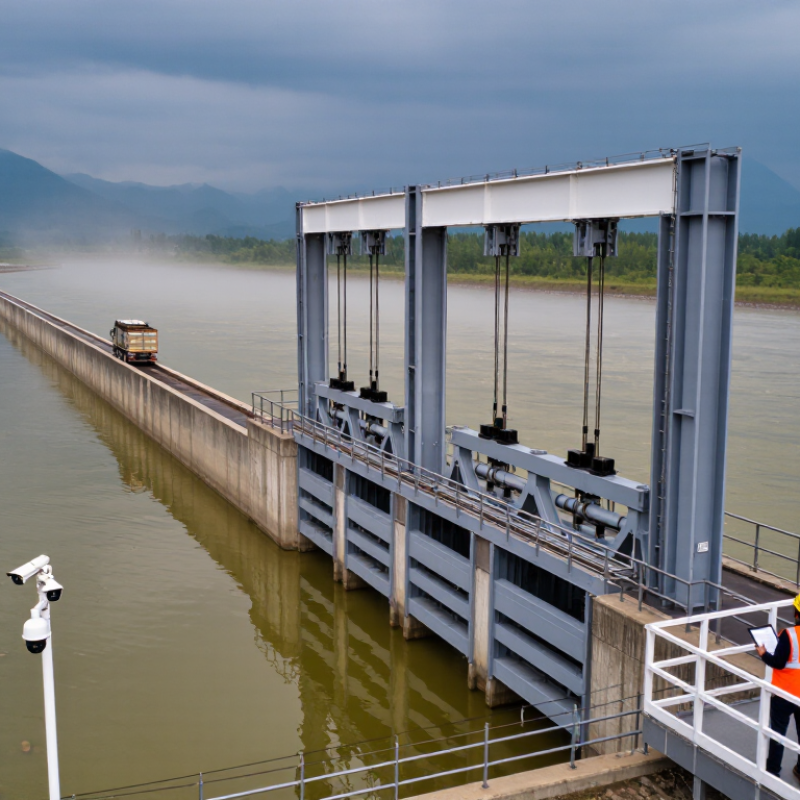
A water control gate is a movable barrier that regulates water elevation, discharge, and direction. It operates across dams, irrigation canals, and floodways. Common designs include slide gates, radial gates, and flap gates. Each responds differently to pressure, debris, and changing flow conditions.
In dams, gates release stored water through controlled openings. Operators adjust them gradually to protect downstream channels and nearby communities. In canals, gates distribute water between branches and maintain dependable levels for irrigation. In floodways, they redirect peak flows away from dense areas.
The need is substantial. The UN World Water Development Report 2023 states that agriculture accounts for about 70% of global freshwater withdrawals. Accurate flow control therefore supports both food production and water conservation.
Professional design goes beyond selecting a strong steel panel. Engineers assess hydraulic loading, sediment, corrosion, ice, and emergency access. Field teams inspect seals, hoists, guides, and embedded concrete before commissioning. A few millimeters of leakage can become a serious maintenance issue.
Small errors matter. The World Meteorological Organization’s State of Global Water Resources 2023 reported widespread abnormal river flows, reinforcing the value of adaptable control systems. Sensors can track upstream levels, gate position, and downstream discharge, but automation is not infallible. Manual inspection still matters, especially after storms. A reliable gate combines calculated capacity with practical maintenance, clear operating procedures, and room for unexpected conditions.
Agriculture uses about 70% of global freshwater withdrawals, according to FAO’s AQUASTAT database. This demand makes water control gates important for irrigation canals, reservoirs, and drainage channels. A well-positioned gate can regulate flow, protect downstream fields, and reduce unnecessary releases during dry periods.
The detail matters. A gate operator may adjust water by centimeters after checking canal levels, soil moisture, and rainfall forecasts. Small changes can affect hundreds of hectares. The 2024 UN World Water Development Report also identifies agriculture as the largest freshwater-consuming sector worldwide. However, the 70% figure is a global average, not a fixed rule for every region. Local crops, climate, and irrigation systems change the result.
For global projects, engineers should match gate capacity with peak discharge, sediment conditions, and maintenance skills. Manual systems may work in remote areas, while automated controls can improve response time where reliable power exists. That assumption needs testing. Digital equipment is not automatically better if operators cannot repair it locally. Practical designs should include visible level markings, safe access platforms, corrosion-resistant materials, and emergency shutoff options. These details support measurable water management rather than promising perfect efficiency.
| Data Dimension | Verified Global Figure | Project Relevance | Source |
|---|---|---|---|
| Agriculture’s share of global freshwater withdrawals | About 70% | Agricultural infrastructure requires dependable flow regulation, allocation, and water-level management. | FAO AQUASTAT |
| Agriculture’s share of global water consumption | Approximately 90% | Efficient control of canals, reservoirs, and drainage structures can support better water distribution and reduce avoidable losses. | FAO Land and Water |
| Share of cultivated land using irrigation | About 20% | Although irrigated land is a minority of cultivated land, it depends on precise conveyance and control systems. | FAO Irrigation |
| Contribution of irrigated agriculture to global food production | About 40% | Water-control gates help maintain stable operating levels in irrigation channels serving high-output agricultural areas. | FAO Irrigation |
| Global freshwater withdrawals | Approximately 4,000 km³ per year | Large withdrawal volumes increase the need for durable, maintainable, and accurately controlled hydraulic structures. | FAO AQUASTAT |
| Primary functions of a water-control gate | Flow regulation, level control, isolation, and drainage management | These functions support irrigation canals, flood-control channels, reservoirs, drainage systems, and water-transfer infrastructure. | FAO Water-Resources Development |
| Why the solution suits global projects | Adaptable across agricultural, municipal, drainage, and flood-management applications | A properly specified gate can be integrated into different channel sizes, operating conditions, and water-management objectives without relying on a single end-use sector. | UNESCO World Water Development Report |
Climate resilience is now a basic infrastructure requirement. UN-Water reports that 3.6 billion people face water scarcity for at least one month each year. This figure could exceed 5 billion by 2050. Seasonal shortages can affect farms, cities, and emergency services. A water control gate helps regulate storage, drainage, and distribution during changing conditions. It can hold water after intense rainfall, then release it gradually during dry periods. The 2024 UNESCO World Water Development Report also states that 2.2 billion people lacked safely managed drinking water in 2022. Reliable flow control matters where every available source is valuable.
A well-designed gate should match local hydrology, sediment loads, maintenance skills, and flood risks. Engineers should assess corrosion, power availability, manual operation, and safe access before selecting equipment. The World Meteorological Organization’s State of Global Water Resources reports show increasing pressure from variable rainfall and extreme hydrological events. However, a gate is not a complete climate solution. Poor monitoring, blocked channels, or weak maintenance can reduce performance quickly. That uncomfortable point deserves attention. Global projects need practical designs, not impressive specifications alone.
Tips:
Use seasonal flow data, not average rainfall only. Include backup operation when power fails. Inspect seals, hinges, and channels before the wet season. Train local operators with clear procedures. Independent testing and documented maintenance improve reliability, especially where replacement parts are difficult to obtain.
Selecting a water control gate starts with hydraulic loading, not catalog dimensions. At 10 metres of water depth, static pressure reaches about 98.1 kPa at the gate base. USACE Hydraulic Design of Spillways, EM 1110-2-1603, also requires designers to consider uplift, vibration, debris, ice, sediment, and seismic effects. These loads can change the safest gate type.
Sluice gates suit channels needing firm shutoff and frequent level adjustment. Their vertical plates transfer substantial water pressure into side guides and hoists. Radial gates use curved arms and trunnions, reducing lifting effort under deep water. This matters at spillways, where a large opening may face rapidly changing discharge.
PIANC guidance on hydraulic structures highlights vibration and flow instability as critical review points. A radial gate can still suffer if its seals, arms, or bearings receive uneven loading.
Flap gates work differently. Buoyancy and downstream water levels can operate them with limited mechanical equipment. They fit tidal outlets and drainage channels, but hinges must resist impact, corrosion, and trapped debris. The World Register of Dams records more than 58,000 large dams worldwide, showing how varied operating environments can be. However, global statistics cannot replace site measurements. Field inspections often reveal sediment buildup where drawings predicted clean flow. That uncomfortable mismatch deserves attention. Engineers should verify load cases with current surveys, transient analysis, and physical inspection before choosing a gate.
Why Choose a Water Control Gate for Global Projects?
A water control gate must fit the project’s standards, risks, and operating conditions. IEC requirements may apply to electrical systems, control panels, sensors, and emergency power. ISO standards can support quality management, manufacturing controls, inspection, and documentation. They do not replace local engineering rules. Confirm the exact scope before procurement.
Local flood-design requirements often determine the gate’s real performance. Engineers should check design flood levels, return periods, flow velocity, debris impact, sediment buildup, and seismic conditions. A gate exposed to muddy water may need stronger seals and easier cleaning access. In coastal areas, corrosion protection requires careful material selection. Hydraulic calculations should cover both normal operation and emergency closure.
Small details matter.
Project teams should request certified material records, factory test reports, welding qualifications, and clear commissioning procedures. Electrical components may need local approvals, enclosure protection, or specific voltage requirements. Site acceptance testing should simulate power loss, manual operation, alarms, and partial obstruction. A checklist helps, but it can still miss unusual rainfall patterns or maintenance limits. This is where independent review adds value. Requirements may also change during design, and early assumptions can become expensive mistakes. Verify revisions with local authorities, qualified engineers, and the responsible flood-control agency before installation.
Flood-control equipment should be verified against the applicable IEC and ISO requirements, together with the local authority’s hydraulic and flood-design criteria. The chart shows the mathematical relationship between common flood return periods and annual exceedance probability (AEP).
A 100-year event has a 1% annual exceedance probability; it does not occur only once every 100 years. The governing return period, loading conditions, materials, inspection requirements, and electrical protection level must be confirmed for each project jurisdiction.
We use cookies on our website to give you an improved browser experience. View our Privacy Policy for more information. Please make your selection to opt in or out of ALL cookies here: Accept or Decline
Do you consent to the use of ALL cookies?
901 2nd Court West
Birmingham, AL 35204
Sales: 866.481.4036
Logistics/Ops: 866.481.4036
2101 Dralle Road
University Park, IL 60466
Sales: 708.813.9070
Logistics/Ops: 708.235.4200
400 E. 13th Street
Little Rock, AR 72114
Sales: 866.760.5344
Logistics/Ops: 866.760.5344
225 Collins Road
Elkhart, IN 46515
Sales: 574.295.0214
Logistics/Ops: 574.607.4611
601 Berryman Pike
Tipton, IN 46072
Sales: 800.897.7591
Logistics/Ops: 800.897.7591
3900 Uvalda Street
Denver, CO 80239
Sales: 303.706.8000
Ops/Logistics: 303.576.8398
510 3rd Street E
Milan, IL 61264
Sales: 800.322.1052
Logistics/Ops: 800.322.1052
1660 E. Aurora
Des Moines, IA 50313
Sales: 800.671.1660
Logistics: 800.671.1660
86554 Gene Lasserre Blvd.
Yulee, FL 32097
Sales: 904.253.3060
Logistics/Ops: 904.225.3000
694 S.E. County Road 245
Lake City, FL 32025
Sales: 800.727.6706
Logistics/Ops: 386.752.7412
210 Neptune Road
Auburndale, FL 33823
Sales: 863.967.1131
Logistics/Ops: 863.777.9814
4601 McCoy Drive
Pensacola, FL 32503
Sales: 850.308.7030
Logistics/Ops: 850.434.5502
815 South 56th Street
Tampa, FL 33619
Sales: 813.302.1940
Logistics/Ops: 813.621.1352
200 Hosea Road
Lawrenceville, GA 30046
Sales: 770.953.7575
Logistics/Ops: 770.513.6000
Branch Product Guide
Branch Line Card
Moulding Offering
Cedar Offering
Column Offering
8173 Hwy. 165 North
Monroe, LA 71211
Sales: 800.256.4165
Logistics/Ops: 800.256.4165
508 Warren Avenue
Portland, ME 04103
Sales: 207.888.2331
Logistics/Ops: 207.797.6565
4300 Georgia Pacific Blvd.
Frederick, MD 21704
Sales: 301.798.7474
Logistics/Ops: 301.874.8000
419 Maple Street
Bellingham, MA 02019
Sales: 508.449.0535
Logistics/Ops: 508.966.5500
825 Buchanan Ave SW
Grand Rapids, MI 49507
Sales: 877.800.1180
Logistics/Ops: 616.278.0909
995 Pacific St. NW
Aitkin, MN 56431
Sales: 800.432.3727
Logistics/Ops: 218.212.7770
1102 Port Terminal Drive
Duluth, MN 55802
Sales: 800.951.9899
Logistics/Ops: 800.851.9899
9110 83rd Ave. North
Brooklyn Park, MN 55445
Sales: 763.425.0204
Logistics/Ops: 763.425.0204
910 E. Railroad Street
Long Beach, MS 39560
Sales: 866.535.4135
Logistics/Ops: 228.205.2400
1727 Warren Street
North Kansas City, MO 64116
Sales: 800.621.2611
Logistics/Ops: 800.621.2611
2123 North Golden
Springfield, MO 65803
Sales: 800.375.7891
Logistics/Ops: 800.375.7891
13860 Corp. Woods Trail
Bridgeton, MO 63044
Sales: 314.209.0800
Logistics/Ops: 314.209.0800
1109 South 19th Street
Omaha, NE 68108
Sales: 800.489.6637
Logistics/Ops: 800.489.6637
1 Luger Road
Denville, NJ 07834
Sales: 973-339-3539
Logistics/Ops: 973.625.1461
3720 Jeffrey Blvd.
Blasdell, NY 14219
Sales: 716.235.5989
Logistics/Ops: 716.825.6557
319 Yaphank Ave.
Yaphank, NY 11980
Sales: 631.358.5714
Logistics/Ops: 631.924.7401
3300 Parkside Drive
Charlotte, NC 28208
Sales: 800.839.2588
Logistics/Ops: 704.394.3172
1712 East D Street
Butner, NC 27509
Sales: 984.389.8200
Logistics/Ops: 919.575.3700
128 Foothills Drive
Statesville, NC 28687
Sales: 800.222.1414
Logistics/Ops: 704.394.3172
550 Munroe Falls Rd.
Tallmadge, OH 44278
Sales: 330.357.4506
Logistics/Ops: 330.794.1141
10347 Toebben Dr.
Independence, KY 41051
Sales: 859.298.3926
Logistics/Ops: 859.746.2250
450 N. MacArthur
Oklahoma City, OK 73127
Sales: 800.375.6025
Logistics/Ops: 800.375.6025
1680 North Aspen
Broken Arrow, OK 74012
Sales: 918.272.2212
Logistics/Ops: 918.272.2212
522 Bridge Street
Hunker, PA 15639
Sales: 878.217.2001
Logistics/Ops: 724.925.7285
4290 Atlanta Street
Charleston, SC 29418
Sales: 843.371.1420
Logistics/Ops: 843.554.8192
1040 S. Industrial Dr.
Erwin, TN 37650
Sales: 423.641.1005
Logistics/Ops: 423.742.5911
4287 Pilot Drive
Memphis, TN 38118
Sales: 901.365.2101
Logistics/Ops: 901.365.2101
700 Myatt Drive
Madison, TN 37115
Sales: 615.327.9547
Logistics/Ops: 629.777.4949
4747 Mark IV Parkway
Fort Worth, TX 76106
Sales: 866.323.5117
Logistics/Ops: 817.625.9091
6990 Market Avenue
El Paso, TX 79915
Sales: 915.778.6356
Logistics/Ops: 915.265.7200
2502 Wilson Road
Harlingen, TX 78552
Sales: 800.580.6711
Logistics/Ops: 800.580.6711
10,000 North Loop East
Houston, TX 77029
Sales: 713.921.1977
Logistics/Ops: 713.675.3544
702 East 44th St.
Lubbock, TX 79404
Sales: 866.454.6010
Logistics/Ops: 866.454.6010
535 N. WW White Road
San Antonio, TX 78219
Sales: 800.284.0488
Logistics/Ops: 210.333.8112
142 Pine Haven Shores Rd.
Shelburne, VT 05482
Sales: 802.800.2540
Logistics/Ops: 802.985.2512
4700 Bethlehem Road,
Richmond, VA 23230
Sales: 804.201.2400
Logistics/Ops: 804.342.1161
4516 N Barker Road
Spokane Valley, WA 99027
Phone: 509.892.9420
Toll free: 800.728.6157
8365 N. 76th Street
Milwaukee, WI 53223
Sales: 800.356.9245
Logistics/Ops: 800.356.9245
312 S. Chester Street
Sparta, WI 54656
Sales: 800.362.5864
Logistics/Ops: 800.362.5864
899 Grossman Drive
Schofield, WI 54476
Sales: 800.472.0017
Logistics/Ops: 800.472.0017
