Why Choose an Aluminum Hanging Door for Global Sourcing?
Why Choose an Aluminum Hanging Door for Global Sourcing? The answer begins with practical performance, not appearance alone. Aluminum offers a strong yet lightweight frame for commercial interiors, warehouses, clinics, and residential projects. Its resistance to rust can reduce maintenance in humid environments. A well-designed Aluminum Hanging Door also moves smoothly when its rollers and track are correctly matched.
Details matter.
During supplier evaluation, buyers should check alloy specifications, frame thickness, surface treatment, hardware quality, and tested load capacity. Request clear drawings with panel dimensions, track length, opening direction, and installation points. Product samples can reveal issues that photographs hide, such as uneven coating, noisy rollers, or sharp frame edges. Factory audits, inspection records, and documented quality procedures add useful confidence. Still, paperwork is not proof of every shipment.
Global sourcing also requires careful communication. Confirm packaging methods, replacement hardware, lead times, spare parts, and after-sales support before placing an order. A supplier should explain applicable product standards and provide accurate technical documents for local review. Requirements differ between markets, buildings, and project types. Never assume one design fits every region.
Aluminum is not automatically the best choice. Some projects need higher insulation, heavier security features, or different panel materials. This limitation deserves honest attention. However, when low weight, clean appearance, corrosion resistance, and efficient installation are priorities, aluminum can offer a balanced solution. The right decision comes from verified specifications, realistic site conditions, and a supplier willing to answer difficult questions. Good sourcing is less about choosing the cheapest door and more about reducing avoidable risk.
What Is an Aluminum Hanging Door?
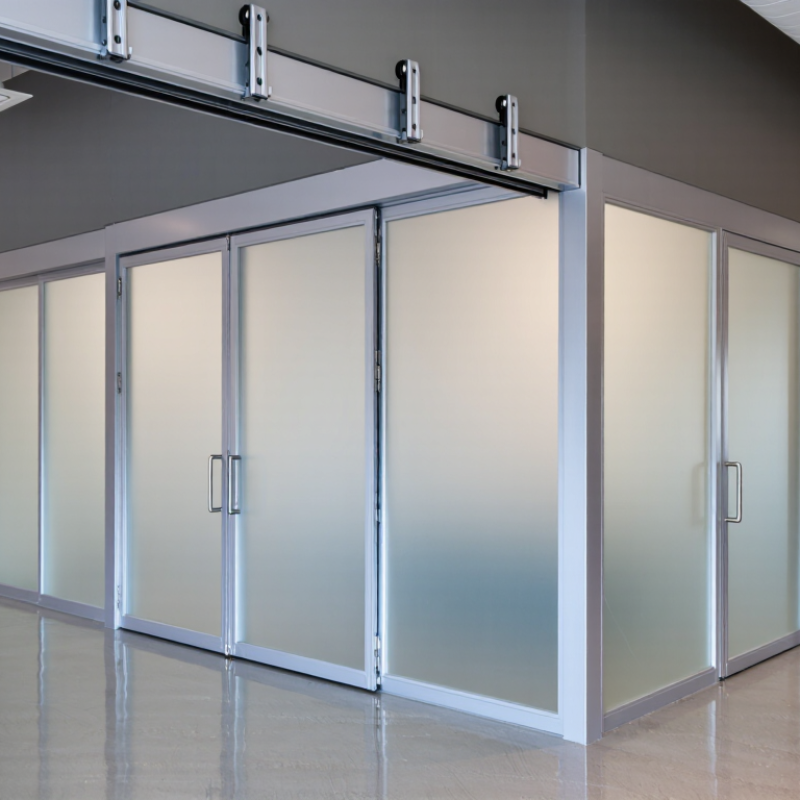
An aluminum hanging door is a door suspended from an overhead track rather than supported mainly by floor hinges. Its aluminum frame carries the door panel, while rollers move inside the upper rail. A small floor guide usually controls swinging and keeps the panel aligned. This design creates a clean threshold and can make narrow entrances easier to use.
In practical installations, the frame may hold glass, composite panels, or solid aluminum sheets. Aluminum offers low weight, corrosion resistance, and simple surface finishing. These qualities help reduce handling costs during international sourcing. However, the door still needs accurate measurements, suitable rollers, and a strong support structure. A lightweight frame cannot correct a weak ceiling.
The real performance depends on details. Check the opening width, panel weight, track length, locking method, and available clearance. Ask for load data, drawings, material specifications, and installation instructions before placing an order. Local building, accessibility, wind, and fire requirements may also affect the design. A door that works well in a dry warehouse may perform differently near a coast or in a busy hotel.
It is not a perfect solution.
Top-hung systems can collect dust in the track, and poor alignment may cause noise or uneven movement. In my view, suppliers should explain these limits instead of presenting aluminum doors as maintenance-free. Sample testing, finish checks, and trial installation can reveal problems earlier. That small effort often protects both product quality and sourcing reliability.
How Aluminum Hanging Doors Are Designed and Manufactured
Why Choose an Aluminum Hanging Door for Global Sourcing?
Designing an aluminum hanging door begins with its operating environment. Engineers assess opening size, door weight, traffic frequency, humidity, and available ceiling structure. A top-hung system transfers the load through an overhead rail, reducing floor contact and simplifying cleaning. The frame usually uses extruded aluminum profiles, selected for strength, weight, and corrosion resistance. Careful profile design also improves dimensional stability during daily operation.
Manufacturing starts with cutting profiles to controlled lengths. Technicians then machine connection points, assemble corners, and install reinforced panels or glass. Rollers must match the calculated door load, not just the visible panel size. Small alignment errors can create noise, vibration, or uneven gaps. We have found that checking rail straightness before final assembly prevents many installation problems. It is a modest step.
Surface treatment may include anodizing or powder coating, depending on appearance and exposure conditions. Factory teams inspect coating coverage, corner joints, fasteners, and movement resistance. Sample doors should complete repeated opening tests before production approval. Packaging also matters because long rails can bend under careless handling. Export suppliers should provide drawings, load data, inspection records, and installation guidance in clear technical language. No design is perfect; unusual wall conditions may still require a revised bracket or rail layout.
Key Benefits of Aluminum Hanging Doors
Why Choose an Aluminum Hanging Door for Global Sourcing?
Aluminum hanging doors offer a practical balance between low weight, strength, and clean appearance. Their lighter frames can reduce installation effort and lessen stress on overhead hardware. In warehouses, workshops, and service areas, this matters during frequent opening and closing. The panels also resist moisture and surface corrosion when properly finished. That benefit is useful near loading bays, washdown zones, and coastal facilities. Still, aluminum is not automatically maintenance-free. Hinges, rollers, seals, and fasteners need regular inspection.
Energy performance depends on the complete doorway system, not the frame alone. Tight seals and accurate alignment can reduce drafts, dust entry, and temperature loss.
The United Nations Environment Programme reports that buildings consume about 30% of global final energy. A well-fitted hanging door supports wider envelope-efficiency goals, although it cannot solve poor insulation or careless installation. That assumption can fail.
Material sustainability strengthens the sourcing case. The International Aluminium Institute reports that recycled aluminum requires about 95% less energy than primary production. Buyers should request recycled-content evidence, coating specifications, test results, and replacement-part availability. These details improve reliability across different climates and supply chains. They also expose weak claims. Aluminum doors may cost more initially than simpler alternatives, but their service life, repairability, and reduced handling demands can change the long-term calculation. Numbers should be verified for each project.
Factors to Consider When Sourcing Globally
Why Choose an Aluminum Hanging Door for Global Sourcing?
Factors to Consider When Sourcing Globally
An aluminum hanging door can reduce visible floor hardware and suit busy commercial spaces. Its lighter frame may simplify installation and reduce strain on supporting structures. Still, material choice alone does not guarantee reliable performance.
Global sourcing begins with a clear technical specification. Define opening size, panel weight, track length, alloy grade, surface finish, and expected traffic. Ask suppliers for load calculations, dimensional tolerances, coating details, and installation drawings. Small gaps matter. They can affect alignment, noise, and weather resistance.
Check the supplier’s production records and quality-control process. A useful audit examines incoming aluminum, welding points, rollers, fasteners, and final inspection reports. Request a physical sample before approving a larger order. Photographs rarely show rough edges or uneven anodizing. That lesson is easy to overlook.
Evaluate the total landed cost, not only the unit price. Include tooling, packaging, freight, duties, insurance, spare parts, and local installation. Strong export packaging should protect long tracks from bending during handling. Confirm lead times in writing, including sample approval and holiday shutdowns. Communication can fail across time zones, so use drawings and numbered checklists.
The door must also match local building, fire, accessibility, and safety requirements. These rules vary by destination. Ask a qualified local professional to verify compliance before shipment. A supplier may provide accurate products but incomplete project advice. That distinction deserves attention.
An imperfect plan is better than an untested assumption. Recheck measurements at the site. Even experienced teams can miss a few millimeters.

