
We use cookies on our website to give you an improved browser experience. View our Privacy Policy for more information. Please make your selection to opt in or out of ALL cookies here: Accept or Decline
Wall Panels shape how a room looks, sounds, feels, and performs. They can cover a cold concrete wall, soften office noise, or add warmth behind a bed. Yet the right choice depends on more than appearance.
Architect Frank Lloyd Wright wrote, “Form and function should be one, joined in a spiritual union.” His principle remains useful when evaluating Wall Panels. A beautiful surface may fail in a humid bathroom. A durable panel may feel too heavy in a small room. Good design must balance both.
This guide examines common Wall Panels types, materials, and practical uses. It considers wood, MDF, PVC, acoustic felt, fabric, stone, metal, and composite options. Each material behaves differently under light, moisture, heat, and daily contact.
Wood panels can bring visible grain and natural warmth. PVC panels resist moisture and simplify cleaning. Acoustic panels help control echoes in busy rooms. Stone and metal create stronger visual statements. Installation methods also matter. Adhesive, clips, battens, and mechanical fasteners affect repair, weight, and wall preparation.
Small details matter.
A panel’s edge can reveal poor planning. Uneven joints may become obvious beside a window. Color can shift under warm lighting. These issues are easy to overlook during selection.
No single panel suits every project. This article offers practical comparisons, but local building requirements and manufacturer instructions still deserve careful review. A reliable decision considers the room’s purpose, maintenance demands, budget, and expected lifespan. Sometimes, the most attractive option is not the most sensible one.
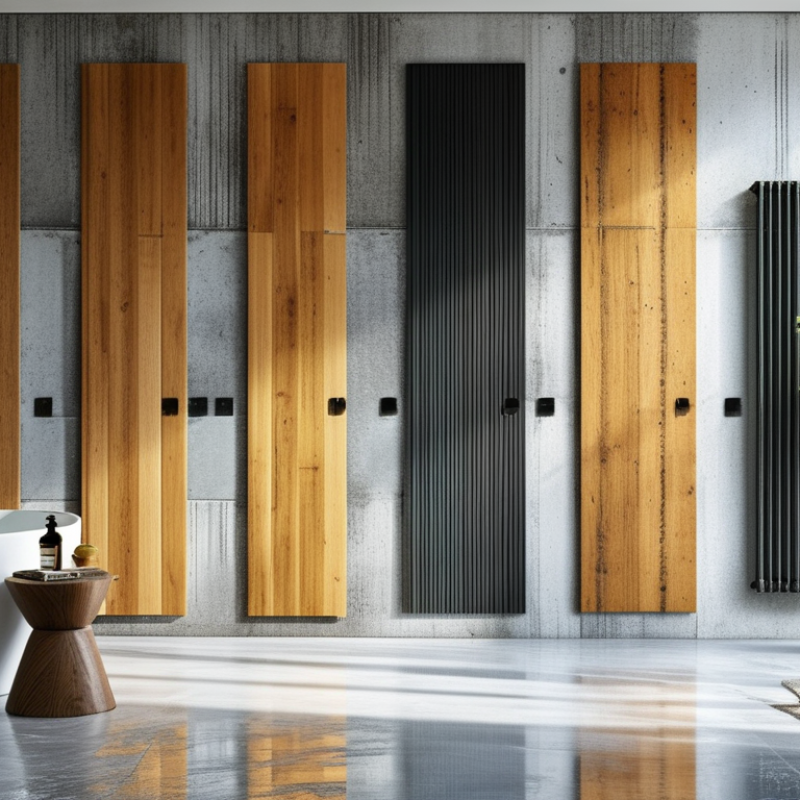
Wall panels are manufactured boards or layered sheets fixed over existing walls.
They create a finished surface without rebuilding the entire room. Depending on design, panels may use wood fiber, PVC, gypsum, stone veneer, fabric, or recycled composite. Their core and face determine performance. A dense surface resists impacts, while a textured surface can soften echoes. They do not magically repair a damp wall.
Most panels work through a simple assembly: a face layer, a backing, and a fixing method.
Adhesive suits clean, stable surfaces. Battens or clips create a small cavity, allowing cables to pass behind the panels.
In acoustic systems, mineral fiber or perforated faces absorb sound by slowing air movement. Moisture-resistant products can protect a bathroom wall, but sealed joints still matter. Water can enter through one careless gap.
During installation, I check wall flatness, moisture, corners, and ventilation before cutting anything.
A three-millimeter error can become obvious across a long run. Panels also change slightly with heat and humidity, so expansion gaps are practical, not decorative. I have seen attractive panels fail because the substrate was dusty or uneven.
Their honest limitation is important: panels improve appearance and selected functions, but cannot replace structural repairs. Choosing the wrong core may also reduce fire, moisture, or sound performance. Product data and local installation requirements deserve careful attention.
Wall panels are grouped by material, structure, and intended use.
Solid wood panels bring natural grain, warmth, and useful acoustic softness to bedrooms or offices. They need stable indoor humidity, however, because boards can expand, shrink, or warp.
Engineered wood panels offer a more consistent surface and often cost less. Their finish may imitate oak, walnut, or painted timber.
PVC panels suit bathrooms, utility rooms, and other damp areas. They resist splashes and clean easily, but low-quality sheets can look artificial under strong lighting.
Metal panels usually made from aluminum or steel, provide durability for kitchens, workshops, and commercial interiors. Perforated metal can also improve sound control when paired with acoustic backing.
Stone veneer and ceramic panels create a solid visual effect around fireplaces, reception desks, or feature walls. They may require stronger support and careful joint sealing.
Acoustic panels use fabric, felt, wood slats, or mineral-based cores to reduce echo in meeting rooms and home studios. They are not complete soundproofing systems.
A moisture-resistant panel can still fail if water reaches open edges or poorly sealed joints. Fire ratings, emissions data, panel thickness, and fixing methods deserve verification before purchase.
I have found that appearance often receives more attention than maintenance access. That is an imperfect choice. A beautiful panel becomes inconvenient when one damaged section cannot be removed easily.
Wall panels are made from materials chosen for appearance, strength, moisture resistance, and installation needs. Engineered wood, including MDF and plywood, creates a warm, furniture-like surface. It can be painted, veneered, or routed into grooves. Natural wood offers unique grain patterns, but humidity may cause swelling or movement. I have seen small gaps appear when wood panels are installed without allowing room for expansion.
PVC panels are lightweight and resist water, making them practical for bathrooms, utility rooms, and other damp areas. However, thin PVC can look less convincing under strong lighting. Gypsum panels provide a smooth, fire-resistant surface and support clean interior designs. They are easy to finish, but impacts can leave dents. Cement boards are harder and more durable, especially near moisture, yet they require stronger tools and careful handling.
Metal panels, often made from aluminum or steel, suit commercial interiors and modern kitchens. They resist stains and tolerate frequent cleaning. Stone veneer and porcelain panels create a solid, premium appearance, but their weight demands reliable wall support. Recycled PET felt is used for acoustic panels, where its soft texture helps reduce echoes in offices and studios. Material selection should match the wall condition, room humidity, cleaning routine, and installer’s skill. A visually attractive panel can still fail when ventilation or adhesive compatibility is ignored.
Wall panels shape how a room feels before furniture enters it. In interior spaces, wood veneer panels add warmth to bedrooms, offices, and reception areas. Fluted panels create changing shadows as daylight moves across the wall. Fabric-covered panels can soften echoes in meeting rooms or home theaters. PVC and fiber-cement panels offer practical surfaces where moisture or heavy use is expected.
Exterior wall panels serve a different purpose. They help protect buildings from rain, wind, sunlight, and daily temperature changes. Metal panels suit modern façades and commercial buildings because they are lightweight and durable. Fiber-cement panels can create a clean, solid appearance around homes and public spaces. Insulated panels may also improve thermal performance when installed as part of a properly designed wall system.
Installation details matter more than many people expect. A panel can look impressive in a showroom but fail beside a damp floor or uneven wall. I have seen small gaps become visible after seasonal movement. That mistake is easy to underestimate. Installers should check moisture levels, ventilation, fire requirements, fixing methods, and expansion gaps. Interior panels need careful joint alignment around sockets and doors. Exterior systems require drainage paths and weather-resistant connections. Material samples should be viewed under actual lighting. Sometimes the “best” texture feels too busy after a full wall is covered.
| Wall Panel Type | Common Materials | Typical Interior Uses | Typical Exterior Uses | Key Characteristics | Moisture and Maintenance Considerations |
|---|---|---|---|---|---|
| Gypsum Wall Panels | Gypsum core with paper or fiberglass facing |
| Usually not used as an exposed exterior finish; may be part of protected wall systems | Easy to cut and install; provides a smooth surface for paint; specialized versions can improve fire or sound performance | Standard panels should be kept dry. Moisture-resistant types are intended for areas such as bathrooms but are not generally waterproof. |
| Wood Wall Panels | Solid wood, plywood, veneer, or engineered wood fiberboard |
|
| Offers natural texture and warmth; can contribute to visual interest and, in slatted systems, may support acoustic treatment | Requires sealing or suitable factory treatment. Exterior applications must account for UV exposure, rain, ventilation, and dimensional movement. |
| Medium-Density Fiberboard (MDF) Panels | Compressed wood fibers bonded with resin |
| Generally limited to protected locations unless specifically engineered and sealed for exterior conditions | Uniform surface; easy to machine and paint; available in routed, grooved, or decorative profiles | Standard MDF can swell when exposed to water. Use moisture-resistant grades where appropriate and protect all cut edges. |
| PVC Wall Panels | Polyvinyl chloride plastic |
|
| Lightweight, water-resistant, and available in smooth or patterned finishes; often installed with interlocking or adhesive systems | Simple to clean, but joints and penetrations must be properly sealed. Prolonged sunlight can affect color and may require UV-stable products. |
| Fiber-Cement Panels | Cement, cellulose fibers, mineral fillers, and water |
|
| Rigid and durable; resists rot and many insects; available in board, plank, and textured panel formats | Needs correctly detailed joints, flashings, and drainage. Cutting may create dust, so suitable dust-control practices are required. |
| Metal Wall Panels | Aluminum, galvanized steel, stainless steel, or coated steel |
|
| Strong, recyclable, and available in flat, corrugated, perforated, or composite forms; can create a modern architectural appearance | Check coating durability, corrosion resistance, fasteners, and compatibility between dissimilar metals. Allowance for thermal movement is important. |
| Stone and Stone-Veneer Panels | Natural stone, thin-cut stone, or manufactured stone veneer |
|
| Provides a durable, high-impact appearance; natural stone varies in color, texture, weight, and porosity | Substrate capacity and anchoring are critical. Porous materials may require sealing, and exterior systems must manage water drainage and freeze-thaw exposure. |
| Brick or Terracotta Panels | Fired clay brick slips, terracotta, or ceramic-based units |
|
| Offers a masonry appearance with a thinner profile than conventional brickwork; good color and texture stability when properly selected | Use compatible adhesives, joints, and backing systems. Exterior installations require attention to drainage, movement, and weather exposure. |
| Glass Wall Panels | Tempered, laminated, frosted, or coated safety glass |
|
| Reflects or transmits light; can make spaces feel larger; safety glazing is required in many impact-prone locations | Shows fingerprints and mineral deposits, so regular cleaning may be needed. Thermal stress, edge protection, and correct framing must be considered. |
| Acoustic Wall Panels | Mineral fiber, fiberglass, PET felt, wood wool, or fabric-wrapped cores |
| Occasionally used in sheltered, purpose-designed exterior acoustic applications | Designed primarily to absorb sound and reduce reverberation; performance depends on thickness, spacing, coverage, and installation method | Many products are intended for dry interiors only. Protect from water, abrasion, and excessive dust; verify fire performance for the intended building use. |
| Composite Wall Panels | Layered systems such as metal-faced insulated panels or aluminum composite panels |
|
| Can combine a finished surface with insulation, low weight, and rapid installation; system performance varies by core and assembly | Confirm fire classification, weather sealing, drainage, impact resistance, and attachment details. Follow the complete tested system rather than treating panels as standalone products. |
| Exterior Insulated Wall Panels | Insulated metal panels, structural insulated panels, or rigid insulation with weather-resistant cladding | Used selectively for insulated interior-facing construction where the full assembly is designed for that purpose |
| Can improve thermal continuity and speed of enclosure; overall performance depends on joints, fasteners, and surrounding construction | Requires careful control of air, water, vapor, and thermal layers. Joints, penetrations, and base details should be installed according to the system design. |
Note: Actual performance depends on the complete wall assembly, installation method, local climate, building-code requirements, fire rating, and manufacturer-tested specifications.
Choosing a wall panel starts with the room, not the appearance. Gypsum panels suit dry interiors and easy finishing. Fiber-cement panels handle impact and damp conditions better. Metal panels support durable commercial walls, while wood and decorative PVC panels add visual warmth. Acoustic panels can reduce reflected sound in offices, studios, and restaurants.
Moisture, safety, and sound control Moisture is the first practical test. A bathroom wall needs water-resistant construction, sealed joints, and suitable backing. A corridor may need stronger impact resistance. Check fire performance through recognized test classifications, such as ASTM E84 or EN 13501-1. For sound control, request laboratory ratings, including NRC or STC values. Do not trust the word “acoustic” alone.
Energy performance also deserves attention. The UNEP 2023 Global Status Report for Buildings and Construction states that buildings produce about 37% of global energy-related emissions. Therefore, exterior panels should be reviewed with insulation, thermal bridging, and airtightness in mind. I once focused too heavily on panel price. The installation details later mattered more. Compare whole-life cost, maintenance access, expected service life, and local code requirements. Also ask for verified environmental and performance data, not vague sustainability claims. The cheapest panel may become expensive after repairs.
We use cookies on our website to give you an improved browser experience. View our Privacy Policy for more information. Please make your selection to opt in or out of ALL cookies here: Accept or Decline
Do you consent to the use of ALL cookies?
901 2nd Court West
Birmingham, AL 35204
Sales: 866.481.4036
Logistics/Ops: 866.481.4036
2101 Dralle Road
University Park, IL 60466
Sales: 708.813.9070
Logistics/Ops: 708.235.4200
400 E. 13th Street
Little Rock, AR 72114
Sales: 866.760.5344
Logistics/Ops: 866.760.5344
225 Collins Road
Elkhart, IN 46515
Sales: 574.295.0214
Logistics/Ops: 574.607.4611
601 Berryman Pike
Tipton, IN 46072
Sales: 800.897.7591
Logistics/Ops: 800.897.7591
3900 Uvalda Street
Denver, CO 80239
Sales: 303.706.8000
Ops/Logistics: 303.576.8398
510 3rd Street E
Milan, IL 61264
Sales: 800.322.1052
Logistics/Ops: 800.322.1052
1660 E. Aurora
Des Moines, IA 50313
Sales: 800.671.1660
Logistics: 800.671.1660
86554 Gene Lasserre Blvd.
Yulee, FL 32097
Sales: 904.253.3060
Logistics/Ops: 904.225.3000
694 S.E. County Road 245
Lake City, FL 32025
Sales: 800.727.6706
Logistics/Ops: 386.752.7412
210 Neptune Road
Auburndale, FL 33823
Sales: 863.967.1131
Logistics/Ops: 863.777.9814
4601 McCoy Drive
Pensacola, FL 32503
Sales: 850.308.7030
Logistics/Ops: 850.434.5502
815 South 56th Street
Tampa, FL 33619
Sales: 813.302.1940
Logistics/Ops: 813.621.1352
200 Hosea Road
Lawrenceville, GA 30046
Sales: 770.953.7575
Logistics/Ops: 770.513.6000
Branch Product Guide
Branch Line Card
Moulding Offering
Cedar Offering
Column Offering
8173 Hwy. 165 North
Monroe, LA 71211
Sales: 800.256.4165
Logistics/Ops: 800.256.4165
508 Warren Avenue
Portland, ME 04103
Sales: 207.888.2331
Logistics/Ops: 207.797.6565
4300 Georgia Pacific Blvd.
Frederick, MD 21704
Sales: 301.798.7474
Logistics/Ops: 301.874.8000
419 Maple Street
Bellingham, MA 02019
Sales: 508.449.0535
Logistics/Ops: 508.966.5500
825 Buchanan Ave SW
Grand Rapids, MI 49507
Sales: 877.800.1180
Logistics/Ops: 616.278.0909
995 Pacific St. NW
Aitkin, MN 56431
Sales: 800.432.3727
Logistics/Ops: 218.212.7770
1102 Port Terminal Drive
Duluth, MN 55802
Sales: 800.951.9899
Logistics/Ops: 800.851.9899
9110 83rd Ave. North
Brooklyn Park, MN 55445
Sales: 763.425.0204
Logistics/Ops: 763.425.0204
910 E. Railroad Street
Long Beach, MS 39560
Sales: 866.535.4135
Logistics/Ops: 228.205.2400
1727 Warren Street
North Kansas City, MO 64116
Sales: 800.621.2611
Logistics/Ops: 800.621.2611
2123 North Golden
Springfield, MO 65803
Sales: 800.375.7891
Logistics/Ops: 800.375.7891
13860 Corp. Woods Trail
Bridgeton, MO 63044
Sales: 314.209.0800
Logistics/Ops: 314.209.0800
1109 South 19th Street
Omaha, NE 68108
Sales: 800.489.6637
Logistics/Ops: 800.489.6637
1 Luger Road
Denville, NJ 07834
Sales: 973-339-3539
Logistics/Ops: 973.625.1461
3720 Jeffrey Blvd.
Blasdell, NY 14219
Sales: 716.235.5989
Logistics/Ops: 716.825.6557
319 Yaphank Ave.
Yaphank, NY 11980
Sales: 631.358.5714
Logistics/Ops: 631.924.7401
3300 Parkside Drive
Charlotte, NC 28208
Sales: 800.839.2588
Logistics/Ops: 704.394.3172
1712 East D Street
Butner, NC 27509
Sales: 984.389.8200
Logistics/Ops: 919.575.3700
128 Foothills Drive
Statesville, NC 28687
Sales: 800.222.1414
Logistics/Ops: 704.394.3172
550 Munroe Falls Rd.
Tallmadge, OH 44278
Sales: 330.357.4506
Logistics/Ops: 330.794.1141
10347 Toebben Dr.
Independence, KY 41051
Sales: 859.298.3926
Logistics/Ops: 859.746.2250
450 N. MacArthur
Oklahoma City, OK 73127
Sales: 800.375.6025
Logistics/Ops: 800.375.6025
1680 North Aspen
Broken Arrow, OK 74012
Sales: 918.272.2212
Logistics/Ops: 918.272.2212
522 Bridge Street
Hunker, PA 15639
Sales: 878.217.2001
Logistics/Ops: 724.925.7285
4290 Atlanta Street
Charleston, SC 29418
Sales: 843.371.1420
Logistics/Ops: 843.554.8192
1040 S. Industrial Dr.
Erwin, TN 37650
Sales: 423.641.1005
Logistics/Ops: 423.742.5911
4287 Pilot Drive
Memphis, TN 38118
Sales: 901.365.2101
Logistics/Ops: 901.365.2101
700 Myatt Drive
Madison, TN 37115
Sales: 615.327.9547
Logistics/Ops: 629.777.4949
4747 Mark IV Parkway
Fort Worth, TX 76106
Sales: 866.323.5117
Logistics/Ops: 817.625.9091
6990 Market Avenue
El Paso, TX 79915
Sales: 915.778.6356
Logistics/Ops: 915.265.7200
2502 Wilson Road
Harlingen, TX 78552
Sales: 800.580.6711
Logistics/Ops: 800.580.6711
10,000 North Loop East
Houston, TX 77029
Sales: 713.921.1977
Logistics/Ops: 713.675.3544
702 East 44th St.
Lubbock, TX 79404
Sales: 866.454.6010
Logistics/Ops: 866.454.6010
535 N. WW White Road
San Antonio, TX 78219
Sales: 800.284.0488
Logistics/Ops: 210.333.8112
142 Pine Haven Shores Rd.
Shelburne, VT 05482
Sales: 802.800.2540
Logistics/Ops: 802.985.2512
4700 Bethlehem Road,
Richmond, VA 23230
Sales: 804.201.2400
Logistics/Ops: 804.342.1161
4516 N Barker Road
Spokane Valley, WA 99027
Phone: 509.892.9420
Toll free: 800.728.6157
8365 N. 76th Street
Milwaukee, WI 53223
Sales: 800.356.9245
Logistics/Ops: 800.356.9245
312 S. Chester Street
Sparta, WI 54656
Sales: 800.362.5864
Logistics/Ops: 800.362.5864
899 Grossman Drive
Schofield, WI 54476
Sales: 800.472.0017
Logistics/Ops: 800.472.0017
