
We use cookies on our website to give you an improved browser experience. View our Privacy Policy for more information. Please make your selection to opt in or out of ALL cookies here: Accept or Decline
China’s rail network is expanding rapidly, increasing demand for dependable Rail Crossing Signal systems. Suppliers now compete on visibility, detection accuracy, remote monitoring, and lifecycle support. The strongest manufacturers must prove performance, not merely offer attractive prices.
The U.S. Federal Railroad Administration’s Highway-Rail Crossing Inventory and Incident data show that thousands of crossing incidents still occur annually. These figures expose a practical truth: a signal is not decoration. It must remain visible through rain, dust, glare, and winter darkness. The World Bank and International Transport Forum also emphasize digital monitoring, resilient infrastructure, and safer level-crossing design. Their findings support a broader shift toward connected warning equipment and preventive maintenance.
Rachel Maleh, CEO of Operation Lifesaver, states, “Rail safety is everyone’s responsibility.” That principle should guide supplier selection in China. CRSC and other specialized manufacturers offer different strengths, including LED warning systems, obstacle detection, control cabinets, and railway communication integration. Yet product brochures can hide important gaps. Certification scope, field history, spare-part access, and response time deserve close review.
Details matter. Can the system detect a stalled vehicle? Does the cabinet resist water intrusion? Can operators review an alarm after midnight? These questions separate a capable supplier from a convenient listing. This outline examines China’s leading providers through technology, compliance, manufacturing experience, export readiness, and service reliability. Some supplier rankings remain debatable. That is useful. Buyers should verify every claim with test records, site references, and independent technical assessments.
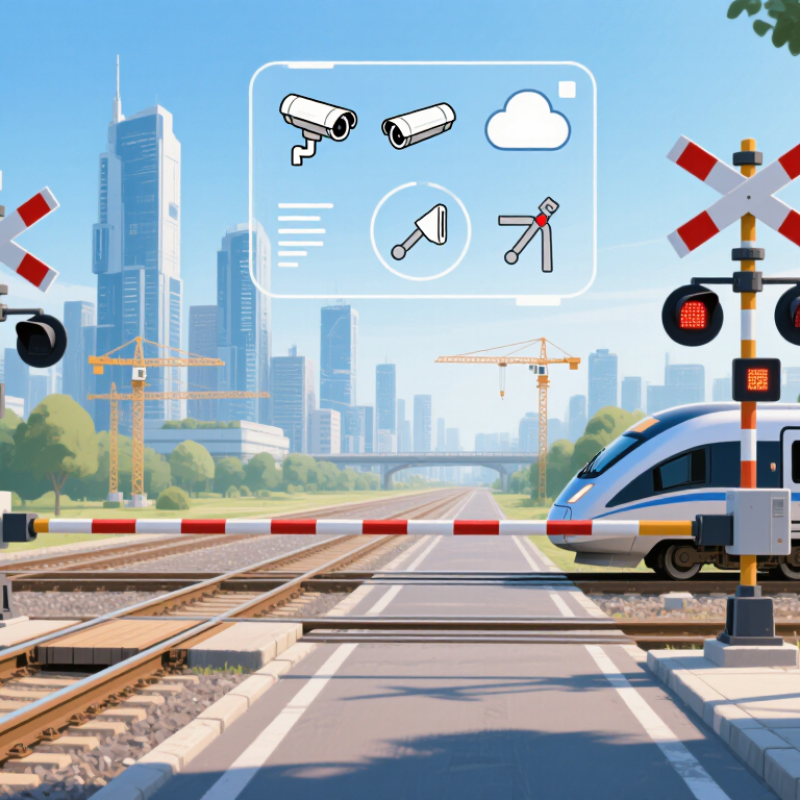
Rail crossing signals warn road users that a train is approaching. A track circuit, axle counter, or radar detector identifies train movement. The controller then activates flashing red lights, bells, and warning gates. Gates usually descend after the warning sequence begins. The system should keep operating during rain, dust, freezing temperatures, and power interruptions.
The Federal Railroad Administration’s 2023 safety database recorded more than 2,000 highway-rail crossing incidents in the United States. This figure shows why detection accuracy matters.
Modern installations often use redundant sensors, battery backup, event logging, and remote fault alerts. Engineers also check sight distance, road geometry, train speed, and local traffic patterns before selecting equipment. A bright lamp alone is not enough.
Reliable suppliers should provide tested control cabinets, weather-resistant enclosures, fail-safe logic, and traceable maintenance records. International railway guidance commonly emphasizes independent monitoring and predictable warning times.
However, no signal removes human risk completely. A driver may ignore the light. A sensor may need inspection. That uncomfortable fact deserves attention.
In practice, technicians test relay timing, gate position, bell volume, and battery capacity at scheduled intervals. Small faults can become serious delays. Clear documentation and field experience remain as important as hardware.
China Top Rail Crossing Signal Suppliers?
Evaluating Chinese rail crossing signal suppliers requires more than comparing prices. Start with compliance. Ask whether the supplier designs equipment against applicable Chinese railway standards and the regulations of your operating country. Check evidence for EMC performance, electrical safety, environmental protection, and fail-safe operation. Independent laboratory reports are more useful than attractive brochures.
Review the supplier’s engineering experience in real railway environments. Request project references with similar traffic density, climate, and crossing layout. Examine warning lamps, audible alarms, barriers, control cabinets, axle detection, and backup power separately. Each component should have clear specifications and defined failure responses. The system should remain safe during cable damage, power loss, or communication interruption.
Look closely at quality control. A reliable supplier should provide serial-number traceability, inspection records, software version control, and documented factory acceptance tests. Site acceptance testing should include night visibility, approach detection, barrier timing, and emergency procedures. Ask how spare parts remain available after installation. This matters.
Certification alone is not enough. A certificate may cover one product version, not a modified system. Suppliers should explain validation methods, maintenance intervals, cybersecurity controls, and staff training. Visit the factory when possible. Observe calibration, aging tests, and final inspections. I would also compare delivery history, warranty handling, and response time during field failures. No supplier is perfect, and unclear answers deserve careful review.
| Evaluation Dimension | Recommended Requirement or Benchmark | Suggested Weight | Supplier Assessment Focus | |
|---|---|---|---|---|
| Applicable Standards and Regulatory Compliance | The supplier should identify all applicable Chinese railway, level-crossing, electrical safety, EMC, environmental and construction requirements for the intended line and crossing type. International projects should also map requirements to the applicable EN, IEC or national standards. | Standards compliance matrix, current technical specifications, type-test reports, conformity declarations and a list of deviations or exclusions. Relevant frameworks may include applicable GB/T and TB standards, EN 50126, EN 50128, EN 50129, EN 50121-4 and IEC 60529. | 15% | Critical |
| Functional Safety and Safety Integrity | The safety integrity target must be defined by the infrastructure manager and hazard analysis. For safety-related electronic railway systems, the supplier should demonstrate a lifecycle and safety case appropriate to the required SIL; SIL 4 is used for some highly safety-critical railway functions, but it must not be assumed without a project-specific assessment. | Hazard log, preliminary hazard analysis, FMEA or FTA, safety plan, safety case, independent assessment report and traceability from safety requirements to verification results. EN 50126, EN 50129 and IEC 62425 are commonly used references for railway safety assurance. | 18% | Critical |
| Interlocking and Signalling Interface | The equipment should provide clearly defined interfaces with interlocking, train detection, road traffic equipment, control centres, power systems and maintenance terminals. Fail-safe states and loss-of-communication behaviour must be specified. | Interface control document, circuit diagrams, communication protocol description, I/O list, fail-safe logic description, FAT procedure and interoperability test records. | 12% | Critical |
| Train Detection and Warning Logic | The solution should support the required train-detection technology and provide deterministic activation, warning, crossing-clearance and reset logic. The design should address multiple tracks, bidirectional operation, shunting movements and degraded operating modes where applicable. | Functional description, timing diagrams, track layout assumptions, detection coverage calculation, false-activation analysis and test results for normal and degraded conditions. | 12% | Critical |
| Availability, Reliability and Maintainability | The supplier should provide RAM targets and calculation methods for the complete crossing system, including control units, detection equipment, warning devices, barriers, power supplies and communications. Targets must be stated for the actual configuration rather than for an isolated module only. | RAM plan, MTBF or failure-rate assumptions, MTTR estimate, reliability block diagram, preventive-maintenance schedule, spare-parts strategy and field failure statistics presented in an auditable format. EN 50126 provides a lifecycle framework for railway RAMS activities. | 12% | High |
| Environmental and Mechanical Performance | Equipment ratings should match the project location, including temperature, humidity, rain, dust, vibration, shock, corrosion, solar exposure, altitude and outdoor installation conditions. Enclosures should have an ingress-protection rating suitable for their installation position. | Environmental qualification reports, vibration and shock test records, temperature and humidity test records, corrosion assessment, enclosure rating certificate and component derating calculations. IEC 60529 is used for IP-code classification; IEC 60068 series methods are commonly used for environmental testing. | 10% | High |
| Electromagnetic Compatibility and Electrical Protection | The system should be tested for conducted and radiated emissions, immunity, electrostatic discharge, electrical fast transients, surges and power disturbances under the applicable railway environment. | EMC test reports from a competent laboratory, grounding and bonding design, surge-protection scheme, lightning-protection interface, electromagnetic compatibility plan and power-quality limits. EN 50121-4 is a commonly referenced EMC standard for railway signalling and telecommunications apparatus. | 8% | High |
| Quality Management and Production Control | The supplier should operate a documented quality-management system with controlled design changes, incoming inspection, process inspection, final testing, nonconformance management and product traceability. | Valid ISO 9001 certificate, railway-sector quality certification where applicable, process audit results, inspection and test plans, calibration records, nonconformance statistics and change-control procedure. ISO 22163:2023 is the railway-sector quality-management standard based on ISO 9001 principles. | 8% | High |
| Verification, Validation and Factory Acceptance Testing | Requirements should be traceable through design, verification, validation, integration testing and site acceptance. FAT should reproduce representative operating, fault and recovery scenarios before shipment. | Requirements traceability matrix, validation plan, test specifications, test coverage report, FAT checklist, calibration certificates and signed test records with serial-number traceability. | 8% | High |
| Cybersecurity and Configuration Control | Connected crossing equipment should have defined security zones, controlled access, secure maintenance procedures, account management, backup and recovery controls, vulnerability handling and a documented software-update process. | Cybersecurity risk assessment, asset inventory, access-control policy, secure-development procedure, vulnerability-management process, software bill of materials where available and configuration-baseline records. IEC 62443 principles may be used for industrial cybersecurity assessment; project-specific railway cybersecurity requirements should also be applied. | 5% | Medium to High |
| Installation, Commissioning and Local Support | The supplier should provide installation drawings, commissioning procedures, training, troubleshooting guidance and defined response arrangements for the project location. Local support capability should be verified rather than accepted solely on a written statement. | Installation manual, commissioning checklist, training plan, service organization chart, escalation process, response-time commitments, reference project contacts and records of completed commissioning activities. | 5% | Medium to High |
| Lifecycle Documentation and Spare-Parts Support | The supplier should commit to controlled technical documentation, software and firmware version management, spare-parts availability, repair procedures and obsolescence management for the contractual support period. | Document index, as-built drawings, maintenance manuals, parts list, recommended initial spares, firmware release notes, obsolescence policy, repair turnaround target and warranty terms. | 5% | Medium |
| Commercial Transparency and Total Cost of Ownership | Evaluation should include purchase price, engineering, testing, installation, training, spare parts, energy use, maintenance, software licensing, warranty extensions and end-of-life costs. The lowest initial price should not automatically receive the highest score. | Itemized quotation, five- to ten-year lifecycle-cost model, warranty conditions, exclusions, payment milestones, delivery schedule, spare-parts pricing and a clear list of customer-supplied interfaces. | 5% | Medium |
China has several leading types of rail crossing signal suppliers, each serving different project needs. Full-system manufacturers provide warning lights, bells, control cabinets, barriers, and track detection equipment. They often support complete installations for freight lines, passenger routes, and industrial rail yards. Their value comes from coordinated design and factory testing.
Component specialists focus on specific products. They may produce LED signal heads, audible alarms, barrier machines, axle counters, or relay-based controllers. These suppliers can help operators replace outdated parts without rebuilding an entire crossing. Ask for test records, wiring diagrams, enclosure ratings, and spare-parts availability. Small details matter in dusty yards and coastal environments.
Engineering and integration suppliers offer another important category. They connect signals with interlocking systems, remote monitoring platforms, and local control panels. Experienced teams should understand site surveys, cable distances, drainage, visibility, and emergency access. Some suppliers also provide commissioning and maintenance training for local technicians.
A low quotation may look attractive, but unclear responsibilities can create expensive delays. No supplier is perfect. Even a capable factory may need stronger documentation or better English support. Buyers should compare response time, inspection procedures, customization ability, and previous railway experience. Samples, acceptance tests, and clear service terms make the evaluation more reliable.
China Top Rail Crossing Signal Suppliers?
Selecting rail crossing signal suppliers in China requires more than comparing catalog prices. In field evaluations, I inspect the signal head, controller cabinet, wiring terminals, and enclosure seals. A bright lamp is not enough. The product must remain visible during rain, dust, vibration, and winter glare. Ask for test data covering operating temperature, ingress protection, electromagnetic compatibility, and service life. Request samples when drawings leave important details unclear. Small connectors can reveal large maintenance problems.
Certifications need careful checking. Confirm the certificate holder, model number, testing laboratory, issue date, and covered production site. A familiar certification logo proves little if its scope excludes the exact controller or warning assembly. Compare documented compliance with applicable railway, electrical, and safety requirements in the destination market. Also review factory quality records, calibration routines, traceability labels, and acceptance-test reports. Some suppliers provide impressive files but weak batch control. That gap deserves attention.
Technical support often decides the real lifecycle cost. Measure response times, spare-parts availability, remote diagnostic capability, and training quality. Ask who supports a fault at 2 a.m. Confirm whether manuals include wiring diagrams, fault codes, and replacement procedures. A trial installation should record false alarms, relay behavior, and recovery after power loss. Do not accept vague promises. I have seen technically strong products delayed by unclear interfaces and incomplete translations. That is an uncomfortable lesson.
Selecting a supplier for a railway project requires more than comparing prices. The supplier must understand crossing safety, local regulations, and harsh operating conditions. Ask for current certificates, test reports, wiring diagrams, and documented quality procedures. Vague answers deserve caution.
Check whether the supplier can match your railway standards and interface requirements. Signal controllers, warning lights, barriers, axle sensors, and power systems must work as one system. Request a sample unit or factory acceptance test before large production. Inspect enclosure sealing, cable quality, terminal labeling, and alarm behavior. Small details matter.
Visit the production site when possible. Review incoming material checks, software control, calibration records, and final inspection. Ask for references from projects with similar traffic, weather, and voltage conditions. Delivery planning also matters; one delayed relay can hold an entire installation. A clear spare-parts list helps maintenance teams respond faster.
Do not choose only from a polished presentation. Even an experienced supplier can overlook a project-specific detail. Require written answers, change-control records, training plans, and after-sales response times. Translation gaps may create technical mistakes, so confirm every critical point in approved drawings. The cheapest offer may not be the safest long-term choice. Yet, the highest price is not automatic proof of quality. Review evidence, test results, and actual engineering support.
We use cookies on our website to give you an improved browser experience. View our Privacy Policy for more information. Please make your selection to opt in or out of ALL cookies here: Accept or Decline
Do you consent to the use of ALL cookies?
901 2nd Court West
Birmingham, AL 35204
Sales: 866.481.4036
Logistics/Ops: 866.481.4036
2101 Dralle Road
University Park, IL 60466
Sales: 708.813.9070
Logistics/Ops: 708.235.4200
400 E. 13th Street
Little Rock, AR 72114
Sales: 866.760.5344
Logistics/Ops: 866.760.5344
225 Collins Road
Elkhart, IN 46515
Sales: 574.295.0214
Logistics/Ops: 574.607.4611
601 Berryman Pike
Tipton, IN 46072
Sales: 800.897.7591
Logistics/Ops: 800.897.7591
3900 Uvalda Street
Denver, CO 80239
Sales: 303.706.8000
Ops/Logistics: 303.576.8398
510 3rd Street E
Milan, IL 61264
Sales: 800.322.1052
Logistics/Ops: 800.322.1052
1660 E. Aurora
Des Moines, IA 50313
Sales: 800.671.1660
Logistics: 800.671.1660
86554 Gene Lasserre Blvd.
Yulee, FL 32097
Sales: 904.253.3060
Logistics/Ops: 904.225.3000
694 S.E. County Road 245
Lake City, FL 32025
Sales: 800.727.6706
Logistics/Ops: 386.752.7412
210 Neptune Road
Auburndale, FL 33823
Sales: 863.967.1131
Logistics/Ops: 863.777.9814
4601 McCoy Drive
Pensacola, FL 32503
Sales: 850.308.7030
Logistics/Ops: 850.434.5502
815 South 56th Street
Tampa, FL 33619
Sales: 813.302.1940
Logistics/Ops: 813.621.1352
200 Hosea Road
Lawrenceville, GA 30046
Sales: 770.953.7575
Logistics/Ops: 770.513.6000
Branch Product Guide
Branch Line Card
Moulding Offering
Cedar Offering
Column Offering
8173 Hwy. 165 North
Monroe, LA 71211
Sales: 800.256.4165
Logistics/Ops: 800.256.4165
508 Warren Avenue
Portland, ME 04103
Sales: 207.888.2331
Logistics/Ops: 207.797.6565
4300 Georgia Pacific Blvd.
Frederick, MD 21704
Sales: 301.798.7474
Logistics/Ops: 301.874.8000
419 Maple Street
Bellingham, MA 02019
Sales: 508.449.0535
Logistics/Ops: 508.966.5500
825 Buchanan Ave SW
Grand Rapids, MI 49507
Sales: 877.800.1180
Logistics/Ops: 616.278.0909
995 Pacific St. NW
Aitkin, MN 56431
Sales: 800.432.3727
Logistics/Ops: 218.212.7770
1102 Port Terminal Drive
Duluth, MN 55802
Sales: 800.951.9899
Logistics/Ops: 800.851.9899
9110 83rd Ave. North
Brooklyn Park, MN 55445
Sales: 763.425.0204
Logistics/Ops: 763.425.0204
910 E. Railroad Street
Long Beach, MS 39560
Sales: 866.535.4135
Logistics/Ops: 228.205.2400
1727 Warren Street
North Kansas City, MO 64116
Sales: 800.621.2611
Logistics/Ops: 800.621.2611
2123 North Golden
Springfield, MO 65803
Sales: 800.375.7891
Logistics/Ops: 800.375.7891
13860 Corp. Woods Trail
Bridgeton, MO 63044
Sales: 314.209.0800
Logistics/Ops: 314.209.0800
1109 South 19th Street
Omaha, NE 68108
Sales: 800.489.6637
Logistics/Ops: 800.489.6637
1 Luger Road
Denville, NJ 07834
Sales: 973-339-3539
Logistics/Ops: 973.625.1461
3720 Jeffrey Blvd.
Blasdell, NY 14219
Sales: 716.235.5989
Logistics/Ops: 716.825.6557
319 Yaphank Ave.
Yaphank, NY 11980
Sales: 631.358.5714
Logistics/Ops: 631.924.7401
3300 Parkside Drive
Charlotte, NC 28208
Sales: 800.839.2588
Logistics/Ops: 704.394.3172
1712 East D Street
Butner, NC 27509
Sales: 984.389.8200
Logistics/Ops: 919.575.3700
128 Foothills Drive
Statesville, NC 28687
Sales: 800.222.1414
Logistics/Ops: 704.394.3172
550 Munroe Falls Rd.
Tallmadge, OH 44278
Sales: 330.357.4506
Logistics/Ops: 330.794.1141
10347 Toebben Dr.
Independence, KY 41051
Sales: 859.298.3926
Logistics/Ops: 859.746.2250
450 N. MacArthur
Oklahoma City, OK 73127
Sales: 800.375.6025
Logistics/Ops: 800.375.6025
1680 North Aspen
Broken Arrow, OK 74012
Sales: 918.272.2212
Logistics/Ops: 918.272.2212
522 Bridge Street
Hunker, PA 15639
Sales: 878.217.2001
Logistics/Ops: 724.925.7285
4290 Atlanta Street
Charleston, SC 29418
Sales: 843.371.1420
Logistics/Ops: 843.554.8192
1040 S. Industrial Dr.
Erwin, TN 37650
Sales: 423.641.1005
Logistics/Ops: 423.742.5911
4287 Pilot Drive
Memphis, TN 38118
Sales: 901.365.2101
Logistics/Ops: 901.365.2101
700 Myatt Drive
Madison, TN 37115
Sales: 615.327.9547
Logistics/Ops: 629.777.4949
4747 Mark IV Parkway
Fort Worth, TX 76106
Sales: 866.323.5117
Logistics/Ops: 817.625.9091
6990 Market Avenue
El Paso, TX 79915
Sales: 915.778.6356
Logistics/Ops: 915.265.7200
2502 Wilson Road
Harlingen, TX 78552
Sales: 800.580.6711
Logistics/Ops: 800.580.6711
10,000 North Loop East
Houston, TX 77029
Sales: 713.921.1977
Logistics/Ops: 713.675.3544
702 East 44th St.
Lubbock, TX 79404
Sales: 866.454.6010
Logistics/Ops: 866.454.6010
535 N. WW White Road
San Antonio, TX 78219
Sales: 800.284.0488
Logistics/Ops: 210.333.8112
142 Pine Haven Shores Rd.
Shelburne, VT 05482
Sales: 802.800.2540
Logistics/Ops: 802.985.2512
4700 Bethlehem Road,
Richmond, VA 23230
Sales: 804.201.2400
Logistics/Ops: 804.342.1161
4516 N Barker Road
Spokane Valley, WA 99027
Phone: 509.892.9420
Toll free: 800.728.6157
8365 N. 76th Street
Milwaukee, WI 53223
Sales: 800.356.9245
Logistics/Ops: 800.356.9245
312 S. Chester Street
Sparta, WI 54656
Sales: 800.362.5864
Logistics/Ops: 800.362.5864
899 Grossman Drive
Schofield, WI 54476
Sales: 800.472.0017
Logistics/Ops: 800.472.0017
