
We use cookies on our website to give you an improved browser experience. View our Privacy Policy for more information. Please make your selection to opt in or out of ALL cookies here: Accept or Decline
A reliable Soccer Ground begins beneath the players’ boots. Surface choice affects ball speed, traction, drainage, maintenance, and injury risk. It also shapes the daily experience of children, professional athletes, and groundskeepers.
The global artificial turf market was valued at approximately USD 3.92 billion in 2022, according to Grand View Research. The report also projected a 6.3% compound annual growth rate through 2030. This expansion reflects demand for durable, weather-resistant sports surfaces. However, market growth does not guarantee quality. FIFA’s Football Turf Handbook highlights measurable requirements, including shock absorption, vertical deformation, ball roll, rotational resistance, and seam performance. These tests create a stronger basis for comparing international suppliers.
A respected football-turf specialist, Paul Burgess, has stated, “The pitch is the most important piece of equipment in football.” That principle guides this supplier review. The strongest companies should provide certified systems, documented laboratory testing, clear installation methods, and practical maintenance support. They should also understand local rainfall, soil conditions, sunlight, usage hours, and drainage limits. A beautiful sample may hide weak seams or poor sub-base preparation. No supplier is perfect. That matters. Some companies excel in elite stadiums but offer limited support for schools or community facilities. Others provide attractive prices but unclear lifecycle costs. This guide compares ten leading Soccer Ground suppliers worldwide through evidence, technical capability, project experience, and after-sales reliability. Readers should still verify current certifications and local references before making a final decision.
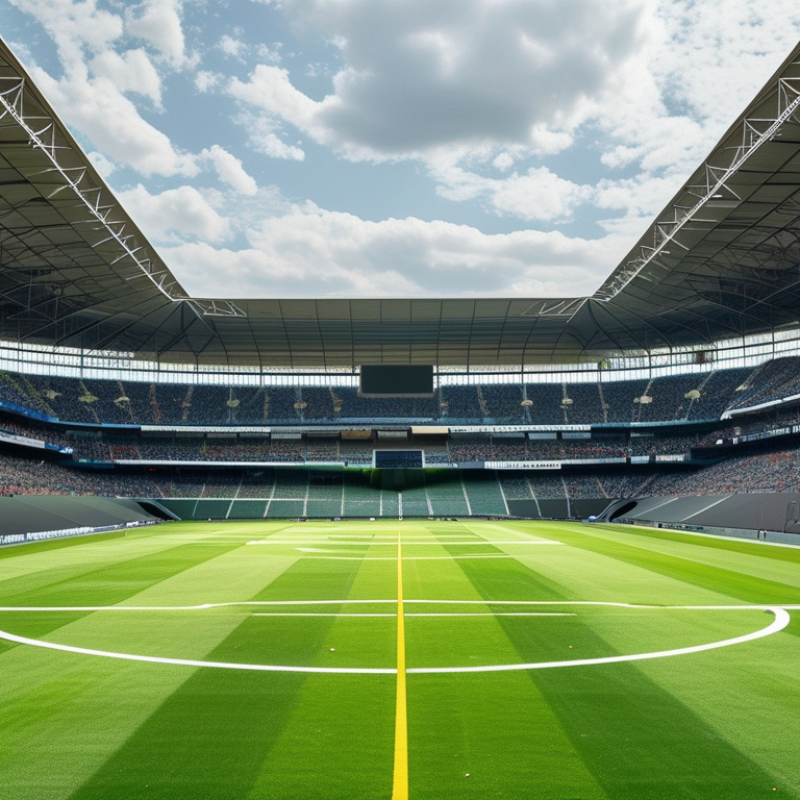
A standout soccer ground supplier does more than ship turf and goal frames. It understands player movement, rainfall patterns, and early-morning maintenance routines. Experienced suppliers inspect soil, drainage routes, local weather, and expected usage before recommending a system. They measure ball roll, surface hardness, seam strength, and water discharge. Small details matter. A field that looks excellent on delivery may fail after one wet season.
Professional knowledge appears in the specification. Reliable suppliers explain fiber type, infill depth, shock-pad performance, UV resistance, and maintenance frequency in plain language. They provide test records, installation drawings, product traceability, and realistic service schedules. Independent testing and clear warranty terms strengthen authority, but paperwork alone proves little. Site supervision matters. So does training the local crew to brush, clean, repair, and record wear correctly.
Worldwide capability also means adapting without pretending every market is identical. A supplier should adjust designs for heat, frost, heavy rainfall, school use, or community tournaments. Local partners can shorten response times, though their skills must be checked carefully. No supplier gets every project right. I would question any company promising zero maintenance or a permanent surface. Honest communication includes risks, replacement cycles, and the cost of mistakes. References from comparable fields, direct technical answers, and post-installation support reveal more than polished brochures. The strongest supplier remains present when the opening ceremony ends.
Leading soccer ground suppliers offer more than turf installation. They begin with a site assessment, measuring soil strength, slope, drainage, and daily usage. Experienced teams review local rainfall patterns before recommending natural grass, hybrid turf, or synthetic surfaces. This prevents expensive choices that look attractive but perform poorly after heavy play.
Design support usually includes pitch dimensions, sub-base construction, irrigation, fencing, dugouts, and spectator access. Reliable suppliers provide detailed drawings and clear material specifications. They also coordinate excavation, shock-pad installation, line marking, and goal anchoring. Small details matter. Poor drainage can leave standing water near the penalty area after one storm.
Professional suppliers test surface firmness, ball roll, traction, and shock absorption before handover. Some provide lighting plans, maintenance equipment, seasonal grooming, and staff training. A useful service includes written maintenance schedules, spare materials, inspection records, and responsive repair support. Warranties should explain coverage, exclusions, and expected service life in plain language.
No playing surface stays perfect. Weather, footwear, and heavy training gradually change performance. Suppliers with practical experience should acknowledge these limits instead of promising effortless durability. Clients can request references, independent test results, and evidence from comparable facilities. A careful supplier remains involved after installation, although some aftercare programs still need clearer response times.
Ten notable soccer ground suppliers stand out through different strengths. A German engineering supplier focuses on drainage systems for wet climates. A Dutch specialist develops hybrid turf for heavy training schedules. A British contractor is known for renovating compact community pitches. An Italian manufacturer supplies shock pads with precise impact testing. A Spanish provider combines irrigation design with water-saving controls.
A North American supplier builds durable artificial fields for schools and municipal venues. An Australian company adapts surfaces to intense sunlight and seasonal heat. A Japanese supplier emphasizes accurate line marking and consistent ball response. A South Korean manufacturer offers modular systems for indoor soccer facilities. A Middle Eastern contractor manages large-scale stadium grounds under demanding weather conditions.
Experience matters beyond product brochures. Site surveys should examine soil, rainfall, usage hours, and maintenance skills. Independent laboratory reports can verify shock absorption, traction, drainage, and fiber resilience. Supplier references also deserve careful checking. Ask for fields operating after several seasons, not only new installations. A polished sample can mislead.
Small details matter.
One weakness appears often: suppliers sometimes underestimate local maintenance budgets. A cheaper installation may create higher repair costs later. Reliable companies explain limitations, provide installation records, and document maintenance schedules clearly. Their technical teams should also respond when grass settles unevenly or drainage slows after heavy rain. Good judgment comes from comparing evidence, field performance, and practical support rather than trusting impressive claims alone.
Reference dimensions for comparing soccer ground design, construction, surfacing, and renovation capabilities. The figures are official pitch-size ranges from the International Football Association Board and do not represent company or brand data.
Standard field dimensions: touchline length 90–120 m and goal-line width 45–90 m. For international matches, the recommended ranges are 100–110 m and 64–75 m respectively.
Global standards make soccer ground construction more than a surface choice. FIFA’s Quality Programme recommends a 105-by-68-metre pitch for top-level international matches. Suppliers must also control drainage, surface firmness, ball roll, shock absorption, and rotational resistance. These details affect player safety and match consistency.
A reliable design begins below the grass. Engineers should inspect soil strength, groundwater, rainfall patterns, and maintenance capacity. The FIFA Quality Programme Handbook requires football turf systems to undergo laboratory and field testing. Tests include water infiltration, seam strength, traction, and surface interaction. Independent testing matters. Supplier claims alone are not enough.
Climate changes the calculation. A wet coastal site may need deeper drainage layers, while a dry region may require efficient irrigation and drought-tolerant grass. UEFA’s Stadium Infrastructure Regulations also stress pitch quality, maintenance, and safe playing conditions for professional venues. Yet many projects still overvalue installation cost. That assumption deserves challenge. A cheaper field can demand more repairs, water, and labor within one season. Practical suppliers should provide construction drawings, test certificates, maintenance schedules, and realistic lifecycle estimates. Small details matter: stable pitch edges, covered drains, even mowing patterns, and clean transitions near touchlines. No design is perfect. Local experience must refine global standards.
10 Best Soccer Ground Suppliers Worldwide
How to Choose the Right Soccer Ground Supplier for Your Project
Choosing a soccer ground supplier requires more than comparing turf prices. Start with the project’s use, climate, drainage, and daily playing hours. A community field needs different materials than a professional training ground. FIFA’s Quality Programme tests football turf for ball roll, shock absorption, vertical deformation, and rotational resistance. Ask suppliers for recent laboratory results, not attractive brochures. Confirm that the proposed system matches the required performance level.
Dimensions also matter. FIFA recommends a 105 by 68 metre field for top-level matches, but local projects may require smaller layouts. Review the full construction system, including sub-base, shock pad, infill, seams, irrigation, and maintenance equipment. A cheaper surface can become expensive when drainage fails after heavy rain. Request references for similar soil and weather conditions. Visit one completed site if possible. Photos can hide uneven seams. They often do.
Tips: Compare lifecycle cost, not only installation cost. Ask who repairs damaged areas and how quickly parts arrive. Check warranty exclusions carefully. Review independent test dates and maintenance records. The supplier should explain cleaning frequency, infill replacement, and expected playing hours. Industry guidance from the FIFA Football Turf Handbook supports regular performance checks, yet many buyers still treat maintenance as an afterthought. That is an easy mistake to repeat. Include measurable service obligations in the contract, and leave room for seasonal inspections.
| No. | Evaluation Dimension | Evidence-Based Benchmark | What the Supplier Should Provide | Suggested Weight | Verification Method |
|---|---|---|---|---|---|
| 1 | Compliance with Football Field Dimensions | For international matches, the playing field is generally 100–110 m long and 64–75 m wide. A commonly used professional reference size is 105 × 68 m. | A dimensioned site plan showing the playing area, safety zones, runoff areas, goals and line markings. | 10% | Review drawings and conduct an on-site measurement. |
| 2 | Surface System Suitability | Outdoor football surfaces may use natural turf, hybrid turf or synthetic turf. Synthetic sports surfaces should be assessed as complete systems rather than by carpet appearance alone. | A complete specification covering carpet, backing, infill, shock pad, seams, sub-base and drainage interface. | 12% | Request product samples, technical datasheets and a system build-up drawing. |
| 3 | Testing and Performance Documentation | EN 15330-1 specifies performance requirements for synthetic surfaces used for outdoor sports, including football applications. | Current independent laboratory reports for shock absorption, vertical deformation, ball interaction, traction, water permeability and durability. | 15% | Check report dates, tested product codes and laboratory details. |
| 4 | Drainage and Sub-Base Engineering | Drainage performance depends on the entire construction assembly, including soil conditions, gradients, sub-base materials, lateral drains and outlet capacity. | A site drainage assessment, permeability information, falls plan, drainage layout and construction method statement. | 14% | Review geotechnical data and require a drainage design signed by a qualified engineer. |
| 5 | Climate and Site Adaptability | Rainfall, freeze–thaw cycles, heat, ultraviolet exposure, wind, irrigation water quality and field usage all affect surface selection and service life. | A climate-specific specification, installation limits, temperature guidance and maintenance recommendations. | 8% | Compare the proposed system with local weather and soil conditions. |
| 6 | Installation Capability | Installation quality affects seam strength, line accuracy, flatness, infill distribution, drainage and long-term playing performance. | A detailed program covering sub-base preparation, carpet installation, seam bonding, line installation, infill application and handover testing. | 12% | Inspect previous installations and verify qualified installation personnel. |
| 7 | Durability and Warranty Terms | Service life depends on usage intensity, maintenance, ultraviolet exposure, climate, infill management and installation quality; no universal service-life period applies to every field. | A written warranty defining covered defects, exclusions, usage assumptions, inspection requirements and remedies. | 10% | Compare warranty wording rather than comparing duration alone. |
| 8 | Maintenance and Operational Support | Synthetic fields require regular brushing, debris removal, infill redistribution and periodic performance inspections. Natural turf requires mowing, irrigation, aeration and renovation. | A site-specific maintenance schedule, equipment list, training plan, inspection frequency and replacement-material strategy. | 9% | Request a lifecycle maintenance plan and annual operating-cost estimate. |
| 9 | Health, Safety and Environmental Records | Infill and construction materials should be supported by safety data, material declarations and applicable local regulatory documentation. | Safety data sheets, material composition information, recycled-content declarations where applicable and disposal guidance. | 5% | Have documents reviewed by the project consultant or local authority. |
| 10 | Total Cost of Ownership and Local Service | The lowest purchase price may not be the lowest project cost after freight, civil works, installation, maintenance, repairs, replacement materials and end-of-life treatment are included. | A transparent quotation, delivery schedule, spare-material policy, local response plan and lifecycle cost estimate. | 5% | Compare at least three equivalent, fully itemized proposals. |
We use cookies on our website to give you an improved browser experience. View our Privacy Policy for more information. Please make your selection to opt in or out of ALL cookies here: Accept or Decline
Do you consent to the use of ALL cookies?
901 2nd Court West
Birmingham, AL 35204
Sales: 866.481.4036
Logistics/Ops: 866.481.4036
2101 Dralle Road
University Park, IL 60466
Sales: 708.813.9070
Logistics/Ops: 708.235.4200
400 E. 13th Street
Little Rock, AR 72114
Sales: 866.760.5344
Logistics/Ops: 866.760.5344
225 Collins Road
Elkhart, IN 46515
Sales: 574.295.0214
Logistics/Ops: 574.607.4611
601 Berryman Pike
Tipton, IN 46072
Sales: 800.897.7591
Logistics/Ops: 800.897.7591
3900 Uvalda Street
Denver, CO 80239
Sales: 303.706.8000
Ops/Logistics: 303.576.8398
510 3rd Street E
Milan, IL 61264
Sales: 800.322.1052
Logistics/Ops: 800.322.1052
1660 E. Aurora
Des Moines, IA 50313
Sales: 800.671.1660
Logistics: 800.671.1660
86554 Gene Lasserre Blvd.
Yulee, FL 32097
Sales: 904.253.3060
Logistics/Ops: 904.225.3000
694 S.E. County Road 245
Lake City, FL 32025
Sales: 800.727.6706
Logistics/Ops: 386.752.7412
210 Neptune Road
Auburndale, FL 33823
Sales: 863.967.1131
Logistics/Ops: 863.777.9814
4601 McCoy Drive
Pensacola, FL 32503
Sales: 850.308.7030
Logistics/Ops: 850.434.5502
815 South 56th Street
Tampa, FL 33619
Sales: 813.302.1940
Logistics/Ops: 813.621.1352
200 Hosea Road
Lawrenceville, GA 30046
Sales: 770.953.7575
Logistics/Ops: 770.513.6000
Branch Product Guide
Branch Line Card
Moulding Offering
Cedar Offering
Column Offering
8173 Hwy. 165 North
Monroe, LA 71211
Sales: 800.256.4165
Logistics/Ops: 800.256.4165
508 Warren Avenue
Portland, ME 04103
Sales: 207.888.2331
Logistics/Ops: 207.797.6565
4300 Georgia Pacific Blvd.
Frederick, MD 21704
Sales: 301.798.7474
Logistics/Ops: 301.874.8000
419 Maple Street
Bellingham, MA 02019
Sales: 508.449.0535
Logistics/Ops: 508.966.5500
825 Buchanan Ave SW
Grand Rapids, MI 49507
Sales: 877.800.1180
Logistics/Ops: 616.278.0909
995 Pacific St. NW
Aitkin, MN 56431
Sales: 800.432.3727
Logistics/Ops: 218.212.7770
1102 Port Terminal Drive
Duluth, MN 55802
Sales: 800.951.9899
Logistics/Ops: 800.851.9899
9110 83rd Ave. North
Brooklyn Park, MN 55445
Sales: 763.425.0204
Logistics/Ops: 763.425.0204
910 E. Railroad Street
Long Beach, MS 39560
Sales: 866.535.4135
Logistics/Ops: 228.205.2400
1727 Warren Street
North Kansas City, MO 64116
Sales: 800.621.2611
Logistics/Ops: 800.621.2611
2123 North Golden
Springfield, MO 65803
Sales: 800.375.7891
Logistics/Ops: 800.375.7891
13860 Corp. Woods Trail
Bridgeton, MO 63044
Sales: 314.209.0800
Logistics/Ops: 314.209.0800
1109 South 19th Street
Omaha, NE 68108
Sales: 800.489.6637
Logistics/Ops: 800.489.6637
1 Luger Road
Denville, NJ 07834
Sales: 973-339-3539
Logistics/Ops: 973.625.1461
3720 Jeffrey Blvd.
Blasdell, NY 14219
Sales: 716.235.5989
Logistics/Ops: 716.825.6557
319 Yaphank Ave.
Yaphank, NY 11980
Sales: 631.358.5714
Logistics/Ops: 631.924.7401
3300 Parkside Drive
Charlotte, NC 28208
Sales: 800.839.2588
Logistics/Ops: 704.394.3172
1712 East D Street
Butner, NC 27509
Sales: 984.389.8200
Logistics/Ops: 919.575.3700
128 Foothills Drive
Statesville, NC 28687
Sales: 800.222.1414
Logistics/Ops: 704.394.3172
550 Munroe Falls Rd.
Tallmadge, OH 44278
Sales: 330.357.4506
Logistics/Ops: 330.794.1141
10347 Toebben Dr.
Independence, KY 41051
Sales: 859.298.3926
Logistics/Ops: 859.746.2250
450 N. MacArthur
Oklahoma City, OK 73127
Sales: 800.375.6025
Logistics/Ops: 800.375.6025
1680 North Aspen
Broken Arrow, OK 74012
Sales: 918.272.2212
Logistics/Ops: 918.272.2212
522 Bridge Street
Hunker, PA 15639
Sales: 878.217.2001
Logistics/Ops: 724.925.7285
4290 Atlanta Street
Charleston, SC 29418
Sales: 843.371.1420
Logistics/Ops: 843.554.8192
1040 S. Industrial Dr.
Erwin, TN 37650
Sales: 423.641.1005
Logistics/Ops: 423.742.5911
4287 Pilot Drive
Memphis, TN 38118
Sales: 901.365.2101
Logistics/Ops: 901.365.2101
700 Myatt Drive
Madison, TN 37115
Sales: 615.327.9547
Logistics/Ops: 629.777.4949
4747 Mark IV Parkway
Fort Worth, TX 76106
Sales: 866.323.5117
Logistics/Ops: 817.625.9091
6990 Market Avenue
El Paso, TX 79915
Sales: 915.778.6356
Logistics/Ops: 915.265.7200
2502 Wilson Road
Harlingen, TX 78552
Sales: 800.580.6711
Logistics/Ops: 800.580.6711
10,000 North Loop East
Houston, TX 77029
Sales: 713.921.1977
Logistics/Ops: 713.675.3544
702 East 44th St.
Lubbock, TX 79404
Sales: 866.454.6010
Logistics/Ops: 866.454.6010
535 N. WW White Road
San Antonio, TX 78219
Sales: 800.284.0488
Logistics/Ops: 210.333.8112
142 Pine Haven Shores Rd.
Shelburne, VT 05482
Sales: 802.800.2540
Logistics/Ops: 802.985.2512
4700 Bethlehem Road,
Richmond, VA 23230
Sales: 804.201.2400
Logistics/Ops: 804.342.1161
4516 N Barker Road
Spokane Valley, WA 99027
Phone: 509.892.9420
Toll free: 800.728.6157
8365 N. 76th Street
Milwaukee, WI 53223
Sales: 800.356.9245
Logistics/Ops: 800.356.9245
312 S. Chester Street
Sparta, WI 54656
Sales: 800.362.5864
Logistics/Ops: 800.362.5864
899 Grossman Drive
Schofield, WI 54476
Sales: 800.472.0017
Logistics/Ops: 800.472.0017
