
We use cookies on our website to give you an improved browser experience. View our Privacy Policy for more information. Please make your selection to opt in or out of ALL cookies here: Accept or Decline
Packaging lines are moving faster, but speed alone does not define a high speed packaging machine. Product handling, sealing accuracy, changeover time, safety, and waste control matter just as much. A machine running at 300 packs per minute may still underperform if damaged products appear after every shift.
PMMI’s 2024 State of the Industry report valued U.S. packaging machinery shipments at approximately $10.2 billion in 2023. The report also identified automation, labor shortages, sustainability, and digital integration as major market influences. Smithers forecasts continued growth in global packaging demand through 2028, although growth will differ across food, beverage, pharmaceutical, and consumer goods applications. These figures show opportunity, not certainty. Every factory has different products, operators, floor space, and maintenance limits.
Jorge Izquierdo, Vice President of Market Development at PMMI, has stated, “Automation is becoming a necessity, not a luxury, for many packaging operations.” His observation reflects what manufacturers often see beside the conveyor: fewer available workers, tighter delivery windows, and rising expectations for consistent output. Still, faster equipment can create new problems when feeding systems, inspection devices, or end-of-line packaging cannot keep pace. That is why this guide examines ten high speed packaging machine types through practical criteria, including throughput, flexibility, setup time, product protection, and total operating cost. The rankings are useful, but not final. A machine that suits snack pouches may be unsuitable for fragile bottles or irregular cartons.
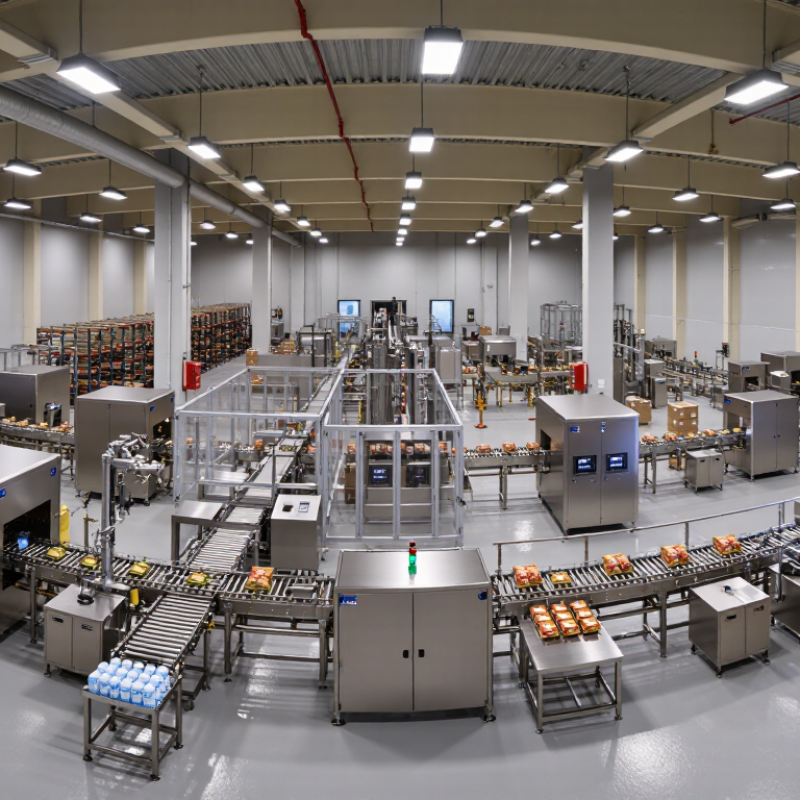
A high-speed packaging machine is defined by controlled output, not by a headline cycle rate. It must maintain speed while protecting seal quality, product accuracy, and operator safety. In practical production, throughput is measured as saleable packs per minute. Downtime, rejects, and changeover losses matter just as much.
PMMI’s 2024 State of the Industry report identifies automation, labor shortages, and operational efficiency as major packaging investment drivers. These findings explain why modern machines need sensors, automatic adjustments, and clear performance data. A machine producing 300 packs per minute may perform poorly if frequent jams reduce its actual output. The real test is sustained OEE: availability, performance, and quality.
Speed also depends on the package format. Flexible pouches, cartons, bottles, trays, and cases require different feeding and sealing systems. Servo-driven motion can improve timing, while vision inspection helps remove damaged or incorrectly filled packs. Fast changeovers are equally important. A ten-minute format change may create more value than an extra twenty cycles per minute.
Smithers’ market research continues to link packaging growth with automation and higher production efficiency. Still, speed can create hidden costs. More vibration may increase wear, noise, and maintenance demands. I have found that the fastest setting is rarely the best setting. A reliable machine runs quickly, consistently, and safely across a full production shift. That distinction separates genuine high-speed equipment from impressive specifications.
The ten main types of high-speed packaging machines serve different products and production goals. Vertical form-fill-seal machines create bags from film, while horizontal flow wrappers seal products in a continuous film tube. Premade pouch machines open, fill, and seal ready-made bags. Rotary filling and sealing machines handle liquids, powders, and granules through timed stations. Cup filling machines measure products into cups and apply lidding film. Bottle filling and capping systems manage liquids with controlled dosing. Cartoning machines place products into folded cartons. Case packers load cartons into shipping cases. Blister packaging machines seal products between formed plastic and backing material. Palletizing machines arrange finished cases for transport.
In practical production, speed is only one measure. A machine running at 180 packs per minute may lose output during frequent changeovers. Servo controls can improve timing, while vision sensors can detect poor seals, missing labels, or uneven fills. Stainless steel contact parts support easier cleaning in food and pharmaceutical environments. Operators should also check film width, product temperature, pouch stiffness, and available floor space before choosing equipment.
I have seen small design details create large delays. Narrow access doors slow cleaning. Weak conveyors cause product jams. Poor training creates avoidable waste. Not every “high-speed” system performs well with fragile or irregular products. Trial runs with real materials remain essential. Records of reject rates, maintenance time, and changeover performance provide more dependable evidence than a catalog specification. In some facilities, a slightly slower machine delivers better output because it stops less often.
Representative maximum throughput by machine type, measured in packages per minute
Horizontal form-fill-seal and vertical form-fill-seal systems can reach very high speeds for flexible products, while cartoners, case packers, and tray formers are commonly selected for secondary packaging. Actual output depends on product characteristics, package size, filling accuracy, materials, and line configuration.
Top 10 High Speed Packaging Machine Types
High-speed packaging lines match the product, film, and required seal. Vertical form-fill-seal machines create bags from a film roll, then dose snacks, grains, or powders. Horizontal flow wrappers seal products between two film layers, often for bakery items and personal-care goods. Premade pouch machines open, fill, and seal pouches for sauces, pet food, and household products. Stick-pack machines form narrow sachets for powders, while sachet machines handle wider single-use portions. Both depend on precise dosing and stable film tension.
Cartoners erect cartons, insert products, and close flaps for pharmaceuticals and packaged food. Case packers load cartons into shipping cases, using robotic or continuous-motion systems. Tray formers fold flat blanks around bottles, cans, or produce. Wraparound case packers fold corrugated board tightly around grouped products. Palletizing robots arrange cases in programmed layers, then prepare loads for warehouse movement. Stretch wrappers rotate pallets or wrapping arms around them, protecting goods from dust and shifting.
Smithers projects the global packaging market will surpass 1 trillion dollars by 2028, increasing pressure for reliable automation. PMMI industry research also links labor shortages with stronger investment in robotics and integrated controls. In practice, speed alone is not enough. A line running 300 bags per minute may waste material when sensors drift. That detail is often underestimated. Product shape, humidity, seal temperature, and changeover time can reduce real output. A careful factory trial remains more trustworthy than a catalogue rating.
Top 10 High Speed Packaging Machine Types?
Key Factors for Comparing Packaging Machine Types
When comparing the top ten high speed packaging machine types, speed is only one measure. Vertical and horizontal form-fill-seal machines suit different product shapes and film paths. Rotary fillers can deliver impressive output, while intermittent systems often offer better control during changeovers. Sachet, stick-pack, flow-wrap, cartoning, case-packing, thermoforming, and tray-sealing machines also require different feeding methods. Shorter runs need flexibility.
I compare machines through six practical questions: What is the target output? How often will products change? Can the equipment handle fragile items without crushing them? How much floor space is available? Operators should also examine seal quality, material waste, cleaning access, noise, safety guarding, and spare-part availability. A fast machine is not efficient if it stops every hour. That happens.
In production trials, I watch the first ten minutes and the final ten minutes of a run. Small alignment errors often appear after heat builds around the sealing jaws. I also measure changeover time with a real operator, not only an engineer. I once overvalued maximum speed and underestimated feeding complexity. The lesson was uncomfortable but useful. Total cost includes labor, energy, film loss, training, maintenance, and rejected packs. Controls should provide clear alarms and usable production data. A technically advanced machine can still frustrate people when its interface is unclear. Witness the changeover closely.
Comparative overview of commonly used high-speed packaging machine types. Speed ranges are indicative operating ranges and vary according to product characteristics, package dimensions, sealing method, material, and the number of lanes.
| Machine Type | Typical Speed Range | Common Package Formats | Typical Products | Main Packaging Materials | Key Advantages | Main Limitations | Automation Potential |
|---|---|---|---|---|---|---|---|
| Vertical Form-Fill-Seal (VFFS) | 30–120 bags/min | Pillow bags, gusseted bags, block-bottom bags, stick packs | Snacks, grains, powders, frozen foods, pet food | Heat-sealable laminated films, polyethylene, polypropylene | Compact footprint; suitable for many free-flowing and powdered products; easy format changes on configurable systems | Product flow and film properties can strongly affect accuracy and sealing performance | ★★★★★ |
| Horizontal Form-Fill-Seal (HFFS) | 30–200 packs/min | Three-side-seal pouches, sachets, flat packs, shaped pouches | Confectionery, personal care items, medical products, small consumer goods | Heat-sealable flexible laminates and coated films | Good presentation quality; precise control of pack length; suitable for flat and shaped packs | Usually requires more floor space and may have longer changeover times than simpler baggers | ★★★★★ |
| Premade Pouch Filling and Sealing | 15–60 pouches/min | Stand-up pouches, flat pouches, zipper pouches, spouted pouches | Pet treats, sauces, powders, cosmetics, household products | Premade laminated pouches, foil laminates, recyclable flexible structures | High-quality graphics; supports zippers, spouts, special shapes, and multiple filling technologies | Premade pouches generally cost more and require pouch feeding and alignment control | ★★★★☆ |
| Multi-Lane Sachet Machine | 120–600 sachets/min | Flat sachets, stick sachets, four-side-seal sachets | Condiments, instant beverages, pharmaceuticals, personal care liquids | Paper laminates, plastic laminates, foil-based films | Very high output from multiple lanes; efficient for small-dose products and portion packs | More complex setup and cleaning; a fault in a shared system can affect multiple lanes | ★★★★★ |
| Stick Pack Machine | 60–600 sticks/min | Long narrow stick packs, multi-lane sachets | Coffee, sugar, drink powders, nutraceuticals, liquid gels | Heat-sealable laminate films, foil laminates, high-barrier films | Efficient portion control; low material use per dose; suitable for high-volume products | Best suited to narrow product and format specifications; powder dust can affect seals | ★★★★★ |
| Flow Wrapper | 30–200 packs/min | Fin-seal pillow packs, multipacks, collated packs | Bakery products, bars, produce, hardware, medical components | Polypropylene, polyethylene, laminates, recyclable mono-material films | Continuous motion; attractive horizontal presentation; handles individually fed products efficiently | Requires consistent product spacing and orientation; less suitable for loose powders or liquids | ★★★★★ |
| Thermoform-Fill-Seal Machine | 10–40 cycles/min | Vacuum packs, MAP trays, blister-style cavities, peelable trays | Meat, cheese, ready meals, medical devices, technical parts | Thermoformable films, lidding films, barrier webs, recyclable rigid films | Forms the package in-line; supports vacuum and modified-atmosphere packaging; efficient material handling | Higher capital cost; tooling and changeovers can be substantial; product loading may limit output | ★★★★☆ |
| Blister Packaging Machine | 10–60 cycles/min | Thermoformed blisters, cold-form blisters, calendar blister cards | Tablets, capsules, medical devices, small consumer goods | PVC, PET, polypropylene, aluminum cold-form foil, lidding foil | Strong product visibility and protection; individual cavity dosing; tamper-evident formats are available | Primarily designed for rigid or semi-rigid unit-dose formats; tooling is product-specific | ★★★★☆ |
| Cartoning Machine | 30–200 cartons/min | Vertical cartons, horizontal cartons, tuck-end cartons, glue-sealed cartons | Pharmaceuticals, food products, cosmetics, household goods | Paperboard cartons, folding boxboard, specialty coated board | Professional retail presentation; integrates well with leaflet insertion, coding, weighing, and serialization systems | Needs accurately erected cartons and consistent product feeding; carton quality affects reliability | ★★★★★ |
| Case Packer | 5–30 cases/min | Regular slotted cases, wraparound cases, trays, shelf-ready cases | Bottles, cans, cartons, bags, multipacks | Corrugated board, kraft board, recycled fiberboard | Automates secondary packaging; reduces manual handling; suitable for robotic and conveyor integration | Output is measured in cases rather than individual packs; case patterns and product stability affect performance | ★★★★★ |
Comparison factors to verify before selection: required throughput, product characteristics, package size range, material compatibility, sealing requirements, changeover frequency, hygiene standards, labor availability, available floor space, integration with filling and end-of-line equipment, inspection requirements, and total cost of ownership.
Top 10 High Speed Packaging Machine Types
How to Select the Right High-Speed Packaging Machine
The ten common types include vertical form-fill-seal, horizontal form-fill-seal, premade pouch, sachet, thermoforming, cartoning, case packing, wrapping, labeling, and tray sealing machines. Selection should begin with the product, not the machine’s advertised speed. Powder, liquid, fragile goods, and irregular items behave differently during feeding and sealing.
I have seen production teams choose a fast machine, then struggle with frequent jams. Test the actual product before signing a purchase agreement. Check its flow, moisture, temperature, size, and surface texture. Measure the required pack length and seal width. A machine running 180 packs per minute may deliver less after changeovers, cleaning, and minor stops.
Real experience matters here. Request factory trials, sample packs, maintenance records, and operator training details. Confirm that contact surfaces use suitable materials and that guarding, emergency stops, and electrical systems meet local requirements. Review spare-part access and service response times. These details often affect uptime more than headline speed.
Keep the layout practical. Allow space for film rolls, product loading, inspection, and safe cleaning. Automation can reduce labor, but it also adds sensors and control points. That is not always better. A simpler system may suit a stable product, while frequent product changes require flexible tooling. I would also budget for mistakes, because the first production plan is rarely perfect.
We use cookies on our website to give you an improved browser experience. View our Privacy Policy for more information. Please make your selection to opt in or out of ALL cookies here: Accept or Decline
Do you consent to the use of ALL cookies?
901 2nd Court West
Birmingham, AL 35204
Sales: 866.481.4036
Logistics/Ops: 866.481.4036
2101 Dralle Road
University Park, IL 60466
Sales: 708.813.9070
Logistics/Ops: 708.235.4200
400 E. 13th Street
Little Rock, AR 72114
Sales: 866.760.5344
Logistics/Ops: 866.760.5344
225 Collins Road
Elkhart, IN 46515
Sales: 574.295.0214
Logistics/Ops: 574.607.4611
601 Berryman Pike
Tipton, IN 46072
Sales: 800.897.7591
Logistics/Ops: 800.897.7591
3900 Uvalda Street
Denver, CO 80239
Sales: 303.706.8000
Ops/Logistics: 303.576.8398
510 3rd Street E
Milan, IL 61264
Sales: 800.322.1052
Logistics/Ops: 800.322.1052
1660 E. Aurora
Des Moines, IA 50313
Sales: 800.671.1660
Logistics: 800.671.1660
86554 Gene Lasserre Blvd.
Yulee, FL 32097
Sales: 904.253.3060
Logistics/Ops: 904.225.3000
694 S.E. County Road 245
Lake City, FL 32025
Sales: 800.727.6706
Logistics/Ops: 386.752.7412
210 Neptune Road
Auburndale, FL 33823
Sales: 863.967.1131
Logistics/Ops: 863.777.9814
4601 McCoy Drive
Pensacola, FL 32503
Sales: 850.308.7030
Logistics/Ops: 850.434.5502
815 South 56th Street
Tampa, FL 33619
Sales: 813.302.1940
Logistics/Ops: 813.621.1352
200 Hosea Road
Lawrenceville, GA 30046
Sales: 770.953.7575
Logistics/Ops: 770.513.6000
Branch Product Guide
Branch Line Card
Moulding Offering
Cedar Offering
Column Offering
8173 Hwy. 165 North
Monroe, LA 71211
Sales: 800.256.4165
Logistics/Ops: 800.256.4165
508 Warren Avenue
Portland, ME 04103
Sales: 207.888.2331
Logistics/Ops: 207.797.6565
4300 Georgia Pacific Blvd.
Frederick, MD 21704
Sales: 301.798.7474
Logistics/Ops: 301.874.8000
419 Maple Street
Bellingham, MA 02019
Sales: 508.449.0535
Logistics/Ops: 508.966.5500
825 Buchanan Ave SW
Grand Rapids, MI 49507
Sales: 877.800.1180
Logistics/Ops: 616.278.0909
995 Pacific St. NW
Aitkin, MN 56431
Sales: 800.432.3727
Logistics/Ops: 218.212.7770
1102 Port Terminal Drive
Duluth, MN 55802
Sales: 800.951.9899
Logistics/Ops: 800.851.9899
9110 83rd Ave. North
Brooklyn Park, MN 55445
Sales: 763.425.0204
Logistics/Ops: 763.425.0204
910 E. Railroad Street
Long Beach, MS 39560
Sales: 866.535.4135
Logistics/Ops: 228.205.2400
1727 Warren Street
North Kansas City, MO 64116
Sales: 800.621.2611
Logistics/Ops: 800.621.2611
2123 North Golden
Springfield, MO 65803
Sales: 800.375.7891
Logistics/Ops: 800.375.7891
13860 Corp. Woods Trail
Bridgeton, MO 63044
Sales: 314.209.0800
Logistics/Ops: 314.209.0800
1109 South 19th Street
Omaha, NE 68108
Sales: 800.489.6637
Logistics/Ops: 800.489.6637
1 Luger Road
Denville, NJ 07834
Sales: 973-339-3539
Logistics/Ops: 973.625.1461
3720 Jeffrey Blvd.
Blasdell, NY 14219
Sales: 716.235.5989
Logistics/Ops: 716.825.6557
319 Yaphank Ave.
Yaphank, NY 11980
Sales: 631.358.5714
Logistics/Ops: 631.924.7401
3300 Parkside Drive
Charlotte, NC 28208
Sales: 800.839.2588
Logistics/Ops: 704.394.3172
1712 East D Street
Butner, NC 27509
Sales: 984.389.8200
Logistics/Ops: 919.575.3700
128 Foothills Drive
Statesville, NC 28687
Sales: 800.222.1414
Logistics/Ops: 704.394.3172
550 Munroe Falls Rd.
Tallmadge, OH 44278
Sales: 330.357.4506
Logistics/Ops: 330.794.1141
10347 Toebben Dr.
Independence, KY 41051
Sales: 859.298.3926
Logistics/Ops: 859.746.2250
450 N. MacArthur
Oklahoma City, OK 73127
Sales: 800.375.6025
Logistics/Ops: 800.375.6025
1680 North Aspen
Broken Arrow, OK 74012
Sales: 918.272.2212
Logistics/Ops: 918.272.2212
522 Bridge Street
Hunker, PA 15639
Sales: 878.217.2001
Logistics/Ops: 724.925.7285
4290 Atlanta Street
Charleston, SC 29418
Sales: 843.371.1420
Logistics/Ops: 843.554.8192
1040 S. Industrial Dr.
Erwin, TN 37650
Sales: 423.641.1005
Logistics/Ops: 423.742.5911
4287 Pilot Drive
Memphis, TN 38118
Sales: 901.365.2101
Logistics/Ops: 901.365.2101
700 Myatt Drive
Madison, TN 37115
Sales: 615.327.9547
Logistics/Ops: 629.777.4949
4747 Mark IV Parkway
Fort Worth, TX 76106
Sales: 866.323.5117
Logistics/Ops: 817.625.9091
6990 Market Avenue
El Paso, TX 79915
Sales: 915.778.6356
Logistics/Ops: 915.265.7200
2502 Wilson Road
Harlingen, TX 78552
Sales: 800.580.6711
Logistics/Ops: 800.580.6711
10,000 North Loop East
Houston, TX 77029
Sales: 713.921.1977
Logistics/Ops: 713.675.3544
702 East 44th St.
Lubbock, TX 79404
Sales: 866.454.6010
Logistics/Ops: 866.454.6010
535 N. WW White Road
San Antonio, TX 78219
Sales: 800.284.0488
Logistics/Ops: 210.333.8112
142 Pine Haven Shores Rd.
Shelburne, VT 05482
Sales: 802.800.2540
Logistics/Ops: 802.985.2512
4700 Bethlehem Road,
Richmond, VA 23230
Sales: 804.201.2400
Logistics/Ops: 804.342.1161
4516 N Barker Road
Spokane Valley, WA 99027
Phone: 509.892.9420
Toll free: 800.728.6157
8365 N. 76th Street
Milwaukee, WI 53223
Sales: 800.356.9245
Logistics/Ops: 800.356.9245
312 S. Chester Street
Sparta, WI 54656
Sales: 800.362.5864
Logistics/Ops: 800.362.5864
899 Grossman Drive
Schofield, WI 54476
Sales: 800.472.0017
Logistics/Ops: 800.472.0017
