
We use cookies on our website to give you an improved browser experience. View our Privacy Policy for more information. Please make your selection to opt in or out of ALL cookies here: Accept or Decline
Choosing the right Valve Actuator manufacturer affects uptime, safety, and maintenance costs across industrial systems.
This guide examines ten influential manufacturers worldwide, not merely the most visible names. Our comparison considers product range, torque accuracy, control compatibility, environmental protection, service networks, and documented field experience. We review electric, pneumatic, and hydraulic solutions used in water treatment, energy, chemical processing, and general manufacturing. A strong brand should provide clear datasheets, traceable testing, responsive technical support, and practical spare-parts access. Marketing claims alone are not enough. Real installations matter.
The review also considers how manufacturers handle difficult conditions. Think of salty coastal air, dusty cement plants, repeated cycling, and limited maintenance access. Features such as enclosure ratings, manual overrides, position feedback, diagnostics, and fail-safe performance can influence the final choice. However, no manufacturer leads in every application. That is worth remembering. A compact actuator may suit a small valve, while a high-torque unit may be essential for large dampers or severe-service valves. We present these rankings as a decision aid, rather than an absolute verdict. Information can change as product lines, certifications, and regional support develop. Readers should verify current specifications, local compliance requirements, warranty terms, and lifecycle costs with each supplier. Our aim is practical clarity: identify dependable manufacturers, understand their strengths, and ask better questions before procurement. Even experienced engineers can miss installation details. This guide leaves room for review.
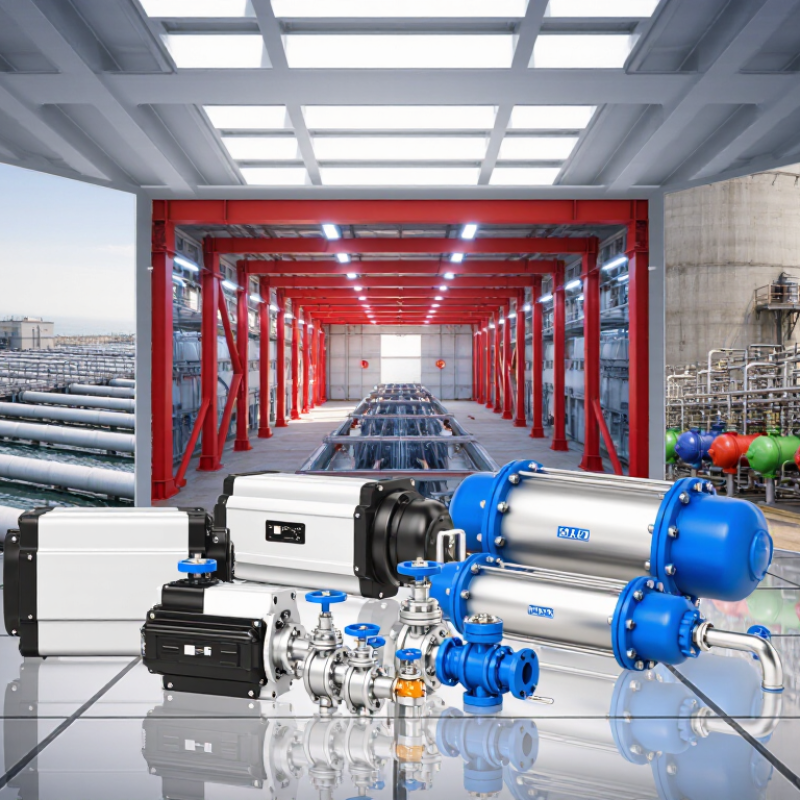
Valve actuators convert control signals into mechanical movement. They open, close, or position valves inside water plants, refineries, power stations, and process facilities. Their role seems simple, but reliable movement depends on several operating details.
Electric actuators suit accurate positioning and controlled environments. Pneumatic units respond quickly and perform well where compressed air is available. Hydraulic actuators deliver high force for large valves. Each type requires correct torque, stroke, speed, and duty-cycle calculations. A quarter-turn valve needs rotational torque, while a gate valve needs linear thrust. Incorrect sizing can cause slow travel, overheating, leakage, or premature failure. Feedback devices also report valve position to control systems, supporting safer and more stable operation. Still, specifications alone do not tell the whole story. Pipe vibration, temperature changes, corrosion, and poor installation can undermine a technically sound selection.
Tips: Check the valve’s actual breakaway torque, not only its normal running torque. Confirm environmental protection, manual override access, and emergency positioning requirements. Inspect mounting alignment during commissioning. Small errors matter. Keep maintenance records detailed, including unusual noise, delayed movement, and repeated limit-switch trips. These observations often reveal developing faults before production is affected. No actuator is perfect. Periodic testing remains essential, especially after process changes or long shutdowns.
This technology-based comparison summarizes the main actuator categories used across industrial systems. Manufacturer and brand names are intentionally excluded.
| No. | Actuator Category | Output Motion | Primary Power Source | Typical Output Range | Control Capability | Typical Fail-Safe Action | Common Valve Applications | Industrial Role | Relevant Standards or Practices |
|---|---|---|---|---|---|---|---|---|---|
| 1 | Electric Quarter-Turn | Rotary, typically 90° | Electric motor | Approximately 10–10,000 N·m | On/off, modulating, position feedback | Optional spring-return or battery-backed positioning | Ball, butterfly and plug valves | Automated flow isolation and throttling where plant electricity is available | IEC 60534 practices; enclosure ratings such as IP65–IP68 may apply |
| 2 | Pneumatic Quarter-Turn | Rotary, typically 90° | Compressed air or gas | Approximately 5–100,000 N·m | On/off; modulating with positioner | Spring-to-close or spring-to-open | Ball, butterfly and plug valves | Fast and reliable emergency isolation in process plants | ISO 5211 mounting; IEC 61508 may apply to safety-related systems |
| 3 | Pneumatic Linear | Linear stroke | Compressed air or gas | Approximately 0.5–100 kN thrust | Modulating with pneumatic positioner | Spring-to-close or spring-to-open | Globe, diaphragm and pinch valves | Precise regulation of pressure, temperature and flow | IEC 60534-6 mounting and control-valve practices |
| 4 | Hydraulic Quarter-Turn | Rotary, typically 90° | Pressurized hydraulic fluid | Approximately 1,000–1,000,000 N·m | On/off and modulating control | Accumulator-based fail position | Large ball, butterfly and trunnion-mounted valves | High-torque operation in pipelines and heavy-duty energy facilities | ISO 5211 interfaces; hazardous-area requirements depend on installation |
| 5 | Hydraulic Linear | Linear stroke | Pressurized hydraulic fluid | Approximately 10–2,000 kN thrust | Position or force control | Accumulator, spring or hydraulic lock | Large globe, gate and control valves | Generates high thrust for large-pressure and high-temperature services | API 6D and pipeline actuator practices may apply |
| 6 | Electric Linear | Linear stroke | Electric motor and screw mechanism | Approximately 0.5–300 kN thrust | On/off, proportional and digital positioning | Optional spring-return or electronic fail position | Globe, gate and diaphragm valves | Clean, accurate automation where compressed air is unavailable | IEC 60534 practices; electrical safety and enclosure standards apply |
| 7 | Electro-Hydraulic | Rotary or linear | Electric motor with hydraulic power unit | Approximately 1,000–1,000,000 N·m or equivalent thrust | Remote, modulating and programmable control | Stored-energy fail-safe positioning | Pipeline, offshore and critical isolation valves | Combines electric supervision with hydraulic high-force performance | IEC 61508 considerations for safety functions; ISO 5211 for rotary mounting |
| 8 | Solenoid-Operated | Usually direct or pilot-controlled linear motion | Electrical coil with process pressure or air | Generally small to medium valve sizes | Fast on/off switching | Normally open or normally closed | Process, utility, gas and instrument valves | Rapid sequencing, interlocking and fluid routing | IEC 60534-related control practices; coil certification depends on hazardous-area classification |
| 9 | Motorized Multi-Turn | Multiple rotary turns | Electric motor and gearbox | Approximately 10–50,000 N·m | On/off, torque-limited and modulating | Configurable fail position; often requires external backup power | Gate, globe and rising-stem valves | Automates valves requiring travel beyond a quarter turn | IEC 60034 motor practices and applicable valve-actuator interface standards |
| 10 | Manual Override Actuator | Rotary or linear with handwheel or lever | Human force; optional powered primary actuator | Application-dependent; sized to valve breakaway load | Local operation and emergency override | Manual positioning during loss of power or control signal | Gate, globe, ball and butterfly valves | Maintains operability during commissioning, maintenance and emergency conditions | ISO 5211 or valve-specific interfaces; guarding and lockout practices may apply |
Choosing among global valve actuator manufacturers requires more than comparing price and product catalogs. Start with torque accuracy, operating speed, duty cycle, and valve compatibility. A suitable actuator should match the valve’s real breakaway torque, not only its normal running torque. In field inspections, poor sizing often appears as overheating, delayed movement, or repeated control alarms. Request load calculations, endurance results, and clear test records.
Reliability also depends on protection and support. Check enclosure ratings, corrosion resistance, emergency operation, and performance across local temperature ranges. Review wiring diagrams, calibration procedures, spare-part availability, and technical training. Manufacturers with traceable quality systems and documented factory testing usually offer stronger confidence. However, published data may not reflect difficult site conditions. Ask for references from comparable industries and operating environments. A perfect scorecard is unrealistic; one overlooked maintenance issue can still affect the entire valve system.
Top 10 Valve Actuator Manufacturers Worldwide
The worldwide top ten valve actuator manufacturers compete through dependable design, precise control, and consistent production quality. Their products serve water treatment, power generation, chemical processing, and oil and gas facilities. A reliable actuator must deliver accurate torque without excessive heat, vibration, or energy use. Small errors can stop a production line.
A practical comparison should examine electric, pneumatic, and hydraulic actuator ranges. Engineers usually check torque output, operating speed, enclosure protection, and manual override options. IP-rated housings help protect equipment from dust and moisture. Fail-safe functions also matter when valves control pressure, steam, or hazardous process fluids. Strong manufacturers document testing, traceability, and service procedures clearly. That builds confidence beyond attractive specifications.
Field experience often reveals more than a catalogue. A quiet actuator may still perform poorly under repeated cycling. A powerful unit may waste energy when control accuracy is weak. Diagnostic feedback, corrosion resistance, and spare-part availability deserve equal attention. International certifications can support credibility, but certification alone does not guarantee good installation results. No ranking is perfect. Weighting reliability over price may overlook smaller manufacturers with clever engineering. Therefore, buyers should compare ten leading manufacturers against actual site conditions, maintenance skills, valve torque requirements, and expected duty cycles. During commissioning, technicians should record cycle time, current draw, air consumption, and emergency response. These details expose weaknesses early. Some evaluation methods remain too dependent on laboratory tests. Real plants are harsher.
Common valve actuator technologies by typical industrial application share
Electric actuators are widely used for precise modulation and automated process control, while pneumatic actuators remain common in fast-response applications. Hydraulic, electro-hydraulic, and manual units are typically selected for high-force, remote, or emergency-duty requirements. The percentages represent an industry-oriented comparative distribution of common application usage rather than individual company market share.
Leading valve actuator manufacturers now combine mechanical strength with digital control. Their product ranges usually include electric, pneumatic, and hydraulic actuators for quarter-turn and linear valves. Electric models support precise positioning, remote operation, and lower on-site emissions. Pneumatic units deliver fast movement in hazardous or high-cycle environments. Hydraulic designs provide high torque for large valves and demanding pressure systems.
Smart positioners add feedback, calibration, and condition monitoring. Many advanced units connect with plant control networks through industrial communication protocols. Built-in diagnostics can identify excessive friction, stalled travel, or unusual cycle times. These details help maintenance teams act before a valve stops production. Still, sensor data is not always perfect. Poor calibration, moisture, and incorrect installation can create misleading alarms.
The leading manufacturers serve oil and gas, water treatment, power generation, chemical processing, mining, food production, pharmaceuticals, and building services. Corrosion-resistant housings suit coastal water plants, while hygienic designs support clean processing lines. Explosion-protected configurations are selected for regulated hazardous areas. High-temperature power facilities need durable seals and carefully tested insulation. A compact actuator may fit a crowded skid, but limited access can complicate repairs. Selection should consider torque margins, duty cycles, ambient temperature, valve type, control signals, and local maintenance skills. Field experience often proves more valuable than a polished specification sheet.
Selecting among the world’s leading valve actuator manufacturers requires more than comparing catalog prices. Start with the valve’s torque, stroke, operating frequency, fluid temperature, and available power. A quarter-turn valve may need different control behavior from a linear globe valve. Ask for sizing calculations, not optimistic labels. Check whether the actuator maintains required torque at low voltage and end-of-cycle conditions. Small details matter.
An experienced manufacturer should explain its test method, duty-cycle rating, enclosure protection, and fail-position performance. Request traceable test records and clear installation drawings. Verify compatibility with your control system, feedback signals, network protocols, and hazardous-area requirements where applicable. Review service coverage before ordering. Spare gears, seals, local technicians, and realistic lead times can prevent a short shutdown from becoming an expensive delay. Talk with users operating similar valves, not only reference sites selected by sales teams.
I would also compare lifecycle evidence. How often do failures occur after commissioning? Can the supplier diagnose a fault remotely? Does it document corrective actions? These questions expose practical reliability better than polished brochures. A manufacturer may offer excellent torque figures yet lack disciplined after-sales support. That is a warning. During evaluation, score technical fit, documentation, testing, support, and total ownership cost separately. Do not let a low purchase price decide the project. I have seen specifications change late because original assumptions were never checked against actual pipe conditions. Revisit those assumptions before signing, and record every unresolved point.
We use cookies on our website to give you an improved browser experience. View our Privacy Policy for more information. Please make your selection to opt in or out of ALL cookies here: Accept or Decline
Do you consent to the use of ALL cookies?
901 2nd Court West
Birmingham, AL 35204
Sales: 866.481.4036
Logistics/Ops: 866.481.4036
2101 Dralle Road
University Park, IL 60466
Sales: 708.813.9070
Logistics/Ops: 708.235.4200
400 E. 13th Street
Little Rock, AR 72114
Sales: 866.760.5344
Logistics/Ops: 866.760.5344
225 Collins Road
Elkhart, IN 46515
Sales: 574.295.0214
Logistics/Ops: 574.607.4611
601 Berryman Pike
Tipton, IN 46072
Sales: 800.897.7591
Logistics/Ops: 800.897.7591
3900 Uvalda Street
Denver, CO 80239
Sales: 303.706.8000
Ops/Logistics: 303.576.8398
510 3rd Street E
Milan, IL 61264
Sales: 800.322.1052
Logistics/Ops: 800.322.1052
1660 E. Aurora
Des Moines, IA 50313
Sales: 800.671.1660
Logistics: 800.671.1660
86554 Gene Lasserre Blvd.
Yulee, FL 32097
Sales: 904.253.3060
Logistics/Ops: 904.225.3000
694 S.E. County Road 245
Lake City, FL 32025
Sales: 800.727.6706
Logistics/Ops: 386.752.7412
210 Neptune Road
Auburndale, FL 33823
Sales: 863.967.1131
Logistics/Ops: 863.777.9814
4601 McCoy Drive
Pensacola, FL 32503
Sales: 850.308.7030
Logistics/Ops: 850.434.5502
815 South 56th Street
Tampa, FL 33619
Sales: 813.302.1940
Logistics/Ops: 813.621.1352
200 Hosea Road
Lawrenceville, GA 30046
Sales: 770.953.7575
Logistics/Ops: 770.513.6000
Branch Product Guide
Branch Line Card
Moulding Offering
Cedar Offering
Column Offering
8173 Hwy. 165 North
Monroe, LA 71211
Sales: 800.256.4165
Logistics/Ops: 800.256.4165
508 Warren Avenue
Portland, ME 04103
Sales: 207.888.2331
Logistics/Ops: 207.797.6565
4300 Georgia Pacific Blvd.
Frederick, MD 21704
Sales: 301.798.7474
Logistics/Ops: 301.874.8000
419 Maple Street
Bellingham, MA 02019
Sales: 508.449.0535
Logistics/Ops: 508.966.5500
825 Buchanan Ave SW
Grand Rapids, MI 49507
Sales: 877.800.1180
Logistics/Ops: 616.278.0909
995 Pacific St. NW
Aitkin, MN 56431
Sales: 800.432.3727
Logistics/Ops: 218.212.7770
1102 Port Terminal Drive
Duluth, MN 55802
Sales: 800.951.9899
Logistics/Ops: 800.851.9899
9110 83rd Ave. North
Brooklyn Park, MN 55445
Sales: 763.425.0204
Logistics/Ops: 763.425.0204
910 E. Railroad Street
Long Beach, MS 39560
Sales: 866.535.4135
Logistics/Ops: 228.205.2400
1727 Warren Street
North Kansas City, MO 64116
Sales: 800.621.2611
Logistics/Ops: 800.621.2611
2123 North Golden
Springfield, MO 65803
Sales: 800.375.7891
Logistics/Ops: 800.375.7891
13860 Corp. Woods Trail
Bridgeton, MO 63044
Sales: 314.209.0800
Logistics/Ops: 314.209.0800
1109 South 19th Street
Omaha, NE 68108
Sales: 800.489.6637
Logistics/Ops: 800.489.6637
1 Luger Road
Denville, NJ 07834
Sales: 973-339-3539
Logistics/Ops: 973.625.1461
3720 Jeffrey Blvd.
Blasdell, NY 14219
Sales: 716.235.5989
Logistics/Ops: 716.825.6557
319 Yaphank Ave.
Yaphank, NY 11980
Sales: 631.358.5714
Logistics/Ops: 631.924.7401
3300 Parkside Drive
Charlotte, NC 28208
Sales: 800.839.2588
Logistics/Ops: 704.394.3172
1712 East D Street
Butner, NC 27509
Sales: 984.389.8200
Logistics/Ops: 919.575.3700
128 Foothills Drive
Statesville, NC 28687
Sales: 800.222.1414
Logistics/Ops: 704.394.3172
550 Munroe Falls Rd.
Tallmadge, OH 44278
Sales: 330.357.4506
Logistics/Ops: 330.794.1141
10347 Toebben Dr.
Independence, KY 41051
Sales: 859.298.3926
Logistics/Ops: 859.746.2250
450 N. MacArthur
Oklahoma City, OK 73127
Sales: 800.375.6025
Logistics/Ops: 800.375.6025
1680 North Aspen
Broken Arrow, OK 74012
Sales: 918.272.2212
Logistics/Ops: 918.272.2212
522 Bridge Street
Hunker, PA 15639
Sales: 878.217.2001
Logistics/Ops: 724.925.7285
4290 Atlanta Street
Charleston, SC 29418
Sales: 843.371.1420
Logistics/Ops: 843.554.8192
1040 S. Industrial Dr.
Erwin, TN 37650
Sales: 423.641.1005
Logistics/Ops: 423.742.5911
4287 Pilot Drive
Memphis, TN 38118
Sales: 901.365.2101
Logistics/Ops: 901.365.2101
700 Myatt Drive
Madison, TN 37115
Sales: 615.327.9547
Logistics/Ops: 629.777.4949
4747 Mark IV Parkway
Fort Worth, TX 76106
Sales: 866.323.5117
Logistics/Ops: 817.625.9091
6990 Market Avenue
El Paso, TX 79915
Sales: 915.778.6356
Logistics/Ops: 915.265.7200
2502 Wilson Road
Harlingen, TX 78552
Sales: 800.580.6711
Logistics/Ops: 800.580.6711
10,000 North Loop East
Houston, TX 77029
Sales: 713.921.1977
Logistics/Ops: 713.675.3544
702 East 44th St.
Lubbock, TX 79404
Sales: 866.454.6010
Logistics/Ops: 866.454.6010
535 N. WW White Road
San Antonio, TX 78219
Sales: 800.284.0488
Logistics/Ops: 210.333.8112
142 Pine Haven Shores Rd.
Shelburne, VT 05482
Sales: 802.800.2540
Logistics/Ops: 802.985.2512
4700 Bethlehem Road,
Richmond, VA 23230
Sales: 804.201.2400
Logistics/Ops: 804.342.1161
4516 N Barker Road
Spokane Valley, WA 99027
Phone: 509.892.9420
Toll free: 800.728.6157
8365 N. 76th Street
Milwaukee, WI 53223
Sales: 800.356.9245
Logistics/Ops: 800.356.9245
312 S. Chester Street
Sparta, WI 54656
Sales: 800.362.5864
Logistics/Ops: 800.362.5864
899 Grossman Drive
Schofield, WI 54476
Sales: 800.472.0017
Logistics/Ops: 800.472.0017
