
We use cookies on our website to give you an improved browser experience. View our Privacy Policy for more information. Please make your selection to opt in or out of ALL cookies here: Accept or Decline
China’s car parking market is changing quickly, especially in dense cities with limited land. A reliable Car Elevator Platform can move vehicles between levels, reduce ramp space, and support more organized parking layouts.
However, product quality varies widely. Some manufacturers focus on hydraulic lifting systems. Others develop screw-driven platforms, scissor lifts, or integrated parking automation. This guide examines ten leading Chinese manufacturers through practical criteria, including lifting capacity, platform size, travel speed, safety locks, control systems, installation support, and after-sales service.
Parking researcher Dr. Paul Barter has said, “Parking is a transport problem.” His observation fits this industry well. A platform is not merely steel, motors, and buttons. It must work safely beside columns, doors, drainage channels, and moving vehicles. Small design errors matter.
Real projects reveal the difference.
A showroom model may look impressive. A busy apartment garage tests it harder. Buyers should inspect welding quality, emergency lowering systems, sensor placement, noise levels, and maintenance access. They should also request factory records, reference projects, load-testing evidence, and destination-market compliance documents.
The ranking is not absolute. That matters. A low-cost supplier may suit a private residence, but fail commercial demands. A premium manufacturer may offer stronger support, yet require a larger budget. Readers should compare verified specifications rather than trust marketing language alone. This review offers a practical starting point for identifying China’s top ten manufacturers, while recognizing that local installation conditions can change the final decision.
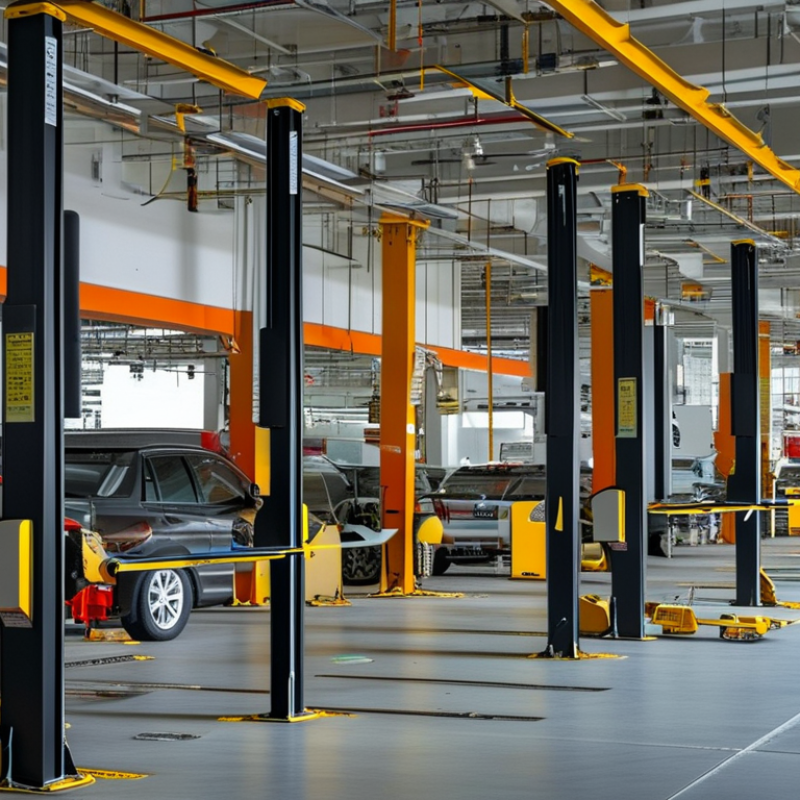
A car elevator platform is a powered lifting system that moves vehicles between different levels. It can serve parking buildings, private garages, workshops, and compact urban sites. Unlike a passenger elevator, it is designed for vehicle weight, wheel positioning, and controlled loading.
The platform usually travels inside vertical guide rails. A hydraulic cylinder or electric traction system raises and lowers it. The driver places the car on marked floor guides, selects the destination, and leaves the platform when required. Sensors check the platform position, door status, and load conditions. Mechanical locks hold the platform at each landing. Interlocked doors should remain closed while the platform moves.
A typical installation may include a shallow pit, overhead clearance, drainage equipment, and protective barriers. Engineers must calculate vehicle dimensions, total load, travel height, stopping accuracy, and emergency access before production. In China’s manufacturing market, these details often separate a practical supplier from a low-cost imitator. Still, specifications on paper can miss daily problems. A wet tire may reduce positioning accuracy. A narrow entrance may frustrate drivers. Maintenance records matter more than polished images.
Regular inspections should examine cables, hydraulic hoses, guide rollers, sensors, locks, and platform leveling. Operators also need clear instructions and visible warning signs. The safest design is not always the fastest one. A slower lift with stable stopping can protect vehicles, buildings, and users better.
| No. | Evaluation Dimension | Typical Technical Data | How It Works | Why It Matters When Selecting a Manufacturer |
|---|---|---|---|---|
| 1 | Rated Load Capacity | Common passenger-car applications: approximately 2,500–5,000 kg; larger systems may be engineered for heavier vehicles. | The lifting mechanism, guide rails, platform structure, and braking system are designed to raise and lower the specified vehicle load with an appropriate safety margin. | The rated load must exceed the combined weight of the heaviest vehicle, occupants, and any permitted accessories. |
| 2 | Platform Size | Typical clear platform widths are about 2,500–3,000 mm, with lengths commonly around 5,000–6,500 mm. | The vehicle is driven or positioned onto a steel platform. The platform transfers the load to the lifting frame and guide system. | The platform should accommodate the longest and widest vehicle expected at the site while maintaining safe door and wall clearances. |
| 3 | Drive Technology | The principal drive options are hydraulic, traction, screw-driven, and chain or cable-supported lifting systems. | Hydraulic systems use pressurized fluid; traction systems use a motor, sheave, and counterweight or counterbalance; screw systems use a rotating threaded mechanism; chain or cable systems transmit motor force through flexible lifting members. | Drive selection affects installation depth, maintenance requirements, noise, energy use, travel height, and lifecycle cost. |
| 4 | Rated Lifting Speed | Many vehicle elevators operate at approximately 0.10–0.30 m/s, depending on travel height, capacity, and applicable regulations. | A motor and control system regulate the upward and downward movement so that acceleration, travel, leveling, and stopping remain controlled. | Higher speed can improve traffic flow, but it generally requires more advanced controls, stronger structural components, and stricter commissioning procedures. |
| 5 | Lifting Height and Stops | Low-rise applications may serve two or three levels; lifting height is commonly engineered from several metres to more than 10 metres. | Position sensors and limit switches identify each landing. The controller stops the platform at a predetermined level for vehicle entry and exit. | The manufacturer should verify shaft dimensions, overhead clearance, pit depth, landing alignment, and the required number of stops before design approval. |
| 6 | Leveling Accuracy | A properly configured system is generally designed to stop close to the landing level, with the permitted tolerance determined by the applicable code and project specification. | Encoders, proximity sensors, limit switches, and closed-loop or controlled stopping logic reduce platform height differences at each floor. | Accurate leveling reduces tire impact, improves driving comfort, and lowers the risk of trips or vehicle underbody contact. |
| 7 | Door and Interlocking System | Common arrangements include manual or automatic landing doors, vertically lifting doors, hinged doors, and rolling doors with electrical or mechanical interlocks. | Interlocks prevent landing doors from opening unless the platform is correctly positioned and prevent movement when a door is not securely closed. | Door compatibility is essential for preventing vehicle falls, unauthorized access, and movement during loading or unloading. |
| 8 | Safety Protection | Typical protection includes overspeed or unintended-movement protection, emergency stop controls, overload detection, slack-rope or chain monitoring, limit switches, and obstruction sensing. | Sensors and mechanical safety devices detect abnormal conditions and either stop the drive or hold the platform in a safe position. | A complete safety architecture is more important than lifting speed or cosmetic finish and must be assessed against local elevator and parking-equipment requirements. |
| 9 | Control and Emergency Operation | Typical controls include landing call stations, key switches or access cards, programmable controllers, emergency lowering, manual rescue operation, and fault indication. | The controller coordinates calls, door status, motor operation, floor positioning, alarms, and fault responses through a defined sequence. | Clear controls and a documented rescue procedure help operators recover vehicles safely during power failure, sensor faults, or other service interruptions. |
| 10 | Installation, Compliance, and Service | The project normally requires structural verification, electrical protection, drainage or waterproofing where applicable, commissioning tests, periodic inspection, and scheduled maintenance. | The complete system functions as an integrated installation: civil structure, guide rails, drive unit, platform, doors, controls, and safety devices must operate together. | A capable manufacturer should provide drawings, load calculations, manuals, training, spare parts, testing records, and after-sales support appropriate to the installation location. |
China Top 10 Car Elevator Platform Manufacturers?
Car elevator platforms move vehicles between parking levels where ramps cannot fit. Their key features include hydraulic or traction lifting, guided platforms, interlocked doors, emergency lowering, and load sensors. A typical system must manage repeated starts, uneven vehicle loading, and limited shaft space. Field inspections often reveal small problems first: water collects near the pit, wheels stop outside the marked area, or sensors become dirty. These details affect safety and maintenance more than brochure speed.
Demand is growing in dense Chinese cities. The National Bureau of Statistics reported an urbanization rate of 66.16% at the end of 2023. Meanwhile, the International Energy Agency’s Global EV Outlook 2024 stated that China accounted for nearly 60% of global electric car sales in 2023. More vehicles and compact urban sites create stronger demand for vertical parking access, especially in residential buildings, offices, hotels, and vehicle storage facilities. Platforms should provide smooth acceleration, anti-slip surfaces, drainage, and clear visual signals for drivers.
Designers should match rated capacity with real vehicle weights, including larger electric models. They should also check fire access, ventilation, noise, and evacuation procedures against local codes. Energy-efficient motors can reduce operating costs, but actual savings depend on traffic frequency and standby settings. One weakness remains: a technically advanced platform can still fail operationally when users ignore alignment instructions. Better signage helps, but it cannot replace regular inspections and documented maintenance.
Car elevator platforms in China are commonly used in residential parking systems, commercial buildings, automotive service centers, showrooms, logistics facilities, and public parking garages. The typical rated capacities shown below are representative engineering ranges and do not refer to any specific company or brand.
Selecting China’s top car elevator platform manufacturers requires more than checking export volume or online rankings. Grand View Research estimates that the global elevator market will exceed USD 150 billion by 2030. This growth increases competition, but it also makes supplier verification more important. Buyers should examine factory experience, engineering staff, production records, and completed vehicle-access projects. A polished website proves little. Real installation photos, load-test records, and customer references matter more.
Technical compliance should guide the comparison. Manufacturers should provide structural calculations, rated-load data, platform dimensions, emergency-lowering procedures, and maintenance instructions. Their equipment should align with applicable Chinese standards, including GB/T 7588.1 where relevant to elevator safety design. For vehicle platforms, assess wheel-stop systems, door interlocks, anti-drop protection, drainage, and corrosion resistance. The China Elevator Association’s industry statistics show a very large installed elevator base in China, yet car elevator platforms often face different site conditions. That difference deserves careful review.
Selection teams can score suppliers across safety, customization, delivery control, spare-parts availability, and after-sales response. A practical factory audit should inspect welding quality, hydraulic leakage controls, electrical cabinets, and final testing. ISO 9001 certification may support process consistency, but it cannot replace product-level evidence. I would also request a witnessed full-load test. It may slow procurement. That is acceptable. One overlooked clearance issue can disrupt an entire parking project. Published data helps, but it is not perfect; local soil, climate, traffic frequency, and installer skill can change real performance.
China’s Top 10 Car Elevator Platform Manufacturers
China’s top 10 car elevator platform manufacturers are often compared by engineering depth, production control, and service reliability. The strongest suppliers usually design systems for homes, showrooms, parking buildings, and restricted urban sites. Their platforms may use hydraulic, screw, or traction drive systems. Each choice affects lifting speed, noise, maintenance, and installation cost.
Load matters. A dependable manufacturer provides clear capacity ratings, platform dimensions, emergency lowering procedures, and documented factory testing. Buyers should inspect welding quality, guide rails, door interlocks, control panels, and anti-slip surfaces. A practical test includes repeated lifting cycles with a representative vehicle, not an empty platform. This detail is easy to overlook.
Experience also appears after delivery. Leading Chinese manufacturers normally offer layout drawings, foundation guidance, commissioning support, spare parts, and operator training. Their technical teams should explain drainage, ventilation, power requirements, and inspection access in plain language. However, a polished catalogue proves little by itself. Some suppliers may present impressive specifications while offering limited local support. That risk deserves honest attention. Independent verification, customer references, and service response records can reveal more than promotional claims. Even experienced buyers can misjudge installation conditions, especially where soil, weather, or building tolerances vary. Reliable selection requires careful measurement, qualified installation, and regular maintenance.
China Top 10 Car Elevator Platform Manufacturers?
China’s vehicle market reached 30.16 million units in 2023, according to the China Association of Automobile Manufacturers. This scale creates strong demand for car elevator platforms in residential, commercial, and automated parking projects. When comparing ten shortlisted manufacturers, inspect more than price. Request load-test records, welding procedures, control-system documentation, and evidence of compliance with applicable Chinese mechanical parking standards, including GB/T 26559. Ask whether the supplier has installed similar systems in humid coastal cities or cold northern regions.
Vehicle weight is changing. The IEA’s Global EV Outlook 2024 reported that China sold more than 8 million electric cars in 2023. Many electric vehicles are heavier than comparable petrol models. Specify the platform’s rated load, usable dimensions, emergency braking, anti-drop protection, drainage, and manual-lowering system. Measure the site carefully. A few lost centimeters can affect door clearance, turning paths, and maintenance access. Factory testing matters, but an independent on-site acceptance test is safer. I would not trust a brochure alone.
Maintenance should be written into the purchase contract. Check hydraulic oil, guide rails, chains, sensors, limit switches, and anchor bolts on a defined schedule. Keep a log with dates, readings, photographs, and repair actions. Ask about spare-part availability and technician response times in China. Salt, dust, and standing water often cause more trouble than the lifting motor. The China Automotive Technology and Research Center has repeatedly highlighted vehicle electrification and changing vehicle structures in its annual industry reports, yet platform specifications often lag behind reality. That gap deserves careful review.
We use cookies on our website to give you an improved browser experience. View our Privacy Policy for more information. Please make your selection to opt in or out of ALL cookies here: Accept or Decline
Do you consent to the use of ALL cookies?
901 2nd Court West
Birmingham, AL 35204
Sales: 866.481.4036
Logistics/Ops: 866.481.4036
2101 Dralle Road
University Park, IL 60466
Sales: 708.813.9070
Logistics/Ops: 708.235.4200
400 E. 13th Street
Little Rock, AR 72114
Sales: 866.760.5344
Logistics/Ops: 866.760.5344
225 Collins Road
Elkhart, IN 46515
Sales: 574.295.0214
Logistics/Ops: 574.607.4611
601 Berryman Pike
Tipton, IN 46072
Sales: 800.897.7591
Logistics/Ops: 800.897.7591
3900 Uvalda Street
Denver, CO 80239
Sales: 303.706.8000
Ops/Logistics: 303.576.8398
510 3rd Street E
Milan, IL 61264
Sales: 800.322.1052
Logistics/Ops: 800.322.1052
1660 E. Aurora
Des Moines, IA 50313
Sales: 800.671.1660
Logistics: 800.671.1660
86554 Gene Lasserre Blvd.
Yulee, FL 32097
Sales: 904.253.3060
Logistics/Ops: 904.225.3000
694 S.E. County Road 245
Lake City, FL 32025
Sales: 800.727.6706
Logistics/Ops: 386.752.7412
210 Neptune Road
Auburndale, FL 33823
Sales: 863.967.1131
Logistics/Ops: 863.777.9814
4601 McCoy Drive
Pensacola, FL 32503
Sales: 850.308.7030
Logistics/Ops: 850.434.5502
815 South 56th Street
Tampa, FL 33619
Sales: 813.302.1940
Logistics/Ops: 813.621.1352
200 Hosea Road
Lawrenceville, GA 30046
Sales: 770.953.7575
Logistics/Ops: 770.513.6000
Branch Product Guide
Branch Line Card
Moulding Offering
Cedar Offering
Column Offering
8173 Hwy. 165 North
Monroe, LA 71211
Sales: 800.256.4165
Logistics/Ops: 800.256.4165
508 Warren Avenue
Portland, ME 04103
Sales: 207.888.2331
Logistics/Ops: 207.797.6565
4300 Georgia Pacific Blvd.
Frederick, MD 21704
Sales: 301.798.7474
Logistics/Ops: 301.874.8000
419 Maple Street
Bellingham, MA 02019
Sales: 508.449.0535
Logistics/Ops: 508.966.5500
825 Buchanan Ave SW
Grand Rapids, MI 49507
Sales: 877.800.1180
Logistics/Ops: 616.278.0909
995 Pacific St. NW
Aitkin, MN 56431
Sales: 800.432.3727
Logistics/Ops: 218.212.7770
1102 Port Terminal Drive
Duluth, MN 55802
Sales: 800.951.9899
Logistics/Ops: 800.851.9899
9110 83rd Ave. North
Brooklyn Park, MN 55445
Sales: 763.425.0204
Logistics/Ops: 763.425.0204
910 E. Railroad Street
Long Beach, MS 39560
Sales: 866.535.4135
Logistics/Ops: 228.205.2400
1727 Warren Street
North Kansas City, MO 64116
Sales: 800.621.2611
Logistics/Ops: 800.621.2611
2123 North Golden
Springfield, MO 65803
Sales: 800.375.7891
Logistics/Ops: 800.375.7891
13860 Corp. Woods Trail
Bridgeton, MO 63044
Sales: 314.209.0800
Logistics/Ops: 314.209.0800
1109 South 19th Street
Omaha, NE 68108
Sales: 800.489.6637
Logistics/Ops: 800.489.6637
1 Luger Road
Denville, NJ 07834
Sales: 973-339-3539
Logistics/Ops: 973.625.1461
3720 Jeffrey Blvd.
Blasdell, NY 14219
Sales: 716.235.5989
Logistics/Ops: 716.825.6557
319 Yaphank Ave.
Yaphank, NY 11980
Sales: 631.358.5714
Logistics/Ops: 631.924.7401
3300 Parkside Drive
Charlotte, NC 28208
Sales: 800.839.2588
Logistics/Ops: 704.394.3172
1712 East D Street
Butner, NC 27509
Sales: 984.389.8200
Logistics/Ops: 919.575.3700
128 Foothills Drive
Statesville, NC 28687
Sales: 800.222.1414
Logistics/Ops: 704.394.3172
550 Munroe Falls Rd.
Tallmadge, OH 44278
Sales: 330.357.4506
Logistics/Ops: 330.794.1141
10347 Toebben Dr.
Independence, KY 41051
Sales: 859.298.3926
Logistics/Ops: 859.746.2250
450 N. MacArthur
Oklahoma City, OK 73127
Sales: 800.375.6025
Logistics/Ops: 800.375.6025
1680 North Aspen
Broken Arrow, OK 74012
Sales: 918.272.2212
Logistics/Ops: 918.272.2212
522 Bridge Street
Hunker, PA 15639
Sales: 878.217.2001
Logistics/Ops: 724.925.7285
4290 Atlanta Street
Charleston, SC 29418
Sales: 843.371.1420
Logistics/Ops: 843.554.8192
1040 S. Industrial Dr.
Erwin, TN 37650
Sales: 423.641.1005
Logistics/Ops: 423.742.5911
4287 Pilot Drive
Memphis, TN 38118
Sales: 901.365.2101
Logistics/Ops: 901.365.2101
700 Myatt Drive
Madison, TN 37115
Sales: 615.327.9547
Logistics/Ops: 629.777.4949
4747 Mark IV Parkway
Fort Worth, TX 76106
Sales: 866.323.5117
Logistics/Ops: 817.625.9091
6990 Market Avenue
El Paso, TX 79915
Sales: 915.778.6356
Logistics/Ops: 915.265.7200
2502 Wilson Road
Harlingen, TX 78552
Sales: 800.580.6711
Logistics/Ops: 800.580.6711
10,000 North Loop East
Houston, TX 77029
Sales: 713.921.1977
Logistics/Ops: 713.675.3544
702 East 44th St.
Lubbock, TX 79404
Sales: 866.454.6010
Logistics/Ops: 866.454.6010
535 N. WW White Road
San Antonio, TX 78219
Sales: 800.284.0488
Logistics/Ops: 210.333.8112
142 Pine Haven Shores Rd.
Shelburne, VT 05482
Sales: 802.800.2540
Logistics/Ops: 802.985.2512
4700 Bethlehem Road,
Richmond, VA 23230
Sales: 804.201.2400
Logistics/Ops: 804.342.1161
4516 N Barker Road
Spokane Valley, WA 99027
Phone: 509.892.9420
Toll free: 800.728.6157
8365 N. 76th Street
Milwaukee, WI 53223
Sales: 800.356.9245
Logistics/Ops: 800.356.9245
312 S. Chester Street
Sparta, WI 54656
Sales: 800.362.5864
Logistics/Ops: 800.362.5864
899 Grossman Drive
Schofield, WI 54476
Sales: 800.472.0017
Logistics/Ops: 800.472.0017
