
We use cookies on our website to give you an improved browser experience. View our Privacy Policy for more information. Please make your selection to opt in or out of ALL cookies here: Accept or Decline
Choosing the right Curing Adhesive is rarely a simple strength comparison. The real decision begins with the materials, curing method, production speed, and service environment. A bond that performs beautifully on glass may fail on polypropylene, painted metal, or a flexible composite. Small details matter, including surface energy, joint thickness, temperature, humidity, and available curing equipment.
Dr. Dave Dunn, a respected adhesive technology author and consultant, has stated, “The best adhesive is the one that fits the process, not merely the one with the highest strength.” This principle deserves attention. A fast-curing formula may increase production speed, yet it can reduce positioning time. A flexible Curing Adhesive may absorb vibration, but it may not provide the rigidity required for precision assemblies. These trade-offs are easy to overlook when product data sheets dominate the discussion.
This guide presents seven practical tips for selecting a Curing Adhesive with greater confidence. It examines substrate compatibility, curing conditions, bond design, environmental resistance, handling time, safety, and long-term reliability. Real production decisions are rarely perfect. Test results can also mislead when samples are too clean, too small, or cured under ideal conditions. Therefore, a useful evaluation should include representative materials, realistic joint gaps, and controlled aging tests. Even then, some uncertainty remains. That is not a weakness; it is a reason to document assumptions, consult technical specialists, and validate the adhesive before full-scale production.
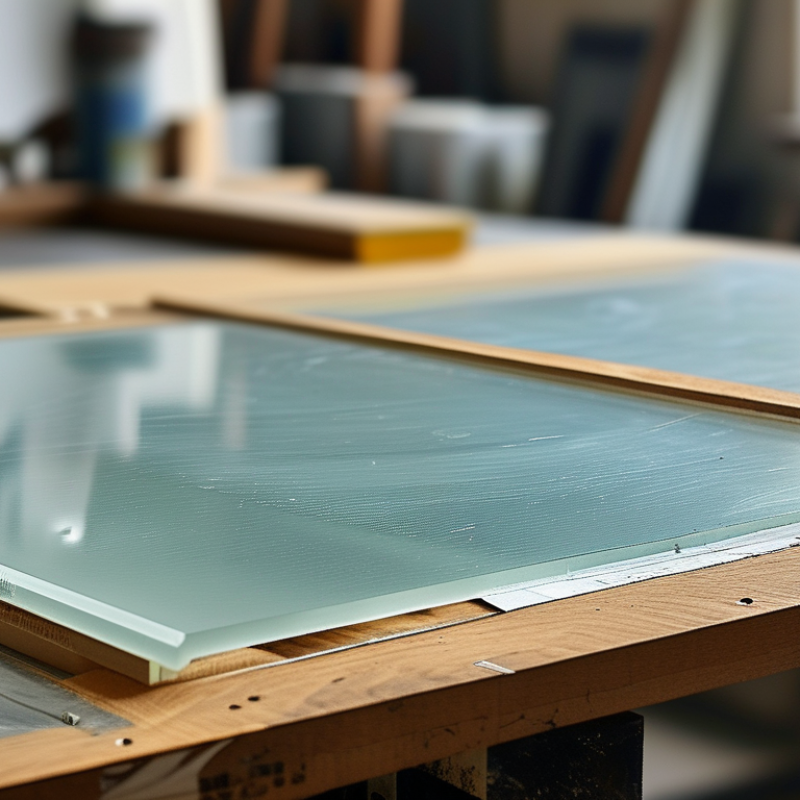
Understanding Curing Adhesives and Their Main Applications
Curing adhesives form strong bonds through heat, moisture, light, or chemical reaction. Their performance depends on the curing mechanism, substrate, and production conditions. In electronics, UV-curing materials can secure small components where rapid fixing matters. Moisture-curing types suit assemblies exposed to air and humidity. Two-part systems support demanding structural bonds but require accurate mixing.
Market data shows why selection deserves care. MarketsandMarkets reported that the global adhesives and sealants market could grow from about USD 78.6 billion in 2023 to USD 95.7 billion by 2028. That growth reflects wider use in transportation, electronics, packaging, and medical equipment. The report also highlights performance, sustainability, and process efficiency as major purchasing factors. The numbers are useful, but forecasts are not guarantees.
Use these seven checks before choosing a curing adhesive: match chemistry to the substrate; confirm the required cure temperature; measure open time; test bond strength after aging; inspect resistance to moisture and chemicals; verify dispensing equipment; and run a small production trial. Not every fast cure is better. A UV adhesive may cure in seconds, yet shaded areas can remain uncured. Heat-cured products may offer excellent strength but slow the assembly line. A practical trial should include real surface cleanliness, joint gaps, and worker handling. This is where assumptions often fail. Record the compromise, then review it with engineering and quality teams before scaling production.
Choosing the right curing adhesive starts with the materials being joined, not the adhesive label. Metals, plastics, glass, and composites transfer stress differently. A rigid adhesive may suit steel, but it can crack a flexible polymer during temperature changes. The U.S. Department of Energy reports that reducing vehicle weight by 10% can improve fuel economy by about 6–8%. Adhesive bonding can support lightweight designs, but only when compatibility is verified.
Tip 1: Check surface energy. Low-energy plastics often need cleaning, abrasion, or a primer. Tip 2: Match flexibility to movement. Measure thermal expansion, vibration, and joint width. Tip 3: Review chemical resistance. Oil, moisture, and cleaning agents can weaken the bond. Tip 4: Compare cure methods. Heat, moisture, light, and two-part systems behave differently. Cure charts are not promises; humidity and part thickness can change results.
Tip 5: Test the actual materials. ASTM D1002 lap-shear testing is useful for comparing metal bonds, but it may not represent peel or impact loads. Tip 6: Examine the failure surface. Adhesive residue on one side may indicate poor wetting, not weak chemistry. Tip 7: Confirm production conditions. A 2024 MarketsandMarkets analysis estimated the structural adhesives market would grow from approximately 14.8 billion dollars in 2024 to 19.5 billion dollars by 2029. That growth reflects demanding applications, not automatic reliability. One detail is easy to miss: a strong adhesive can still fail when the joint design concentrates stress at one sharp corner.
The chart compares representative room-temperature linear thermal expansion coefficients. When two joined materials expand at different rates, select a curing adhesive with suitable flexibility, low cure shrinkage, and strong fatigue resistance. Higher mismatch generally increases the need for a more compliant adhesive joint.
Tips: identify the substrates, compare thermal expansion, check surface energy and chemical resistance, choose the appropriate cure method, verify service-temperature limits, allow for joint movement, and validate the bond with application-specific testing. Values are typical references and may vary by alloy, grade, fiber direction, temperature, and processing conditions.
Curing method controls production speed, equipment cost, and bond reliability. Light-curing adhesives can set within seconds when the light reaches every bond line. They suit transparent parts and automated assembly, but shadows create uncured pockets. Thermal systems handle hidden joints better, yet ovens add heat, floor space, and waiting time. Moisture-curing products need less equipment, although humidity and joint depth can extend processing times.
Compare the complete cycle, not only the advertised cure speed. A 2024 MarketsandMarkets report projects strong growth in UV curing systems, reflecting demand for faster, lower-waste manufacturing. RadTech technical reports also describe UV and electron-beam curing as rapid processes with reduced thermal exposure. However, these advantages depend on dose, distance, substrate transparency, and lamp maintenance. A two-second cure may fail after a dirty lens or uneven fixture.
Test open time, clamp time, handling strength, and final strength. Record temperature and humidity during trials. For heat-sensitive plastics, ask for data from thermal cycling and aging tests. For deep or shaded joints, use a dual-cure formulation or extend the secondary cure. That can improve reliability, but it may complicate quality control. I once underestimated fixture alignment; the adhesive was suitable, but the bond line varied too widely. Choose equipment and adhesive together. A technically faster method is not always faster on the factory floor.
Choosing a curing adhesive requires more than a strong initial grip. Test the cured bond, not the tube’s promise. Measure lap-shear strength on the actual substrates and surface finishes. Include clean, oily, rough, and lightly oxidized samples. A bond can look excellent and still fail at the interface. Record cure time, temperature, humidity, and pressure during every trial. Small process changes matter.
Ask how the bond behaves after heat, cold, water, salt spray, and cleaning chemicals. Cycle samples instead of testing only once. Inspect cracks, whitening, softening, and edge lift with a loupe. Document every result. Check the weakest condition expected during service. For outdoor assemblies, combine ultraviolet exposure with moisture. For machinery, add vibration and repeated loading. Durability is not a single number. It is a pattern over time.
Review technical data from controlled tests, then request independent evidence for critical applications. Confirm shelf life, batch consistency, and compatibility with primers or coatings. A reliable supplier should explain failure modes, not only quote peak strength. Keep retained samples for later comparison. I once treated a short cure time as an advantage. Later, incomplete curing reduced water resistance. That mistake changed our evaluation plan. Allow a practical safety margin, because production is rarely as tidy as the laboratory. Track bond performance after real handling, not just after perfect curing.
Choosing a curing adhesive starts with safety, not convenience. Review the safety data sheet, ventilation needs, skin hazards, and curing by-products. Check required protective equipment before opening the container. A clean work area matters. I once underestimated odor during a small trial, and the team needed extra ventilation. That mistake changed our evaluation process.
Compatibility requires more than bonding two surfaces. Test the adhesive on the actual substrates, including coatings, plastics, metals, and porous materials. Examine adhesion after heat, humidity, vibration, and cleaning exposure. Confirm the cure schedule at real production temperatures. Different thermal expansion rates can create hidden stress. Do not trust a strong initial bond alone. Test it properly.
Price should include waste, rework, storage, equipment, and shelf-life losses. A cheaper cartridge may create higher costs if it cures unevenly. Ask suppliers for technical data, sample quantities, lot traceability, and practical troubleshooting support. Their response time can affect production downtime. Reliable suppliers explain limitations instead of promising perfect results. Ask difficult questions. Request written guidance. If support depends on one salesperson, the arrangement may be fragile. Keep test records, batch details, and observed failures, even when the results seem inconvenient.
| No. | Selection Dimension | What to Check | Useful Technical Data or Benchmark | Evidence to Request | Common Warning Signs | Priority |
|---|---|---|---|---|---|---|
| 1 | Define the curing method | Identify whether the adhesive is cured by heat, ultraviolet light, moisture, two-part reaction, or a combination of methods. Confirm the available equipment, cycle time, and access to the curing energy. | Typical examples include UV curing with a specified wavelength range, heat curing at a defined temperature and time, or moisture curing that depends on ambient humidity and joint geometry. Use the supplier's validated cure schedule rather than a generic estimate. | Technical data sheet, recommended cure profile, minimum and maximum cure conditions, depth-of-cure information, and test results using the actual substrate and joint design. | The product requires a curing condition that the production line cannot reliably provide, or the supplier gives only a nominal cure time without temperature, light intensity, humidity, or layer-thickness limits. | Critical |
| 2 | Check safety and regulatory requirements | Review worker exposure, ventilation, flammability, skin and eye hazards, sensitization potential, storage conditions, transport classification, and end-use regulations. | Compare the product's Safety Data Sheet with the workplace risk assessment. Check relevant requirements such as hazard communication rules, chemical storage limits, and restrictions affecting electrical, medical, food-contact, or consumer applications. | Current Safety Data Sheet, technical data sheet, regulatory statement, storage guidance, personal protective equipment recommendations, and relevant compliance declarations. | Missing or outdated safety documentation, unclear ingredient disclosure, no recommended controls for vapors or skin contact, or storage requirements that cannot be maintained. | Critical |
| 3 | Verify material compatibility | Test adhesion and chemical compatibility with metals, plastics, glass, ceramics, coatings, rubbers, printed materials, and any surface treatment used in the final assembly. | Evaluate lap-shear strength, peel or tensile performance, dimensional change, surface wetting, and bond retention after exposure to heat, humidity, chemicals, and vibration. Surface preparation can materially change the result. | Substrate-specific test data, surface-preparation instructions, primer requirements, compatibility results, and samples produced with the actual production materials. | Strong results are reported only on a different substrate, the adhesive causes stress cracking or discoloration, or the supplier cannot define acceptable surface cleanliness and roughness. | Critical |
| 4 | Match performance to the service environment | Define the expected temperature range, humidity, fluid exposure, electrical requirements, mechanical loads, vibration, impact, and required service life. | Review the adhesive's operating-temperature range, glass-transition temperature where applicable, dielectric properties for electrical assemblies, moisture resistance, and strength retention after environmental aging. | Environmental aging reports, temperature and humidity cycling data, chemical-resistance results, electrical-property data, and test methods used. | Only initial strength is provided, with no aging data or no information about performance under combined heat, humidity, chemicals, and mechanical stress. | Critical |
| 5 | Evaluate process fit and quality control | Check viscosity, dispensing accuracy, working time, fixture time, cure speed, tolerances for mix ratio, rework options, and sensitivity to contamination. | Useful process data includes viscosity at a stated temperature and shear rate, mix ratio for two-part systems, open time, tack-free time, cure time, and recommended bond-line thickness. | Process window, dispensing guidance, batch-to-batch quality limits, packaging options, lot traceability, shelf-life data, and recommended inspection methods. | The adhesive cures too quickly for assembly, requires narrow process control, blocks dispensing equipment, or has no documented lot-release criteria. | High |
| 6 | Calculate total cost, not only unit price | Include material consumption, packaging waste, mixing or dispensing equipment, curing energy, labor, rework, scrap, storage, disposal, testing, and downtime. | Compare cost per finished assembly or per bonded area rather than cost per kilogram alone. A higher-priced adhesive may reduce cycle time or rework, while a low-priced product may increase process losses. | Quotation with pack sizes and delivery terms, estimated coverage, shelf-life and storage costs, equipment requirements, and a trial-based consumption estimate. | The quotation excludes freight, special storage, curing equipment, minimum-order quantities, hazardous-material handling, or expected material waste. | High |
| 7 | Assess supplier support and continuity | Review technical response time, sample support, application engineering, quality-system controls, production capacity, change-notification practices, and business continuity. | A dependable supply program should define lead times, shelf-life at receipt, lot traceability, acceptance criteria, complaint handling, and communication procedures for formulation or site changes. | Quality certificates, product-change policy, certificate of analysis, continuity plan, technical contact information, sample-to-production support, and agreed service-level expectations. | Unstable lead times, limited technical documentation, no formal change notification, inconsistent batch performance, or inability to support validation and scale-up. | High |
We use cookies on our website to give you an improved browser experience. View our Privacy Policy for more information. Please make your selection to opt in or out of ALL cookies here: Accept or Decline
Do you consent to the use of ALL cookies?
901 2nd Court West
Birmingham, AL 35204
Sales: 866.481.4036
Logistics/Ops: 866.481.4036
2101 Dralle Road
University Park, IL 60466
Sales: 708.813.9070
Logistics/Ops: 708.235.4200
400 E. 13th Street
Little Rock, AR 72114
Sales: 866.760.5344
Logistics/Ops: 866.760.5344
225 Collins Road
Elkhart, IN 46515
Sales: 574.295.0214
Logistics/Ops: 574.607.4611
601 Berryman Pike
Tipton, IN 46072
Sales: 800.897.7591
Logistics/Ops: 800.897.7591
3900 Uvalda Street
Denver, CO 80239
Sales: 303.706.8000
Ops/Logistics: 303.576.8398
510 3rd Street E
Milan, IL 61264
Sales: 800.322.1052
Logistics/Ops: 800.322.1052
1660 E. Aurora
Des Moines, IA 50313
Sales: 800.671.1660
Logistics: 800.671.1660
86554 Gene Lasserre Blvd.
Yulee, FL 32097
Sales: 904.253.3060
Logistics/Ops: 904.225.3000
694 S.E. County Road 245
Lake City, FL 32025
Sales: 800.727.6706
Logistics/Ops: 386.752.7412
210 Neptune Road
Auburndale, FL 33823
Sales: 863.967.1131
Logistics/Ops: 863.777.9814
4601 McCoy Drive
Pensacola, FL 32503
Sales: 850.308.7030
Logistics/Ops: 850.434.5502
815 South 56th Street
Tampa, FL 33619
Sales: 813.302.1940
Logistics/Ops: 813.621.1352
200 Hosea Road
Lawrenceville, GA 30046
Sales: 770.953.7575
Logistics/Ops: 770.513.6000
Branch Product Guide
Branch Line Card
Moulding Offering
Cedar Offering
Column Offering
8173 Hwy. 165 North
Monroe, LA 71211
Sales: 800.256.4165
Logistics/Ops: 800.256.4165
508 Warren Avenue
Portland, ME 04103
Sales: 207.888.2331
Logistics/Ops: 207.797.6565
4300 Georgia Pacific Blvd.
Frederick, MD 21704
Sales: 301.798.7474
Logistics/Ops: 301.874.8000
419 Maple Street
Bellingham, MA 02019
Sales: 508.449.0535
Logistics/Ops: 508.966.5500
825 Buchanan Ave SW
Grand Rapids, MI 49507
Sales: 877.800.1180
Logistics/Ops: 616.278.0909
995 Pacific St. NW
Aitkin, MN 56431
Sales: 800.432.3727
Logistics/Ops: 218.212.7770
1102 Port Terminal Drive
Duluth, MN 55802
Sales: 800.951.9899
Logistics/Ops: 800.851.9899
9110 83rd Ave. North
Brooklyn Park, MN 55445
Sales: 763.425.0204
Logistics/Ops: 763.425.0204
910 E. Railroad Street
Long Beach, MS 39560
Sales: 866.535.4135
Logistics/Ops: 228.205.2400
1727 Warren Street
North Kansas City, MO 64116
Sales: 800.621.2611
Logistics/Ops: 800.621.2611
2123 North Golden
Springfield, MO 65803
Sales: 800.375.7891
Logistics/Ops: 800.375.7891
13860 Corp. Woods Trail
Bridgeton, MO 63044
Sales: 314.209.0800
Logistics/Ops: 314.209.0800
1109 South 19th Street
Omaha, NE 68108
Sales: 800.489.6637
Logistics/Ops: 800.489.6637
1 Luger Road
Denville, NJ 07834
Sales: 973-339-3539
Logistics/Ops: 973.625.1461
3720 Jeffrey Blvd.
Blasdell, NY 14219
Sales: 716.235.5989
Logistics/Ops: 716.825.6557
319 Yaphank Ave.
Yaphank, NY 11980
Sales: 631.358.5714
Logistics/Ops: 631.924.7401
3300 Parkside Drive
Charlotte, NC 28208
Sales: 800.839.2588
Logistics/Ops: 704.394.3172
1712 East D Street
Butner, NC 27509
Sales: 984.389.8200
Logistics/Ops: 919.575.3700
128 Foothills Drive
Statesville, NC 28687
Sales: 800.222.1414
Logistics/Ops: 704.394.3172
550 Munroe Falls Rd.
Tallmadge, OH 44278
Sales: 330.357.4506
Logistics/Ops: 330.794.1141
10347 Toebben Dr.
Independence, KY 41051
Sales: 859.298.3926
Logistics/Ops: 859.746.2250
450 N. MacArthur
Oklahoma City, OK 73127
Sales: 800.375.6025
Logistics/Ops: 800.375.6025
1680 North Aspen
Broken Arrow, OK 74012
Sales: 918.272.2212
Logistics/Ops: 918.272.2212
522 Bridge Street
Hunker, PA 15639
Sales: 878.217.2001
Logistics/Ops: 724.925.7285
4290 Atlanta Street
Charleston, SC 29418
Sales: 843.371.1420
Logistics/Ops: 843.554.8192
1040 S. Industrial Dr.
Erwin, TN 37650
Sales: 423.641.1005
Logistics/Ops: 423.742.5911
4287 Pilot Drive
Memphis, TN 38118
Sales: 901.365.2101
Logistics/Ops: 901.365.2101
700 Myatt Drive
Madison, TN 37115
Sales: 615.327.9547
Logistics/Ops: 629.777.4949
4747 Mark IV Parkway
Fort Worth, TX 76106
Sales: 866.323.5117
Logistics/Ops: 817.625.9091
6990 Market Avenue
El Paso, TX 79915
Sales: 915.778.6356
Logistics/Ops: 915.265.7200
2502 Wilson Road
Harlingen, TX 78552
Sales: 800.580.6711
Logistics/Ops: 800.580.6711
10,000 North Loop East
Houston, TX 77029
Sales: 713.921.1977
Logistics/Ops: 713.675.3544
702 East 44th St.
Lubbock, TX 79404
Sales: 866.454.6010
Logistics/Ops: 866.454.6010
535 N. WW White Road
San Antonio, TX 78219
Sales: 800.284.0488
Logistics/Ops: 210.333.8112
142 Pine Haven Shores Rd.
Shelburne, VT 05482
Sales: 802.800.2540
Logistics/Ops: 802.985.2512
4700 Bethlehem Road,
Richmond, VA 23230
Sales: 804.201.2400
Logistics/Ops: 804.342.1161
4516 N Barker Road
Spokane Valley, WA 99027
Phone: 509.892.9420
Toll free: 800.728.6157
8365 N. 76th Street
Milwaukee, WI 53223
Sales: 800.356.9245
Logistics/Ops: 800.356.9245
312 S. Chester Street
Sparta, WI 54656
Sales: 800.362.5864
Logistics/Ops: 800.362.5864
899 Grossman Drive
Schofield, WI 54476
Sales: 800.472.0017
Logistics/Ops: 800.472.0017
