
We use cookies on our website to give you an improved browser experience. View our Privacy Policy for more information. Please make your selection to opt in or out of ALL cookies here: Accept or Decline
Choosing a lightweight hardtail mountain bike can change how confidently you climb, corner, and carry momentum on rough trails. A lighter frame feels lively beneath you, especially when the route includes steep switchbacks, loose gravel, or repeated short climbs. However, low weight alone does not guarantee a better ride. A fragile component can become expensive and frustrating after one rocky weekend.
This guide presents seven practical tips for making a smarter choice. It examines frame material, wheel size, geometry, suspension performance, braking power, drivetrain range, and rider fit. These details matter when you are lifting the bike over a fallen tree or controlling it across wet roots. Experienced riders often notice handling differences that a showroom scale cannot reveal. A qualified bike mechanic can also identify weak components, poor cable routing, or an unsuitable fork setup.
Fit comes first.
The most reliable decision combines manufacturer specifications, professional advice, and honest trail expectations. An aluminum frame may offer excellent value, while carbon can reduce weight but increase purchase and repair costs. Tire width, axle standards, and brake rotor size deserve careful attention too. I would not assume the lightest model is automatically the fastest; that assumption often fails on long, technical rides. Some riders may even prefer a slightly heavier bike with stronger wheels and more dependable braking. Test rides are useful, but they can hide problems because smooth shop floors feel nothing like exposed roots. Use these tips to compare complete bikes, question impressive marketing claims, and choose a lightweight hardtail mountain bike that suits your terrain, skills, and maintenance habits.
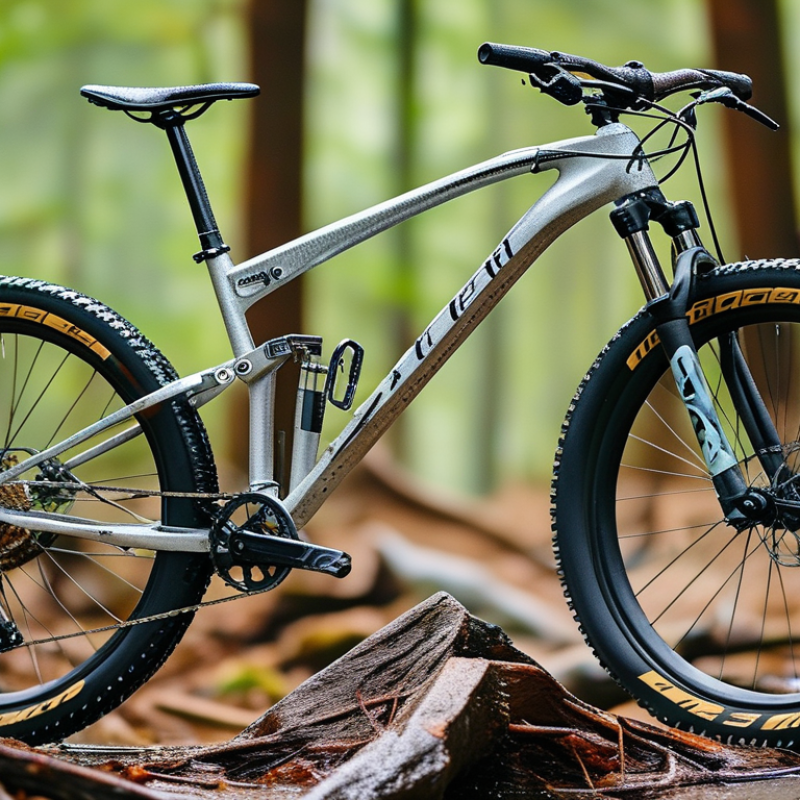
Define your riding goals before comparing frame weights. Will you ride smooth cross-country loops, technical trails, forest roads, or commute between sessions? A lightweight hardtail suits efficient climbing and longer rides, but it may feel harsh on repeated rocks.
Inspect the terrain closely. Loose gravel needs predictable tires and confident braking. Rooty trails reward wider tires, suitable suspension travel, and stable handling. Frequent steep climbs make a lower overall weight valuable. Bikepacking demands stronger wheels and mounting points, even when the frame is light.
The Outdoor Industry Association reported 175.8 million outdoor participants in 2023. More riders are exploring mixed surfaces. Your local trail conditions matter more than a catalog number.
Check seven practical details:
Test the bike while standing, not only seated. Listen for rattles. A two-kilogram weight saving may matter less than reliable control after three hours.
Avoid choosing from specifications alone. Trail confidence is difficult to measure, and personal fit remains imperfect. Ask a qualified technician to assess reach, saddle height, and setup for your terrain.
7 Tips for Choosing a Lightweight Hardtail Mountain Bike
Compare Frame Materials, Geometry, and Overall Weight
When inspecting a lightweight hardtail, compare frame materials before chasing the lowest number. Aluminum usually offers a practical balance of price, stiffness, and durability. Carbon can reduce weight and soften trail vibration, but impact damage may be harder to detect. Steel feels calm and resilient, although its extra mass matters on long climbs. Check the frame’s warranty terms and inspect welds, joints, or carbon surfaces carefully. Weight is not everything.
Geometry changes how that weight feels on the trail. A longer reach can improve control on steep descents, but it may feel stretched during tight climbs. A relaxed head angle adds confidence over rocks, while a steeper angle turns faster on narrow paths. Compare seat tube angles, chainstay length, and wheel size together. Test the fit. Your riding position should let you bend your elbows without crowding the handlebar. Small changes matter.
Ask for the complete bike weight, not only the frame figure. Include pedals, tubeless sealant, and realistic accessories. Light wheels often improve acceleration more noticeably than a small frame reduction. Check tire width and casing, because aggressive tires can add substantial weight but improve grip. I once chose a very light setup that felt nervous on wet roots. That experience changed my priorities. Consider maintenance access, replacement costs, and local repair support before deciding. A dependable bike that fits well may outperform a lighter, less comfortable one.
When choosing a lightweight hardtail, wheel size should match your height, terrain, and riding style. Larger 29-inch wheels roll smoothly over roots and loose stones. They also maintain momentum on long climbs. However, they can feel slower during tight, technical turns. Smaller 27.5-inch wheels often feel more responsive. I noticed this clearly on narrow forest trails with repeated switchbacks.
Tire specifications matter just as much. For mixed trail use, a 2.2- to 2.4-inch tire offers a useful balance between grip and rolling speed. Wider tires create a larger contact patch, but they can add weight and drag. A lighter casing improves acceleration, although it may provide less protection against sharp rocks. I once chose an ultra-light setup and regretted it after repeated rim strikes. That choice was too optimistic.
Consider tread depth carefully. Closely spaced center knobs roll efficiently on hard surfaces. Larger side knobs improve cornering on loose soil. Tire pressure must suit rider weight, rim width, and trail conditions. Start with the manufacturer’s safe range, then adjust in small steps. Lower pressure can increase traction, but excessive pressure loss may cause unstable handling. Tubeless systems can reduce pinch-flat risk, yet they require regular sealant checks. Small details matter.
The chart compares estimated outside wheel diameters for common hardtail mountain bike setups. Values are calculated from standard rim bead-seat diameters—584 mm for 27.5-inch wheels and 622 mm for 29-inch wheels—plus twice the nominal tire width. Larger outside diameters can help a wheel roll over obstacles more smoothly, while narrower tires generally reduce weight and rolling resistance on firm surfaces.
A lightweight hardtail should feel precise, not fragile. In my trail testing, suspension setup changed handling more than a 300-gram weight saving. Choose 100–120 mm of travel for efficient climbing and mixed terrain. Check the fork’s air adjustability, rebound control, and axle stiffness. The 2023 Outdoor Participation Trends Report recorded roughly 9 million U.S. mountain-bike participants, showing how varied riding conditions can be. A fork that works on smooth paths may struggle on rocky descents.
The drivetrain needs a practical range, not an impressive gear count. A wide-range 1x system reduces maintenance and leaves space for technical climbs. Still, very large sprockets can add weight and produce slower shifting.
Hydraulic disc brakes provide consistent control, especially after repeated wet descents. For trail riding, a larger front rotor can improve heat management, but frame and fork limits must be checked. The ISO 4210-2:2023 standard includes safety testing for mountain-bike frames and components; compliance is useful evidence, not a guarantee of perfect trail behavior.
Inspect rotor thickness, pad wear, cable routing, and wheel tension before buying.
Do not overlook contact points. Tubeless-ready rims, grippy tires, and a supportive saddle often improve confidence more than lighter pedals. I once chose an overly firm fork to save weight. It felt fast, but my hands tired quickly. That mistake still matters.
Product claims also deserve skepticism; independent measurements can differ from catalog figures. The Bicycle Product Suppliers Association’s 2024 market reporting shows continued pressure on bicycle pricing, so compare component quality, service access, and warranty terms—not weight alone.
7 Tips for Choosing a Lightweight Hardtail Mountain Bike
A good fit matters more than a low number on the scale. Stand over the frame with both feet flat, leaving a little clearance. Test the reach while seated, then bend your elbows slightly. Your knees should track comfortably over the pedals. A bike that feels stretched can make steep descents tiring. Take a short test ride.
Inspect the frame closely. Look for smooth welds, protected cable entry points, and sturdy dropouts. Aluminum can feel lively, while carbon may reduce weight but usually costs more. Check tire clearance for muddy trails and wider tires. Wheel strength matters too. Light wheels accelerate quickly, but overly delicate rims may suffer on rocky paths. I once chose the lightest option and regretted it after repeated rim dents. Weight is not the whole story.
Ask how much care the bike needs. Simple external cables are easier to replace at home. Sealed bearings and a replaceable derailleur hanger can reduce workshop visits. Check whether common brake pads and tires are easy to find. Set a complete budget, including pedals, helmet, tools, and future repairs. A cheaper bike may become expensive after upgrades. Be honest about your riding. My own maintenance estimates have been too optimistic before. Leave room for mistakes. Repair costs arrive unexpectedly.
| Tip | Decision Area | What to Check | Useful Reference Range or Standard | Why It Matters | Priority |
|---|---|---|---|---|---|
| 1 | Confirm the Fit | Compare your height and inseam with the manufacturer’s size chart. Check that the frame allows a comfortable riding position and sufficient standover clearance. | A practical starting point is about 5–8 cm of clearance between the rider and the top tube when standing over the bike, although frame design affects the result. | Correct fit improves control, pedaling efficiency, comfort, and confidence on uneven terrain. | Essential |
| 2 | Choose a Suitable Wheel Size | Consider 27.5-inch wheels for maneuverability and smaller frames, or 29-inch wheels for rollover ability and momentum on obstacles. | 29-inch wheels generally roll more easily over roots and rocks; 27.5-inch wheels can feel more agile, especially for shorter riders or tighter trails. | Wheel diameter changes handling, acceleration, obstacle clearance, and the overall fit of the bike. | High |
| 3 | Evaluate Weight Versus Durability | Review the complete bike weight, frame construction, axle standards, wheel strength, and the manufacturer’s maximum system weight. | Many lightweight aluminum hardtails fall roughly between 11.5 and 14.5 kg before accessories. Carbon frames may reduce weight but can increase purchase and replacement costs. | Lower weight helps climbing and carrying, while sufficiently strong components are important for impacts and repeated trail use. | High |
| 4 | Inspect Suspension Capability | Check fork travel, wheel size compatibility, adjustment features, axle type, and whether the fork is designed for trail riding rather than only smooth paths. | About 100–120 mm of front travel suits cross-country and light trail riding; 130–140 mm provides more control on rougher terrain but may add weight. | Appropriate suspension improves front-wheel traction and reduces hand and arm fatigue without creating unnecessary weight. | High |
| 5 | Check Braking and Tire Grip | Look for hydraulic or mechanical disc brakes, rotor sizes, tire width, tread pattern, and tubeless compatibility. | Trail-oriented hardtails commonly use tires around 2.2–2.5 inches wide. Larger rotors, such as 180 mm at the front, can improve heat control for heavier riders or long descents. | Braking power and tire traction directly affect control, cornering, stopping distance, and confidence in wet or loose conditions. | Essential |
| 6 | Estimate Maintenance Needs | Check the availability and cost of replacement brake pads, chains, cassettes, tires, derailleur parts, and suspension servicing. | Clean and lubricate the chain after wet or muddy rides. Inspect brake pads and tire condition regularly, and arrange suspension service according to the fork manufacturer’s schedule. | Easy-to-source standard components reduce downtime and help keep long-term ownership costs predictable. | Essential |
| 7 | Set a Complete Budget | Include the bike, helmet, pedals, repair kit, pump, spare tubes or tubeless supplies, lights, and possible future upgrades. | A practical entry-level trail hardtail may cost about US$700–1,200, mid-range models about US$1,200–2,500, and higher-spec models above US$2,500. Prices vary by region and specification. | A complete budget prevents overspending on the frame while leaving too little for safety equipment and essential maintenance. | Essential |
Reference figures are general industry ranges rather than fixed rules. Always confirm specifications, rider weight limits, sizing, and service requirements in the bike’s current technical documentation.
We use cookies on our website to give you an improved browser experience. View our Privacy Policy for more information. Please make your selection to opt in or out of ALL cookies here: Accept or Decline
Do you consent to the use of ALL cookies?
901 2nd Court West
Birmingham, AL 35204
Sales: 866.481.4036
Logistics/Ops: 866.481.4036
2101 Dralle Road
University Park, IL 60466
Sales: 708.813.9070
Logistics/Ops: 708.235.4200
400 E. 13th Street
Little Rock, AR 72114
Sales: 866.760.5344
Logistics/Ops: 866.760.5344
225 Collins Road
Elkhart, IN 46515
Sales: 574.295.0214
Logistics/Ops: 574.607.4611
601 Berryman Pike
Tipton, IN 46072
Sales: 800.897.7591
Logistics/Ops: 800.897.7591
3900 Uvalda Street
Denver, CO 80239
Sales: 303.706.8000
Ops/Logistics: 303.576.8398
510 3rd Street E
Milan, IL 61264
Sales: 800.322.1052
Logistics/Ops: 800.322.1052
1660 E. Aurora
Des Moines, IA 50313
Sales: 800.671.1660
Logistics: 800.671.1660
86554 Gene Lasserre Blvd.
Yulee, FL 32097
Sales: 904.253.3060
Logistics/Ops: 904.225.3000
694 S.E. County Road 245
Lake City, FL 32025
Sales: 800.727.6706
Logistics/Ops: 386.752.7412
210 Neptune Road
Auburndale, FL 33823
Sales: 863.967.1131
Logistics/Ops: 863.777.9814
4601 McCoy Drive
Pensacola, FL 32503
Sales: 850.308.7030
Logistics/Ops: 850.434.5502
815 South 56th Street
Tampa, FL 33619
Sales: 813.302.1940
Logistics/Ops: 813.621.1352
200 Hosea Road
Lawrenceville, GA 30046
Sales: 770.953.7575
Logistics/Ops: 770.513.6000
Branch Product Guide
Branch Line Card
Moulding Offering
Cedar Offering
Column Offering
8173 Hwy. 165 North
Monroe, LA 71211
Sales: 800.256.4165
Logistics/Ops: 800.256.4165
508 Warren Avenue
Portland, ME 04103
Sales: 207.888.2331
Logistics/Ops: 207.797.6565
4300 Georgia Pacific Blvd.
Frederick, MD 21704
Sales: 301.798.7474
Logistics/Ops: 301.874.8000
419 Maple Street
Bellingham, MA 02019
Sales: 508.449.0535
Logistics/Ops: 508.966.5500
825 Buchanan Ave SW
Grand Rapids, MI 49507
Sales: 877.800.1180
Logistics/Ops: 616.278.0909
995 Pacific St. NW
Aitkin, MN 56431
Sales: 800.432.3727
Logistics/Ops: 218.212.7770
1102 Port Terminal Drive
Duluth, MN 55802
Sales: 800.951.9899
Logistics/Ops: 800.851.9899
9110 83rd Ave. North
Brooklyn Park, MN 55445
Sales: 763.425.0204
Logistics/Ops: 763.425.0204
910 E. Railroad Street
Long Beach, MS 39560
Sales: 866.535.4135
Logistics/Ops: 228.205.2400
1727 Warren Street
North Kansas City, MO 64116
Sales: 800.621.2611
Logistics/Ops: 800.621.2611
2123 North Golden
Springfield, MO 65803
Sales: 800.375.7891
Logistics/Ops: 800.375.7891
13860 Corp. Woods Trail
Bridgeton, MO 63044
Sales: 314.209.0800
Logistics/Ops: 314.209.0800
1109 South 19th Street
Omaha, NE 68108
Sales: 800.489.6637
Logistics/Ops: 800.489.6637
1 Luger Road
Denville, NJ 07834
Sales: 973-339-3539
Logistics/Ops: 973.625.1461
3720 Jeffrey Blvd.
Blasdell, NY 14219
Sales: 716.235.5989
Logistics/Ops: 716.825.6557
319 Yaphank Ave.
Yaphank, NY 11980
Sales: 631.358.5714
Logistics/Ops: 631.924.7401
3300 Parkside Drive
Charlotte, NC 28208
Sales: 800.839.2588
Logistics/Ops: 704.394.3172
1712 East D Street
Butner, NC 27509
Sales: 984.389.8200
Logistics/Ops: 919.575.3700
128 Foothills Drive
Statesville, NC 28687
Sales: 800.222.1414
Logistics/Ops: 704.394.3172
550 Munroe Falls Rd.
Tallmadge, OH 44278
Sales: 330.357.4506
Logistics/Ops: 330.794.1141
10347 Toebben Dr.
Independence, KY 41051
Sales: 859.298.3926
Logistics/Ops: 859.746.2250
450 N. MacArthur
Oklahoma City, OK 73127
Sales: 800.375.6025
Logistics/Ops: 800.375.6025
1680 North Aspen
Broken Arrow, OK 74012
Sales: 918.272.2212
Logistics/Ops: 918.272.2212
522 Bridge Street
Hunker, PA 15639
Sales: 878.217.2001
Logistics/Ops: 724.925.7285
4290 Atlanta Street
Charleston, SC 29418
Sales: 843.371.1420
Logistics/Ops: 843.554.8192
1040 S. Industrial Dr.
Erwin, TN 37650
Sales: 423.641.1005
Logistics/Ops: 423.742.5911
4287 Pilot Drive
Memphis, TN 38118
Sales: 901.365.2101
Logistics/Ops: 901.365.2101
700 Myatt Drive
Madison, TN 37115
Sales: 615.327.9547
Logistics/Ops: 629.777.4949
4747 Mark IV Parkway
Fort Worth, TX 76106
Sales: 866.323.5117
Logistics/Ops: 817.625.9091
6990 Market Avenue
El Paso, TX 79915
Sales: 915.778.6356
Logistics/Ops: 915.265.7200
2502 Wilson Road
Harlingen, TX 78552
Sales: 800.580.6711
Logistics/Ops: 800.580.6711
10,000 North Loop East
Houston, TX 77029
Sales: 713.921.1977
Logistics/Ops: 713.675.3544
702 East 44th St.
Lubbock, TX 79404
Sales: 866.454.6010
Logistics/Ops: 866.454.6010
535 N. WW White Road
San Antonio, TX 78219
Sales: 800.284.0488
Logistics/Ops: 210.333.8112
142 Pine Haven Shores Rd.
Shelburne, VT 05482
Sales: 802.800.2540
Logistics/Ops: 802.985.2512
4700 Bethlehem Road,
Richmond, VA 23230
Sales: 804.201.2400
Logistics/Ops: 804.342.1161
4516 N Barker Road
Spokane Valley, WA 99027
Phone: 509.892.9420
Toll free: 800.728.6157
8365 N. 76th Street
Milwaukee, WI 53223
Sales: 800.356.9245
Logistics/Ops: 800.356.9245
312 S. Chester Street
Sparta, WI 54656
Sales: 800.362.5864
Logistics/Ops: 800.362.5864
899 Grossman Drive
Schofield, WI 54476
Sales: 800.472.0017
Logistics/Ops: 800.472.0017
