
We use cookies on our website to give you an improved browser experience. View our Privacy Policy for more information. Please make your selection to opt in or out of ALL cookies here: Accept or Decline
An Oil Tank is a container designed to store liquid petroleum safely until it is needed. It may sit above ground, below ground, inside a building, or beside a commercial facility. Its shape and material vary, but its purpose remains clear: contain oil, protect the surroundings, and support controlled delivery.
Philip E. Myers, a recognized storage-tank engineer and author, has emphasized, “A tank is only as reliable as the system around it.” That idea deserves attention. The tank itself is only one part of the operation. Fill pipes bring oil into the vessel. Vent lines manage pressure changes. A pump or gravity system moves oil toward its destination. Gauges show the remaining level, although gauges can become inaccurate. Small details matter.
Imagine a steel tank on a cold morning. Moisture may collect near the bottom. Sediment can settle there. A worn valve may drip slowly before anyone notices. These conditions can affect performance and create expensive maintenance problems. Regular inspections, leak monitoring, proper ventilation, and corrosion control help reduce those risks. Local technical requirements also matter, because installation standards differ by location and use.
The basic principle sounds simple. Store oil. Release oil. Yet real systems demand careful design and responsible operation. Tank age, fuel type, soil conditions, temperature, and maintenance history all influence reliability. Even experienced operators can overlook warning signs. That is why understanding how an Oil Tank works should include both the visible equipment and the less obvious supporting components.
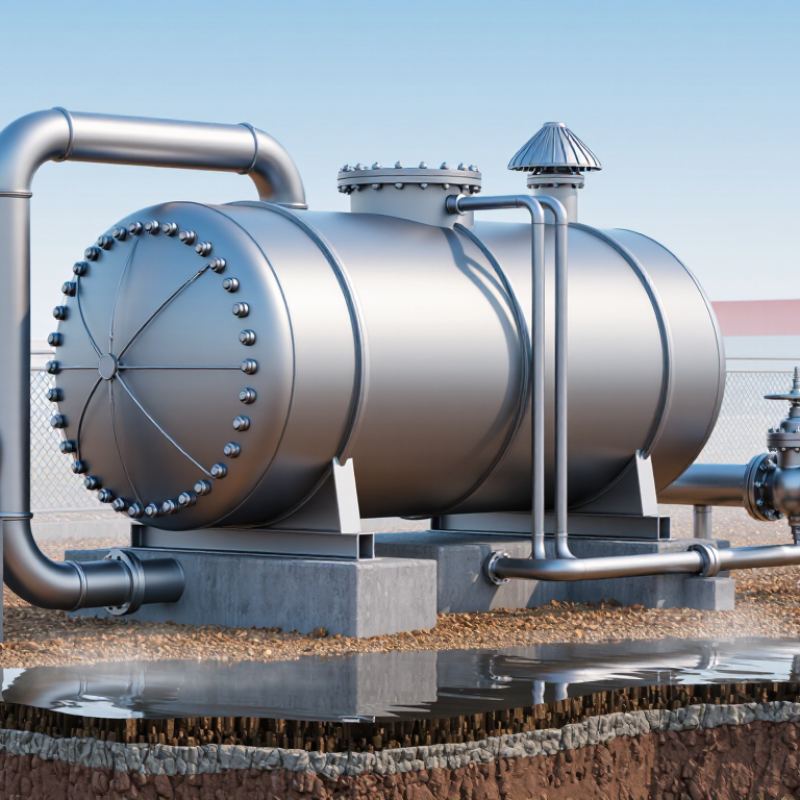
What Is an Oil Tank and How Does It Work?
An oil tank is a sealed container designed to store liquid oil safely until equipment needs it. It may hold heating oil, lubricating oil, or process fuel. The tank’s size depends on daily consumption, available space, and required storage time. A sound tank limits leaks, reduces contamination, and keeps the fluid accessible.
The tank shell forms the main storage chamber. Common core components include a fill pipe, vent pipe, outlet line, shutoff valve, and level gauge. The fill pipe guides oil into the tank, while the vent releases displaced air during filling. The outlet carries oil toward a burner, pump, or production system. A gauge shows the approximate level, but it can become inaccurate if damaged or poorly calibrated.
Support legs or saddles keep the tank stable and reduce contact with damp ground. Secondary containment provides an extra barrier beneath or around the tank. Inspection ports help technicians examine sediment, corrosion, and internal moisture. During inspections, a dry floor does not always prove the tank is sound. Corrosion can begin beneath supports or around fittings. That detail is easy to miss. Regular checks should examine seams, valves, pipe connections, and the surrounding surface. Maintenance records also improve reliability, although records can be incomplete or overlooked.
An oil tank stores liquid fuel for later delivery to a burner, generator, or other oil-powered equipment. Its main components typically include a tank shell, fill pipe, vent pipe, outlet line, level gauge, shutoff valve, and secondary containment where required.
Typical nominal capacities: The chart compares common above-ground oil-tank capacities in US gallons and their exact metric equivalents. Actual usable volume may be lower because tanks require safety space and should not be filled completely.
An oil tank stores liquid fuel in a controlled space, but its real job is protection. A steel shell resists pressure and impact. The roof limits water, dust, and sunlight exposure. Vents balance internal pressure during filling, withdrawal, and temperature changes. Without proper venting, pressure can stress the tank or distort its structure.
Protection also depends on details beneath the surface. The U.S. Environmental Protection Agency’s SPCC rule applies to facilities with more than 1,320 gallons of aboveground oil storage. It requires planning for leaks, drainage, and secondary containment. API 650 covers welded steel tank design, while API 653 inspection practices examine shells, roofs, bottoms, and foundations. These standards matter because corrosion often begins quietly around tank bottoms, seams, and water collection points. A tank may look sound and still need attention. That is an uncomfortable reality.
Tips: Keep the tank on a stable, level foundation. Check vents for blockage. Inspect seams, valves, and nearby soil for stains. Record product levels and unusual odors. Use a qualified inspector for thickness measurements and corrosion reviews. NFPA 30 also provides guidance on flammable and combustible liquid storage, including spacing and fire protection. Do not rely only on visual checks. Paint can hide corrosion, and clean floors can create false confidence. Small inspection gaps can become expensive problems.
An oil tank stores liquid fuel before controlled use. It may supply a home heating system, generator, or industrial burner. The U.S. Energy Information Administration’s Residential Energy Consumption Survey found that heating oil serves about 4% of American homes. That small share still represents millions of daily tank operations.
The step-by-step process begins when a delivery hose fills the tank through the inlet pipe. A gauge measures the rising level, while a vent releases displaced air safely. Inside, heavier water and sediment settle near the bottom. The outlet then draws cleaner oil toward a filter. A pump pushes the oil through the supply line at controlled pressure. The burner sprays a fine mist into a combustion chamber. Ignition creates heat, and the system transfers that heat to air or water. Some equipment returns unused oil through a separate line. Sensors stop the pump when pressure, temperature, or flame conditions become unsafe. The process sounds linear, but real systems are messier. Cold weather can thicken oil. Sediment can restrict flow.
Tips: Keep the gauge visible and record delivery dates. Inspect fittings for damp spots, rust, or unusual odors. The U.S. Environmental Protection Agency recommends regular tank checks because small leaks can contaminate soil and groundwater. Never ignore a damaged vent cap. A qualified technician should test alarms, filters, and shutoff controls. These checks seem minor, yet missed maintenance can interrupt heating and raise repair costs.
An oil tank stores liquid fuel or industrial oil until equipment needs it. A pump transfers the oil through pipes, while vents balance internal pressure. The tank does not create pressure by itself. Its shape, material, and capacity depend on the intended use. Small differences matter.
Above-ground tanks are common for home heating, generators, farms, and workshops. They are easier to inspect and replace, but weather can accelerate rust. Underground tanks save space and protect the tank from temperature changes. However, leaks can remain hidden and require careful monitoring.
Double-wall tanks add a second barrier around the inner container. This design can reduce environmental risks when the inner wall fails. Plastic tanks resist some forms of corrosion and are often lighter, but they still need suitable foundations and temperature control.
Tips:
Place the tank on a stable, level surface. Keep clear access around valves, gauges, and inspection points. Check for damp patches, unusual smells, rust, or cracked fittings. A qualified technician should examine tanks used for heating or industrial systems. Never store oil near flames, blocked vents, or incompatible chemicals. Written inspection records can reveal gradual changes that memory misses. No tank is maintenance-free, although that is easy to forget. Even a clean-looking tank may hide corrosion beneath its base. Personally, I would treat a small warning sign as useful evidence, not an inconvenience.
Safety, Maintenance, and Environmental Considerations
An oil tank stores liquid fuel for heating, machinery, or emergency power. It may stand outdoors, sit inside a building, or remain underground. A fill pipe brings fuel into the tank, while an outlet sends it to a burner or pump. A vent balances air pressure during filling and use. Without proper ventilation, pressure can build dangerously.
Safety begins with location and condition. Keep tanks away from ignition sources, vehicle impact, and blocked access. During routine checks, look for rust, damp patches, cracked fittings, unusual odors, or a rising fuel level without use. A small leak matters. Have qualified technicians inspect valves, gauges, supports, and connections according to local requirements. Overfill protection and emergency shutoff equipment also deserve regular testing. Never drill, weld, or modify a tank without professional guidance.
Environmental care requires more than preventing visible spills. Use suitable secondary containment, protect nearby drains, and keep an appropriate spill-response kit available. Underground tanks need specialized testing because soil can hide contamination for months. Even a clean-looking tank can fail beneath its surface. That is easy to forget. Keep inspection records, repair leaks quickly, and arrange fuel removal through authorized service providers when replacing or abandoning a tank. Local rules may require reporting, testing, or certified decommissioning. A checklist helps, but it cannot replace careful judgment.
We use cookies on our website to give you an improved browser experience. View our Privacy Policy for more information. Please make your selection to opt in or out of ALL cookies here: Accept or Decline
Do you consent to the use of ALL cookies?
901 2nd Court West
Birmingham, AL 35204
Sales: 866.481.4036
Logistics/Ops: 866.481.4036
2101 Dralle Road
University Park, IL 60466
Sales: 708.813.9070
Logistics/Ops: 708.235.4200
400 E. 13th Street
Little Rock, AR 72114
Sales: 866.760.5344
Logistics/Ops: 866.760.5344
225 Collins Road
Elkhart, IN 46515
Sales: 574.295.0214
Logistics/Ops: 574.607.4611
601 Berryman Pike
Tipton, IN 46072
Sales: 800.897.7591
Logistics/Ops: 800.897.7591
3900 Uvalda Street
Denver, CO 80239
Sales: 303.706.8000
Ops/Logistics: 303.576.8398
510 3rd Street E
Milan, IL 61264
Sales: 800.322.1052
Logistics/Ops: 800.322.1052
1660 E. Aurora
Des Moines, IA 50313
Sales: 800.671.1660
Logistics: 800.671.1660
86554 Gene Lasserre Blvd.
Yulee, FL 32097
Sales: 904.253.3060
Logistics/Ops: 904.225.3000
694 S.E. County Road 245
Lake City, FL 32025
Sales: 800.727.6706
Logistics/Ops: 386.752.7412
210 Neptune Road
Auburndale, FL 33823
Sales: 863.967.1131
Logistics/Ops: 863.777.9814
4601 McCoy Drive
Pensacola, FL 32503
Sales: 850.308.7030
Logistics/Ops: 850.434.5502
815 South 56th Street
Tampa, FL 33619
Sales: 813.302.1940
Logistics/Ops: 813.621.1352
200 Hosea Road
Lawrenceville, GA 30046
Sales: 770.953.7575
Logistics/Ops: 770.513.6000
Branch Product Guide
Branch Line Card
Moulding Offering
Cedar Offering
Column Offering
8173 Hwy. 165 North
Monroe, LA 71211
Sales: 800.256.4165
Logistics/Ops: 800.256.4165
508 Warren Avenue
Portland, ME 04103
Sales: 207.888.2331
Logistics/Ops: 207.797.6565
4300 Georgia Pacific Blvd.
Frederick, MD 21704
Sales: 301.798.7474
Logistics/Ops: 301.874.8000
419 Maple Street
Bellingham, MA 02019
Sales: 508.449.0535
Logistics/Ops: 508.966.5500
825 Buchanan Ave SW
Grand Rapids, MI 49507
Sales: 877.800.1180
Logistics/Ops: 616.278.0909
995 Pacific St. NW
Aitkin, MN 56431
Sales: 800.432.3727
Logistics/Ops: 218.212.7770
1102 Port Terminal Drive
Duluth, MN 55802
Sales: 800.951.9899
Logistics/Ops: 800.851.9899
9110 83rd Ave. North
Brooklyn Park, MN 55445
Sales: 763.425.0204
Logistics/Ops: 763.425.0204
910 E. Railroad Street
Long Beach, MS 39560
Sales: 866.535.4135
Logistics/Ops: 228.205.2400
1727 Warren Street
North Kansas City, MO 64116
Sales: 800.621.2611
Logistics/Ops: 800.621.2611
2123 North Golden
Springfield, MO 65803
Sales: 800.375.7891
Logistics/Ops: 800.375.7891
13860 Corp. Woods Trail
Bridgeton, MO 63044
Sales: 314.209.0800
Logistics/Ops: 314.209.0800
1109 South 19th Street
Omaha, NE 68108
Sales: 800.489.6637
Logistics/Ops: 800.489.6637
1 Luger Road
Denville, NJ 07834
Sales: 973-339-3539
Logistics/Ops: 973.625.1461
3720 Jeffrey Blvd.
Blasdell, NY 14219
Sales: 716.235.5989
Logistics/Ops: 716.825.6557
319 Yaphank Ave.
Yaphank, NY 11980
Sales: 631.358.5714
Logistics/Ops: 631.924.7401
3300 Parkside Drive
Charlotte, NC 28208
Sales: 800.839.2588
Logistics/Ops: 704.394.3172
1712 East D Street
Butner, NC 27509
Sales: 984.389.8200
Logistics/Ops: 919.575.3700
128 Foothills Drive
Statesville, NC 28687
Sales: 800.222.1414
Logistics/Ops: 704.394.3172
550 Munroe Falls Rd.
Tallmadge, OH 44278
Sales: 330.357.4506
Logistics/Ops: 330.794.1141
10347 Toebben Dr.
Independence, KY 41051
Sales: 859.298.3926
Logistics/Ops: 859.746.2250
450 N. MacArthur
Oklahoma City, OK 73127
Sales: 800.375.6025
Logistics/Ops: 800.375.6025
1680 North Aspen
Broken Arrow, OK 74012
Sales: 918.272.2212
Logistics/Ops: 918.272.2212
522 Bridge Street
Hunker, PA 15639
Sales: 878.217.2001
Logistics/Ops: 724.925.7285
4290 Atlanta Street
Charleston, SC 29418
Sales: 843.371.1420
Logistics/Ops: 843.554.8192
1040 S. Industrial Dr.
Erwin, TN 37650
Sales: 423.641.1005
Logistics/Ops: 423.742.5911
4287 Pilot Drive
Memphis, TN 38118
Sales: 901.365.2101
Logistics/Ops: 901.365.2101
700 Myatt Drive
Madison, TN 37115
Sales: 615.327.9547
Logistics/Ops: 629.777.4949
4747 Mark IV Parkway
Fort Worth, TX 76106
Sales: 866.323.5117
Logistics/Ops: 817.625.9091
6990 Market Avenue
El Paso, TX 79915
Sales: 915.778.6356
Logistics/Ops: 915.265.7200
2502 Wilson Road
Harlingen, TX 78552
Sales: 800.580.6711
Logistics/Ops: 800.580.6711
10,000 North Loop East
Houston, TX 77029
Sales: 713.921.1977
Logistics/Ops: 713.675.3544
702 East 44th St.
Lubbock, TX 79404
Sales: 866.454.6010
Logistics/Ops: 866.454.6010
535 N. WW White Road
San Antonio, TX 78219
Sales: 800.284.0488
Logistics/Ops: 210.333.8112
142 Pine Haven Shores Rd.
Shelburne, VT 05482
Sales: 802.800.2540
Logistics/Ops: 802.985.2512
4700 Bethlehem Road,
Richmond, VA 23230
Sales: 804.201.2400
Logistics/Ops: 804.342.1161
4516 N Barker Road
Spokane Valley, WA 99027
Phone: 509.892.9420
Toll free: 800.728.6157
8365 N. 76th Street
Milwaukee, WI 53223
Sales: 800.356.9245
Logistics/Ops: 800.356.9245
312 S. Chester Street
Sparta, WI 54656
Sales: 800.362.5864
Logistics/Ops: 800.362.5864
899 Grossman Drive
Schofield, WI 54476
Sales: 800.472.0017
Logistics/Ops: 800.472.0017
