
We use cookies on our website to give you an improved browser experience. View our Privacy Policy for more information. Please make your selection to opt in or out of ALL cookies here: Accept or Decline
How Can Global Buyers Find Discount Lumber in China?
Global buyers are looking beyond familiar suppliers for discount lumber, but low pricing alone proves very little. China offers extensive processing capacity, established port infrastructure, and access to imported softwood and hardwood species. The USDA Foreign Agricultural Service’s China Wood Products Annual reports that construction, furniture, and renovation demand continue influencing China’s wood-product imports. FAOSTAT forestry data also confirms China’s important position in global wood-product trade.
Price is only one part.
A reliable sourcing review should compare species, dimensions, moisture content, grade, packaging, and shipment terms. A 2×4 kiln-dried board may look inexpensive until inspection fees, inland transport, duties, and port charges are added. Buyers should request mill photographs, recent test records, treatment details, and a traceable packing list. Independent pre-shipment inspection can reveal warped boards, inconsistent lengths, or excessive moisture before loading. It is not flawless, though. Inspection samples may miss problems hidden inside a full container.
Certification also matters. FSC chain-of-custody documentation can support responsible sourcing claims, while phytosanitary requirements and import rules must be checked with competent authorities. The International Tropical Timber Organization and the Forest Stewardship Council provide useful references for legal and responsible timber procurement. Buyers should verify each supplier’s business registration, production history, export experience, and contract terms. Incoterms must be understood clearly.
Cheap can become expensive.
A practical comparison should use landed cost, not the factory quotation alone. Currency changes, delayed production, rejected batches, and storage costs can quickly erase savings. The best opportunity is usually not the lowest offer. It is a transparent, inspected, legally compliant supply arrangement that remains dependable after delivery.
Table of Contents
[Hide]
Understanding China’s Discount Lumber Market
China’s discount lumber market is broad, but low prices need careful interpretation. Suppliers may reduce prices because of excess inventory, mixed dimensions, seasonal demand, or minor surface defects. These reasons do not always indicate poor quality. However, buyers should confirm the lumber’s species, grade, moisture level, treatment status, and actual measurements.
A discounted offer may include shorter boards, uneven color, rough edges, or limited packaging. Ask for recent factory photos, inspection samples, and a detailed packing list. Confirm whether the quoted price includes inland transport, export packing, and loading fees. Documentation also matters. Check material declarations, legal sourcing records, and destination-country import requirements. A cheaper shipment can become expensive when specifications are unclear. That lesson is easy to overlook.
Tips: Compare three or more quotations with identical specifications. Request moisture readings from several bundles, not one board. Use an independent inspection before payment when the order is large. Keep a written tolerance for thickness, length, defects, and packaging. Do not rely only on polished sample photos. Real cargo may look different. A small trial order can reveal packing weaknesses, inconsistent grading, or delayed production. Buyers should also review supplier communication carefully. Slow answers often signal weak process control, although not always. Discount lumber can be valuable, but only when the discount has a clear, verifiable reason.
How Can Global Buyers Find Discount Lumber in China? - Understanding China’s Discount Lumber Market
| Discount Lumber Segment | Common Wood Type | Typical Market Specification | Why It May Be Discounted | Buyer Quality Checks | Relative Discount Potential | Best Application |
|---|---|---|---|---|---|---|
| Overstocked softwood bundles | Spruce, pine, fir, or radiata pine | Rough-sawn or planed boards; commonly 18–50 mm thick and 75–250 mm wide | Excess inventory, slow local demand, or cancellation of an original order | Bundle count, average length, moisture content, wane, splits, twist, and insect damage | Medium to high | Packaging, pallets, furniture components, and general construction |
| Short-length lumber | Pine, spruce, fir, or poplar | Often below 2.4 m; exact length distribution should be agreed before shipment | Lower demand for short pieces compared with full-length boards | Minimum length, percentage of pieces below target length, end checks, and usable yield | High | Small furniture parts, crates, dunnage, interior framing, and cut-to-size projects |
| Mixed-grade bundles | Softwood or hardwood, depending on the lot | Multiple visual grades or thicknesses within one shipment | Mixed production output, downgraded boards, or non-standard sorting | Written grade ratio, defect limits, random bundle inspection, and photo records | Medium to high | Projects that can tolerate visual variation and selective processing |
| Downgraded visual grade | Oak, beech, ash, pine, or other commercially available species | Lower visual grade with knots, color variation, small checks, or limited wane | Boards fail a higher appearance grade but remain structurally or functionally usable | Defect size and frequency, strength requirements, surface machining allowance, and usable yield | Medium | Painted furniture, concealed parts, industrial packaging, and rustic designs |
| Air-dried lumber | Hardwood and selected softwood species | Moisture content is usually higher and less uniform than kiln-dried stock | Lower processing cost and longer inventory storage period | Moisture readings at several points, end sealing, fungal staining, mold, and storage conditions | Medium | Outdoor use, secondary processing, rustic products, and projects with on-site acclimatization |
| Non-standard thickness or width | Pine, fir, spruce, poplar, or hardwood | Custom dimensions outside the buyer’s regular cutting list | Limited local demand and higher difficulty in reselling the inventory | Actual finished dimensions, tolerance, machining allowance, and compatibility with production equipment | Medium to high | Specialized components, custom packaging, and projects using CNC or secondary machining |
| Reclaimed or recycled timber | Pine, fir, hardwood, or mixed species | Variable dimensions, visible aging, and possible nail or fastener holes | Material has been recovered from dismantled structures, pallets, or previous use | Metal contamination, chemical treatment, pest evidence, structural integrity, and export eligibility | Medium | Decorative panels, furniture accents, display fixtures, and non-structural applications |
| Machining or surface-defect lots | Softwood or hardwood | Boards with planer marks, rough areas, edge damage, or minor dimensional variation | Appearance defects that can be removed through sanding, trimming, or re-machining | Remaining thickness after processing, defect depth, straightness, and available machining allowance | Medium to high | Secondary manufacturing, painted products, and cut-to-size components |
Buyer reference notes:
Actual lumber prices in China vary by species, grade, moisture content, origin, length distribution, exchange rates, freight, customs requirements, and order volume. Before purchasing a discounted lot, request a bundle list, moisture report, defect photographs, packing details, and a pre-shipment inspection. For interior applications, many buyers specify kiln-dried lumber near 8–12% moisture content, but the final requirement should match the destination climate and end use.
Related Posts
-
Top 10 Construction Materials You Need to Know About?
-
How to Choose the Right Building Materials Stores for Your Project?
-
Why Choose Discount Lumber for Your Next Project?
-
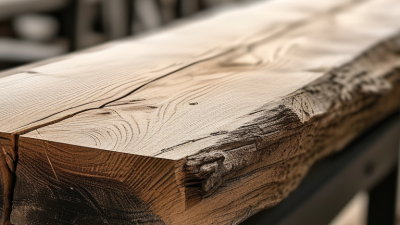
What is Discount Lumber and How to Buy It Effectively?
-
Top Building Materials for Home Construction and Renovation Projects
-
Why Building Solutions Are Essential for Sustainable Infrastructure Development
