
We use cookies on our website to give you an improved browser experience. View our Privacy Policy for more information. Please make your selection to opt in or out of ALL cookies here: Accept or Decline
Choosing the right Galvanized Grating in 2026 requires more than comparing prices and visual finishes. A safe selection begins with the actual service environment, expected loads, and installation conditions. A walkway beside a cooling tower faces moisture, chemicals, and frequent foot traffic. A rooftop platform may need different spacing, support, and maintenance access.
Professional buyers should confirm panel dimensions, bearing-bar depth, cross-bar spacing, and surface type before ordering. Serrated surfaces can improve traction in wet areas, while smooth surfaces may simplify cleaning. The zinc coating also deserves close attention. Ask for coating specifications, inspection records, and traceable material documentation. Reliable suppliers should provide drawings, load tables, and clear tolerances. Independent testing can add confidence when the application carries significant operational risk.
There is no universal “best” grating. That assumption causes expensive mistakes. A heavier panel is not automatically the safest choice if the supporting structure is weak. Likewise, a low-cost product may create problems through poor fit, uneven welding, or premature corrosion. Site measurements should be checked twice, preferably against approved engineering drawings. I have seen projects delay installation because a small opening dimension was overlooked. It sounds minor. It was not.
In 2026, responsible selection should balance safety, durability, drainage, maintenance, and lifecycle cost. Consult a qualified engineer when loads or environmental exposure remain uncertain. Practical evidence matters more than attractive brochures. The right decision is specific, documented, and open to review.
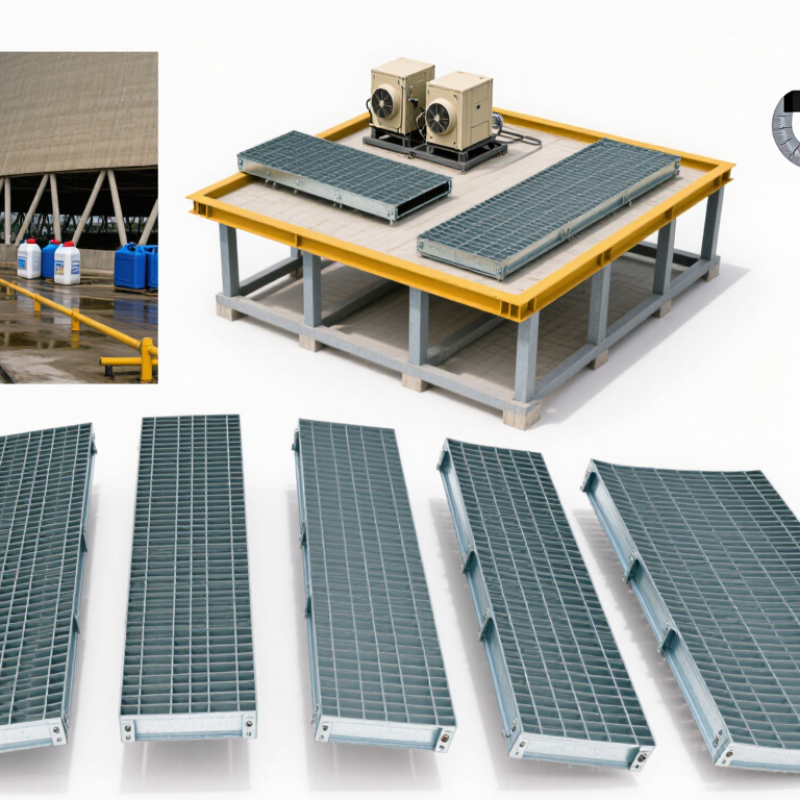
Galvanized grating is a steel grid coated with zinc, usually through hot-dip galvanizing. The zinc layer protects exposed steel from moisture, oxygen, and many industrial contaminants. Open surfaces allow water, mud, and light debris to pass through. This makes grating practical for platforms, walkways, drainage covers, and maintenance areas.
Open surfaces allow water, mud, and light debris to pass through.
In 2026, selection should consider more than appearance. Check the required load, span, bar spacing, surface finish, and installation environment. A walkway near the coast may need stronger corrosion protection than one inside a dry warehouse. Serrated bars can improve traction under wet boots. However, they may collect dirt more easily. During site inspections, I have seen well-made grating fail because supports were spaced too widely. The material was not always the problem.
Tips: Measure the opening carefully. Confirm load requirements with a qualified engineer. Compare zinc coating thickness and inspection records. Ask whether cut edges need additional protection. Keep drainage paths clear. Small details matter.
Reliable purchasing also requires traceable documentation. Request material certificates, dimensional checks, and coating test results. Review local safety requirements before installation. A lighter panel may reduce handling effort, but it could deform under repeated traffic. I once underestimated maintenance access in a compact plant room. The grating worked, yet removal was awkward. That mistake changed how I assess access, not only strength.
Choosing galvanized grating begins with the load path, not the zinc finish. Measure the clear span between supports, then identify the bearing-bar direction. The 2023 Metal Bar Grating Manual separates uniform loads from concentrated loads in its design tables. That distinction matters. A 1,000-pound point load is not equal to 1,000 pounds per square foot.
For walkways, platforms, and maintenance areas, list people, tools, carts, and stored materials separately. Select bearing-bar depth and thickness from the combined load, span, and spacing. Wider spans usually require deeper bars or an intermediate support. Do not judge strength by appearance alone. A light-looking panel may perform well over a short span, while the same panel can deflect noticeably over a longer opening. Deflection limits, often specified near L/200 or L/240, must follow the project specification and local engineering rules.
Connection details also influence real performance. Check seat depth, support width, clip capacity, panel vibration, and openings near edges. The grating may be strong, but a weak support can control the failure. Galvanizing protects steel from atmospheric corrosion; it does not increase the design load. ASTM A123/A123M-24 provides coating requirements for hot-dip galvanized structural steel, so verify coating class and inspection records. Field conditions are rarely perfect. Mud, damaged zinc, or poor alignment deserves correction before installation. A rushed span assumption is an expensive shortcut.
| Typical Use | Clear Span | Indicative Service Load | Recommended Bearing Bar | Typical Cross-Bar Pitch | Preferred Surface | Design Considerations |
|---|---|---|---|---|---|---|
| Light-duty walkway | 600 mm | 2.5 kPa uniformly distributed load | 25 × 3 mm serrated bearing bars | 100 mm nominal | Serrated for improved slip resistance | Suitable for pedestrian access where the supporting frame is rigid and properly aligned. |
| Standard industrial platform | 900 mm | 4.8 kPa uniformly distributed load | 32 × 5 mm serrated bearing bars | 100 mm nominal | Serrated or plain, subject to walkway conditions | Check both uniform loading and concentrated loads from maintenance equipment. |
| Longer-span access walkway | 1,200 mm | 4.8 kPa uniformly distributed load | 40 × 5 mm serrated bearing bars | 100 mm nominal | Serrated with nosing where edge visibility is required | Use a deeper bearing bar or add intermediate supports if deflection is excessive. |
| Heavy-duty plant platform | 1,000 mm | 7.5 kPa uniformly distributed load | 40 × 5 mm or 50 × 5 mm bearing bars | 50 or 100 mm nominal | Serrated for wet or contaminated areas | Verify point loads, impact, equipment feet, and the required serviceability limit. |
| Maintenance trolley route | 750 mm | 4.8 kPa plus a specified wheel or point load | 40 × 5 mm bearing bars | 50 mm nominal preferred | Plain or serrated, depending on wheel compatibility | A wheel-load calculation is required; uniform-load capacity alone is not sufficient. |
| Drainage trench or removable cover | 500 mm | Vehicle or wheel load specified by the project | 50 × 5 mm or engineered heavier section | 30–50 mm nominal | Plain surface for rolling loads; serrated only when slip resistance is critical | Design for the actual axle, wheel, or point load and include bearing-seat details. |
| Open-air or corrosive service area | Up to 1,200 mm | Project-specific load; commonly 2.5–4.8 kPa for pedestrian areas | Select from span and load calculation | 30, 50, or 100 mm nominal | Hot-dip galvanized after fabrication; serrated where needed | Confirm the required zinc coating specification, drainage, ventilation, and corrosion environment. |
Material choice determines how well grating survives pressure, moisture, and daily wear. Most galvanized grating uses carbon steel with a hot-dip zinc coating. This combination offers strong load capacity and practical corrosion resistance. For coastal sites, stainless steel may perform better, although its higher cost needs careful justification. Aluminum is lighter, but it may not suit heavy industrial traffic.
The finish matters more than appearance. A continuous zinc layer should cover surfaces, edges, welds, and recessed areas. Ask for coating thickness records and inspection results, not only a polished sample. Standards such as ISO 1461 or ASTM A123 can support quality checks. Drainage also matters. Trapped water can attack steel beneath an otherwise sound coating.
Some projects need a duplex system: galvanizing plus paint or powder coating. The zinc protects exposed steel when the outer layer is scratched. Surface preparation remains critical, especially after transport or welding.
In chemical plants, confirm compatibility with acids, alkalis, and cleaning agents before selection. Salt spray testing can help, but it does not perfectly reproduce every jobsite.
One detail is often missed.
Cut edges and drilled holes need suitable repair treatment. A thin touch-up layer may look acceptable but fail early. I would also review loading assumptions with the fabricator, because coating performance cannot correct undersized steel.
Over-specifying coatings is possible too. It can raise costs without improving service life. Evaluate the environment, maintenance access, and expected traffic together.
Choosing galvanized grating starts with the surface, not the price. Plain surfaces suit dry platforms and light foot traffic. Serrated surfaces offer stronger grip near oil, rain, mud, or process water. The difference is practical: a wet shoe needs an edge to hold. For stairs, use serrated bearing bars, visible nosing, and consistent tread dimensions. Check load tables carefully. A grating panel supporting people, carts, or equipment needs the correct span and bearing-bar depth.
The American Galvanizers Association reports that hot-dip galvanized coatings can protect steel for more than 70 years in rural environments. Service life may fall to about 20–40 years in industrial exposure, depending on pollutants and moisture. Select drainage-friendly panels, adequate openings, and removable sections for maintenance. Bolted clips usually simplify replacement. Welded connections may be rigid, but damaged zinc protection requires approved repair procedures. Small details matter.
Tips: Confirm the actual load, span, and opening size with the supplier’s engineer. Ask for coating thickness records and material certificates. Do not assume “galvanized” means maintenance-free. Inspect cut edges, clamps, and stair nosings after installation. One common mistake is choosing a smooth surface for a wet area because it looks cleaner. That choice may age badly. Recheck the site conditions before ordering.
Compare surface style, safety features, and installation options using common metric grating configurations.
Choose plain surfaces for cleaner, easier-to-maintain areas. Serrated bearing bars provide additional slip resistance for wet, oily, or outdoor locations.
Check load capacity, opening size, span, toe plates, handrails, and local regulations. Smaller openings can help reduce dropped-object risks.
Use removable clips where access is required. Bolted or welded connections are suitable when a more permanent installation is needed.
Open-area values are calculated from the listed bearing-bar width and spacing: open area = (spacing − bar width) ÷ spacing. Final selection must be verified against project loads, span, deflection limits, and applicable safety standards.
Choosing galvanized grating in 2026 means comparing evidence, not shiny surfaces. Compliance starts with the duty: pedestrians, forklifts, chemicals, or roof access. Specify span, bearing-bar depth, opening size, load rating, and slip resistance against applicable codes. ISO 1461 defines minimum coating requirements for hot-dip galvanized fabricated steel. Request measured coating records, not a generic certificate. Shortcuts are expensive.
Cost should include freight, installation, cleaning, touch-up, and replacement. The NACE IMPACT study estimated global corrosion costs at $2.5 trillion, or 3.4% of global GDP. That figure covers all corrosion, not grating alone. Still, it exposes the scale of neglected maintenance. International Zinc Association guidance shows zinc coating life can extend for decades, depending on exposure and coating thickness. Design drainage carefully. Trapped water defeats good galvanizing. Inspect cut edges, welds, blocked openings, and damaged surfaces; ASTM A780 provides recognized repair guidance.
Supplier quality requires traceability from steel heat numbers to the finished panel. Ask for material certificates, dimensional checks, weld inspection records, coating measurements, and a clear nonconformance process. Compare sample panels for flatness, warped bearing bars, sharp projections, and consistent spacing. On real sites, small irregularities complicate installation. I would challenge any quotation that omits tolerances or test methods. A low price may simply transfer risk to maintenance teams. Measure the risk. Not always.
We use cookies on our website to give you an improved browser experience. View our Privacy Policy for more information. Please make your selection to opt in or out of ALL cookies here: Accept or Decline
Do you consent to the use of ALL cookies?
901 2nd Court West
Birmingham, AL 35204
Sales: 866.481.4036
Logistics/Ops: 866.481.4036
2101 Dralle Road
University Park, IL 60466
Sales: 708.813.9070
Logistics/Ops: 708.235.4200
400 E. 13th Street
Little Rock, AR 72114
Sales: 866.760.5344
Logistics/Ops: 866.760.5344
225 Collins Road
Elkhart, IN 46515
Sales: 574.295.0214
Logistics/Ops: 574.607.4611
601 Berryman Pike
Tipton, IN 46072
Sales: 800.897.7591
Logistics/Ops: 800.897.7591
3900 Uvalda Street
Denver, CO 80239
Sales: 303.706.8000
Ops/Logistics: 303.576.8398
510 3rd Street E
Milan, IL 61264
Sales: 800.322.1052
Logistics/Ops: 800.322.1052
1660 E. Aurora
Des Moines, IA 50313
Sales: 800.671.1660
Logistics: 800.671.1660
86554 Gene Lasserre Blvd.
Yulee, FL 32097
Sales: 904.253.3060
Logistics/Ops: 904.225.3000
694 S.E. County Road 245
Lake City, FL 32025
Sales: 800.727.6706
Logistics/Ops: 386.752.7412
210 Neptune Road
Auburndale, FL 33823
Sales: 863.967.1131
Logistics/Ops: 863.777.9814
4601 McCoy Drive
Pensacola, FL 32503
Sales: 850.308.7030
Logistics/Ops: 850.434.5502
815 South 56th Street
Tampa, FL 33619
Sales: 813.302.1940
Logistics/Ops: 813.621.1352
200 Hosea Road
Lawrenceville, GA 30046
Sales: 770.953.7575
Logistics/Ops: 770.513.6000
Branch Product Guide
Branch Line Card
Moulding Offering
Cedar Offering
Column Offering
8173 Hwy. 165 North
Monroe, LA 71211
Sales: 800.256.4165
Logistics/Ops: 800.256.4165
508 Warren Avenue
Portland, ME 04103
Sales: 207.888.2331
Logistics/Ops: 207.797.6565
4300 Georgia Pacific Blvd.
Frederick, MD 21704
Sales: 301.798.7474
Logistics/Ops: 301.874.8000
419 Maple Street
Bellingham, MA 02019
Sales: 508.449.0535
Logistics/Ops: 508.966.5500
825 Buchanan Ave SW
Grand Rapids, MI 49507
Sales: 877.800.1180
Logistics/Ops: 616.278.0909
995 Pacific St. NW
Aitkin, MN 56431
Sales: 800.432.3727
Logistics/Ops: 218.212.7770
1102 Port Terminal Drive
Duluth, MN 55802
Sales: 800.951.9899
Logistics/Ops: 800.851.9899
9110 83rd Ave. North
Brooklyn Park, MN 55445
Sales: 763.425.0204
Logistics/Ops: 763.425.0204
910 E. Railroad Street
Long Beach, MS 39560
Sales: 866.535.4135
Logistics/Ops: 228.205.2400
1727 Warren Street
North Kansas City, MO 64116
Sales: 800.621.2611
Logistics/Ops: 800.621.2611
2123 North Golden
Springfield, MO 65803
Sales: 800.375.7891
Logistics/Ops: 800.375.7891
13860 Corp. Woods Trail
Bridgeton, MO 63044
Sales: 314.209.0800
Logistics/Ops: 314.209.0800
1109 South 19th Street
Omaha, NE 68108
Sales: 800.489.6637
Logistics/Ops: 800.489.6637
1 Luger Road
Denville, NJ 07834
Sales: 973-339-3539
Logistics/Ops: 973.625.1461
3720 Jeffrey Blvd.
Blasdell, NY 14219
Sales: 716.235.5989
Logistics/Ops: 716.825.6557
319 Yaphank Ave.
Yaphank, NY 11980
Sales: 631.358.5714
Logistics/Ops: 631.924.7401
3300 Parkside Drive
Charlotte, NC 28208
Sales: 800.839.2588
Logistics/Ops: 704.394.3172
1712 East D Street
Butner, NC 27509
Sales: 984.389.8200
Logistics/Ops: 919.575.3700
128 Foothills Drive
Statesville, NC 28687
Sales: 800.222.1414
Logistics/Ops: 704.394.3172
550 Munroe Falls Rd.
Tallmadge, OH 44278
Sales: 330.357.4506
Logistics/Ops: 330.794.1141
10347 Toebben Dr.
Independence, KY 41051
Sales: 859.298.3926
Logistics/Ops: 859.746.2250
450 N. MacArthur
Oklahoma City, OK 73127
Sales: 800.375.6025
Logistics/Ops: 800.375.6025
1680 North Aspen
Broken Arrow, OK 74012
Sales: 918.272.2212
Logistics/Ops: 918.272.2212
522 Bridge Street
Hunker, PA 15639
Sales: 878.217.2001
Logistics/Ops: 724.925.7285
4290 Atlanta Street
Charleston, SC 29418
Sales: 843.371.1420
Logistics/Ops: 843.554.8192
1040 S. Industrial Dr.
Erwin, TN 37650
Sales: 423.641.1005
Logistics/Ops: 423.742.5911
4287 Pilot Drive
Memphis, TN 38118
Sales: 901.365.2101
Logistics/Ops: 901.365.2101
700 Myatt Drive
Madison, TN 37115
Sales: 615.327.9547
Logistics/Ops: 629.777.4949
4747 Mark IV Parkway
Fort Worth, TX 76106
Sales: 866.323.5117
Logistics/Ops: 817.625.9091
6990 Market Avenue
El Paso, TX 79915
Sales: 915.778.6356
Logistics/Ops: 915.265.7200
2502 Wilson Road
Harlingen, TX 78552
Sales: 800.580.6711
Logistics/Ops: 800.580.6711
10,000 North Loop East
Houston, TX 77029
Sales: 713.921.1977
Logistics/Ops: 713.675.3544
702 East 44th St.
Lubbock, TX 79404
Sales: 866.454.6010
Logistics/Ops: 866.454.6010
535 N. WW White Road
San Antonio, TX 78219
Sales: 800.284.0488
Logistics/Ops: 210.333.8112
142 Pine Haven Shores Rd.
Shelburne, VT 05482
Sales: 802.800.2540
Logistics/Ops: 802.985.2512
4700 Bethlehem Road,
Richmond, VA 23230
Sales: 804.201.2400
Logistics/Ops: 804.342.1161
4516 N Barker Road
Spokane Valley, WA 99027
Phone: 509.892.9420
Toll free: 800.728.6157
8365 N. 76th Street
Milwaukee, WI 53223
Sales: 800.356.9245
Logistics/Ops: 800.356.9245
312 S. Chester Street
Sparta, WI 54656
Sales: 800.362.5864
Logistics/Ops: 800.362.5864
899 Grossman Drive
Schofield, WI 54476
Sales: 800.472.0017
Logistics/Ops: 800.472.0017
