
We use cookies on our website to give you an improved browser experience. View our Privacy Policy for more information. Please make your selection to opt in or out of ALL cookies here: Accept or Decline
Choosing the right Aluminum Composite Panel Factory is more than comparing prices on a spreadsheet. It is a practical decision about safety, consistency, technical support, and long-term façade performance. A factory may show bright samples, but the real evidence appears in its production records, testing reports, and finished projects.
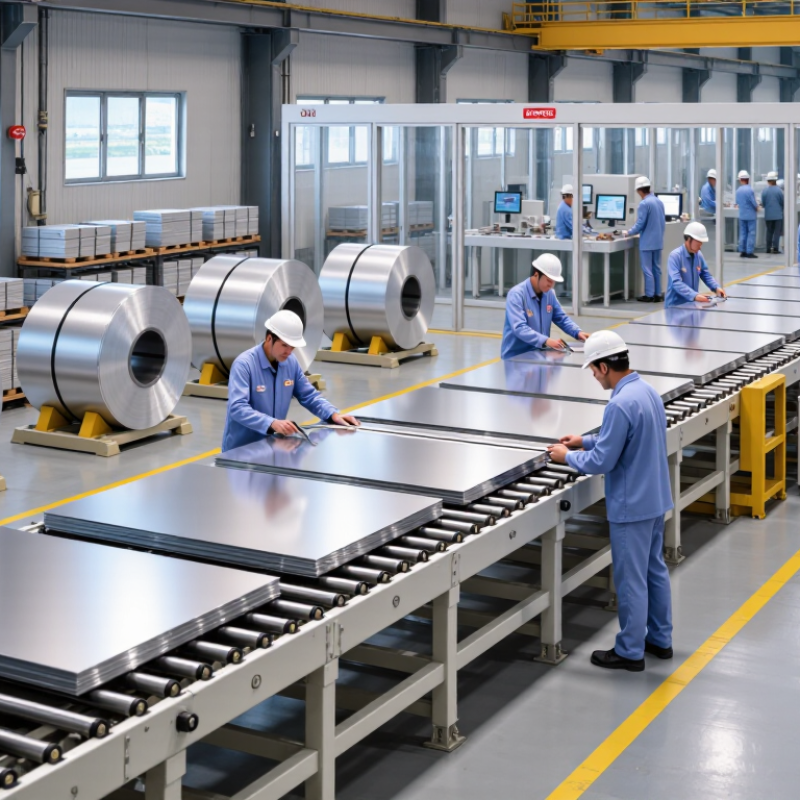
Dr. Joseph Lstiburek, a respected building-science authority, often emphasizes this principle: “Water is patient.” That short warning matters when evaluating an Aluminum Composite Panel Factory. Ask how the factory controls moisture, coating adhesion, core quality, flatness, and dimensional accuracy. Request current fire-performance documentation, not an old brochure. Inspect the production line if possible. Look for clean cutting areas, labeled coils, calibrated equipment, and workers checking panels before packing.
Small details matter.
A reliable supplier should explain its alloy grade, panel thickness, coating system, tolerance range, and quality-control process without hiding behind vague claims. It should also provide traceable batch numbers and realistic delivery schedules. Some factories offer impressive guarantees, yet their after-sales response remains unclear. That is a warning worth considering. My own assessment would not rely on one factory visit or one attractive sample; weather exposure, installation quality, and maintenance can change the final result. Even experienced buyers can overlook these variables.
This guide will examine factory capability, certifications, raw materials, testing standards, customization, communication, and service support. The goal is not to find the loudest seller. It is to find a manufacturer whose evidence survives close questions, repeated inspections, and years of actual use.
How to Choose an Aluminum Composite Panel Factory
An aluminum composite panel factory produces more than finished sheets. It converts coated aluminum coils, polymer or mineral cores, adhesives, and protective films into stable building panels. Production usually includes coil cleaning, primer application, color coating, lamination, cooling, trimming, and protective-film installation. Each stage affects flatness, color consistency, bonding strength, and weather resistance.
A serious factory should provide batch records and test results. Ask for panel thickness, aluminum skin thickness, core composition, coating performance, and fire classification. Independent testing should cover peel strength, impact resistance, aging, and dimensional stability. The 2024 Grand View Research analysis estimated steady growth in the global aluminum composite panel market, driven by construction and renovation demand. Growth can pressure factories to shorten inspection time. That is a warning sign.
The International Aluminium Institute reports that recycled aluminum requires about 5% of the energy used for primary aluminum production. Therefore, a factory with controlled scrap separation can improve material efficiency. Look for recycling records, calibrated coating equipment, and documented sampling frequency. A clean showroom is not enough. I would inspect panel edges, corners, and film adhesion by hand. Small defects often appear there first. A factory may offer impressive samples, yet inconsistent core thickness can create installation problems. The uncomfortable truth is simple: no production line is perfect. Reliable factories admit limits, explain corrective actions, and keep traceable records.
| Evaluation Dimension | Typical Factory Output or Capability | Common Technical Data | What to Verify Before Selection |
|---|---|---|---|
| Panel Construction | Flat aluminum composite panels made from two aluminum skins bonded to a thermoplastic or mineral-filled core. | Three-layer construction: aluminum skin, core material, and aluminum skin. A protective coating is normally applied to the exterior surface. | Ask for cross-section samples, core composition details, bonding-process information, and production drawings. |
| Standard Panel Thickness | Panels for exterior cladding, signage, interior walls, ceilings, partitions, and fabrication work. | Common overall thicknesses are approximately 3 mm, 4 mm, and 6 mm. Thicker panels may be available for specialized applications. | Confirm thickness tolerance, flatness, squareness, and whether the stated thickness includes the aluminum skins and core. |
| Aluminum Skin Thickness | Lightweight skins for general signage and interior use, with heavier skins for façades and forming applications. | Typical aluminum skin thickness ranges from about 0.05 mm to 0.50 mm per side, depending on the product grade and application. | Check the actual measured skin thickness, aluminum alloy, temper, and consistency across production batches. |
| Core Material Options | Polyethylene-core panels, fire-retardant panels, and mineral-filled or non-combustible core panels. | Core selection affects fire performance, weight, rigidity, machining behavior, and permitted building applications. | Request the core formulation, density range, fire-test report, safety data, and application limitations. |
| Surface Coating | Panels with painted, metallic, solid-color, textured, wood-effect, stone-effect, or digitally printable surfaces. | Common coating systems include polyester for general use and higher-durability fluoropolymer systems for demanding exterior environments. | Verify coating type, dry-film thickness, color tolerance, gloss level, weathering data, and warranty conditions. |
| Available Panel Dimensions | Standard sheets and cut-to-length panels for architectural, advertising, transport, and interior fabrication projects. | Common widths include approximately 1,220 mm, 1,500 mm, and 1,600 mm. Lengths are often supplied around 2,440 mm to 6,000 mm, subject to equipment and logistics. | Confirm maximum roll or sheet width, cutting tolerance, usable area, packaging size, and transport restrictions. |
| Production Process | Coil coating, surface preparation, lamination or extrusion bonding, cooling, trimming, inspection, and sheet cutting. | A controlled continuous process helps maintain coating uniformity, bonding strength, thickness, and panel flatness. | Review process flow charts, equipment maintenance records, in-process inspection points, and batch traceability procedures. |
| Bonding and Peel Strength | Panels designed for routing, folding, riveting, screw fixing, and other fabrication methods. | Bond quality is commonly assessed through peel-strength testing and visual examination of the adhesive or core interface. | Request recent test records, test methods such as ASTM D1781 where applicable, and failure-mode photographs. |
| Fire Performance | Standard-core products for low-risk applications and fire-retardant or mineral-core products for regulated building projects. | Fire classifications and requirements vary by country, building type, façade design, and installation system. | Obtain reports from accredited laboratories and check relevant methods such as EN 13501-1, ASTM E84, or applicable local standards. |
| Mechanical Properties | Panels suitable for flat cladding, folded trays, signage, partitions, and decorative elements. | Important properties include flexural strength, rigidity, impact resistance, tensile behavior, and resistance to deformation. | Match the test data to the intended fixing method, wind load, panel span, folding radius, and local structural requirements. |
| Dimensional Quality | Cut panels with controlled length, width, diagonal difference, thickness, and surface flatness. | Dimensional tolerances depend on the product specification, manufacturing equipment, and applicable product standard. | Request a written tolerance schedule and verify measurements with a pre-production sample or first-article inspection. |
| Environmental Resistance | Panels for indoor and outdoor use, including humid, coastal, industrial, and high-sunlight environments. | Performance depends on coating chemistry, aluminum pretreatment, edge protection, drainage, installation, and exposure conditions. | Check corrosion resistance, accelerated weathering, humidity exposure, color-change limits, and suitability for coastal conditions. |
| Quality Control System | Incoming-material inspection, process monitoring, finished-panel inspection, sample retention, and batch documentation. | Typical checkpoints include coating thickness, color, gloss, dimensions, flatness, peel strength, and surface defects. | Ask for inspection plans, calibration records, certificates of analysis, nonconformance procedures, and traceability documents. |
| Applicable Standards | Products manufactured for different regional construction, signage, transportation, and interior-use requirements. | Potential references include GB/T 17748, EN 13501-1, ASTM test methods, and project-specific specifications. | Confirm the exact edition, scope, laboratory accreditation, test date, product identification, and whether the report covers the supplied construction. |
| Customization Services | Custom colors, textures, dimensions, protective films, pre-cutting, grooving, drilling, routing, and project packaging. | Customization may require minimum order quantities, approved color samples, additional tooling, and longer production lead times. | Obtain a written specification covering color approval, tolerances, artwork, protective film, packaging, and change-control procedures. |
| Packaging and Delivery | Flat-packed sheets, protective-film-wrapped panels, pallets, crates, and moisture-protected export packaging. | Packaging should protect corners, coated surfaces, sheet alignment, and edges during handling and transportation. | Confirm packing method, pallet dimensions, loading quantity, moisture protection, shipping marks, and damage-claim procedures. |
| Factory Selection Decision | The most suitable factory is one that can consistently meet the required construction, fire rating, coating durability, dimensions, quality documentation, and delivery schedule. | A low purchase price should not replace verification of core composition, skin thickness, coating performance, bonding strength, and compliance documentation. | Compare approved samples, independent test reports, production capacity, quality controls, total landed cost, lead time, and after-sales support. |
Note: Technical ranges are typical industry values. Final requirements should be confirmed against the applicable product standard, project specification, local building code, and installation system.
Choosing an aluminum composite panel factory starts with a precise requirement sheet. Do not request a quotation using only “standard panel.” Specify the project location, panel length, width, thickness, and total quantity. State whether the panels will cover a facade, canopy, partition, or interior feature. Each application creates different stresses. Wind exposure matters. So does cleaning frequency.
Define the aluminum skin thickness, core type, surface coating, color, gloss, and texture. For exterior projects, ask about weather resistance, color retention, and drainage details. For buildings with strict safety requirements, request test reports that match local regulations and the intended application. Do not accept vague claims such as “high quality.” Check the actual documents.
Also request physical samples. Online colors can look surprisingly different under daylight, warm lamps, or shade.
Include fabrication details before contacting a factory. List cutting tolerances, folding angles, joint widths, protective film needs, and packaging conditions. Confirm whether the factory can provide shop drawings or installation guidance. A small mistake in panel dimensions can create visible gaps on site.
My own specifications can still be incomplete, especially when several contractors are involved. Ask an installer to review the sheet. That extra review may reveal missing edge details, access problems, or an unrealistic delivery schedule. A reliable factory should answer these questions clearly and record the agreed requirements in writing.
How to Choose an Aluminum Composite Panel Factory
A reliable factory should explain its materials in clear, measurable terms. Ask for the aluminum alloy grade, sheet thickness, coating type, and core composition. Do not accept “premium quality” as a technical answer. Ask for evidence.
Inspect a physical panel under strong, even lighting. Check surface waviness, color consistency, edge bonding, and protective film adhesion. Measure thickness at several points, not just near the edge. Request recent test reports for peel strength, coating adhesion, weather resistance, and fire performance. The reports should identify the tested material and production date. Generic documents create uncertainty.
Manufacturing discipline often reveals more than a polished showroom. Review incoming material records, batch numbers, production controls, and final inspection forms. Ask whether testing equipment is regularly calibrated. A responsible factory should explain how it handles rejected panels and complaints. Visit the production line if possible. Observe clean cutting areas, controlled storage, and workers checking dimensions. A factory can meet a specification on paper and still deliver uneven panels. I have found random batch samples more useful than carefully selected displays. This approach may expose small differences in gloss or flatness. Those imperfections deserve discussion before ordering. Compare factory claims with independent test results and your project’s actual environmental demands. Salt air, strong sunlight, and frequent temperature changes can challenge weak materials. Reliable decisions come from records, measurements, and direct observation.
How to Choose an Aluminum Composite Panel Factory
A reliable aluminum composite panel factory should prove quality, not merely promise it. Ask for current certificates, test reports, and the certification scope. Check the issuing organization, product type, testing method, and validity date. A certificate for one panel series may not cover every available thickness or coating.
During a factory review, inspect the production records. Look for batch numbers, aluminum thickness checks, core inspection, coating thickness readings, and peel-strength results. Fire-performance reports also deserve careful attention. They should match the exact panel structure and intended application. A polished certificate folder can still hide weak production discipline. That detail is easy to miss.
Tips: Request a recent sample from normal production, not a specially prepared piece. Compare its color, flatness, protective film, and edge condition. Ask how rejected panels are recorded and handled. Visit the laboratory if possible. Simple instruments, clear calibration labels, and organized test logs indicate practical control. Still, do not assume neat paperwork means perfect consistency. Verify several batches when the project is large.
A professional supplier should explain corrective actions when results fall outside limits. Their answers should include dates, responsible staff, and follow-up testing. Independent laboratory reports can strengthen confidence, especially for fire, weathering, and bond performance. Confirm that documents are authentic through the issuing body when uncertainty remains. Careful verification takes time, but it can prevent costly replacement, delays, and unsafe assumptions.
Price comparisons should begin with identical specifications. Request the same panel thickness, aluminum skin gauge, core type, coating system, color, and fire-performance standard. A low quotation may exclude protective film, tooling, testing, or export packaging. The World Bank Commodity Markets Outlook shows that aluminum prices remain exposed to energy costs and global demand. Therefore, ask factories to separate material, processing, coating, packing, and freight charges. This reveals where the price can change.
Service quality is easier to judge through evidence. The International Aluminium Institute reported global primary aluminum production above 70 million tonnes in 2023. Large supply volumes do not guarantee consistent panels. Request recent inspection records, coating thickness results, batch numbers, and sample corners. Check whether the factory can provide technical drawings, color matching, installation guidance, and replacement procedures. Test certificates matter. So does the person answering difficult questions.
Delivery capability needs measurable promises. Ask for monthly capacity, standard lead time, peak-season delays, minimum order quantity, and loading photos. Verify whether raw materials are stocked or purchased after receiving payment. One useful test is a small trial order with strict dimensional and color checks. It may cost more at first. Still, it exposes weak packaging, slow communication, or uneven coating before a large project begins. I would not trust a perfect schedule without contingency planning. Shipping data, production records, and clear contract milestones offer stronger evidence than confident sales language.
We use cookies on our website to give you an improved browser experience. View our Privacy Policy for more information. Please make your selection to opt in or out of ALL cookies here: Accept or Decline
Do you consent to the use of ALL cookies?
901 2nd Court West
Birmingham, AL 35204
Sales: 866.481.4036
Logistics/Ops: 866.481.4036
2101 Dralle Road
University Park, IL 60466
Sales: 708.813.9070
Logistics/Ops: 708.235.4200
400 E. 13th Street
Little Rock, AR 72114
Sales: 866.760.5344
Logistics/Ops: 866.760.5344
225 Collins Road
Elkhart, IN 46515
Sales: 574.295.0214
Logistics/Ops: 574.607.4611
601 Berryman Pike
Tipton, IN 46072
Sales: 800.897.7591
Logistics/Ops: 800.897.7591
3900 Uvalda Street
Denver, CO 80239
Sales: 303.706.8000
Ops/Logistics: 303.576.8398
510 3rd Street E
Milan, IL 61264
Sales: 800.322.1052
Logistics/Ops: 800.322.1052
1660 E. Aurora
Des Moines, IA 50313
Sales: 800.671.1660
Logistics: 800.671.1660
86554 Gene Lasserre Blvd.
Yulee, FL 32097
Sales: 904.253.3060
Logistics/Ops: 904.225.3000
694 S.E. County Road 245
Lake City, FL 32025
Sales: 800.727.6706
Logistics/Ops: 386.752.7412
210 Neptune Road
Auburndale, FL 33823
Sales: 863.967.1131
Logistics/Ops: 863.777.9814
4601 McCoy Drive
Pensacola, FL 32503
Sales: 850.308.7030
Logistics/Ops: 850.434.5502
815 South 56th Street
Tampa, FL 33619
Sales: 813.302.1940
Logistics/Ops: 813.621.1352
200 Hosea Road
Lawrenceville, GA 30046
Sales: 770.953.7575
Logistics/Ops: 770.513.6000
Branch Product Guide
Branch Line Card
Moulding Offering
Cedar Offering
Column Offering
8173 Hwy. 165 North
Monroe, LA 71211
Sales: 800.256.4165
Logistics/Ops: 800.256.4165
508 Warren Avenue
Portland, ME 04103
Sales: 207.888.2331
Logistics/Ops: 207.797.6565
4300 Georgia Pacific Blvd.
Frederick, MD 21704
Sales: 301.798.7474
Logistics/Ops: 301.874.8000
419 Maple Street
Bellingham, MA 02019
Sales: 508.449.0535
Logistics/Ops: 508.966.5500
825 Buchanan Ave SW
Grand Rapids, MI 49507
Sales: 877.800.1180
Logistics/Ops: 616.278.0909
995 Pacific St. NW
Aitkin, MN 56431
Sales: 800.432.3727
Logistics/Ops: 218.212.7770
1102 Port Terminal Drive
Duluth, MN 55802
Sales: 800.951.9899
Logistics/Ops: 800.851.9899
9110 83rd Ave. North
Brooklyn Park, MN 55445
Sales: 763.425.0204
Logistics/Ops: 763.425.0204
910 E. Railroad Street
Long Beach, MS 39560
Sales: 866.535.4135
Logistics/Ops: 228.205.2400
1727 Warren Street
North Kansas City, MO 64116
Sales: 800.621.2611
Logistics/Ops: 800.621.2611
2123 North Golden
Springfield, MO 65803
Sales: 800.375.7891
Logistics/Ops: 800.375.7891
13860 Corp. Woods Trail
Bridgeton, MO 63044
Sales: 314.209.0800
Logistics/Ops: 314.209.0800
1109 South 19th Street
Omaha, NE 68108
Sales: 800.489.6637
Logistics/Ops: 800.489.6637
1 Luger Road
Denville, NJ 07834
Sales: 973-339-3539
Logistics/Ops: 973.625.1461
3720 Jeffrey Blvd.
Blasdell, NY 14219
Sales: 716.235.5989
Logistics/Ops: 716.825.6557
319 Yaphank Ave.
Yaphank, NY 11980
Sales: 631.358.5714
Logistics/Ops: 631.924.7401
3300 Parkside Drive
Charlotte, NC 28208
Sales: 800.839.2588
Logistics/Ops: 704.394.3172
1712 East D Street
Butner, NC 27509
Sales: 984.389.8200
Logistics/Ops: 919.575.3700
128 Foothills Drive
Statesville, NC 28687
Sales: 800.222.1414
Logistics/Ops: 704.394.3172
550 Munroe Falls Rd.
Tallmadge, OH 44278
Sales: 330.357.4506
Logistics/Ops: 330.794.1141
10347 Toebben Dr.
Independence, KY 41051
Sales: 859.298.3926
Logistics/Ops: 859.746.2250
450 N. MacArthur
Oklahoma City, OK 73127
Sales: 800.375.6025
Logistics/Ops: 800.375.6025
1680 North Aspen
Broken Arrow, OK 74012
Sales: 918.272.2212
Logistics/Ops: 918.272.2212
522 Bridge Street
Hunker, PA 15639
Sales: 878.217.2001
Logistics/Ops: 724.925.7285
4290 Atlanta Street
Charleston, SC 29418
Sales: 843.371.1420
Logistics/Ops: 843.554.8192
1040 S. Industrial Dr.
Erwin, TN 37650
Sales: 423.641.1005
Logistics/Ops: 423.742.5911
4287 Pilot Drive
Memphis, TN 38118
Sales: 901.365.2101
Logistics/Ops: 901.365.2101
700 Myatt Drive
Madison, TN 37115
Sales: 615.327.9547
Logistics/Ops: 629.777.4949
4747 Mark IV Parkway
Fort Worth, TX 76106
Sales: 866.323.5117
Logistics/Ops: 817.625.9091
6990 Market Avenue
El Paso, TX 79915
Sales: 915.778.6356
Logistics/Ops: 915.265.7200
2502 Wilson Road
Harlingen, TX 78552
Sales: 800.580.6711
Logistics/Ops: 800.580.6711
10,000 North Loop East
Houston, TX 77029
Sales: 713.921.1977
Logistics/Ops: 713.675.3544
702 East 44th St.
Lubbock, TX 79404
Sales: 866.454.6010
Logistics/Ops: 866.454.6010
535 N. WW White Road
San Antonio, TX 78219
Sales: 800.284.0488
Logistics/Ops: 210.333.8112
142 Pine Haven Shores Rd.
Shelburne, VT 05482
Sales: 802.800.2540
Logistics/Ops: 802.985.2512
4700 Bethlehem Road,
Richmond, VA 23230
Sales: 804.201.2400
Logistics/Ops: 804.342.1161
4516 N Barker Road
Spokane Valley, WA 99027
Phone: 509.892.9420
Toll free: 800.728.6157
8365 N. 76th Street
Milwaukee, WI 53223
Sales: 800.356.9245
Logistics/Ops: 800.356.9245
312 S. Chester Street
Sparta, WI 54656
Sales: 800.362.5864
Logistics/Ops: 800.362.5864
899 Grossman Drive
Schofield, WI 54476
Sales: 800.472.0017
Logistics/Ops: 800.472.0017
