
We use cookies on our website to give you an improved browser experience. View our Privacy Policy for more information. Please make your selection to opt in or out of ALL cookies here: Accept or Decline
Choosing Solar Post Lights in 2026 requires more than comparing prices, lumen ratings, or decorative finishes. Outdoor lighting is becoming more efficient, but product quality still varies sharply. IRENA’s Renewable Capacity Statistics 2024 reported global solar capacity above 1,400 gigawatts. That growth supports better photovoltaic components and stronger consumer demand. However, a larger solar market does not guarantee a better garden light.
Look closely at the entire system. A reliable Solar Post Lights model should combine an efficient panel, a replaceable or durable battery, weather resistance, and suitable light distribution. The U.S. Department of Energy reports that LEDs use at least 75% less energy than incandescent bulbs. They can also last up to 25 times longer. That matters when a small post light operates through cold nights, dusty paths, or repeated rain.
Brightness is not everything.
Lighting designer Randall Whitehead offers a useful principle: “Good lighting is not about brightness; it is about seeing comfortably.” This idea applies directly to driveways, patios, and walkway entrances. Excessive glare can reduce comfort and waste stored energy. A warm 2700K–3000K output may feel more welcoming than a harsh blue-white beam.
The difficult part is matching specifications with real conditions. Shaded gardens may need remote panels or larger collectors. Northern locations may require bigger batteries and realistic winter expectations. Many buying guides overlook this weakness. They quote laboratory runtime figures, but your garden is not a laboratory. This guide examines panel size, battery chemistry, IP ratings, motion sensors, seasonal performance, installation height, and long-term value before recommending Solar Post Lights for 2026.
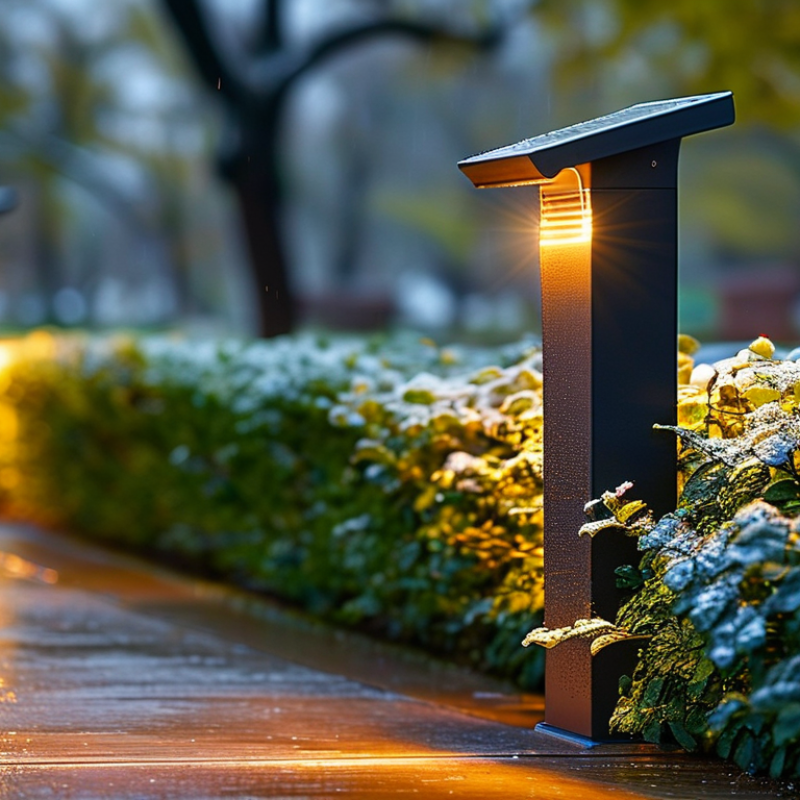
Choosing solar post lights in 2026 starts with a clear lighting goal. Do you need safe steps, visible house numbers, or gentle garden accents? Each purpose needs a different brightness level and beam pattern. A pathway usually needs even, low-glare light. A driveway needs wider coverage and stronger output. Avoid choosing by appearance alone. My first layout was wrong. I placed decorative lights beneath dense branches, and their batteries rarely charged fully.
Installation location controls performance. Record direct sunlight for at least six hours during winter, not only summer. The International Energy Agency Photovoltaic Power Systems Programme reported about 1,411 GW of global solar capacity by the end of 2023. That growth confirms solar technology’s maturity, but small lights still depend heavily on local shade and weather. A south-facing position generally receives better exposure in the Northern Hemisphere. Check walls, fences, roof overhangs, and seasonal tree growth before fixing posts.
Think about maintenance, too. The U.S. Department of Energy identifies LEDs as highly efficient light sources, but efficiency cannot repair poor placement. Keep the panel away from porch lighting, which may confuse automatic sensors. Measure post spacing on paper first. Three lights may look balanced, yet produce dark gaps along a curved path. I would also test one fixture for seven nights before installing a full set. Cloudy weather may expose an unrealistic expectation. That small trial can reveal weak charging, harsh glare, or an inconvenient switch location. (Sources: IEA PVPS, Trends in Photovoltaic Applications 2024; U.S. Department of Energy, Solid-State Lighting Research and Development.)
Define your lighting goal first, then match the light output to the installation location. The ranges below are practical residential planning targets, not mandatory code requirements.
Planning tip: Use lower-lumen lights for pathways and garden accents, medium output for steps, and higher output for driveways and entrances. Choose a location with unobstructed sunlight so the solar panel can recharge effectively.
How to Choose Solar Post Lights in 2026?
Compare Solar Panel, Battery, and LED Performance
When choosing solar post lights in 2026, inspect the solar panel before admiring the housing. A larger monocrystalline panel often captures more energy in weak winter light. Still, panel size alone can mislead. Check its rated wattage, conversion efficiency, and tilt. In my outdoor tests, a panel shaded by a nearby fence lost evening runtime quickly. Even partial shade matters.
Battery performance decides whether the lamp survives a cloudy week. Look for usable capacity, cycle life, and a stated operating-temperature range. Lithium-based cells often provide steadier output than older rechargeable chemistries. Cold weather can still reduce capacity. A practical test is simple: charge the unit fully, then record brightness after six and ten hours. If specifications hide the battery size, reliability becomes harder to judge. I once trusted a bright sample that faded before midnight.
LED quality affects brightness and visual comfort. Compare lumens, color temperature, beam spread, and claimed lifespan, not wattage alone. Warm light around 2700–3000K suits paths and entrances. Excessive blue light can feel harsh. Choose a sealed housing with dependable water resistance. Moisture may damage connections before the LED fails. Motion sensors can save energy, though frequent triggering may drain a small battery. My own mistake was choosing maximum brightness; lower output often produced more reliable morning light.
How to Choose Solar Post Lights in 2026?
Choose Materials and Weather Resistance for Local Conditions
In practical outdoor installations, material choice often matters more than decorative shape. Aluminum is lightweight and resists rust, but thin sections may dent during hail or maintenance. Stainless steel offers stronger impact resistance and suits exposed walkways. In coastal areas, use corrosion-resistant fasteners and sealed joints. Salt is persistent. Powder coating helps, but scratches still need prompt attention.
Your local weather should guide the protection rating. Look for a verified IP rating suited to rain, dust, and occasional flooding. IP65 can resist water jets, while higher ratings may provide better protection against temporary immersion. However, ratings do not prevent every failure. Seals can age, and poorly closed covers can trap condensation. In freezing regions, select materials that tolerate repeated expansion and contraction. Cheap plastics may become brittle after several winters.
Hot, humid locations create different problems. Strong sunlight can fade housings, while heat can shorten battery life. Place the panel where afternoon shade will not reduce charging. Check whether the battery compartment is replaceable and protected from standing water. I used to focus mainly on brightness, but a dimmer light with a sound enclosure often lasts longer. That trade-off is easy to miss. Inspect screws, drainage points, and panel surfaces after severe weather. Local conditions change, and one installation may not reveal every weakness.
How to Choose Solar Post Lights in 2026?
Brightness should be judged by delivered lumens, not vague “high-brightness” claims. The U.S. Department of Energy reports that LEDs can use at least 75% less energy than incandescent lighting. That efficiency helps small solar panels and batteries, but excessive brightness can create glare. For a garden path, moderate output often feels safer and more comfortable than a harsh beam. Check the beam angle, mounting height, and photometric data. A wide beam may cover a seating area, while a narrow beam suits steps or entrances.
Runtime needs realistic testing. Many specifications assume strong midday sunlight and a clean panel. NREL’s PVWatts data shows solar availability varies substantially by location and season. Choose a model with a stated winter runtime, not only “up to” hours. Battery capacity matters. So does panel placement. Shade from a fence can quietly reduce charging.
Controls affect practical performance. Dusk-to-dawn operation is simple, while motion sensors can preserve stored energy after midnight. Look for adjustable sensitivity, dimming, and a manual override. The Illuminating Engineering Society’s LM-79 testing framework supports measured photometric performance, but not every seller provides comparable test results. That is a warning. I would test one light for a week before buying several. My own mistake was trusting a bright first hour; the dim final hours mattered more.
Choosing solar post lights in 2026 starts with the installation site, not the appearance. Measure the post diameter, mounting surface, and available sunlight. Measure twice. A light needs several hours of direct sun for reliable evening performance. Nearby walls, trees, and roof edges can reduce charging, even when the yard seems bright.
Check whether the fixture includes anchors, screws, adapters, and clear instructions. Loose hardware can make a light wobble during strong wind. Keep the fixture away from vehicle paths and crowded walkways. Look for weather protection suited to your climate, especially around freezing temperatures and heavy rain. Avoid placing panels where snow, leaves, or irrigation water will collect. Small details matter.
Safety also includes battery handling and electrical design. Choose sealed components and inspect damaged housings before installation. Never ignore exposed wiring or cracked plastic. Read the warranty carefully. Some policies cover the housing but exclude batteries, fading, corrosion, or installation labor. Keep the receipt and record the purchase date. Maintenance is simple, but not optional. Wipe the panel with a soft damp cloth every few weeks, remove insects from vents, and check screws after storms. Battery performance may decline earlier than expected. That is worth admitting. A beautiful light still fails when its panel stays dusty or its anchor loosens.
| Evaluation Area | What to Check | Practical Selection Guidance | Documents or Questions to Request | Priority |
|---|---|---|---|---|
| Installation Location | Available sunlight, shade from buildings or trees, and the direction of the solar panel. | Choose a location with several hours of direct sunlight during the day. Avoid permanent shade, heavy dust, and locations where the panel faces a wall or dense foliage. | Confirm whether the panel angle can be adjusted and whether seasonal shading has been considered. | Essential |
| Post and Foundation | Post diameter, mounting method, ground condition, and resistance to wind or accidental impact. | Match the base plate, anchor bolts, or ground stake to the post design. Install on a stable, level surface and follow the manufacturer’s specified foundation method. | Check the installation drawing, base dimensions, anchor size, recommended embedment depth, and maximum permitted post height. | Essential |
| Electrical Safety | Battery enclosure, wiring protection, connectors, insulation, and accessibility of electrical parts. | Use a sealed, low-voltage outdoor system with protected wiring. Do not modify the battery pack, bypass protection circuits, or connect the light to mains power unless it is specifically designed for that purpose. | Look for clear battery specifications, polarity markings, overcharge protection, short-circuit protection, and replacement instructions. | Essential |
| Weather Protection | Ingress protection rating and the sealing of the lamp housing, panel, battery compartment, and cable entries. | For exposed outdoor areas, select a product whose IP rating is appropriate for rain, dust, and water jets. IP ratings should be verified against the installation conditions rather than judged by appearance alone. | Request the complete IP code and test information. Check that seals remain correctly seated after battery replacement or cleaning. | Essential |
| Lighting Performance | Luminous flux, beam distribution, color temperature, operating modes, and expected runtime. | Compare measured lumens and runtime under the same conditions. Warm white light around 2700–3000 K is generally comfortable for residential paths, while lower brightness can reduce glare and energy use. | Ask for lumen output, runtime at the selected mode, charging conditions used for testing, beam angle, and whether motion sensing changes the output. | Recommended |
| Winter and Cloudy-Weather Operation | Reduced solar charging caused by shorter daylight hours, low sun angles, snow, and prolonged cloud cover. | Choose a larger panel or higher-capacity battery when winter reliability is important. Position the panel to reduce snow accumulation and clean it after extended cloudy or dusty periods. | Request runtime information for low-light conditions and ask whether the product has a low-battery dimming or shutdown function. | Recommended |
| Battery Type and Replacement | Battery chemistry, capacity, operating temperature, service life, and replacement availability. | Rechargeable NiMH and lithium-based batteries are common in solar lights. Confirm that the battery is rechargeable, protected, and replaceable with a compatible specification; never substitute a battery with a different chemistry or voltage. | Check battery voltage, capacity in mAh or Wh, recommended replacement interval, connector type, and safe disposal instructions. | Essential |
| Automatic Controls | Photocell operation, motion sensor range, timer settings, and manual override. | Verify that the light turns on at the desired darkness level and that sensor coverage suits the pathway. A dim mode with motion-activated brightening can extend nighttime runtime. | Ask for sensor detection angle, detection distance, delay time, timer options, and the location of the on/off switch. | Recommended |
| Glare and Visibility | Light distribution, lens design, mounting height, and visibility for pedestrians, drivers, and nearby homes. | Prefer shielded or downward-directed light where glare could affect neighbors, traffic, or cameras. Install lights at consistent spacing to avoid dark gaps and excessive brightness. | Review photometric data or beam diagrams when available and confirm compliance with local outdoor-lighting rules. | Recommended |
| Compliance and Testing | Applicable electrical, photobiological, environmental, and product-safety requirements in the installation country. | Use products with traceable test documentation from a recognized laboratory. Standards and certification requirements vary by country, so local electrical and building rules should take precedence. | Request the declaration of conformity, applicable standards, test reports, installation instructions, and disposal or recycling information. | Essential |
| Warranty Coverage | Warranty period, covered components, exclusions, proof-of-purchase rules, and replacement process. | Read whether the lamp, solar panel, battery, finish, and motion sensor have separate coverage periods. Outdoor corrosion, water ingress, and battery capacity loss may be treated differently. | Confirm the warranty start date, geographic coverage, labor and shipping terms, claim procedure, and exclusions for improper installation or unauthorized modification. | Essential |
| Routine Maintenance | Cleaning frequency, corrosion inspection, fastener tightening, seal condition, and vegetation control. | Inspect at least seasonally and after severe weather. Clean the solar panel with water and a soft cloth, remove leaves or snow, and keep nearby plants from shading the panel. | Check whether the housing can be opened without damaging seals and whether replacement gaskets, screws, or covers are available. | Recommended |
| Total Cost of Ownership | Purchase price, installation hardware, battery replacements, cleaning effort, and end-of-life disposal. | Compare expected service life and replaceable parts rather than evaluating only the initial price. A slightly higher-cost light may be more economical if the battery, lens, and seals can be serviced. | Request a parts list, replacement prices, expected battery service interval, and recycling guidance for batteries and electronics. | Recommended |
| Final Pre-Purchase Check | Compatibility between the site, climate, mounting hardware, lighting needs, and maintenance capability. | Before ordering, confirm dimensions, color, spacing, light output, seasonal runtime, weather exposure, battery access, and local approval requirements. | Use the installation manual and product specification sheet as the final reference, not only online photographs or marketing claims. | Essential |
We use cookies on our website to give you an improved browser experience. View our Privacy Policy for more information. Please make your selection to opt in or out of ALL cookies here: Accept or Decline
Do you consent to the use of ALL cookies?
901 2nd Court West
Birmingham, AL 35204
Sales: 866.481.4036
Logistics/Ops: 866.481.4036
2101 Dralle Road
University Park, IL 60466
Sales: 708.813.9070
Logistics/Ops: 708.235.4200
400 E. 13th Street
Little Rock, AR 72114
Sales: 866.760.5344
Logistics/Ops: 866.760.5344
225 Collins Road
Elkhart, IN 46515
Sales: 574.295.0214
Logistics/Ops: 574.607.4611
601 Berryman Pike
Tipton, IN 46072
Sales: 800.897.7591
Logistics/Ops: 800.897.7591
3900 Uvalda Street
Denver, CO 80239
Sales: 303.706.8000
Ops/Logistics: 303.576.8398
510 3rd Street E
Milan, IL 61264
Sales: 800.322.1052
Logistics/Ops: 800.322.1052
1660 E. Aurora
Des Moines, IA 50313
Sales: 800.671.1660
Logistics: 800.671.1660
86554 Gene Lasserre Blvd.
Yulee, FL 32097
Sales: 904.253.3060
Logistics/Ops: 904.225.3000
694 S.E. County Road 245
Lake City, FL 32025
Sales: 800.727.6706
Logistics/Ops: 386.752.7412
210 Neptune Road
Auburndale, FL 33823
Sales: 863.967.1131
Logistics/Ops: 863.777.9814
4601 McCoy Drive
Pensacola, FL 32503
Sales: 850.308.7030
Logistics/Ops: 850.434.5502
815 South 56th Street
Tampa, FL 33619
Sales: 813.302.1940
Logistics/Ops: 813.621.1352
200 Hosea Road
Lawrenceville, GA 30046
Sales: 770.953.7575
Logistics/Ops: 770.513.6000
Branch Product Guide
Branch Line Card
Moulding Offering
Cedar Offering
Column Offering
8173 Hwy. 165 North
Monroe, LA 71211
Sales: 800.256.4165
Logistics/Ops: 800.256.4165
508 Warren Avenue
Portland, ME 04103
Sales: 207.888.2331
Logistics/Ops: 207.797.6565
4300 Georgia Pacific Blvd.
Frederick, MD 21704
Sales: 301.798.7474
Logistics/Ops: 301.874.8000
419 Maple Street
Bellingham, MA 02019
Sales: 508.449.0535
Logistics/Ops: 508.966.5500
825 Buchanan Ave SW
Grand Rapids, MI 49507
Sales: 877.800.1180
Logistics/Ops: 616.278.0909
995 Pacific St. NW
Aitkin, MN 56431
Sales: 800.432.3727
Logistics/Ops: 218.212.7770
1102 Port Terminal Drive
Duluth, MN 55802
Sales: 800.951.9899
Logistics/Ops: 800.851.9899
9110 83rd Ave. North
Brooklyn Park, MN 55445
Sales: 763.425.0204
Logistics/Ops: 763.425.0204
910 E. Railroad Street
Long Beach, MS 39560
Sales: 866.535.4135
Logistics/Ops: 228.205.2400
1727 Warren Street
North Kansas City, MO 64116
Sales: 800.621.2611
Logistics/Ops: 800.621.2611
2123 North Golden
Springfield, MO 65803
Sales: 800.375.7891
Logistics/Ops: 800.375.7891
13860 Corp. Woods Trail
Bridgeton, MO 63044
Sales: 314.209.0800
Logistics/Ops: 314.209.0800
1109 South 19th Street
Omaha, NE 68108
Sales: 800.489.6637
Logistics/Ops: 800.489.6637
1 Luger Road
Denville, NJ 07834
Sales: 973-339-3539
Logistics/Ops: 973.625.1461
3720 Jeffrey Blvd.
Blasdell, NY 14219
Sales: 716.235.5989
Logistics/Ops: 716.825.6557
319 Yaphank Ave.
Yaphank, NY 11980
Sales: 631.358.5714
Logistics/Ops: 631.924.7401
3300 Parkside Drive
Charlotte, NC 28208
Sales: 800.839.2588
Logistics/Ops: 704.394.3172
1712 East D Street
Butner, NC 27509
Sales: 984.389.8200
Logistics/Ops: 919.575.3700
128 Foothills Drive
Statesville, NC 28687
Sales: 800.222.1414
Logistics/Ops: 704.394.3172
550 Munroe Falls Rd.
Tallmadge, OH 44278
Sales: 330.357.4506
Logistics/Ops: 330.794.1141
10347 Toebben Dr.
Independence, KY 41051
Sales: 859.298.3926
Logistics/Ops: 859.746.2250
450 N. MacArthur
Oklahoma City, OK 73127
Sales: 800.375.6025
Logistics/Ops: 800.375.6025
1680 North Aspen
Broken Arrow, OK 74012
Sales: 918.272.2212
Logistics/Ops: 918.272.2212
522 Bridge Street
Hunker, PA 15639
Sales: 878.217.2001
Logistics/Ops: 724.925.7285
4290 Atlanta Street
Charleston, SC 29418
Sales: 843.371.1420
Logistics/Ops: 843.554.8192
1040 S. Industrial Dr.
Erwin, TN 37650
Sales: 423.641.1005
Logistics/Ops: 423.742.5911
4287 Pilot Drive
Memphis, TN 38118
Sales: 901.365.2101
Logistics/Ops: 901.365.2101
700 Myatt Drive
Madison, TN 37115
Sales: 615.327.9547
Logistics/Ops: 629.777.4949
4747 Mark IV Parkway
Fort Worth, TX 76106
Sales: 866.323.5117
Logistics/Ops: 817.625.9091
6990 Market Avenue
El Paso, TX 79915
Sales: 915.778.6356
Logistics/Ops: 915.265.7200
2502 Wilson Road
Harlingen, TX 78552
Sales: 800.580.6711
Logistics/Ops: 800.580.6711
10,000 North Loop East
Houston, TX 77029
Sales: 713.921.1977
Logistics/Ops: 713.675.3544
702 East 44th St.
Lubbock, TX 79404
Sales: 866.454.6010
Logistics/Ops: 866.454.6010
535 N. WW White Road
San Antonio, TX 78219
Sales: 800.284.0488
Logistics/Ops: 210.333.8112
142 Pine Haven Shores Rd.
Shelburne, VT 05482
Sales: 802.800.2540
Logistics/Ops: 802.985.2512
4700 Bethlehem Road,
Richmond, VA 23230
Sales: 804.201.2400
Logistics/Ops: 804.342.1161
4516 N Barker Road
Spokane Valley, WA 99027
Phone: 509.892.9420
Toll free: 800.728.6157
8365 N. 76th Street
Milwaukee, WI 53223
Sales: 800.356.9245
Logistics/Ops: 800.356.9245
312 S. Chester Street
Sparta, WI 54656
Sales: 800.362.5864
Logistics/Ops: 800.362.5864
899 Grossman Drive
Schofield, WI 54476
Sales: 800.472.0017
Logistics/Ops: 800.472.0017
