
We use cookies on our website to give you an improved browser experience. View our Privacy Policy for more information. Please make your selection to opt in or out of ALL cookies here: Accept or Decline
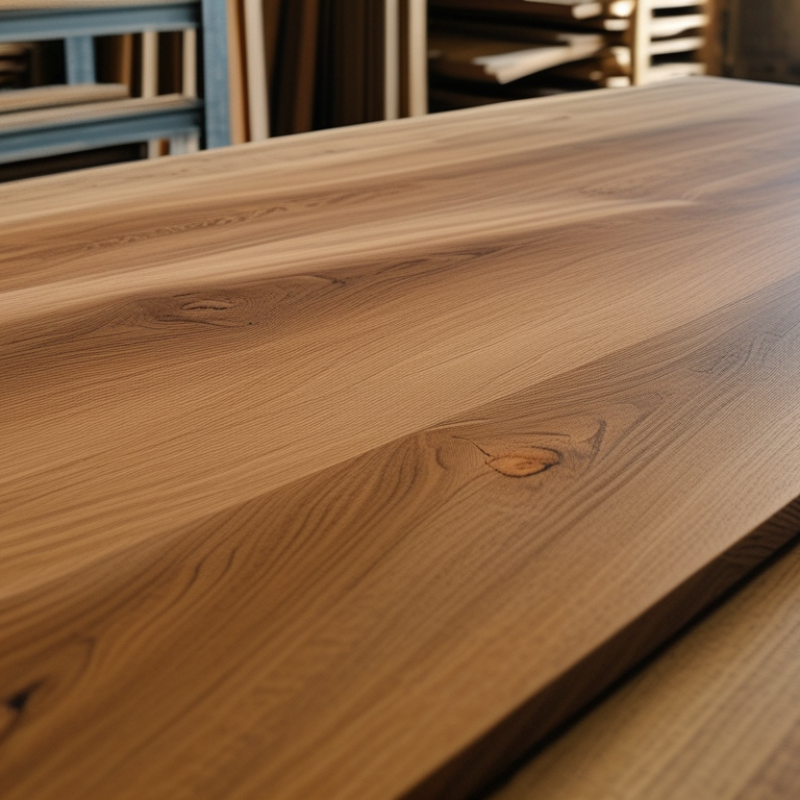
Choosing Oak Veneer Wood for global projects involves more than selecting an attractive grain. It requires practical judgment, material knowledge, and careful supplier verification. A warm European oak surface may look consistent in a showroom, yet sunlight, humidity, and transport can change its appearance. I have seen veneer samples match perfectly at the design stage, then differ slightly after pressing. That possibility should be considered early.
David Venables, European Director of the American Hardwood Export Council, has said, “The beauty of wood lies in its natural variation.” This idea matters when specifying Oak Veneer Wood across different markets. Buyers should confirm the oak species, veneer cut, thickness, moisture content, panel core, and finishing system. Ask for production samples, not only digital images. Touch the surface. Check the joint pattern under warm and cool light. Small details often reveal large quality differences.
A reliable global specification also needs traceability. Request documented timber origin, responsible forestry information, batch identification, and stable technical data. Confirm how the panels will be packed, stored, and protected during shipping. Marine environments may require different finishes from dry interior applications. Fire performance and emissions requirements should also be reviewed with local professionals.
There is no perfect checklist.
Even experienced teams can overlook edge banding, repair marks, or slight color movement between batches. That is why testing a full-size mock-up remains valuable. Good Oak Veneer Wood is not simply beautiful. It should be predictable, documented, and suitable for the project’s climate, function, and maintenance expectations.
Choosing oak veneer for global projects requires more than matching a color sample. Under EN 635-2, oak plywood surfaces are classified by appearance. The usual classes run from E to IV. Class E allows very limited natural features and demands a highly uniform face. Classes I and II accept carefully controlled knots, mineral streaks, and small color variations. Class III permits more visible characteristics and repaired defects. Class IV allows the broadest natural variation.
These classes help buyers write clearer specifications. They do not guarantee identical color between panels. Oak can show cathedral grain, medullary rays, pin knots, and pale sapwood. A project requiring quiet wall panels may select Class E or I. Furniture with a more natural look may accept Class II or III. Class IV can suit concealed or heavily charactered surfaces, but the contract should state its intended use.
Inspect samples in the final lighting. Small strips can hide large variation. That is easy to miss. Ask for the veneer species, face class, repair policy, sanding condition, and moisture requirements. EN 635-2 supports appearance classification, but it should not replace a project-specific inspection plan. Confirm the referenced edition and national adoption before ordering. Human judgment still matters, especially when buyers compare factory samples with full-size panels. A perfect match is rarely realistic. Photograph approved samples and record acceptable limits before production begins.
EN 635-2 classifies hardwood plywood faces by visual appearance. The chart shows the ordinal visual selectivity of the five appearance classes, from E as the most selective class to IV as the least selective. These classes describe visible face characteristics and should not be interpreted as structural-performance grades. Final acceptance should be confirmed against the project specification and the applicable edition of EN 635-2.
Oak veneer selection becomes more practical when thickness matches the project’s real demands. A 0.5 mm veneer suits curved panels, wrapped edges, and decorative wall surfaces. It follows gentle contours with less resistance. However, it offers limited sanding depth and can reveal substrate movement quickly. Use a stable core, controlled moisture, and an adhesive tested for the intended environment.
A 0.6–0.8 mm veneer provides a useful balance for doors, furniture panels, and hospitality interiors. It shows oak’s grain clearly while allowing modest finishing corrections. For high-contact surfaces, 1.0 mm veneer gives better repair potential and stronger visual depth. It is not structural wood by itself. The panel beneath carries the load, so engineers should verify bending, impact, and fastener performance separately.
Thicker does not always mean better.
Climate changes the decision. A dry inland office and a humid coastal hotel may need different core materials and finishing systems. Check veneer moisture content before pressing, then inspect the panel under angled light. Small color shifts and open pores are normal. They can add character. Yet uneven thickness, loose fibers, or excessive filler deserve rejection. In practice, project teams sometimes choose 1.0 mm veneer for prestige, then discover that tight curves require 0.5 mm instead. That mistake is avoidable, but only when drawings, samples, and local technical requirements are reviewed together.
Moisture content often decides whether oak veneer performs well after shipping. For stable international installation, target 6–12% moisture content before packing. The USDA Forest Products Laboratory’s Wood Handbook, FPL-GTR-282, reports that interior wood commonly equilibrates around 6–14%, depending on climate and building conditions. This range shows why one fixed number cannot suit every destination. A veneer prepared for a dry inland office may react differently in a humid coastal project.
Measure more than one sheet. Use a calibrated moisture meter, check both faces, and record readings from the veneer, substrate, and edge areas. EN 13183-1 provides recognized guidance for measuring wood moisture content. Keep oak veneer flat during acclimatization, with spacers between sheets. Allow enough time for the material to approach the installation environment. Packaging too early is a common mistake. I have seen beautifully finished panels develop open joints after rapid climate changes.
Tips: Request a batch moisture report before shipment. Confirm the meter’s calibration and test method. Compare readings with the destination’s expected indoor humidity. Keep cartons away from wet floors and direct sunlight. If readings sit near 12%, pause and investigate. That small delay may prevent costly replacement. Veneer is thin, but its movement is not. Danmarki? Wait, not every project follows the same rule.
How to Choose Oak Veneer Wood for Global Projects?
Oak veneer brings a warm, natural surface to furniture, doors, wall panels, and hospitality interiors. However, the veneer is only the visible layer. The substrate and adhesive system can strongly influence formaldehyde emissions. For international projects, request test evidence showing emissions below 0.124 mg/m³ under EN 717-1. This chamber-test value is commonly associated with E1 classification in Europe.
Check the report carefully. It should identify the panel type, thickness, production batch, test date, and laboratory method. A recent report is more useful than a general brochure statement. Ask whether the tested construction matches your planned project. A low-emission core may perform differently after cutting, edging, drilling, or installation in a warm room. Small details matter.
Tips: Compare samples in daylight. Inspect the veneer for open pores, uneven coloring, and repaired knots. Ask for technical data before ordering. Confirm that certificates cover the complete panel, not only the oak surface. Also consider moisture resistance, surface finish, and local climate. I have found that appearance samples can hide core differences. That deserves a second check. EN 717-1 results support informed material selection, but they do not replace project-specific ventilation and indoor-air assessments.
Practical comparison criteria for selecting oak veneer panels, doors, furniture components, and interior wall applications. Values marked “typical” are general industry ranges and should be confirmed with project-specific technical documents.
| Selection Dimension | Recommended Requirement | Typical Technical Data | Why It Matters for Global Projects | Verification Method |
|---|---|---|---|---|
| Formaldehyde emissions | Select a panel tested to E1 performance with emissions below 0.124 mg/m³ under EN 717-1. | < 0.124 mg/m³ chamber-air concentration at steady-state testing. | Helps meet low-emission requirements for interior applications and supports healthier indoor-air specifications. | Request an independent laboratory report that clearly states EN 717-1, the tested construction, and the measured result. |
| Panel construction | Use a stable core such as plywood, MDF, or particleboard, matched to the application and emission requirement. | Oak veneer face commonly applied to a wood-based panel; total panel thickness often ranges from 6–25 mm for interior products. | The core and adhesive system can affect dimensional stability, screw holding, machining, and formaldehyde emissions. | Review the complete panel specification rather than assessing the oak veneer alone. |
| Oak veneer thickness | Choose thickness according to sanding, edge treatment, repairability, and expected service life. | Natural sliced veneer is commonly about 0.5–0.6 mm; thicker decorative veneer may be approximately 1.0–2.0 mm. | Thicker veneer generally provides more tolerance for light refinishing and edge detailing, subject to the manufacturer’s construction limits. | Confirm nominal thickness, tolerance, sanding allowance, and whether the product is natural or reconstructed veneer. |
| Moisture content | Keep the veneer and panel acclimatized to the installation environment before fabrication and installation. | Solid and veneer wood products are commonly supplied around 8–12% moisture content, depending on climate and product specification. | Incorrect moisture balance can lead to cupping, open joints, cracking, or adhesive failure after international shipment. | Measure representative pieces with a calibrated moisture meter and follow the supplier’s acclimatization instructions. |
| Appearance grade | Define the required grain, color variation, knots, sapwood, mineral streaks, and joint matching before production. | Common visual layouts include plain-sliced, quarter-sliced, rift-sliced, book-matched, slip-matched, and random-matched panels. | Clear grading rules reduce color and grain disputes across different factories, climates, and inspection teams. | Approve a physical control sample or sequence-matched panel set before mass production. |
| Bonding quality | Require uniform adhesion without blisters, delamination, open joints, or telegraphing through the face. | Adhesive performance depends on glue type, spread rate, pressing temperature, pressure, time, and substrate moisture. | Long shipping routes and changes in humidity can expose weak veneer bonds or poorly balanced panels. | Check production controls and conduct suitable bond, delamination, or surface-quality tests for the intended use. |
| Surface finish | Select a finish compatible with the expected abrasion, staining, cleaning, and UV exposure conditions. | Typical options include clear lacquer, water-based coating, UV-cured coating, oil, or hardwax oil. | Finish selection affects color consistency, maintenance, scratch resistance, and the final appearance of the oak grain. | Approve finish samples under the project’s lighting and request product-specific performance data where required. |
| Dimensional stability | Use balanced construction with a compatible backer where needed, especially for doors, wall panels, and large furniture faces. | Movement is influenced by wood species, grain direction, panel construction, moisture, temperature, and relative humidity. | Balanced panels are less likely to warp during ocean freight, warehouse storage, or installation in a different climate zone. | Review panel balancing details and follow the installation manufacturer’s gap and fixing recommendations. |
| Sustainability documentation | Request traceability and legally sourced timber documentation appropriate to the destination market. | Documentation may include species identification, country of harvest, chain-of-custody information, and applicable legality declarations. | Import rules and green-building requirements vary by country and may require evidence before customs clearance or project approval. | Confirm the destination country’s current timber, customs, and project-certification requirements before ordering. |
| Packaging and logistics | Protect finished surfaces from moisture, impact, abrasion, and prolonged exposure to uncontrolled warehouse conditions. | Use flat, dry, ventilated storage; separate finished faces with suitable protective material and avoid direct contact with wet floors or walls. | Correct packaging reduces transit damage, edge impact, staining, and moisture-related distortion during international transport. | Define packaging, pallet, moisture-protection, labeling, inspection, and storage requirements in the purchase specification. |
Oak veneer can look consistent in a showroom yet vary across production batches. For international projects, compliance deserves attention from the first quotation. Ask for the supplier’s current FSC Chain of Custody certificate, not a logo alone. Check the certificate scope, product category, site address, and validity date. The invoice should identify the FSC claim and match the shipped material. Keep purchase orders, delivery records, and claim details together. Small gaps can create expensive questions later.
Confirm that the oak species and veneer format match the certified scope. Request documents before production starts. A credible supplier should explain how logs, sliced veneer, cores, and finished panels remain traceable. Mixed sources may require controlled wood or percentage claims, so do not assume “responsibly sourced” means FSC certified. I would also compare batch markings with packing lists. Human error happens.
ISPM 15 mainly concerns solid wood packaging, such as pallets, crates, and blocking. It does not automatically apply to every veneer sheet or engineered panel. Ask whether the shipment uses solid wood packaging, then verify approved treatment and a readable official mark. Heat-treated packaging usually carries the IPPC symbol, country code, producer code, and treatment code. Photograph the marks before loading. Some destinations apply additional import rules, and exemptions can be misunderstood. A customs broker or forestry authority should confirm the current requirement. Even experienced teams can miss a small wooden brace inside a crate.
We use cookies on our website to give you an improved browser experience. View our Privacy Policy for more information. Please make your selection to opt in or out of ALL cookies here: Accept or Decline
Do you consent to the use of ALL cookies?
901 2nd Court West
Birmingham, AL 35204
Sales: 866.481.4036
Logistics/Ops: 866.481.4036
2101 Dralle Road
University Park, IL 60466
Sales: 708.813.9070
Logistics/Ops: 708.235.4200
400 E. 13th Street
Little Rock, AR 72114
Sales: 866.760.5344
Logistics/Ops: 866.760.5344
225 Collins Road
Elkhart, IN 46515
Sales: 574.295.0214
Logistics/Ops: 574.607.4611
601 Berryman Pike
Tipton, IN 46072
Sales: 800.897.7591
Logistics/Ops: 800.897.7591
3900 Uvalda Street
Denver, CO 80239
Sales: 303.706.8000
Ops/Logistics: 303.576.8398
510 3rd Street E
Milan, IL 61264
Sales: 800.322.1052
Logistics/Ops: 800.322.1052
1660 E. Aurora
Des Moines, IA 50313
Sales: 800.671.1660
Logistics: 800.671.1660
86554 Gene Lasserre Blvd.
Yulee, FL 32097
Sales: 904.253.3060
Logistics/Ops: 904.225.3000
694 S.E. County Road 245
Lake City, FL 32025
Sales: 800.727.6706
Logistics/Ops: 386.752.7412
210 Neptune Road
Auburndale, FL 33823
Sales: 863.967.1131
Logistics/Ops: 863.777.9814
4601 McCoy Drive
Pensacola, FL 32503
Sales: 850.308.7030
Logistics/Ops: 850.434.5502
815 South 56th Street
Tampa, FL 33619
Sales: 813.302.1940
Logistics/Ops: 813.621.1352
200 Hosea Road
Lawrenceville, GA 30046
Sales: 770.953.7575
Logistics/Ops: 770.513.6000
Branch Product Guide
Branch Line Card
Moulding Offering
Cedar Offering
Column Offering
8173 Hwy. 165 North
Monroe, LA 71211
Sales: 800.256.4165
Logistics/Ops: 800.256.4165
508 Warren Avenue
Portland, ME 04103
Sales: 207.888.2331
Logistics/Ops: 207.797.6565
4300 Georgia Pacific Blvd.
Frederick, MD 21704
Sales: 301.798.7474
Logistics/Ops: 301.874.8000
419 Maple Street
Bellingham, MA 02019
Sales: 508.449.0535
Logistics/Ops: 508.966.5500
825 Buchanan Ave SW
Grand Rapids, MI 49507
Sales: 877.800.1180
Logistics/Ops: 616.278.0909
995 Pacific St. NW
Aitkin, MN 56431
Sales: 800.432.3727
Logistics/Ops: 218.212.7770
1102 Port Terminal Drive
Duluth, MN 55802
Sales: 800.951.9899
Logistics/Ops: 800.851.9899
9110 83rd Ave. North
Brooklyn Park, MN 55445
Sales: 763.425.0204
Logistics/Ops: 763.425.0204
910 E. Railroad Street
Long Beach, MS 39560
Sales: 866.535.4135
Logistics/Ops: 228.205.2400
1727 Warren Street
North Kansas City, MO 64116
Sales: 800.621.2611
Logistics/Ops: 800.621.2611
2123 North Golden
Springfield, MO 65803
Sales: 800.375.7891
Logistics/Ops: 800.375.7891
13860 Corp. Woods Trail
Bridgeton, MO 63044
Sales: 314.209.0800
Logistics/Ops: 314.209.0800
1109 South 19th Street
Omaha, NE 68108
Sales: 800.489.6637
Logistics/Ops: 800.489.6637
1 Luger Road
Denville, NJ 07834
Sales: 973-339-3539
Logistics/Ops: 973.625.1461
3720 Jeffrey Blvd.
Blasdell, NY 14219
Sales: 716.235.5989
Logistics/Ops: 716.825.6557
319 Yaphank Ave.
Yaphank, NY 11980
Sales: 631.358.5714
Logistics/Ops: 631.924.7401
3300 Parkside Drive
Charlotte, NC 28208
Sales: 800.839.2588
Logistics/Ops: 704.394.3172
1712 East D Street
Butner, NC 27509
Sales: 984.389.8200
Logistics/Ops: 919.575.3700
128 Foothills Drive
Statesville, NC 28687
Sales: 800.222.1414
Logistics/Ops: 704.394.3172
550 Munroe Falls Rd.
Tallmadge, OH 44278
Sales: 330.357.4506
Logistics/Ops: 330.794.1141
10347 Toebben Dr.
Independence, KY 41051
Sales: 859.298.3926
Logistics/Ops: 859.746.2250
450 N. MacArthur
Oklahoma City, OK 73127
Sales: 800.375.6025
Logistics/Ops: 800.375.6025
1680 North Aspen
Broken Arrow, OK 74012
Sales: 918.272.2212
Logistics/Ops: 918.272.2212
522 Bridge Street
Hunker, PA 15639
Sales: 878.217.2001
Logistics/Ops: 724.925.7285
4290 Atlanta Street
Charleston, SC 29418
Sales: 843.371.1420
Logistics/Ops: 843.554.8192
1040 S. Industrial Dr.
Erwin, TN 37650
Sales: 423.641.1005
Logistics/Ops: 423.742.5911
4287 Pilot Drive
Memphis, TN 38118
Sales: 901.365.2101
Logistics/Ops: 901.365.2101
700 Myatt Drive
Madison, TN 37115
Sales: 615.327.9547
Logistics/Ops: 629.777.4949
4747 Mark IV Parkway
Fort Worth, TX 76106
Sales: 866.323.5117
Logistics/Ops: 817.625.9091
6990 Market Avenue
El Paso, TX 79915
Sales: 915.778.6356
Logistics/Ops: 915.265.7200
2502 Wilson Road
Harlingen, TX 78552
Sales: 800.580.6711
Logistics/Ops: 800.580.6711
10,000 North Loop East
Houston, TX 77029
Sales: 713.921.1977
Logistics/Ops: 713.675.3544
702 East 44th St.
Lubbock, TX 79404
Sales: 866.454.6010
Logistics/Ops: 866.454.6010
535 N. WW White Road
San Antonio, TX 78219
Sales: 800.284.0488
Logistics/Ops: 210.333.8112
142 Pine Haven Shores Rd.
Shelburne, VT 05482
Sales: 802.800.2540
Logistics/Ops: 802.985.2512
4700 Bethlehem Road,
Richmond, VA 23230
Sales: 804.201.2400
Logistics/Ops: 804.342.1161
4516 N Barker Road
Spokane Valley, WA 99027
Phone: 509.892.9420
Toll free: 800.728.6157
8365 N. 76th Street
Milwaukee, WI 53223
Sales: 800.356.9245
Logistics/Ops: 800.356.9245
312 S. Chester Street
Sparta, WI 54656
Sales: 800.362.5864
Logistics/Ops: 800.362.5864
899 Grossman Drive
Schofield, WI 54476
Sales: 800.472.0017
Logistics/Ops: 800.472.0017
