
We use cookies on our website to give you an improved browser experience. View our Privacy Policy for more information. Please make your selection to opt in or out of ALL cookies here: Accept or Decline
Choosing High Strength Steel in 2026 requires more than selecting the highest strength value. Designers must connect yield strength, tensile strength, toughness, formability, weldability, and service life. A stronger grade may reduce component weight, yet it can increase forming force, springback, or fabrication risk.
This guide explains how experienced engineers evaluate High Strength Steel for real projects. The process starts with drawings, loading conditions, temperature ranges, corrosion exposure, and joining methods. Supplier mill certificates, heat numbers, test reports, and traceability records deserve careful review. Laboratory data matters, but production behavior matters more. A sheet that performs well in testing may still crack around a tight bend.
No grade is perfect.
Material selection should also follow relevant industry standards and verified customer specifications. Engineers should compare total lifecycle value, not only purchase price. A thinner section can lower transport weight, but machining changes, tooling wear, and inspection costs may offset those gains. Welding procedures require particular attention because heat can change local strength and toughness.
Our early assumption may be wrong.
This article will examine practical selection criteria for automotive frames, construction equipment, pressure-related structures, and general fabrication. It will compare common strength levels, surface conditions, delivery forms, and supplier capabilities. We will also identify frequent mistakes, such as ignoring fatigue, choosing a grade without forming trials, or trusting incomplete certificates. The goal is a reliable decision process that balances performance, manufacturability, safety, and long-term cost. When evidence is limited, the responsible choice is to test, document, and reconsider.
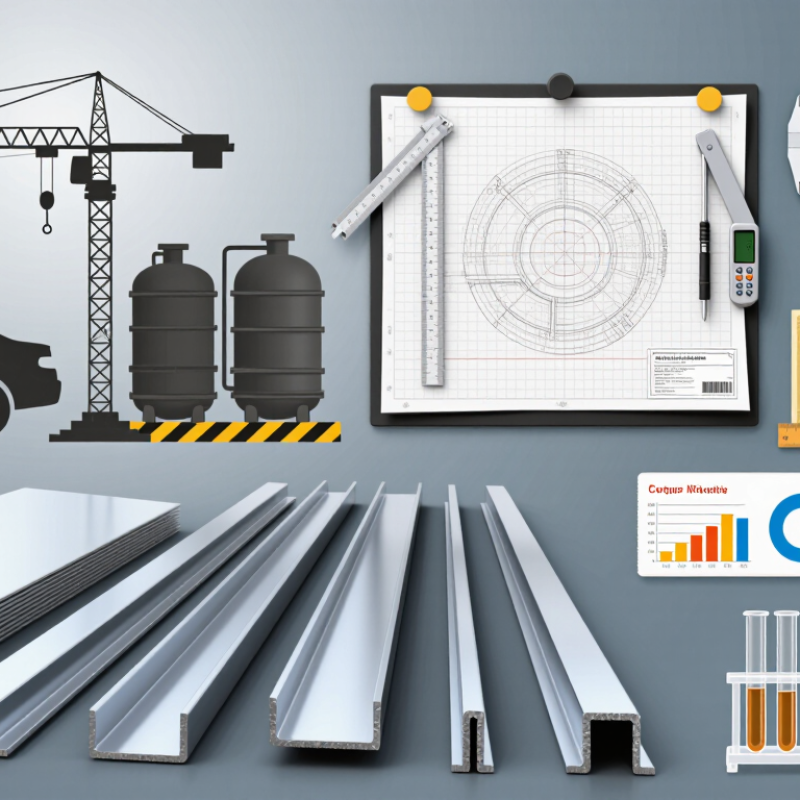
High-strength steel should be chosen by yield strength, not by marketing language. Yield strength describes when permanent deformation begins. In 2026, common selection points include 355, 550, 700, and 1,000+ MPa. These numbers are not interchangeable. They also vary with thickness, heat treatment, and the governing standard.
Steel around 355 MPa suits frames, platforms, and general structural parts. It offers familiar welding behavior and easier forming. At 550 MPa, designers can reduce plate thickness and lower component weight. However, forming forces increase. Steel near 700 MPa supports cranes, transport structures, and heavily loaded equipment. It demands tighter control of cutting, bending, and weld heat input. Above 1,000 MPa, strength becomes impressive. Practical limits appear quickly. Crack sensitivity, springback, and joint performance need serious review.
Do not choose the highest number automatically. A 1,000 MPa plate may reduce weight but complicate repairs and fabrication. Check tensile strength, impact toughness, elongation, and thickness-specific properties. Request mill certificates and independent test results when the application is critical. Welding procedures should match the actual heat-affected zone, not just the base plate. I have seen designs fail at connections, not in the steel itself. That detail is easy to overlook. Consider load cycles, corrosion allowance, forming radius, inspection access, and local standards before approving the material.
Start with the load. Static, impact, fatigue, and torsional loads demand different steel responses. A bridge bracket may need high yield strength, while a stamped enclosure needs controlled elongation and a tight bend radius. World Steel Association data recorded about 1.89 billion tonnes of crude steel production in 2023, showing the scale of available material choices. However, volume does not guarantee suitability. World Auto Steel’s AHSS Application Guidelines discuss grades exceeding 980 MPa tensile strength, but higher strength can reduce formability and complicate welding.
Strength is not everything. A thinner 1,200 MPa component may save weight, yet fail during forming or show brittle cracking near a hole.
Calculate the working stress from real service conditions, not a catalog load. Then apply the safety factor required by the governing design code. Do not choose a factor casually. Uncertainty in fatigue, corrosion, temperature, joints, and manufacturing defects should influence it. In practical design reviews, engineers should compare yield strength, tensile strength, elongation, fracture behavior, weldability, and supply consistency.
Tips: Test the real part. Use forming simulations before tooling. Inspect bend zones and welded joints. Ask for heat-lot certificates and verified mechanical data. One caveat remains: published values describe specimens, not every production condition. Recheck the design after forming, coating, and assembly. That extra review may feel excessive, but it often exposes the weakest detail.
Choosing high-strength steel in 2026 requires more than selecting the highest tensile value. Application data matters.
HSLA commonly delivers about 300–700 MPa yield strength and 400–800 MPa tensile strength, according to WorldAutoSteel’s AHSS Guidelines. It offers reliable weldability, moderate formability, and simpler production control. HSLA suits chassis rails, cross-members, and structural brackets where cost and manufacturing stability matter. It is not always the lightest option.
Dual-phase steel usually reaches 500–1,200 MPa tensile strength, with roughly 10–25% elongation. Its ferrite-martensite structure supports good energy absorption and useful hole expansion. In practical forming trials, springback can become noticeable, especially above 980 MPa. TRIP steel often provides 600–1,000 MPa tensile strength and 15–30% elongation. Transformation hardening helps absorb crash energy. However, its retained-austenite response depends strongly on chemistry, strain path, and heat treatment. Laboratory results can disappoint on the shop floor.
Martensitic steel exceeds 1,000 MPa and may approach 1,700 MPa tensile strength, based on AHSS Guidelines and U.S. Department of Energy lightweight-materials assessments. It delivers excellent intrusion resistance but limited elongation, commonly near 3–10%. Very strong. Also unforgiving. Use it selectively for reinforcements and anti-intrusion parts, not every formed panel. These ranges are indicative, not guarantees; actual performance changes with thickness, coating, welding method, and supplier process control. My practical mistake has been treating tensile strength as the final answer. It is only one measurement. Evaluate forming-limit curves, bendability, fatigue data, weld performance, and crash simulations together before approving a grade.
Representative performance comparison of HSLA, dual-phase (DP), TRIP, and martensitic steels. Values are typical nominal figures for commonly used automotive-grade examples and may vary with thickness, chemistry, and processing.
Key takeaway: HSLA provides a balanced combination of strength and formability, DP steel offers a strong strength-to-ductility compromise, TRIP steel delivers high tensile strength with excellent elongation, and martensitic steel provides the highest strength with substantially lower formability.
High-strength steel selection in 2026 should begin with verified standards, not a supplier’s brochure. Confirm the grade, heat-treatment condition, impact class, and test method. EN 10025-6 covers quenched and tempered structural steels with yield strengths reaching 960 MPa. ISO 6892-1 specifies tensile testing procedures. These references make comparisons more reliable. Still, paperwork can hide practical weaknesses.
Weldability deserves a separate check. Review carbon equivalent, plate thickness, heat input, preheating, and hydrogen-controlled consumables. The International Institute of Welding links higher strength and thicker sections with greater cracking sensitivity. A 2024 technical review from the U.S. Department of Energy also identifies hydrogen exposure as a serious materials challenge in hydrogen systems. Avoid treating one carbon-equivalent number as a complete answer. Small errors matter. Trial welds should include hardness mapping, bend tests, and delayed-crack inspection.
Thickness tolerance affects fit-up, weight, and fatigue performance. Verify the permitted deviation against the purchasing standard, then measure plates at several points. Do not trust one corner measurement. The 2024 World Steel in Figures report recorded about 1.89 billion tonnes of crude steel production in 2023, showing the scale of modern supply chains, but volume does not guarantee consistency. Ask for heat numbers, mill certificates, mechanical results, and non-destructive testing records. Hydrogen-embrittlement risk may increase with high strength, tensile residual stress, surface damage, or cathodic protection. I would not approve a grade from strength data alone. That approach is convenient, but incomplete.
How to Choose High Strength Steel in 2026?
High strength steel can reduce structural weight, but strength alone does not determine value. A lighter beam may lower transport, lifting, and foundation costs. However, alloying, forming, welding, and inspection can increase fabrication expenses. The cheapest purchase price may become the highest installed cost. In project reviews, compare cost per finished component, not cost per tonne. Include machining time, qualified labor, coating, maintenance, and expected service life. Small design changes matter.
Embodied carbon needs equal attention. The International Energy Agency reported that iron and steel production created about 2.6 gigatonnes of direct CO2 emissions in 2019. That represented roughly 7–9% of global energy-related emissions. High strength grades can reduce material use, but production routes and electricity sources strongly influence results. Request product-specific environmental data, preferably verified under recognized life-cycle assessment standards. Generic averages can mislead. They still help during early screening.
Recyclability is another practical test. The World Steel Association describes steel as recyclable repeatedly without losing its essential properties. Yet coatings, mixed alloys, and poor separation can reduce recovery quality. Ask suppliers for recycled content, end-of-life assumptions, and traceable environmental declarations. Compare both production emissions and future recovery value. A design using 20% less steel is not automatically better. That assumption can fail. Engineers should test several scenarios, including longer service life, repair, reuse, and regional energy mixes. The IEA’s technology assessments and verified environmental product declarations provide stronger evidence than unsupported carbon claims.
| Representative Steel Grade or Option | Typical Yield Strength (MPa) | Typical Tensile Strength (MPa) | Indicative Material Cost Index (Conventional Mild Steel = 100) | Typical Embodied Carbon (kg CO2e/kg steel) | Typical Recycled Content by Production Route | End-of-Life Recyclability | Potential Structural or Manufacturing Benefit | Key Selection Risk |
|---|---|---|---|---|---|---|---|---|
| S355 Structural Steel | 355 minimum | 470–630 | 100–115 | 0.8–2.2 | Approximately 15–30% for primary-route supply; often higher for electric-arc-furnace supply | Technically recyclable; actual recovery depends on collection, separation, and local infrastructure | Good availability, weldability, design familiarity, and balanced performance for general construction | May require greater section weight than higher-strength grades, increasing transport and fabrication impacts |
| S500 Structural Steel | 500 minimum | 550–650 | 110–130 | 0.8–2.2 | Approximately 15–30% for primary-route supply; potentially higher with scrap-based production | Steel can be recycled repeatedly without losing its basic material properties | Can reduce member size and steel mass where buckling, connection, and serviceability requirements permit | Higher fabrication control, welding procedure requirements, and possible availability constraints |
| S690QL High-Strength Structural Steel | 690 minimum | 770–940 | 125–155 | 0.8–2.2 | Approximately 15–30% for primary-route supply; route-specific declarations should be checked | High recycling potential, provided coatings, attachments, and composite materials are properly managed | High strength-to-weight ratio can reduce plate thickness, dead load, lifting requirements, and transportation weight | Reduced ductility in some applications, stricter welding controls, and possible need for low-temperature toughness verification |
| ASTM A572 Grade 50 | 345 minimum | 450 minimum | 100–115 | 0.8–2.2 | Approximately 15–30% for primary-route supply; supplier-specific recycled content may differ | Widely compatible with established steel recycling systems | Commonly used for bridges, buildings, equipment, and general structural applications | Grade equivalence is not automatic; thickness, toughness, chemistry, and design standards must be confirmed |
| ASTM A656 Grade 80 | 550 minimum | 620 minimum | 115–140 | 0.8–2.2 | Approximately 15–30% for primary-route supply; higher values may be available from scrap-based routes | Recyclable through normal carbon-steel recycling channels when correctly identified | Suitable for weight-sensitive equipment and structural components requiring higher strength | Forming, welding, thickness availability, and impact-property requirements require project-specific review |
| Automotive AHSS, 980 MPa Tensile-Class | Approximately 600–800 | Approximately 980 minimum | 125–170 | 0.8–2.2 | Often based on relatively low recycled content in flat-product supply; verify the product declaration and mill route | Recyclable as steel, although shredding, coatings, and mixed-material assemblies affect recovery efficiency | Enables thinner gauges, crash-energy management, and significant mass reduction in vehicle structures | More demanding stamping, springback control, joining, tooling, and repair procedures |
| Electric-Arc-Furnace Steel with High Scrap Input | Grade-dependent | Grade-dependent | 95–125 | Approximately 0.3–0.8 | Commonly about 70–100%, depending on furnace feedstock and product requirements | Very high recycling compatibility; steel scrap is the principal feedstock | Usually provides substantially lower cradle-to-gate carbon than coal-based primary production when electricity is low-carbon | Carbon performance depends strongly on electricity mix, scrap availability, residual elements, and product quality requirements |
| Primary Blast-Furnace and Basic-Oxygen-Furnace Steel | Grade-dependent | Grade-dependent | 90–120 | Approximately 2.0–2.6 | Typically about 15–30%, although the value varies by facility, product, and accounting method | Highly recyclable at end of life, but recycling does not remove the original production emissions | Broad product range, mature supply chain, high quality consistency, and strong availability for demanding products | Usually has higher production-stage embodied carbon than scrap-based or low-carbon electricity routes |
| Direct-Reduced Iron and Electric-Arc-Furnace Steel | Grade-dependent | Grade-dependent | 105–145 | Approximately 0.7–1.4 | Often combines virgin reduced iron with scrap; recycled content is project- and product-dependent | Recyclable and compatible with future circular steelmaking systems | Can lower emissions while reducing dependence on high-carbon blast-furnace production | Availability, hydrogen or natural-gas source, electricity mix, and certification status must be verified |
We use cookies on our website to give you an improved browser experience. View our Privacy Policy for more information. Please make your selection to opt in or out of ALL cookies here: Accept or Decline
Do you consent to the use of ALL cookies?
901 2nd Court West
Birmingham, AL 35204
Sales: 866.481.4036
Logistics/Ops: 866.481.4036
2101 Dralle Road
University Park, IL 60466
Sales: 708.813.9070
Logistics/Ops: 708.235.4200
400 E. 13th Street
Little Rock, AR 72114
Sales: 866.760.5344
Logistics/Ops: 866.760.5344
225 Collins Road
Elkhart, IN 46515
Sales: 574.295.0214
Logistics/Ops: 574.607.4611
601 Berryman Pike
Tipton, IN 46072
Sales: 800.897.7591
Logistics/Ops: 800.897.7591
3900 Uvalda Street
Denver, CO 80239
Sales: 303.706.8000
Ops/Logistics: 303.576.8398
510 3rd Street E
Milan, IL 61264
Sales: 800.322.1052
Logistics/Ops: 800.322.1052
1660 E. Aurora
Des Moines, IA 50313
Sales: 800.671.1660
Logistics: 800.671.1660
86554 Gene Lasserre Blvd.
Yulee, FL 32097
Sales: 904.253.3060
Logistics/Ops: 904.225.3000
694 S.E. County Road 245
Lake City, FL 32025
Sales: 800.727.6706
Logistics/Ops: 386.752.7412
210 Neptune Road
Auburndale, FL 33823
Sales: 863.967.1131
Logistics/Ops: 863.777.9814
4601 McCoy Drive
Pensacola, FL 32503
Sales: 850.308.7030
Logistics/Ops: 850.434.5502
815 South 56th Street
Tampa, FL 33619
Sales: 813.302.1940
Logistics/Ops: 813.621.1352
200 Hosea Road
Lawrenceville, GA 30046
Sales: 770.953.7575
Logistics/Ops: 770.513.6000
Branch Product Guide
Branch Line Card
Moulding Offering
Cedar Offering
Column Offering
8173 Hwy. 165 North
Monroe, LA 71211
Sales: 800.256.4165
Logistics/Ops: 800.256.4165
508 Warren Avenue
Portland, ME 04103
Sales: 207.888.2331
Logistics/Ops: 207.797.6565
4300 Georgia Pacific Blvd.
Frederick, MD 21704
Sales: 301.798.7474
Logistics/Ops: 301.874.8000
419 Maple Street
Bellingham, MA 02019
Sales: 508.449.0535
Logistics/Ops: 508.966.5500
825 Buchanan Ave SW
Grand Rapids, MI 49507
Sales: 877.800.1180
Logistics/Ops: 616.278.0909
995 Pacific St. NW
Aitkin, MN 56431
Sales: 800.432.3727
Logistics/Ops: 218.212.7770
1102 Port Terminal Drive
Duluth, MN 55802
Sales: 800.951.9899
Logistics/Ops: 800.851.9899
9110 83rd Ave. North
Brooklyn Park, MN 55445
Sales: 763.425.0204
Logistics/Ops: 763.425.0204
910 E. Railroad Street
Long Beach, MS 39560
Sales: 866.535.4135
Logistics/Ops: 228.205.2400
1727 Warren Street
North Kansas City, MO 64116
Sales: 800.621.2611
Logistics/Ops: 800.621.2611
2123 North Golden
Springfield, MO 65803
Sales: 800.375.7891
Logistics/Ops: 800.375.7891
13860 Corp. Woods Trail
Bridgeton, MO 63044
Sales: 314.209.0800
Logistics/Ops: 314.209.0800
1109 South 19th Street
Omaha, NE 68108
Sales: 800.489.6637
Logistics/Ops: 800.489.6637
1 Luger Road
Denville, NJ 07834
Sales: 973-339-3539
Logistics/Ops: 973.625.1461
3720 Jeffrey Blvd.
Blasdell, NY 14219
Sales: 716.235.5989
Logistics/Ops: 716.825.6557
319 Yaphank Ave.
Yaphank, NY 11980
Sales: 631.358.5714
Logistics/Ops: 631.924.7401
3300 Parkside Drive
Charlotte, NC 28208
Sales: 800.839.2588
Logistics/Ops: 704.394.3172
1712 East D Street
Butner, NC 27509
Sales: 984.389.8200
Logistics/Ops: 919.575.3700
128 Foothills Drive
Statesville, NC 28687
Sales: 800.222.1414
Logistics/Ops: 704.394.3172
550 Munroe Falls Rd.
Tallmadge, OH 44278
Sales: 330.357.4506
Logistics/Ops: 330.794.1141
10347 Toebben Dr.
Independence, KY 41051
Sales: 859.298.3926
Logistics/Ops: 859.746.2250
450 N. MacArthur
Oklahoma City, OK 73127
Sales: 800.375.6025
Logistics/Ops: 800.375.6025
1680 North Aspen
Broken Arrow, OK 74012
Sales: 918.272.2212
Logistics/Ops: 918.272.2212
522 Bridge Street
Hunker, PA 15639
Sales: 878.217.2001
Logistics/Ops: 724.925.7285
4290 Atlanta Street
Charleston, SC 29418
Sales: 843.371.1420
Logistics/Ops: 843.554.8192
1040 S. Industrial Dr.
Erwin, TN 37650
Sales: 423.641.1005
Logistics/Ops: 423.742.5911
4287 Pilot Drive
Memphis, TN 38118
Sales: 901.365.2101
Logistics/Ops: 901.365.2101
700 Myatt Drive
Madison, TN 37115
Sales: 615.327.9547
Logistics/Ops: 629.777.4949
4747 Mark IV Parkway
Fort Worth, TX 76106
Sales: 866.323.5117
Logistics/Ops: 817.625.9091
6990 Market Avenue
El Paso, TX 79915
Sales: 915.778.6356
Logistics/Ops: 915.265.7200
2502 Wilson Road
Harlingen, TX 78552
Sales: 800.580.6711
Logistics/Ops: 800.580.6711
10,000 North Loop East
Houston, TX 77029
Sales: 713.921.1977
Logistics/Ops: 713.675.3544
702 East 44th St.
Lubbock, TX 79404
Sales: 866.454.6010
Logistics/Ops: 866.454.6010
535 N. WW White Road
San Antonio, TX 78219
Sales: 800.284.0488
Logistics/Ops: 210.333.8112
142 Pine Haven Shores Rd.
Shelburne, VT 05482
Sales: 802.800.2540
Logistics/Ops: 802.985.2512
4700 Bethlehem Road,
Richmond, VA 23230
Sales: 804.201.2400
Logistics/Ops: 804.342.1161
4516 N Barker Road
Spokane Valley, WA 99027
Phone: 509.892.9420
Toll free: 800.728.6157
8365 N. 76th Street
Milwaukee, WI 53223
Sales: 800.356.9245
Logistics/Ops: 800.356.9245
312 S. Chester Street
Sparta, WI 54656
Sales: 800.362.5864
Logistics/Ops: 800.362.5864
899 Grossman Drive
Schofield, WI 54476
Sales: 800.472.0017
Logistics/Ops: 800.472.0017
