We use cookies on our website to give you an improved browser experience. View our Privacy Policy for more information. Please make your selection to opt in or out of ALL cookies here: Accept or Decline
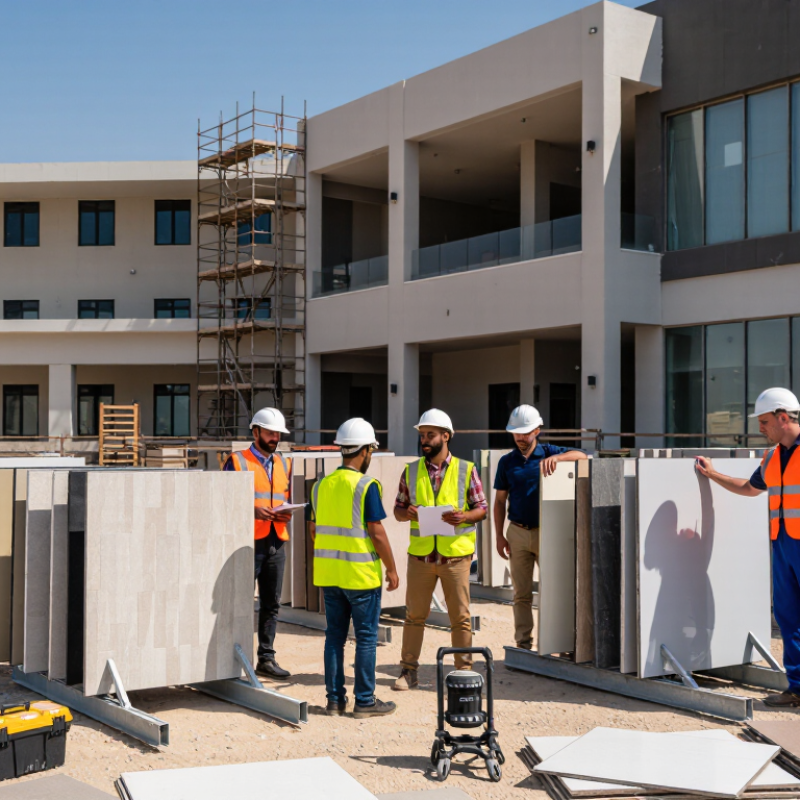
Choosing Faux Stone Panels for global projects requires more than comparing colors, textures, and prices. A panel that looks convincing in a showroom may perform poorly under intense sunlight, coastal moisture, freezing temperatures, or frequent cleaning. Project teams must examine the substrate, climate, installation method, transport conditions, and local building requirements before approving a product.
Material evidence matters. Ask manufacturers for technical data, fire-performance documentation, water-resistance information, UV testing, and installation instructions. Confirm whether these documents apply to the exact panel model, not a similar product. Experienced contractors can also reveal practical details, such as broken edges after shipping, difficult corner joints, or adhesive failure on dusty surfaces. These small issues often affect schedules more than expected.
Global sourcing adds another layer of responsibility. Reliable suppliers should explain production consistency, packaging protection, batch control, replacement procedures, and warranty limits. Local regulations and approved installation systems must guide the final decision. A low-cost panel may become expensive after customs delays, extra framing, or site repairs.
There is no universal best choice.
Even careful recommendations can miss regional realities. A successful hotel project in a dry climate may not predict performance near a humid coastline. The safest approach combines verified test results, local professional advice, sample installation, and honest risk review. This guide explores how to compare Faux Stone Panels with practical judgment, technical discipline, and attention to the people who will install, maintain, and experience the finished building.
Choosing faux stone panels for global projects begins with a clear application brief. Define the building type, climate, substrate, budget, and installation method. Exterior façades face ultraviolet exposure, wind, rain, and freeze-thaw cycles. Interior walls need different priorities, such as cleanability, acoustics, and impact resistance. Panels are decorative systems, not structural elements. Confirm this distinction before preparing drawings.
The 2024 Global Status Report for Buildings and Construction states that buildings consume 32% of global energy and produce 34% of energy-related emissions. Lightweight panel systems may reduce handling and transport demands, but performance still depends on the backing, fixings, and installation quality. McKinsey’s modular construction research reports potential schedule reductions of 20–50%. That benefit can disappear when panel sizes, fire documentation, or replacement parts vary across markets. A showroom sample can mislead. Test the complete wall assembly instead.
Tips: Request fire, moisture, impact, UV, and freeze-thaw evidence for the target region. Check local code requirements before selecting colors or textures. Use mock-ups with real joints, corners, trims, and sealants. Confirm container dimensions and replacement availability. Leave access for future repairs. I would also question highly realistic textures; they can look convincing nearby but artificial from a distance. That is not always a failure, but it needs honest review.
Choosing faux stone panels for global projects requires more than matching a showroom image. Material selection affects weight, durability, installation speed, and transport costs. Polyurethane panels are lightweight and easy to cut, while fiber-reinforced options may offer greater rigidity and impact resistance. Cement-based panels can feel highly authentic, but they usually require stronger support and careful handling.
Texture should suit the building’s scale and viewing distance. Deep joints create strong shadows on large exterior walls, while fine textures appear more natural indoors. Color also changes under sunlight, rain, and artificial lighting. Warm gray may look beige near wood, but cold gray can appear blue beside glass. I have learned that digital color charts often mislead. Physical samples are essential. Ask for samples with different lighting conditions.
Manufacturing quality deserves close inspection. Check panel thickness, edge consistency, surface adhesion, color stability, and packaging protection. Uneven edges can create visible lines during installation. Weak protective wrapping may cause damage before the panels arrive. Request production records, quality inspection details, and installation guidance. Confirm moisture, fire, and impact requirements with qualified local professionals.
Tips: Compare at least three materials. Test samples outdoors. Measure repeated textures carefully. Review one finished installation before ordering in volume. A small sample cannot reveal every problem, so leave room for practical adjustment.
When selecting faux stone panels for global projects, climate resistance deserves practical testing. A sample may look convincing indoors, yet fail under coastal salt, intense ultraviolet light, or repeated freezing. I have seen joint edges swell after poor drainage trapped water behind panels. Ask for data on water absorption, freeze-thaw cycles, UV exposure, thermal movement, and impact resistance. Check whether the system includes compatible membranes, fasteners, sealants, and drainage details.
Fire safety must be assessed as a complete wall assembly, not from the panel alone. Request independent test reports showing flame spread, smoke development, and fire propagation results. Requirements can differ between exterior façades, balconies, interior corridors, and high-rise buildings. A panel rated for one application may be unsuitable elsewhere. Confirm substrate type, cavity depth, insulation, and installation method against the tested configuration. Small changes matter.
Building code compliance also requires local review. Verify product documentation with architects, fire engineers, and code officials in the destination market. Documents should identify testing standards, production controls, and installation limits. Translation quality matters too. A vague certificate creates risk. I prefer a site mock-up before procurement, including corners, window openings, and penetrations. It often exposes weak fixings or awkward joints. No system is perfect. The decision may still involve trade-offs between appearance, weight, cost, and long-term maintenance. Record those compromises clearly.
| Evaluation Dimension | Typical Project Risk | Relevant Test Method or Reference | Recommended Performance Target | Evidence to Request | Global Compliance Consideration |
|---|---|---|---|---|---|
| UV and Color Stability | Color fading, chalking, surface embrittlement, and loss of coating adhesion in high-solar regions. | ASTM G154, ASTM G155, ISO 4892-2, and color-change evaluation using ASTM D2244. | Use accelerated-weathering data appropriate to the resin and finish; require documented color-change limits agreed in the specification. | Independent weathering report, exposure duration, lamp type, irradiance, temperature cycle, and ΔE results. | Solar exposure varies significantly by latitude, altitude, and orientation; do not treat an indoor-use rating as an exterior rating. |
| Freeze–Thaw Resistance | Cracking, delamination, spalling, and water expansion in cold or seasonally freezing climates. | ASTM C67 for masonry-related absorption and freeze–thaw evaluation where applicable; project-specific manufacturer or laboratory cycling protocols may also be required. | Select a system tested for the expected number of freeze–thaw cycles and moisture condition; no visible cracking or delamination should be accepted after testing. | Test specimen construction, number of cycles, saturation condition, mass loss, cracking record, and post-test photographs. | The panel, adhesive, fasteners, joints, and substrate must be evaluated as one assembly in cold climates. |
| Water Absorption and Moisture Management | Water ingress, mold growth, corrosion of fixings, and trapped moisture behind the cladding. | ASTM C67, ASTM D570 for plastic materials where relevant, ASTM E331 for water penetration, and project-specific hygrothermal analysis. | Specify a drained and ventilated rainscreen where required; provide defined water-shedding joints, flashings, weeps, and compatible membranes. | Water-absorption results, assembly water-penetration report, installation details, drainage-path drawings, and sealant compatibility data. | High rainfall, coastal exposure, and humid climates require particular attention to joints, penetrations, and back ventilation. |
| Thermal Movement | Buckling, joint opening, cracking, or fastener stress caused by daily and seasonal temperature changes. | ASTM D696 or ASTM E831 for coefficient of linear thermal expansion, depending on material type. | Design joint spacing, fixing slots, and movement allowances from tested expansion data rather than using a universal gap. | Coefficient of thermal expansion, service-temperature range, panel dimensions, and approved movement-joint details. | Dark colors and high-rise façades can experience greater surface temperatures and require project-specific movement design. |
| Wind Load and Impact Resistance | Panel detachment, cracking, or damage from wind pressure, debris, hail, and maintenance activity. | ASTM E330 for structural performance, ASTM E331 for water penetration, ASTM E1996 for impact-related fenestration applications where applicable, and local façade standards. | Verify the complete attachment system for calculated positive and negative wind pressures, including corner and edge zones. | System test report, engineering calculations, fastener pull-out data, substrate requirements, and approved fixing layout. | Wind design depends on building height, terrain, openings, local wind speed, and national structural provisions. |
| Reaction to Fire | Flame spread, smoke production, and contribution to fire growth on interior or exterior surfaces. | ASTM E84, CAN/ULC-S102, EN 13501-1, ISO 5660, or another method specifically required by the project authority. | Specify the required classification or flame-spread/smoke-developed limits for the intended location, rather than relying on a generic “fire resistant” statement. | Current third-party classification report identifying panel composition, thickness, finish, substrate, and mounting orientation. | Fire classification is not transferable when the panel, adhesive, air gap, insulation, or substrate changes. |
| External Wall Fire Performance | Vertical fire spread through combustible cladding, cavities, insulation, or concealed spaces. | NFPA 285, CAN/ULC-S134, BS 8414, EN 1364-6, or the applicable full-scale façade test required by the jurisdiction. | Use a tested wall assembly matching the actual panel, cavity, insulation, membranes, barriers, joints, and window interfaces. | Full-scale assembly report, field-of-application limits, fire-stopping details, cavity-barrier schedule, and installation restrictions. | High-rise and combustible-wall projects often require assembly-level testing or an approved engineering assessment. |
| Smoke and Toxicity Considerations | Smoke obscuration and hazardous combustion products during a building fire. | Use the smoke-development provisions within the applicable fire test and local building regulations; additional smoke-toxicity assessment may be required for specific occupancies. | Confirm that the material and any coating, adhesive, or backing meet the project’s smoke and occupancy requirements. | Safety data sheet, fire-test smoke results, material composition declaration, and coating/adhesive information. | Requirements can be stricter in transportation facilities, healthcare buildings, high-occupancy spaces, and enclosed egress routes. |
| Building Code and Product Approval | Delays, rejected submittals, redesign, or non-approval by the building authority. | Applicable national and local building codes, façade provisions, energy codes, accessibility rules, and approved product-evaluation procedures. | Prepare a compliance matrix covering structure, fire, moisture, thermal performance, durability, and installation requirements before procurement. | Technical data sheet, declaration of performance or conformity where applicable, evaluation report, test certificates, drawings, and installation manual. | A test report alone does not constitute approval; acceptance depends on the local authority, building type, height, and installation conditions. |
| Thermal and Energy Performance | Condensation, excessive heat transfer, and failure to meet the building energy model. | ISO 6946, ASTM C518, ASTM C177, EN 12667, and the applicable national energy code. | Evaluate the complete wall build-up, including insulation, thermal bridges, air barrier, vapor control, and panel cavity—not the decorative panel alone. | Declared thermal conductivity or resistance, assembly U-value calculation, condensation analysis, and thermal-bridge details. | Climate zone, indoor humidity, wall orientation, and local energy requirements determine the appropriate assembly. |
| Chemical and Coastal Exposure | Salt spray, industrial pollutants, cleaning chemicals, and accelerated corrosion or finish deterioration. | ASTM B117 or ISO 9227 for salt-spray screening, plus material-specific chemical-resistance testing. | Use corrosion-resistant fasteners and verify compatibility of panels, coatings, sealants, membranes, and cleaning agents. | Salt-spray or cyclic-corrosion results, fastener grade, coating specification, chemical-resistance data, and maintenance instructions. | Salt-spray duration is a comparative laboratory indicator and should not be treated as a direct prediction of service life. |
| Installation and Maintenance Control | Performance loss caused by incorrect adhesive use, insufficient fasteners, poor joint detailing, or unapproved field modifications. | Manufacturer installation instructions, project specifications, local workmanship standards, and site quality-control procedures. | Require approved mock-ups, installer training, substrate inspection, documented fastener spacing, and controlled repair procedures. | Installation manual, inspection checklist, mock-up approval, maintenance schedule, repair method, and spare-panel plan. | The approved installation method must remain consistent with the tested and submitted wall assembly. |

Note: Test standards and acceptance thresholds must be confirmed with the project’s architect, fire engineer, structural engineer, building authority, and applicable national or local code.
Choosing faux stone panels for a global project requires more than comparing colors and textures. Installation methods must match the building’s structure, climate, and available labor. A lightweight panel may suit a renovation, while a mechanically fixed system offers better security on tall façades. Do not assume adhesive alone will perform well in humid or dusty regions. On one site, uneven masonry forced the crew to add a framed support layer, increasing both time and material use. That mistake was avoidable.
Structural checks should cover wall strength, panel weight, wind pressure, moisture movement, and fire performance. Local engineers can verify anchor spacing and substrate conditions before ordering large quantities. Small test areas are valuable. They reveal bonding problems, visible joints, and color changes under strong sunlight. They also expose weaknesses in the installation plan.
Labor conditions often decide whether a system succeeds. In regions with limited façade experience, panels with clear cutting guides and simple mechanical connections may reduce errors. Skilled workers still need training on corners, openings, drainage gaps, and sealant application. A short demonstration near the work area usually works better than a remote manual. Tools matter too; unreliable saws can create chipped edges and wasted panels. Language differences, heat, and irregular work schedules can affect quality. I have seen detailed specifications fail when they ignored these practical conditions. A flexible method, checked by local supervisors, is usually safer than a theoretically perfect one.
Compare installation methods by the main factors that influence international facade projects: installation speed, structural demand, equipment requirements, and dependence on skilled local labor. Final selection should be verified against local building codes, wind loads, seismic conditions, substrate quality, and available installation expertise.
Choosing faux stone panels for global projects begins with the whole cost, not the unit price. A low quote may hide crating, import duties, specialized fixings, and regional installation labor. I compare delivered costs per square meter across at least three qualified suppliers. Ask for samples, technical data, fire ratings, water absorption, UV resistance, and verified test reports. Documents matter. Suppliers should explain production controls, replacement policies, lead times, and export packaging. I also check whether local installers have handled similar systems.
Maintenance changes by climate. Coastal sites need closer inspections because salt and wind expose weak joints. Hot, sunny regions demand tested color stability and movement allowances. In cold zones, freeze-thaw performance matters more than showroom appearance.
Cleaning instructions should be simple and realistic. If panels require special chemicals, labor costs can quietly grow. Request a maintenance schedule with inspection intervals, repair methods, and expected service life. Warranty language deserves careful reading because exclusions may cover likely damage.
For long-term performance, review substructure compatibility, drainage, ventilation, and installer training. A beautiful panel fails when water remains behind it. I prefer suppliers who provide references, traceable batch information, and responsive technical support. Independent inspection can verify color, dimensions, and fastening before handover. My project reviews are not always perfect. Early budgets often understate access equipment and future repairs. A small pilot installation can reveal awkward cuts, visible seams, and cleaning problems before the full shipment leaves the factory.
We use cookies on our website to give you an improved browser experience. View our Privacy Policy for more information. Please make your selection to opt in or out of ALL cookies here: Accept or Decline
Do you consent to the use of ALL cookies?
901 2nd Court West
Birmingham, AL 35204
Sales: 866.481.4036
Logistics/Ops: 866.481.4036
2101 Dralle Road
University Park, IL 60466
Sales: 708.813.9070
Logistics/Ops: 708.235.4200
400 E. 13th Street
Little Rock, AR 72114
Sales: 866.760.5344
Logistics/Ops: 866.760.5344
225 Collins Road
Elkhart, IN 46515
Sales: 574.295.0214
Logistics/Ops: 574.607.4611
601 Berryman Pike
Tipton, IN 46072
Sales: 800.897.7591
Logistics/Ops: 800.897.7591
3900 Uvalda Street
Denver, CO 80239
Sales: 303.706.8000
Ops/Logistics: 303.576.8398
510 3rd Street E
Milan, IL 61264
Sales: 800.322.1052
Logistics/Ops: 800.322.1052
1660 E. Aurora
Des Moines, IA 50313
Sales: 800.671.1660
Logistics: 800.671.1660
86554 Gene Lasserre Blvd.
Yulee, FL 32097
Sales: 904.253.3060
Logistics/Ops: 904.225.3000
694 S.E. County Road 245
Lake City, FL 32025
Sales: 800.727.6706
Logistics/Ops: 386.752.7412
210 Neptune Road
Auburndale, FL 33823
Sales: 863.967.1131
Logistics/Ops: 863.777.9814
4601 McCoy Drive
Pensacola, FL 32503
Sales: 850.308.7030
Logistics/Ops: 850.434.5502
815 South 56th Street
Tampa, FL 33619
Sales: 813.302.1940
Logistics/Ops: 813.621.1352
200 Hosea Road
Lawrenceville, GA 30046
Sales: 770.953.7575
Logistics/Ops: 770.513.6000
Branch Product Guide
Branch Line Card
Moulding Offering
Cedar Offering
Column Offering
8173 Hwy. 165 North
Monroe, LA 71211
Sales: 800.256.4165
Logistics/Ops: 800.256.4165
508 Warren Avenue
Portland, ME 04103
Sales: 207.888.2331
Logistics/Ops: 207.797.6565
4300 Georgia Pacific Blvd.
Frederick, MD 21704
Sales: 301.798.7474
Logistics/Ops: 301.874.8000
419 Maple Street
Bellingham, MA 02019
Sales: 508.449.0535
Logistics/Ops: 508.966.5500
825 Buchanan Ave SW
Grand Rapids, MI 49507
Sales: 877.800.1180
Logistics/Ops: 616.278.0909
995 Pacific St. NW
Aitkin, MN 56431
Sales: 800.432.3727
Logistics/Ops: 218.212.7770
1102 Port Terminal Drive
Duluth, MN 55802
Sales: 800.951.9899
Logistics/Ops: 800.851.9899
9110 83rd Ave. North
Brooklyn Park, MN 55445
Sales: 763.425.0204
Logistics/Ops: 763.425.0204
910 E. Railroad Street
Long Beach, MS 39560
Sales: 866.535.4135
Logistics/Ops: 228.205.2400
1727 Warren Street
North Kansas City, MO 64116
Sales: 800.621.2611
Logistics/Ops: 800.621.2611
2123 North Golden
Springfield, MO 65803
Sales: 800.375.7891
Logistics/Ops: 800.375.7891
13860 Corp. Woods Trail
Bridgeton, MO 63044
Sales: 314.209.0800
Logistics/Ops: 314.209.0800
1109 South 19th Street
Omaha, NE 68108
Sales: 800.489.6637
Logistics/Ops: 800.489.6637
1 Luger Road
Denville, NJ 07834
Sales: 973-339-3539
Logistics/Ops: 973.625.1461
3720 Jeffrey Blvd.
Blasdell, NY 14219
Sales: 716.235.5989
Logistics/Ops: 716.825.6557
319 Yaphank Ave.
Yaphank, NY 11980
Sales: 631.358.5714
Logistics/Ops: 631.924.7401
3300 Parkside Drive
Charlotte, NC 28208
Sales: 800.839.2588
Logistics/Ops: 704.394.3172
1712 East D Street
Butner, NC 27509
Sales: 984.389.8200
Logistics/Ops: 919.575.3700
128 Foothills Drive
Statesville, NC 28687
Sales: 800.222.1414
Logistics/Ops: 704.394.3172
550 Munroe Falls Rd.
Tallmadge, OH 44278
Sales: 330.357.4506
Logistics/Ops: 330.794.1141
10347 Toebben Dr.
Independence, KY 41051
Sales: 859.298.3926
Logistics/Ops: 859.746.2250
450 N. MacArthur
Oklahoma City, OK 73127
Sales: 800.375.6025
Logistics/Ops: 800.375.6025
1680 North Aspen
Broken Arrow, OK 74012
Sales: 918.272.2212
Logistics/Ops: 918.272.2212
522 Bridge Street
Hunker, PA 15639
Sales: 878.217.2001
Logistics/Ops: 724.925.7285
4290 Atlanta Street
Charleston, SC 29418
Sales: 843.371.1420
Logistics/Ops: 843.554.8192
1040 S. Industrial Dr.
Erwin, TN 37650
Sales: 423.641.1005
Logistics/Ops: 423.742.5911
4287 Pilot Drive
Memphis, TN 38118
Sales: 901.365.2101
Logistics/Ops: 901.365.2101
700 Myatt Drive
Madison, TN 37115
Sales: 615.327.9547
Logistics/Ops: 629.777.4949
4747 Mark IV Parkway
Fort Worth, TX 76106
Sales: 866.323.5117
Logistics/Ops: 817.625.9091
6990 Market Avenue
El Paso, TX 79915
Sales: 915.778.6356
Logistics/Ops: 915.265.7200
2502 Wilson Road
Harlingen, TX 78552
Sales: 800.580.6711
Logistics/Ops: 800.580.6711
10,000 North Loop East
Houston, TX 77029
Sales: 713.921.1977
Logistics/Ops: 713.675.3544
702 East 44th St.
Lubbock, TX 79404
Sales: 866.454.6010
Logistics/Ops: 866.454.6010
535 N. WW White Road
San Antonio, TX 78219
Sales: 800.284.0488
Logistics/Ops: 210.333.8112
142 Pine Haven Shores Rd.
Shelburne, VT 05482
Sales: 802.800.2540
Logistics/Ops: 802.985.2512
4700 Bethlehem Road,
Richmond, VA 23230
Sales: 804.201.2400
Logistics/Ops: 804.342.1161
4516 N Barker Road
Spokane Valley, WA 99027
Phone: 509.892.9420
Toll free: 800.728.6157
8365 N. 76th Street
Milwaukee, WI 53223
Sales: 800.356.9245
Logistics/Ops: 800.356.9245
312 S. Chester Street
Sparta, WI 54656
Sales: 800.362.5864
Logistics/Ops: 800.362.5864
899 Grossman Drive
Schofield, WI 54476
Sales: 800.472.0017
Logistics/Ops: 800.472.0017