
We use cookies on our website to give you an improved browser experience. View our Privacy Policy for more information. Please make your selection to opt in or out of ALL cookies here: Accept or Decline
China’s flooring supply chain offers buyers a wide range of materials, finishes, and production capabilities. This guide to China Top Down Flooring Manufacturers and Suppliers focuses on the details that affect real projects: product specifications, surface consistency, dimensional tolerances, sample quality, and communication during production. “A floor earns trust where the boards meet, not just under showroom lights,” says Daniel Wu, a fictional composite sourcing specialist created for this introduction; the line is an editorial example, not a verified quotation. That distinction matters. Supplier claims should be checked against current samples, technical documents, and clear written requirements.
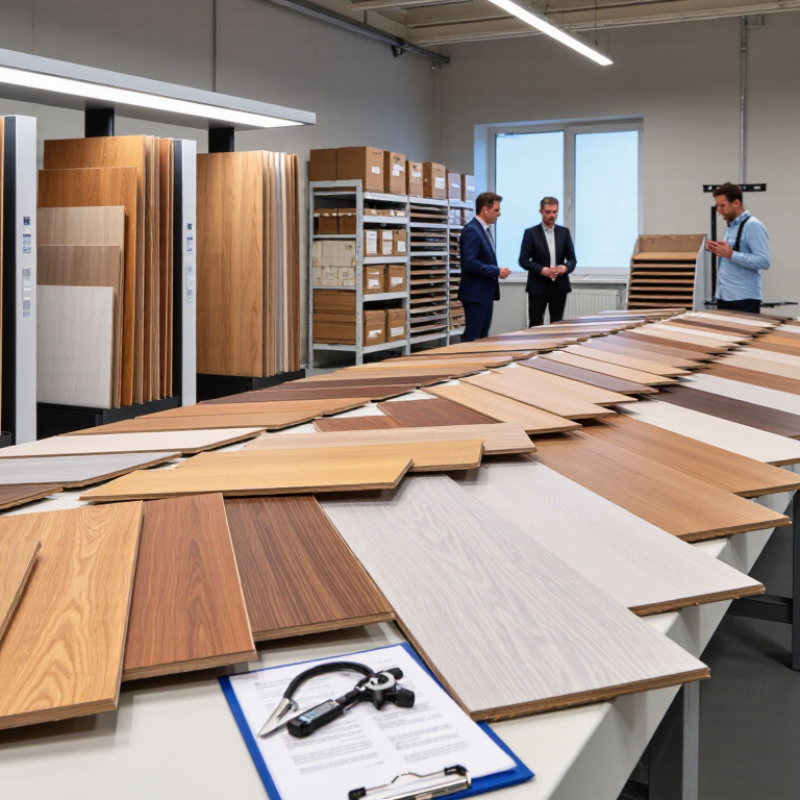
For Down Flooring projects, compare manufacturers on more than price. Ask how they control batch variation, protect edges during packing, and document inspection results. Request samples that reflect the proposed finish, then examine them in the lighting and setting where the floor will be used. Look closely. A smooth display sample cannot prove consistent production. Buyers should also clarify lead times, customization limits, packaging details, and who handles questions after shipment. These checks help distinguish a capable factory from a polished sales presentation.
The manufacturers and suppliers discussed in this outline should be assessed against the needs of each project, not ranked by broad promises alone. Some information may change, and product descriptions can leave gaps. That deserves scrutiny. Verify specifications directly, keep approvals in writing, and treat unusually strong claims as prompts for follow-up. With careful comparison, buyers can identify partners whose materials, processes, and service match the job—while recognizing that no checklist replaces an independent review of the actual product.
Top-down flooring is installed from the room’s upper surface, layer by layer, over a prepared subfloor. The term is not always used consistently, so check the supplier’s installation drawings before comparing products. In practice, the key questions are what supports the floor, how panels connect, and whether damaged sections can be replaced from above.
Common options include click-lock laminate, engineered wood, and rigid vinyl such as SPC. Laminate offers a wear-resistant surface for everyday rooms, while engineered wood has a real-wood top layer that needs sensible moisture control. Rigid vinyl handles spills well, but an uneven base can still show through or stress the joints. No floor is perfect. That detail gets missed in product listings.
Tips: Ask for panel thickness, wear-layer details, underlay requirements, and test reports. Check a sample under natural light, then inspect its locking edge. Confirm allowable subfloor variation and room-temperature limits in writing. A supplier’s clear installation guidance matters as much as a low quoted price. If the specifications feel vague, pause and ask again.
| Flooring type | Typical construction | Common product format and thickness | Typical installation | Common applications | Important considerations |
|---|---|---|---|---|---|
| SPC rigid-core vinyl | Decorative film and wear layer over a rigid stone-plastic composite core; some products include an attached underlay. | Usually planks or tiles; commonly about 4–8 mm overall, with wear-layer specifications varying by product. | Click-lock floating installation is common; glue-down versions are also available. | Residential rooms and selected commercial interiors, including areas where easy cleaning is useful. | Water-resistant construction does not make every installation waterproof. Subfloor flatness, expansion gaps, and product instructions matter. |
| WPC rigid-core vinyl | Vinyl wear and decorative layers over a foamed wood-plastic composite core; an attached underlay may be included. | Typically planks or tiles, often around 5–8 mm overall; exact construction varies by product. | Commonly installed as a click-lock floating floor. | Homes and light commercial spaces where a resilient surface and underfoot comfort are desired. | The cushioned core can feel softer than SPC, but may dent under concentrated loads. Check care and temperature guidance. |
| LVT (luxury vinyl tile or plank) | Multiple vinyl layers, typically including a printed design layer and a transparent protective wear layer. | Planks and tiles; dryback products are often about 2–3 mm, while some click products are thicker. | Glue-down, click-lock, and other product-specific systems are available. | Residential and commercial interiors; the suitable wear layer depends on expected traffic. | Glue-down installations require a suitable, prepared subfloor and compatible adhesive. Follow the specified wear-layer and maintenance requirements. |
| Laminate flooring | Decorative surface and protective overlay over a high-density fiberboard core, usually with a balancing layer underneath. | Mostly planks; commonly about 7–12 mm thick, excluding any separate underlay. | Usually a click-lock floating installation over an approved underlay. | Dry residential rooms and suitable commercial settings, depending on the product’s traffic rating. | The fiberboard core can swell if water reaches it. Use only products rated for the intended moisture conditions and follow cleaning guidance. |
| Engineered wood flooring | A real-wood top veneer bonded to a multi-layer wood-based core; the veneer thickness and core design vary. | Planks and, less commonly, other formats; often about 10–20 mm overall. | Depending on the product and subfloor, it may be floated, glued, nailed, or stapled. | Residential interiors and selected commercial spaces where a real-wood surface is specified. | Moisture and installation requirements remain important. Refinishing potential depends on the thickness of the real-wood wear layer. |
| Solid hardwood flooring | Solid wood boards or strips made from a single piece of wood, with a factory or site-applied finish. | Boards in a range of widths and lengths; many products are approximately 15–22 mm thick. | Commonly nailed or stapled to an appropriate wood subfloor; other approved methods depend on the product. | Interior rooms with suitable moisture and temperature conditions. | Wood expands and contracts with changes in humidity. Acclimation, subfloor moisture checks, and suitable room conditions are essential. |
| Porcelain or ceramic tile | Fired ceramic material; porcelain tile is a ceramic tile type made from dense, low-absorption body material. | Square, rectangular, and other formats; tile thickness varies, commonly around 6–12 mm for many floor products. | Usually bonded to a suitable substrate with tile mortar, with grout joints between tiles. | Bathrooms, kitchens, entryways, and other areas where a hard, cleanable surface is appropriate. | Tile selection, substrate preparation, movement joints, and slip performance should suit the location. Grout and installation quality affect maintenance. |
| Carpet tile | Textile face yarn attached to a backing layer; modular tiles may have different fiber and backing constructions. | Often square or rectangular modules; thickness and dimensions depend on the product. | Installed with a compatible pressure-sensitive adhesive or other method specified by the manufacturer. | Offices and other interiors where modular replacement or acoustic comfort is useful. | Choose fiber, backing, and traffic classification for the intended use. Keep installation areas clean and dry as required by the adhesive system. |
Note: “Top-down flooring” is not a universally standardized product category. This table compares common flooring types by their finished surface and typical construction. Thicknesses and installation methods are general examples, not universal specifications; confirm the technical data and installation instructions for each product.
China’s top-down flooring manufacturers begin with the room, not just the surface. A kitchen needs water resistance and a stable core; a bedroom may call for softer acoustics and lower emissions. Designers translate these needs into wear-layer thickness, board density, locking profiles, and finish. Small details matter. A slightly uneven click joint can become a visible gap after installation.
Production usually moves through material selection, pressing or extrusion, surface treatment, cutting, and quality checks. Teams test dimensions, abrasion resistance, moisture response, and locking strength. For wood-based panels, moisture control is critical: a small change in the board can affect how flooring performs after it leaves the factory. Manufacturers may adjust press temperature or cooling time, then sample products from each batch. Not every batch matches. That is why repeat testing matters more than a polished catalog description.
Environmental performance also shapes design choices. UNEP and GlobalABC’s 2024 Global Status Report states that buildings and construction accounted for 32% of global energy use and 34% of energy- and process-related CO₂ emissions in 2023. The figures concern the sector broadly, not flooring alone, but they make material efficiency worth examining. The U.S. EPA notes that indoor pollutant levels can be two to five times outdoor levels; flooring suppliers can support informed choices with emissions test results and clear material disclosures. I would still check the test method and product batch, because one certificate may not tell the whole story.
Chinese flooring production starts with choosing materials suited to the product and its intended use. Engineered wood, laminate, vinyl, and ceramic tile require different checks. Moisture content matters for wood-based boards. Core density and layer bonding affect laminate stability. For vinyl, buyers may review composition, thickness, and dimensional change after heat exposure. These details are easier to verify when suppliers retain batch records.
Standards depend on the destination market and product category. Buyers should confirm applicable limits for emissions, slip resistance, wear, and fire performance before production begins. Quality teams can inspect incoming materials, sample products during manufacturing, and test finished cartons. A caliper, moisture meter, and clear defect checklist make routine checks more consistent. Small details matter. Chipped edges or uneven thickness can cause trouble during installation.
Inspection records help, but they do not guarantee every shipment will be uniform. Sampling can miss defects, especially when batches are large. Independent testing may be useful for higher-risk specifications, while factory audits can clarify how corrective actions are handled. Requirements also change, so old certificates should be checked rather than accepted at face value. A realistic quality plan leaves room for reinspection and honest discussion when results fall short.
Maximum formaldehyde emission limits for wood-based panels and products under China’s GB/T 39600-2021 classification, measured using the 1 m³ chamber method. These material-level classifications inform flooring production quality control; they are not a complete flooring product standard. Lower limits indicate stricter emission requirements.
Source: GB/T 39600-2021, Classification of Formaldehyde Emission from Wood-Based Panels and Products. Values are maximum limits in mg/m³.
A reliable flooring supplier should be judged by repeatable production, not a polished showroom. Ask how the factory controls board thickness, edge fit, surface finish, and moisture content. Request recent inspection records and product specifications for the exact construction you plan to buy. Details matter. A sample may look flawless, yet tell you little about how a full production run will perform.
Compare samples against your project requirements. Check dimensions with a caliper, inspect joints under natural light, and note whether the surface scratches during ordinary handling. For wood-based flooring, ask about core materials, wear-layer thickness, and acclimation guidance. For stone-plastic or other resilient products, confirm the stated wear layer and dimensional stability. Test more than one batch when possible. One sample is not enough. I would not treat a confident sales presentation as proof; that shortcut is tempting, but weak.
Before placing an order, clarify minimum quantities, lead times, packaging, inspection steps, and how defects are handled. Ask who checks goods before loading and whether an independent inspection is acceptable. Verify certificates against the product and production site; paperwork for a different item offers little assurance. Keep agreed tolerances and remedies in writing. Communication can still be uneven, so record decisions by email and review a pilot order before scaling up.
Sourcing top down flooring in China works best when buyers compare more than quoted prices. Ask manufacturers for product data, production capacity, quality-control steps, and recent export experience. Request clear details on core materials, surface finish, panel dimensions, and installation tolerances. A low price can hide differences in edge quality or packaging. Check samples under the lighting and foot traffic expected at the project site. Small details matter.
Customization should begin with a written specification, not a loose reference image. Confirm color, texture, thickness, edge treatment, and acceptable dimensional variation before approving production. For large orders, agree on a sample approval process and inspection points. Keep a signed sample for comparison. It may feel overly cautious, but vague approvals often create avoidable disputes. Even careful planning cannot remove every production variation, so buyers should decide which deviations are acceptable in advance.
Logistics planning deserves the same attention as product selection. Confirm pallet dimensions, gross weight, loading plans, and protective packaging before booking freight. Ask suppliers to share production milestones and document requirements early. Shipping schedules can shift, especially when several custom finishes are involved. Build in time for inspection and inland delivery, rather than planning around an ideal departure date. A spreadsheet helps, but it cannot replace direct updates from the factory. Track changes in writing, even when the relationship feels familiar.
We use cookies on our website to give you an improved browser experience. View our Privacy Policy for more information. Please make your selection to opt in or out of ALL cookies here: Accept or Decline
Do you consent to the use of ALL cookies?
901 2nd Court West
Birmingham, AL 35204
Sales: 866.481.4036
Logistics/Ops: 866.481.4036
2101 Dralle Road
University Park, IL 60466
Sales: 708.813.9070
Logistics/Ops: 708.235.4200
400 E. 13th Street
Little Rock, AR 72114
Sales: 866.760.5344
Logistics/Ops: 866.760.5344
225 Collins Road
Elkhart, IN 46515
Sales: 574.295.0214
Logistics/Ops: 574.607.4611
601 Berryman Pike
Tipton, IN 46072
Sales: 800.897.7591
Logistics/Ops: 800.897.7591
3900 Uvalda Street
Denver, CO 80239
Sales: 303.706.8000
Ops/Logistics: 303.576.8398
510 3rd Street E
Milan, IL 61264
Sales: 800.322.1052
Logistics/Ops: 800.322.1052
1660 E. Aurora
Des Moines, IA 50313
Sales: 800.671.1660
Logistics: 800.671.1660
86554 Gene Lasserre Blvd.
Yulee, FL 32097
Sales: 904.253.3060
Logistics/Ops: 904.225.3000
694 S.E. County Road 245
Lake City, FL 32025
Sales: 800.727.6706
Logistics/Ops: 386.752.7412
210 Neptune Road
Auburndale, FL 33823
Sales: 863.967.1131
Logistics/Ops: 863.777.9814
4601 McCoy Drive
Pensacola, FL 32503
Sales: 850.308.7030
Logistics/Ops: 850.434.5502
815 South 56th Street
Tampa, FL 33619
Sales: 813.302.1940
Logistics/Ops: 813.621.1352
200 Hosea Road
Lawrenceville, GA 30046
Sales: 770.953.7575
Logistics/Ops: 770.513.6000
Branch Product Guide
Branch Line Card
Moulding Offering
Cedar Offering
Column Offering
8173 Hwy. 165 North
Monroe, LA 71211
Sales: 800.256.4165
Logistics/Ops: 800.256.4165
508 Warren Avenue
Portland, ME 04103
Sales: 207.888.2331
Logistics/Ops: 207.797.6565
4300 Georgia Pacific Blvd.
Frederick, MD 21704
Sales: 301.798.7474
Logistics/Ops: 301.874.8000
419 Maple Street
Bellingham, MA 02019
Sales: 508.449.0535
Logistics/Ops: 508.966.5500
825 Buchanan Ave SW
Grand Rapids, MI 49507
Sales: 877.800.1180
Logistics/Ops: 616.278.0909
995 Pacific St. NW
Aitkin, MN 56431
Sales: 800.432.3727
Logistics/Ops: 218.212.7770
1102 Port Terminal Drive
Duluth, MN 55802
Sales: 800.951.9899
Logistics/Ops: 800.851.9899
9110 83rd Ave. North
Brooklyn Park, MN 55445
Sales: 763.425.0204
Logistics/Ops: 763.425.0204
910 E. Railroad Street
Long Beach, MS 39560
Sales: 866.535.4135
Logistics/Ops: 228.205.2400
1727 Warren Street
North Kansas City, MO 64116
Sales: 800.621.2611
Logistics/Ops: 800.621.2611
2123 North Golden
Springfield, MO 65803
Sales: 800.375.7891
Logistics/Ops: 800.375.7891
13860 Corp. Woods Trail
Bridgeton, MO 63044
Sales: 314.209.0800
Logistics/Ops: 314.209.0800
1109 South 19th Street
Omaha, NE 68108
Sales: 800.489.6637
Logistics/Ops: 800.489.6637
1 Luger Road
Denville, NJ 07834
Sales: 973-339-3539
Logistics/Ops: 973.625.1461
3720 Jeffrey Blvd.
Blasdell, NY 14219
Sales: 716.235.5989
Logistics/Ops: 716.825.6557
319 Yaphank Ave.
Yaphank, NY 11980
Sales: 631.358.5714
Logistics/Ops: 631.924.7401
3300 Parkside Drive
Charlotte, NC 28208
Sales: 800.839.2588
Logistics/Ops: 704.394.3172
1712 East D Street
Butner, NC 27509
Sales: 984.389.8200
Logistics/Ops: 919.575.3700
128 Foothills Drive
Statesville, NC 28687
Sales: 800.222.1414
Logistics/Ops: 704.394.3172
550 Munroe Falls Rd.
Tallmadge, OH 44278
Sales: 330.357.4506
Logistics/Ops: 330.794.1141
10347 Toebben Dr.
Independence, KY 41051
Sales: 859.298.3926
Logistics/Ops: 859.746.2250
450 N. MacArthur
Oklahoma City, OK 73127
Sales: 800.375.6025
Logistics/Ops: 800.375.6025
1680 North Aspen
Broken Arrow, OK 74012
Sales: 918.272.2212
Logistics/Ops: 918.272.2212
522 Bridge Street
Hunker, PA 15639
Sales: 878.217.2001
Logistics/Ops: 724.925.7285
4290 Atlanta Street
Charleston, SC 29418
Sales: 843.371.1420
Logistics/Ops: 843.554.8192
1040 S. Industrial Dr.
Erwin, TN 37650
Sales: 423.641.1005
Logistics/Ops: 423.742.5911
4287 Pilot Drive
Memphis, TN 38118
Sales: 901.365.2101
Logistics/Ops: 901.365.2101
700 Myatt Drive
Madison, TN 37115
Sales: 615.327.9547
Logistics/Ops: 629.777.4949
4747 Mark IV Parkway
Fort Worth, TX 76106
Sales: 866.323.5117
Logistics/Ops: 817.625.9091
6990 Market Avenue
El Paso, TX 79915
Sales: 915.778.6356
Logistics/Ops: 915.265.7200
2502 Wilson Road
Harlingen, TX 78552
Sales: 800.580.6711
Logistics/Ops: 800.580.6711
10,000 North Loop East
Houston, TX 77029
Sales: 713.921.1977
Logistics/Ops: 713.675.3544
702 East 44th St.
Lubbock, TX 79404
Sales: 866.454.6010
Logistics/Ops: 866.454.6010
535 N. WW White Road
San Antonio, TX 78219
Sales: 800.284.0488
Logistics/Ops: 210.333.8112
142 Pine Haven Shores Rd.
Shelburne, VT 05482
Sales: 802.800.2540
Logistics/Ops: 802.985.2512
4700 Bethlehem Road,
Richmond, VA 23230
Sales: 804.201.2400
Logistics/Ops: 804.342.1161
4516 N Barker Road
Spokane Valley, WA 99027
Phone: 509.892.9420
Toll free: 800.728.6157
8365 N. 76th Street
Milwaukee, WI 53223
Sales: 800.356.9245
Logistics/Ops: 800.356.9245
312 S. Chester Street
Sparta, WI 54656
Sales: 800.362.5864
Logistics/Ops: 800.362.5864
899 Grossman Drive
Schofield, WI 54476
Sales: 800.472.0017
Logistics/Ops: 800.472.0017
