
We use cookies on our website to give you an improved browser experience. View our Privacy Policy for more information. Please make your selection to opt in or out of ALL cookies here: Accept or Decline
Buying u100 dried apple in bulk is not simply a price comparison exercise. The wrong lot can arrive too soft, too dark, unevenly sliced, or difficult to store. A low quoted price may hide high breakage, excessive moisture, weak packaging, or inconsistent sizing. These details affect production costs immediately.
Dr. Robert L. Shewfelt, a respected food-quality specialist, describes the principle clearly: “Quality is not a single attribute; it is a collection of attributes.” That idea fits dried apples perfectly. Color, texture, flavor, moisture, cleanliness, and shelf stability must be judged together. One excellent sample does not prove consistent supply. That is an uncomfortable point, but bulk purchasing often rewards caution.
This guide presents seven practical tips for evaluating u100 dried apple before placing a large order. It covers product specifications, supplier experience, sample testing, packaging, documentation, storage conditions, and total landed cost. Buyers should inspect the apple pieces under natural light. They should also check whether the texture feels leathery, crisp, or sticky. Small differences matter.
Ask for the harvest period and processing details. Request a recent certificate of analysis when appropriate. Confirm the meaning of “U100,” because grading language can vary between suppliers. Never assume that similar labels guarantee similar performance. Sometimes, they do not.
A reliable purchase begins with evidence, not attractive photographs. Expect questions, compare samples, and leave room for honest doubt. Bulk success depends on repeatable quality, not one impressive shipment.
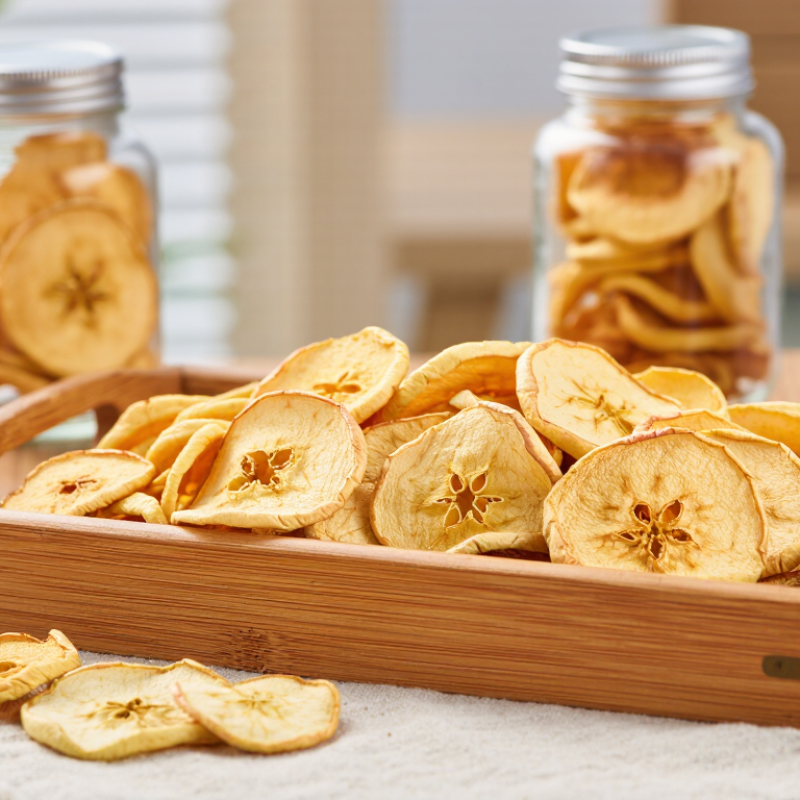
In many wholesale specifications, U100 dried apples mean fewer than 100 pieces per pound. Larger pieces usually indicate thicker cuts or bigger apple sections. It is a size code, not an apple variety. That detail matters. However, suppliers may measure whole rings, slices, or irregular pieces differently. Always confirm the counting method before ordering.
U100 pieces are often used in granola, bakery fillings, trail mixes, cereal, and snack packs. Their larger size gives a stronger bite and more visible fruit appeal. Food manufacturers may also chop them for oatmeal, sauces, or rehydrated fillings. The USDA FoodData Central database shows that dried apples concentrate carbohydrates and dietary fiber compared with fresh apples, although values change with moisture and added ingredients. Check the nutrition specification, not assumptions.
Moisture control affects texture and shelf life. USDA Agricultural Marketing Service standards for dehydrated apples emphasize factors such as color, defects, cleanliness, and condition. The International Nut and Dried Fruit Council’s Statistical Yearbook also tracks dried-fruit production and trade, supporting the sector’s importance in global food supply. In practice, inspect a sample for flexibility, sticking, dark spots, and uneven cuts. A perfect appearance can mislead. Packaging, storage temperature, and sulfur treatment should be verified because U100 alone does not define product quality.
When buying U100 dried apples, confirm what “U100” means on the supplier’s specification sheet. It may describe piece count, size, or a private grading system. Do not assume it guarantees quality. Request a recent certificate of analysis, production date, lot number, and product photographs. Check color, thickness, aroma, and surface texture. Good slices should smell naturally fruity, not sour or chemical. A small sample often reveals more than a polished sales sheet.
Moisture needs laboratory verification. Ask for the test method, result, and acceptance range, rather than accepting “low moisture” as proof. Excess moisture can create soft texture, clumping, and storage risks. However, extremely dry slices may become brittle and lose eating quality. USDA FoodData Central lists about 243 calories and 8.7 grams of fiber per 100 grams for dried apples, but values change with sugar and processing. Compare the nutrition panel with this reference. Added sugar, sulfites, oils, and flavorings must appear clearly in the ingredient statement. Codex CXS 1-1985 supports clear prepackaged food labeling, while AOAC methods provide recognized analytical procedures. Standards still need local review. I would also test a retained sample after two weeks. That step is easy to skip, and regrettable. Temperature, packaging, and warehouse humidity can change the result.
Buying U100 dried apple in bulk requires more than comparing the lowest quotation. Ask each supplier to define “U100” in writing, including piece count, slice thickness, moisture, color, and defect tolerance. Specifications can vary. Samples matter. Request a recent certificate of analysis covering moisture, microbiological limits, sulfites, pesticide residues, and foreign-material controls. A GFSI-recognized food-safety certification, HACCP plan, and traceable lot coding provide stronger evidence than a sales promise.
Market data also deserves attention. FAOSTAT reports global fresh-apple production above 95 million metric tons in recent years, but drying losses, energy costs, and seasonal supply sharply affect bulk pricing. The International Nut and Dried Fruit Council’s statistical reports identify dried fruit supply as highly sensitive to harvest size and processing capacity. Compare at least three offers using the same shipment terms. Include product price, packaging, inland transport, inspection, insurance, and delivered cost. Prices move.
A reliable supplier should explain the crop year, origin, drying method, and storage temperature. Look for sealed cartons or lined bags, pallet protection, and clear best-before dates. Ask whether the quoted price applies to one pallet or a full container. Full-container pricing may look attractive, yet slow turnover can create waste and cash pressure. I would also test a 5–10 kilogram lot before committing. My own caution is simple: certificates can be genuine, but they may not describe the exact lot offered. Recheck the lot number, sample results, and contract tolerances before payment.
Compare suppliers by indicative bulk price, minimum order quantity, and certification coverage. Lower prices may involve larger order commitments, while HACCP, BRCGS, ISO 22000, and organic certification can improve traceability and buyer confidence. Confirm moisture, cut size, packaging, shipping terms, and current quotations before placing an order.
When buying U100 dried apple, inspect the packaging before comparing prices. Strong food-grade liners should resist moisture, odors, and punctures. Ask for sealed cartons, batch identification, net weight, and packing dates. Transparent documentation makes quality checks easier. Do not rely on appearance alone.
Check whether inner bags are heat-sealed and protected by rigid outer cases. Small tears can expose apple pieces to humidity during transport. Storage should remain cool, dry, and away from sunlight. Keep cartons off the floor and leave space between stacks and walls. A clean warehouse matters.
Shelf life depends on moisture, processing, and packaging quality. Request written storage conditions and recent product specifications. Do not assume a long date means perfect texture. I once underestimated humidity, and the fruit softened faster than expected. That mistake was avoidable. Use older stock first and record opened-carton dates. Before ordering, confirm the remaining shelf life at delivery.
Shipping requires more than a low freight quote. Ask about pallet wrapping, ventilation, temperature exposure, and transit time. In warm seasons, extended container delays may affect texture and flavor. Inspect cartons immediately after arrival, including corners and seals. Photograph damage before moving the shipment. A small sample test can reveal clumping, stale odors, or uneven dryness. Suppliers should explain corrective steps clearly when results differ from the agreed specification.
Calculating total cost starts with a clear specification. Confirm what “U100” means, because grading systems can differ by supplier.
Tip 1: define slice size, moisture, color, sweetness, and permitted additives in writing. USDA FoodData Central lists about 243 calories and 8.7 grams of fiber per 100 grams of dried apple. These figures help check product samples, but they do not prove grade or freshness.
Tip 2: compare delivered cost, not the carton price. Add product cost, inner bags, cartons, pallets, inland freight, insurance, customs charges, inspection, and storage.
Tip 3: request a landed-cost quote for your exact destination. USDA Agricultural Marketing Service reports show that produce shipping rates and market prices change by lane and week. A cheap quote can age badly.
Tip 4: calculate yield after sorting. My first spreadsheet ignored broken pieces and moisture loss. That mistake looked small, but it changed the usable cost per kilogram.
Tip 5: include payment fees and currency movement. Keep a five to ten percent contingency, unless your records justify less.
Tip 6: test one representative sample before approving the full lot. Check weight, texture, sulfur status, seal quality, and carton count.
Tip 7: price storage realistically. FAO’s food-loss reporting identifies supply-chain loss as a serious global issue, but the published percentage is not a precise dried-apple allowance. Use your own receiving data. If you lack data, start conservatively. Ask for batch records, laboratory results, and a written replacement policy. A purchase order should show every cost assumption, including who pays for reinspection.
We use cookies on our website to give you an improved browser experience. View our Privacy Policy for more information. Please make your selection to opt in or out of ALL cookies here: Accept or Decline
Do you consent to the use of ALL cookies?
901 2nd Court West
Birmingham, AL 35204
Sales: 866.481.4036
Logistics/Ops: 866.481.4036
2101 Dralle Road
University Park, IL 60466
Sales: 708.813.9070
Logistics/Ops: 708.235.4200
400 E. 13th Street
Little Rock, AR 72114
Sales: 866.760.5344
Logistics/Ops: 866.760.5344
225 Collins Road
Elkhart, IN 46515
Sales: 574.295.0214
Logistics/Ops: 574.607.4611
601 Berryman Pike
Tipton, IN 46072
Sales: 800.897.7591
Logistics/Ops: 800.897.7591
3900 Uvalda Street
Denver, CO 80239
Sales: 303.706.8000
Ops/Logistics: 303.576.8398
510 3rd Street E
Milan, IL 61264
Sales: 800.322.1052
Logistics/Ops: 800.322.1052
1660 E. Aurora
Des Moines, IA 50313
Sales: 800.671.1660
Logistics: 800.671.1660
86554 Gene Lasserre Blvd.
Yulee, FL 32097
Sales: 904.253.3060
Logistics/Ops: 904.225.3000
694 S.E. County Road 245
Lake City, FL 32025
Sales: 800.727.6706
Logistics/Ops: 386.752.7412
210 Neptune Road
Auburndale, FL 33823
Sales: 863.967.1131
Logistics/Ops: 863.777.9814
4601 McCoy Drive
Pensacola, FL 32503
Sales: 850.308.7030
Logistics/Ops: 850.434.5502
815 South 56th Street
Tampa, FL 33619
Sales: 813.302.1940
Logistics/Ops: 813.621.1352
200 Hosea Road
Lawrenceville, GA 30046
Sales: 770.953.7575
Logistics/Ops: 770.513.6000
Branch Product Guide
Branch Line Card
Moulding Offering
Cedar Offering
Column Offering
8173 Hwy. 165 North
Monroe, LA 71211
Sales: 800.256.4165
Logistics/Ops: 800.256.4165
508 Warren Avenue
Portland, ME 04103
Sales: 207.888.2331
Logistics/Ops: 207.797.6565
4300 Georgia Pacific Blvd.
Frederick, MD 21704
Sales: 301.798.7474
Logistics/Ops: 301.874.8000
419 Maple Street
Bellingham, MA 02019
Sales: 508.449.0535
Logistics/Ops: 508.966.5500
825 Buchanan Ave SW
Grand Rapids, MI 49507
Sales: 877.800.1180
Logistics/Ops: 616.278.0909
995 Pacific St. NW
Aitkin, MN 56431
Sales: 800.432.3727
Logistics/Ops: 218.212.7770
1102 Port Terminal Drive
Duluth, MN 55802
Sales: 800.951.9899
Logistics/Ops: 800.851.9899
9110 83rd Ave. North
Brooklyn Park, MN 55445
Sales: 763.425.0204
Logistics/Ops: 763.425.0204
910 E. Railroad Street
Long Beach, MS 39560
Sales: 866.535.4135
Logistics/Ops: 228.205.2400
1727 Warren Street
North Kansas City, MO 64116
Sales: 800.621.2611
Logistics/Ops: 800.621.2611
2123 North Golden
Springfield, MO 65803
Sales: 800.375.7891
Logistics/Ops: 800.375.7891
13860 Corp. Woods Trail
Bridgeton, MO 63044
Sales: 314.209.0800
Logistics/Ops: 314.209.0800
1109 South 19th Street
Omaha, NE 68108
Sales: 800.489.6637
Logistics/Ops: 800.489.6637
1 Luger Road
Denville, NJ 07834
Sales: 973-339-3539
Logistics/Ops: 973.625.1461
3720 Jeffrey Blvd.
Blasdell, NY 14219
Sales: 716.235.5989
Logistics/Ops: 716.825.6557
319 Yaphank Ave.
Yaphank, NY 11980
Sales: 631.358.5714
Logistics/Ops: 631.924.7401
3300 Parkside Drive
Charlotte, NC 28208
Sales: 800.839.2588
Logistics/Ops: 704.394.3172
1712 East D Street
Butner, NC 27509
Sales: 984.389.8200
Logistics/Ops: 919.575.3700
128 Foothills Drive
Statesville, NC 28687
Sales: 800.222.1414
Logistics/Ops: 704.394.3172
550 Munroe Falls Rd.
Tallmadge, OH 44278
Sales: 330.357.4506
Logistics/Ops: 330.794.1141
10347 Toebben Dr.
Independence, KY 41051
Sales: 859.298.3926
Logistics/Ops: 859.746.2250
450 N. MacArthur
Oklahoma City, OK 73127
Sales: 800.375.6025
Logistics/Ops: 800.375.6025
1680 North Aspen
Broken Arrow, OK 74012
Sales: 918.272.2212
Logistics/Ops: 918.272.2212
522 Bridge Street
Hunker, PA 15639
Sales: 878.217.2001
Logistics/Ops: 724.925.7285
4290 Atlanta Street
Charleston, SC 29418
Sales: 843.371.1420
Logistics/Ops: 843.554.8192
1040 S. Industrial Dr.
Erwin, TN 37650
Sales: 423.641.1005
Logistics/Ops: 423.742.5911
4287 Pilot Drive
Memphis, TN 38118
Sales: 901.365.2101
Logistics/Ops: 901.365.2101
700 Myatt Drive
Madison, TN 37115
Sales: 615.327.9547
Logistics/Ops: 629.777.4949
4747 Mark IV Parkway
Fort Worth, TX 76106
Sales: 866.323.5117
Logistics/Ops: 817.625.9091
6990 Market Avenue
El Paso, TX 79915
Sales: 915.778.6356
Logistics/Ops: 915.265.7200
2502 Wilson Road
Harlingen, TX 78552
Sales: 800.580.6711
Logistics/Ops: 800.580.6711
10,000 North Loop East
Houston, TX 77029
Sales: 713.921.1977
Logistics/Ops: 713.675.3544
702 East 44th St.
Lubbock, TX 79404
Sales: 866.454.6010
Logistics/Ops: 866.454.6010
535 N. WW White Road
San Antonio, TX 78219
Sales: 800.284.0488
Logistics/Ops: 210.333.8112
142 Pine Haven Shores Rd.
Shelburne, VT 05482
Sales: 802.800.2540
Logistics/Ops: 802.985.2512
4700 Bethlehem Road,
Richmond, VA 23230
Sales: 804.201.2400
Logistics/Ops: 804.342.1161
4516 N Barker Road
Spokane Valley, WA 99027
Phone: 509.892.9420
Toll free: 800.728.6157
8365 N. 76th Street
Milwaukee, WI 53223
Sales: 800.356.9245
Logistics/Ops: 800.356.9245
312 S. Chester Street
Sparta, WI 54656
Sales: 800.362.5864
Logistics/Ops: 800.362.5864
899 Grossman Drive
Schofield, WI 54476
Sales: 800.472.0017
Logistics/Ops: 800.472.0017
