
We use cookies on our website to give you an improved browser experience. View our Privacy Policy for more information. Please make your selection to opt in or out of ALL cookies here: Accept or Decline
In 2026, choosing Double Head Bolts for international projects means looking beyond price and availability. These fasteners connect components where alignment, clamping, and dependable threads matter. A small mismatch can delay assembly. Buyers should compare material, diameter, thread pitch, length, and end configuration against the actual drawing, not just a product photo. Tiny details matter. Surface finish also deserves attention: zinc plating, hot-dip galvanizing, and other coatings can affect corrosion resistance, dimensions, and suitability for the intended environment. The right choice depends on the application, exposure conditions, and required specifications.
This guide outlines practical points global buyers can use when evaluating products and suppliers in 2026. It considers dimensional consistency, material documentation, inspection records, packaging, lead times, and communication across time zones. Where a project specifies a standard or grade, confirm it against current documentation and the requirements that apply at the destination. Ask for traceable test reports and clear drawings before placing a bulk order. Claims alone are not verification. A supplier’s ability to explain tolerances and resolve specification questions can be as important as its catalog range. Even experienced procurement teams can overlook a thread detail or coating allowance when schedules are tight. That is worth admitting. The sections ahead offer a careful comparison framework, while recognizing that no single bolt suits every project.
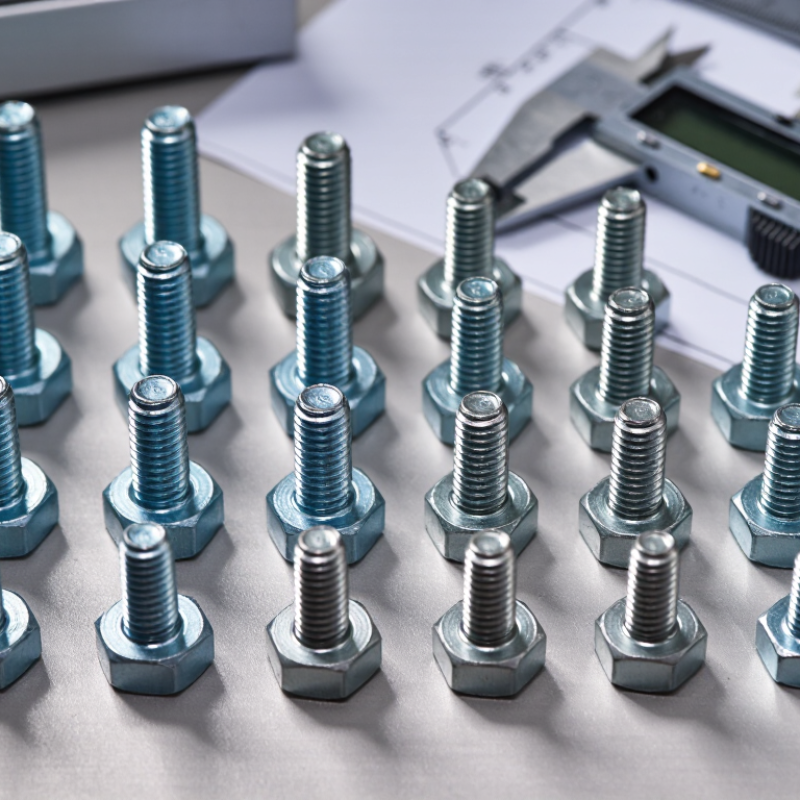
A double head bolt has threads at both ends, with an unthreaded section between them. One threaded end fits into a tapped hole; a nut secures the other side. Some suppliers describe this fastener as a double-ended stud, so buyers should check the drawing rather than rely on the name alone.
Fit matters. Thread diameter, pitch, length, material, and strength grade must match the joint. A few millimeters can change how much thread engages or how much space remains for the nut.
These fasteners appear in machinery housings, engine assemblies, pipe flanges, and equipment covers. They are useful where a component needs repeated removal, or where a bolt head would be difficult to reach.
For example, a technician can leave the anchored end in a casting and remove the outer nut during maintenance. Not always. The arrangement only helps when the tapped material and thread engagement can handle the intended load.
Buyers should also consider temperature, vibration, corrosion exposure, and installation torque. Stainless steel may suit some environments, but it is not automatically the strongest choice. I have seen specifications overlook the plain-shank length; that detail deserves a second look, especially when parts clamp together unevenly. Check the mating surfaces and assembly instructions before ordering.
2026 Best Double Head Bolts for Global Buyers?
How Double Head Bolt Designs and Materials Differ
Double head bolts have threaded ends on both sides, often separated by a plain shank. Their geometry varies with the joint: some designs use equal thread lengths, while others have one longer end for deeper engagement. A shorter shank may suit a compact assembly; a longer one can help position components. Small details matter. Confirm thread diameter, pitch, overall length, and end-to-end dimensions against the drawing. A bolt that looks right on a bench may still leave too little thread inside a tapped hole.
Material choice changes performance. Carbon steel is common where strength and cost matter, while alloy steel may be specified for demanding loads or temperatures. Stainless steel can help resist corrosion, but grade selection still depends on the environment. Salt spray, cleaning chemicals, and contact with dissimilar metals all deserve attention. Coatings can add protection, yet their thickness may affect thread fit. Ask for material and inspection records, including dimensional checks and mechanical test results when the application requires them. A material label alone is not enough. I would also review the joint conditions with the design team; specifications sometimes miss real installation details, such as repeated assembly or limited wrench clearance.
| Option | Typical design | Material or specification | Best suited to | Key selection checks |
|---|---|---|---|---|
| General-purpose high-strength stud | Double-ended stud with a threaded section at each end and an unthreaded shank between them. | ASTM A193 Grade B7, quenched-and-tempered alloy steel. | Many pressure-vessel, piping, and industrial bolting applications where the specified temperature and design code permit it. | Check the required diameter, thread form, grade marking, temperature limits, and whether the service environment requires additional corrosion or sour-service controls. |
| Controlled-hardness alloy-steel stud | Double-ended stud; geometry is specified separately from the material grade. | ASTM A193 Grade B7M, alloy steel with controlled hardness requirements. | Certain applications where resistance to sulfide stress cracking is a concern and the applicable sour-service requirements call for this grade. | B7M alone does not establish suitability for every sour environment. Verify hardness, heat treatment, testing, and project requirements against the applicable standard and service conditions. |
| Stainless-steel stud | Double-ended stud, commonly supplied with matching or specified nuts for the joint. | ASTM A193 Grade B8 (commonly based on Type 304 stainless steel) or Grade B8M (commonly based on Type 316 stainless steel). | Applications where corrosion resistance is important and the loads, temperature, and environment are compatible with the selected stainless grade and class. | Stainless steel is not immune to corrosion. Check the specific medium, chloride exposure, temperature, strength class, galling risk, and nut compatibility. |
| Low-temperature alloy-steel stud | Double-ended stud used with a specified low-temperature bolting assembly. | ASTM A320 Grade L7, quenched-and-tempered alloy steel with requirements for low-temperature service. | Applications designed for low-temperature service where the governing code or purchase specification calls for this grade. | Confirm the minimum design temperature, impact-test requirements, dimensional standard, and compatible nut grade. Do not substitute a general-purpose grade without engineering approval. |
| Metric structural or machinery stud | Double-ended or fully threaded stud, selected to match the joint and engagement requirements. | ISO 898-1 property class 8.8 or 10.9 carbon/alloy steel, where the product and application fall within the standard’s scope. | Metric machinery and general engineering assemblies designed around ISO property classes. | Verify that the stud product is covered by the specified requirements; check diameter, thread tolerance, property class, coating, and mating components. ISO property classes are not interchangeable with ASTM grades by name alone. |
| Tap-end stud | One end is designed for engagement in a tapped hole; the opposite end accepts a nut. Thread lengths may differ. | Material is selected separately, for example to an applicable ASTM or ISO bolting specification. | Equipment covers, engine or machinery housings, and joints where one component has a tapped hole. | Specify tap-end engagement, thread series and fit, protrusion, installation method, and the base material’s thread capacity. |
Compare more than nominal diameter. Record thread form, pitch, thread lengths at both ends, overall length, and tolerances. ISO 898-1 specifies mechanical-property classes for carbon and alloy steel bolts, screws, and studs; ISO 3506-1 covers stainless steel fasteners. A class marking alone is not enough. Match strength requirements to the stud’s diameter and operating conditions, then request material test reports and batch traceability.
The World Steel Association’s World Steel in Figures 2025 reports 1,882.6 million tonnes of crude steel production in 2024. That figure shows the scale of supply, not consistent product quality. For corrosive environments, compare stainless grade and surface condition. For highly loaded joints, verify tensile strength and hardness against the specified requirements. Check that certificates identify the same production batch as the delivered studs. I would still inspect initial samples; drawings can miss a small thread-length mismatch.
Tips: Put diameter, pitch, end lengths, tolerance, material grade, coating, and inspection documents in one request-for-quotation table. Ask suppliers to flag deviations before production. Small details matter.
For global buyers, assessing double head bolts starts with a clear specification. Confirm thread diameter, pitch, usable thread length, overall length, and end alignment against the drawing. Ask which material grade and manufacturing standard apply to your use. For steel fasteners, request relevant mechanical test results, heat-treatment records, and batch-linked material certificates. A certificate without traceable batch details is limited evidence.
Tips: Check sample threads with a calibrated gauge. Inspect end squareness and straightness. Keep records.
Evaluate the manufacturer’s inspection process, not just its product photos. Ask how it controls raw materials, heat treatment, coating thickness, and dimensional variation. If coated parts are specified, request details on the coating and any applicable embrittlement controls. Confirm that inspection equipment is calibrated and that nonconforming parts are documented. Small variations can matter during assembly. I would not treat paperwork as certainty; verify samples against your own drawing and acceptance criteria.
Compliance depends on destination, industry, and project requirements. Request the exact standards, test reports, and declarations relevant to your order, then check that names, grades, and batch numbers match. Clarify packaging, marking, and record-retention needs before production. A supplier’s responsiveness to technical questions is useful evidence, though it cannot replace inspection. Keep a written specification.
2026 Best Double Head Bolts for Global Buyers?
Before ordering double head bolts, confirm the drawing, not just the product name. Check diameter, thread pitch, overall length, and the unthreaded center section. Small differences can prevent proper assembly. Specify the material grade and finish in writing. If the bolts will face moisture or outdoor storage, discuss corrosion protection and packaging with the supplier. Ask for inspection records and a sample when dimensions are critical.
Tips: Compare the quotation with your drawing line by line. Request clear photos of labels and packed goods before dispatch. Keep one sample for later checks. It sounds fussy, but it can save time.
Plan shipping details before production is complete. Confirm the delivery term, destination address, package dimensions, gross weight, and expected dispatch date. Ask how the bolts will be separated and protected inside each carton. Loose metal parts can rub together, and damp packaging may leave surface marks. Make sure the commercial invoice and packing list describe the goods consistently. Freight schedules can change, so leave room in your installation plan. I would also recheck thread measurements on arrival; paperwork is useful, but it cannot catch every mismatch.
We use cookies on our website to give you an improved browser experience. View our Privacy Policy for more information. Please make your selection to opt in or out of ALL cookies here: Accept or Decline
Do you consent to the use of ALL cookies?
901 2nd Court West
Birmingham, AL 35204
Sales: 866.481.4036
Logistics/Ops: 866.481.4036
2101 Dralle Road
University Park, IL 60466
Sales: 708.813.9070
Logistics/Ops: 708.235.4200
400 E. 13th Street
Little Rock, AR 72114
Sales: 866.760.5344
Logistics/Ops: 866.760.5344
225 Collins Road
Elkhart, IN 46515
Sales: 574.295.0214
Logistics/Ops: 574.607.4611
601 Berryman Pike
Tipton, IN 46072
Sales: 800.897.7591
Logistics/Ops: 800.897.7591
3900 Uvalda Street
Denver, CO 80239
Sales: 303.706.8000
Ops/Logistics: 303.576.8398
510 3rd Street E
Milan, IL 61264
Sales: 800.322.1052
Logistics/Ops: 800.322.1052
1660 E. Aurora
Des Moines, IA 50313
Sales: 800.671.1660
Logistics: 800.671.1660
86554 Gene Lasserre Blvd.
Yulee, FL 32097
Sales: 904.253.3060
Logistics/Ops: 904.225.3000
694 S.E. County Road 245
Lake City, FL 32025
Sales: 800.727.6706
Logistics/Ops: 386.752.7412
210 Neptune Road
Auburndale, FL 33823
Sales: 863.967.1131
Logistics/Ops: 863.777.9814
4601 McCoy Drive
Pensacola, FL 32503
Sales: 850.308.7030
Logistics/Ops: 850.434.5502
815 South 56th Street
Tampa, FL 33619
Sales: 813.302.1940
Logistics/Ops: 813.621.1352
200 Hosea Road
Lawrenceville, GA 30046
Sales: 770.953.7575
Logistics/Ops: 770.513.6000
Branch Product Guide
Branch Line Card
Moulding Offering
Cedar Offering
Column Offering
8173 Hwy. 165 North
Monroe, LA 71211
Sales: 800.256.4165
Logistics/Ops: 800.256.4165
508 Warren Avenue
Portland, ME 04103
Sales: 207.888.2331
Logistics/Ops: 207.797.6565
4300 Georgia Pacific Blvd.
Frederick, MD 21704
Sales: 301.798.7474
Logistics/Ops: 301.874.8000
419 Maple Street
Bellingham, MA 02019
Sales: 508.449.0535
Logistics/Ops: 508.966.5500
825 Buchanan Ave SW
Grand Rapids, MI 49507
Sales: 877.800.1180
Logistics/Ops: 616.278.0909
995 Pacific St. NW
Aitkin, MN 56431
Sales: 800.432.3727
Logistics/Ops: 218.212.7770
1102 Port Terminal Drive
Duluth, MN 55802
Sales: 800.951.9899
Logistics/Ops: 800.851.9899
9110 83rd Ave. North
Brooklyn Park, MN 55445
Sales: 763.425.0204
Logistics/Ops: 763.425.0204
910 E. Railroad Street
Long Beach, MS 39560
Sales: 866.535.4135
Logistics/Ops: 228.205.2400
1727 Warren Street
North Kansas City, MO 64116
Sales: 800.621.2611
Logistics/Ops: 800.621.2611
2123 North Golden
Springfield, MO 65803
Sales: 800.375.7891
Logistics/Ops: 800.375.7891
13860 Corp. Woods Trail
Bridgeton, MO 63044
Sales: 314.209.0800
Logistics/Ops: 314.209.0800
1109 South 19th Street
Omaha, NE 68108
Sales: 800.489.6637
Logistics/Ops: 800.489.6637
1 Luger Road
Denville, NJ 07834
Sales: 973-339-3539
Logistics/Ops: 973.625.1461
3720 Jeffrey Blvd.
Blasdell, NY 14219
Sales: 716.235.5989
Logistics/Ops: 716.825.6557
319 Yaphank Ave.
Yaphank, NY 11980
Sales: 631.358.5714
Logistics/Ops: 631.924.7401
3300 Parkside Drive
Charlotte, NC 28208
Sales: 800.839.2588
Logistics/Ops: 704.394.3172
1712 East D Street
Butner, NC 27509
Sales: 984.389.8200
Logistics/Ops: 919.575.3700
128 Foothills Drive
Statesville, NC 28687
Sales: 800.222.1414
Logistics/Ops: 704.394.3172
550 Munroe Falls Rd.
Tallmadge, OH 44278
Sales: 330.357.4506
Logistics/Ops: 330.794.1141
10347 Toebben Dr.
Independence, KY 41051
Sales: 859.298.3926
Logistics/Ops: 859.746.2250
450 N. MacArthur
Oklahoma City, OK 73127
Sales: 800.375.6025
Logistics/Ops: 800.375.6025
1680 North Aspen
Broken Arrow, OK 74012
Sales: 918.272.2212
Logistics/Ops: 918.272.2212
522 Bridge Street
Hunker, PA 15639
Sales: 878.217.2001
Logistics/Ops: 724.925.7285
4290 Atlanta Street
Charleston, SC 29418
Sales: 843.371.1420
Logistics/Ops: 843.554.8192
1040 S. Industrial Dr.
Erwin, TN 37650
Sales: 423.641.1005
Logistics/Ops: 423.742.5911
4287 Pilot Drive
Memphis, TN 38118
Sales: 901.365.2101
Logistics/Ops: 901.365.2101
700 Myatt Drive
Madison, TN 37115
Sales: 615.327.9547
Logistics/Ops: 629.777.4949
4747 Mark IV Parkway
Fort Worth, TX 76106
Sales: 866.323.5117
Logistics/Ops: 817.625.9091
6990 Market Avenue
El Paso, TX 79915
Sales: 915.778.6356
Logistics/Ops: 915.265.7200
2502 Wilson Road
Harlingen, TX 78552
Sales: 800.580.6711
Logistics/Ops: 800.580.6711
10,000 North Loop East
Houston, TX 77029
Sales: 713.921.1977
Logistics/Ops: 713.675.3544
702 East 44th St.
Lubbock, TX 79404
Sales: 866.454.6010
Logistics/Ops: 866.454.6010
535 N. WW White Road
San Antonio, TX 78219
Sales: 800.284.0488
Logistics/Ops: 210.333.8112
142 Pine Haven Shores Rd.
Shelburne, VT 05482
Sales: 802.800.2540
Logistics/Ops: 802.985.2512
4700 Bethlehem Road,
Richmond, VA 23230
Sales: 804.201.2400
Logistics/Ops: 804.342.1161
4516 N Barker Road
Spokane Valley, WA 99027
Phone: 509.892.9420
Toll free: 800.728.6157
8365 N. 76th Street
Milwaukee, WI 53223
Sales: 800.356.9245
Logistics/Ops: 800.356.9245
312 S. Chester Street
Sparta, WI 54656
Sales: 800.362.5864
Logistics/Ops: 800.362.5864
899 Grossman Drive
Schofield, WI 54476
Sales: 800.472.0017
Logistics/Ops: 800.472.0017
