We use cookies on our website to give you an improved browser experience. View our Privacy Policy for more information. Please make your selection to opt in or out of ALL cookies here: Accept or Decline
Choosing the 2026 Best Carbon Steel Coil Supplier requires more than comparing shipment prices. Buyers must examine mill origin, coil thickness, yield strength, surface condition, and documentation. A bright warehouse floor can hide inconsistent gauge control. That detail matters.
The World Steel Association reported approximately 1.88 billion tonnes of crude steel production worldwide in 2024. The International Energy Agency also identifies steelmaking as responsible for roughly 7% to 9% of global carbon dioxide emissions. These figures make supplier selection both a commercial and environmental decision. A reliable Carbon Steel Coil Supplier should provide mill test certificates, heat numbers, inspection records, and traceable production dates. ISO 9001 certification helps, but it does not replace independent verification. That distinction is often missed.
Edwin Basson, Director General of the World Steel Association, has stated, “Steel is an essential material for the energy transition.” His observation places coil sourcing within a wider industrial reality. Buyers now need suppliers that understand construction, automotive, machinery, and energy-sector specifications. They should also assess inventory stability, port access, packaging quality, and claims handling. A coil that arrives with edge damage can delay an entire fabrication line.
Still, no supplier ranking is permanently accurate. Freight rates change. Carbon reporting rules evolve. Mill capacity can tighten quickly. The best choice may therefore be the supplier offering dependable evidence, not the lowest quotation. In 2026, experienced buyers should compare verified performance across several shipments, then challenge assumptions before signing a long-term contract.
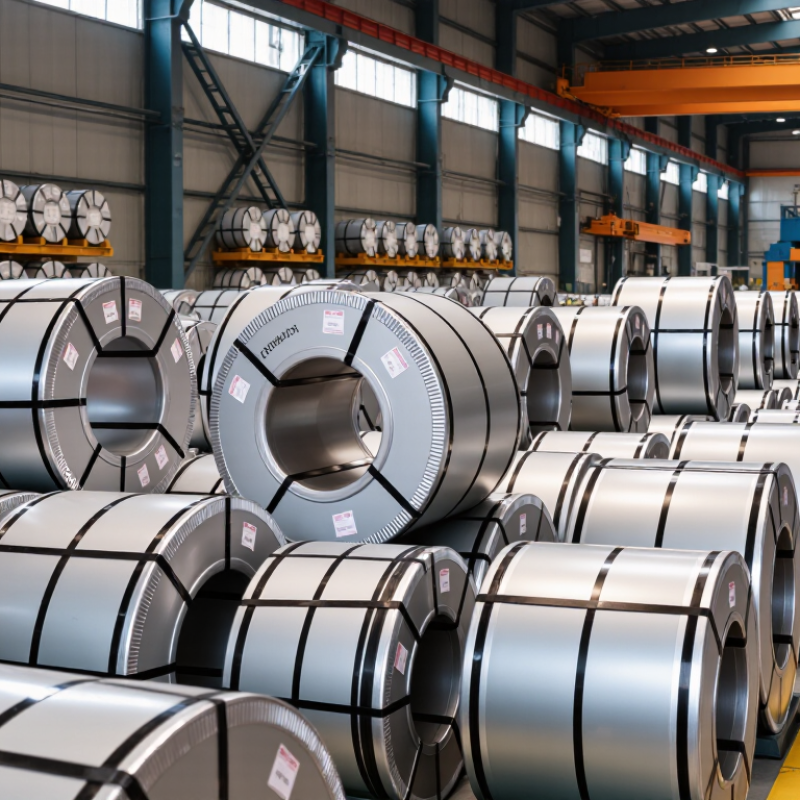
Carbon steel coil is flat steel rolled into a continuous, tightly wound sheet. It usually contains iron and carbon, with small amounts of manganese and other elements. Manufacturers later uncoil, cut, bend, stamp, or weld it into useful parts. These include roofing panels, storage tanks, vehicle components, pipes, and construction frames.
Its value comes from a practical balance. Carbon steel offers strength, predictable forming, and competitive production costs. Coil also saves warehouse space and supports faster automated processing. In 2026, global buyers are watching more than the quoted price. They need stable thickness, accurate width, clean surfaces, and reliable mechanical data. A few tenths of a millimeter can affect stamping performance. It can also create costly production delays.
The “best” supplier depends on the application. There is no universal answer. Experienced buyers compare carbon content, yield strength, tensile strength, coil weight, edge condition, and corrosion protection. They also review mill certificates, inspection procedures, packing quality, and delivery records. Samples should be tested before large orders. This step feels slow, but it often prevents expensive surprises. Supply chains remain changeable, and specifications can be misunderstood. Clear drawings, written tolerances, and direct technical communication still matter. Carbon steel coil is a simple product in appearance, yet small quality differences can influence an entire manufacturing line.
2026 Best Carbon Steel Coil Supplier for Global Buyers?
Evaluating a carbon steel coil supplier requires more than comparing price per tonne. Check mill certificates, coil dimensions, coating details, heat numbers, and test methods. The World Steel Association reported approximately 1.88 billion tonnes of crude steel production in 2024. That scale creates choice, but also creates quality variation. Ask whether the supplier controls production or only resells material. Traceability should follow each coil from heat record to shipping document.
A reliable supplier should explain yield strength, tensile strength, elongation, surface condition, and permissible tolerances. Request recent inspection records, not only standard templates. ISO 9001 certification supports process control, but it does not replace independent testing. The OECD Steel Committee has repeatedly warned about structural excess capacity in global steel markets. Therefore, unusually low prices deserve careful review. Freight terms, port experience, packing quality, and claims handling can change the real cost. Small details matter.
Tips: Compare three complete quotations. Verify the inspection agency. Confirm rust-prevention packing with photos. Check payment milestones carefully. Ask for a sample certificate before ordering. Leave room for doubt. I would also test a small shipment first, because supplier websites rarely reveal every operational weakness. Sustainability deserves attention too. The International Energy Agency estimates steelmaking creates about 7–9% of global energy-related carbon dioxide emissions. Request emissions information when it affects your purchasing policy, but avoid accepting vague green claims without measurable data.
| Evaluation Dimension | What Global Buyers Should Check | Typical Industry Benchmark or Requirement | Recommended Evidence | Evaluation Priority |
|---|---|---|---|---|
| Product Standards | Confirm that the supplier can manufacture and document coils according to the standard specified in the purchase contract. | Common specifications include ASTM A36, ASTM A572, EN 10025-2, EN 10111, JIS G3101, and applicable customer specifications. | Signed technical data sheet, purchase specification, mill test certificate, and standard edition stated on the quotation. | Critical |
| Steel Grade and Chemical Composition | Review carbon, manganese, silicon, phosphorus, sulfur, and other elements required for the selected grade. | Chemical limits must match the ordered grade and the applicable standard; phosphorus and sulfur limits are especially important for weldability and toughness. | Heat number traceability, ladle analysis, product analysis where required, and an independent laboratory report for qualification orders. | Critical |
| Mechanical Properties | Verify yield strength, tensile strength, elongation, bend performance, and any impact requirements. | For example, EN 10025-2 S235JR specifies a minimum yield strength of 235 MPa for relevant thin-product thickness ranges; exact values vary by grade and thickness. | Mill test certificate containing test results, test direction, specimen information, and applicable testing standard. | Critical |
| Thickness Capability | Check whether the supplier can consistently produce the required nominal thickness and tolerance class. | Commercially available hot-rolled carbon steel coil commonly covers approximately 1.2–25 mm, while the actual range depends on the mill and grade. | Current production range, sample inspection record, thickness tolerance table, and recent dimensional inspection reports. | Critical |
| Width Capability | Assess whether the supplier can provide the requested width without excessive slitting or trimming loss. | Many hot-rolled coil programs cover widths of approximately 800–2,000 mm; cold-rolled programs often use narrower or more specialized ranges. | Rolling-mill width range, slitting plan, edge condition description, and width inspection records. | High |
| Dimensional Tolerances | Confirm thickness, width, length, flatness, camber, crown, and coil edge tolerances. | Tolerance requirements should be linked to the applicable standard, such as EN 10051, ASTM A568/A568M, or the agreed customer specification. | Inspection plan, calibrated measuring equipment records, dimensional report, and clearly stated normal or special tolerance class. | Critical |
| Surface Quality | Evaluate scale, rust, scratches, roll marks, pits, edge cracks, and surface defects that could affect forming or coating. | The required surface quality depends on whether the coil will be used for structural fabrication, tube production, stamping, painting, or further cold reduction. | Pre-shipment photographs, agreed defect limits, surface inspection report, and sample approval before mass production. | High |
| Coil Weight and Packaging | Check maximum coil weight, inside diameter, outside diameter, eye orientation, packing materials, and moisture protection. | Coil weights commonly range from approximately 5–30 metric tons, but the safe handling limit depends on the mill, port equipment, and receiving facility. | Packing specification, verified gross and net weight, coil identification, lifting instructions, and container or breakbulk loading plan. | High |
| Traceability | Ensure every coil can be linked to its heat, production batch, inspection result, and shipping documents. | A complete traceability chain should connect the coil number, heat number, mill test certificate, packing list, and shipping marks. | Permanent coil tags, barcode or QR records where available, heat-number mapping, and document cross-check procedure. | Critical |
| Quality Management | Review the supplier’s documented quality system, nonconformance process, corrective-action process, and calibration controls. | ISO 9001 certification is a useful baseline, but certification alone does not replace product audits or inspection of actual shipment records. | Valid certificate, audit report, calibration certificates, corrective-action examples, and quality performance records. | High |
| Testing and Inspection | Determine whether testing is performed by the producer, an independent inspection body, or both. | Typical controls include chemical analysis, tensile testing, bend testing, dimensional inspection, visual inspection, and impact testing when specified. | Inspection and test plan, laboratory accreditation details, witness or hold-point procedure, and final inspection certificate. | Critical |
| Production Lead Time | Separate mill production time from processing, inspection, port handling, and ocean transit time. | For non-stock material, production and processing may require several weeks; the confirmed schedule should be based on actual mill capacity and booking availability. | Production schedule, order confirmation, loading window, port cut-off date, and written delay-notification procedure. | High |
| Export Documentation | Confirm the supplier can provide accurate documents required for customs clearance and technical acceptance. | Typical documents include commercial invoice, packing list, bill of lading, certificate of origin, mill test certificate, and any required inspection certificate. | Document checklist, sample redacted document set, HS-code confirmation, and document approval process before shipment. | High |
| Trade Compliance | Check applicable tariffs, anti-dumping or countervailing measures, sanctions restrictions, import licensing, and origin rules in the destination market. | Trade measures vary by product classification, country of origin, grade, width, thickness, and destination; verification must be completed for each shipment route. | Customs broker review, current tariff classification, origin statement, compliance declaration, and destination-country import check. | Critical |
| Total Landed Cost | Compare material price together with processing, packing, inland freight, ocean freight, insurance, duties, taxes, inspection, and port charges. | The lowest quoted coil price is not necessarily the lowest delivered cost; use the same Incoterm, specification, quantity, and delivery location for comparison. | Itemized quotation, Incoterm, freight validity period, duty assumptions, payment charges, and landed-cost calculation. | Critical |
| Payment and Contract Protection | Assess payment risk, title transfer, claim rights, delay remedies, inspection rights, and governing law. | For new suppliers, staged payment, documentary controls, inspection before shipment, or a letter of credit can reduce exposure compared with unrestricted advance payment. | Draft sales contract, pro forma invoice, payment terms, claim period, warranty clause, and dispute-resolution provisions. | Critical |
| Supplier Capacity and Continuity | Evaluate available rolling capacity, raw-material security, backup production routes, maintenance planning, and business continuity. | A reliable sourcing program should have documented capacity for the required monthly volume and a contingency plan for equipment outages or logistics disruption. | Capacity statement, production allocation, maintenance schedule, contingency plan, and historical on-time delivery data. | High |
| Sustainability and Emissions Data | Request information on energy use, greenhouse-gas emissions, recycled content, environmental management, and reporting boundaries. | ISO 14001 certification and product carbon-footprint data can support environmental due diligence, but the calculation boundary and verification method must be clearly stated. | Environmental certificate, product carbon-footprint statement, emissions methodology, recycled-content declaration, and third-party verification where available. | Medium to High |
| After-Sales Response | Measure response time for claims, technical questions, shortage reports, surface complaints, and replacement requests. | The contract should define a documented claim process, evidence requirements, response deadlines, and corrective-action responsibilities. | Service-level agreement, claim form, escalation contacts, response-time commitment, and records of resolved nonconformities. | High |

Note: Benchmark ranges are general procurement references. The final acceptance criteria should always be defined by the applicable material standard, purchase specification, destination-country regulations, and the buyer’s manufacturing requirements.
For global buyers, the best carbon steel coil supplier is not chosen by price alone. Specifications must match the final application, forming method, and destination market. Hot-rolled coil may follow ASTM A1011, EN 10025-2, or JIS G3101. Cold-rolled buyers often compare ASTM A1008, EN 10130, and JIS G3141. These standards are not interchangeable. Grade names can look similar while chemistry and strength limits differ.
Compare carbon, manganese, yield strength, tensile strength, and elongation first. Then check thickness, width, flatness, camber, and dimensional tolerances. For automotive panels, deep-drawing performance matters more than basic tensile strength. For structural parts, yield strength and impact testing may matter more. Surface condition also deserves attention. Ask whether the coil is pickled, oiled, skin-passed, or supplied with mill scale. Small surface marks can become expensive after painting.
Request a mill test certificate for every coil lot. It should identify heat number, chemical analysis, mechanical results, standard, and actual dimensions. Confirm coil weight, inside diameter, outside diameter, and loading limits before shipment. Independent inspection can verify thickness at several points, not only at the coil edge. I have seen buyers compare certificates but overlook tolerance differences. That mistake caused cutting losses. I still recheck the latest edition of each standard, because older purchase templates can quietly create wrong assumptions. Supplier experience matters, but traceable records matter more.
Minimum specified yield strength for commonly referenced carbon steel grades at thicknesses up to 16 mm.
Buyers should compare the applicable standard, grade designation, thickness range, yield strength, tensile strength, chemical composition, dimensional tolerances, surface condition, coil width, coating requirements, inspection documents, and test certification. Values shown are minimum yield-strength requirements and are not supplier performance ratings.
Reference basis: ASTM A36/A36M, EN 10025-2 S235JR, JIS G 3101 SS400, and GB/T 700 Q235B. Actual requirements may vary with product thickness and the applicable edition of each standard.
Choosing a carbon steel coil supplier in 2026 requires more than comparing quoted prices. Global buyers should examine quality control, pricing transparency, and delivery performance together. A reliable supplier should provide heat numbers, mill test certificates, coil dimensions, steel grade, and coating details. These records must match the physical coil and shipping documents. Sampling should include thickness checks, surface inspection, width measurement, and tensile testing when required. Small details matter.
Pricing needs careful interpretation. A lower offer may exclude slitting, edge trimming, packaging, inland transport, inspection, or port charges. Buyers should request an itemized quotation with currency, payment terms, validity period, and tolerances. It is also useful to compare prices against current raw material trends, not isolated offers. Extremely low prices deserve questions. Not automatic rejection.
Delivery assessment should cover production capacity, booking experience, export documentation, and contingency planning. Ask for a realistic production schedule, loading photos, packing specifications, and shipment tracking procedures. Moisture-resistant wrapping, strong steel straps, and protected coil edges reduce damage during ocean transport. A supplier may promise fast delivery, yet warehouse stock can be outdated or inaccurately reported. Verify it. No supplier is perfect. Even experienced teams sometimes overlook port congestion, holiday closures, or inspection delays. Written responsibilities and measurable milestones make these risks easier to manage.
A reliable carbon steel coil purchase begins with verifiable supplier information. Check the factory address, production capacity, export experience, and quality management records. Ask whether the supplier can provide recent mill test certificates for your required grade. These documents should show chemical composition, yield strength, tensile strength, elongation, and heat numbers. Paperwork matters. Do not rely on a polished website alone.
Confirm every technical detail before discussing price. Specify coil width, thickness tolerance, inner diameter, outer diameter, weight range, surface condition, and edge type. State the required standard clearly, such as ASTM, EN, or another accepted specification. Request a sample report from a recent production batch. Then compare it with your own purchasing requirements. A cheap offer may exclude testing, protective wrapping, or inland transport. Ask for a complete quotation.
Inspect traceability from raw material to shipment. Each coil should connect to a heat number, production record, and inspection result. Consider an independent inspection before loading, especially for a large first order. Check seaworthy packaging, moisture protection, marking, and container weight limits. Payment terms deserve equal attention. Unclear wording can create expensive disputes. A practical weakness is assuming every certificate is accurate; documents still require verification. Ask for photographs, video evidence, and a clear remedy for nonconforming coils. Delivery estimates also need realistic port schedules, not optimistic promises.
We use cookies on our website to give you an improved browser experience. View our Privacy Policy for more information. Please make your selection to opt in or out of ALL cookies here: Accept or Decline
Do you consent to the use of ALL cookies?
901 2nd Court West
Birmingham, AL 35204
Sales: 866.481.4036
Logistics/Ops: 866.481.4036
2101 Dralle Road
University Park, IL 60466
Sales: 708.813.9070
Logistics/Ops: 708.235.4200
400 E. 13th Street
Little Rock, AR 72114
Sales: 866.760.5344
Logistics/Ops: 866.760.5344
225 Collins Road
Elkhart, IN 46515
Sales: 574.295.0214
Logistics/Ops: 574.607.4611
601 Berryman Pike
Tipton, IN 46072
Sales: 800.897.7591
Logistics/Ops: 800.897.7591
3900 Uvalda Street
Denver, CO 80239
Sales: 303.706.8000
Ops/Logistics: 303.576.8398
510 3rd Street E
Milan, IL 61264
Sales: 800.322.1052
Logistics/Ops: 800.322.1052
1660 E. Aurora
Des Moines, IA 50313
Sales: 800.671.1660
Logistics: 800.671.1660
86554 Gene Lasserre Blvd.
Yulee, FL 32097
Sales: 904.253.3060
Logistics/Ops: 904.225.3000
694 S.E. County Road 245
Lake City, FL 32025
Sales: 800.727.6706
Logistics/Ops: 386.752.7412
210 Neptune Road
Auburndale, FL 33823
Sales: 863.967.1131
Logistics/Ops: 863.777.9814
4601 McCoy Drive
Pensacola, FL 32503
Sales: 850.308.7030
Logistics/Ops: 850.434.5502
815 South 56th Street
Tampa, FL 33619
Sales: 813.302.1940
Logistics/Ops: 813.621.1352
200 Hosea Road
Lawrenceville, GA 30046
Sales: 770.953.7575
Logistics/Ops: 770.513.6000
Branch Product Guide
Branch Line Card
Moulding Offering
Cedar Offering
Column Offering
8173 Hwy. 165 North
Monroe, LA 71211
Sales: 800.256.4165
Logistics/Ops: 800.256.4165
508 Warren Avenue
Portland, ME 04103
Sales: 207.888.2331
Logistics/Ops: 207.797.6565
4300 Georgia Pacific Blvd.
Frederick, MD 21704
Sales: 301.798.7474
Logistics/Ops: 301.874.8000
419 Maple Street
Bellingham, MA 02019
Sales: 508.449.0535
Logistics/Ops: 508.966.5500
825 Buchanan Ave SW
Grand Rapids, MI 49507
Sales: 877.800.1180
Logistics/Ops: 616.278.0909
995 Pacific St. NW
Aitkin, MN 56431
Sales: 800.432.3727
Logistics/Ops: 218.212.7770
1102 Port Terminal Drive
Duluth, MN 55802
Sales: 800.951.9899
Logistics/Ops: 800.851.9899
9110 83rd Ave. North
Brooklyn Park, MN 55445
Sales: 763.425.0204
Logistics/Ops: 763.425.0204
910 E. Railroad Street
Long Beach, MS 39560
Sales: 866.535.4135
Logistics/Ops: 228.205.2400
1727 Warren Street
North Kansas City, MO 64116
Sales: 800.621.2611
Logistics/Ops: 800.621.2611
2123 North Golden
Springfield, MO 65803
Sales: 800.375.7891
Logistics/Ops: 800.375.7891
13860 Corp. Woods Trail
Bridgeton, MO 63044
Sales: 314.209.0800
Logistics/Ops: 314.209.0800
1109 South 19th Street
Omaha, NE 68108
Sales: 800.489.6637
Logistics/Ops: 800.489.6637
1 Luger Road
Denville, NJ 07834
Sales: 973-339-3539
Logistics/Ops: 973.625.1461
3720 Jeffrey Blvd.
Blasdell, NY 14219
Sales: 716.235.5989
Logistics/Ops: 716.825.6557
319 Yaphank Ave.
Yaphank, NY 11980
Sales: 631.358.5714
Logistics/Ops: 631.924.7401
3300 Parkside Drive
Charlotte, NC 28208
Sales: 800.839.2588
Logistics/Ops: 704.394.3172
1712 East D Street
Butner, NC 27509
Sales: 984.389.8200
Logistics/Ops: 919.575.3700
128 Foothills Drive
Statesville, NC 28687
Sales: 800.222.1414
Logistics/Ops: 704.394.3172
550 Munroe Falls Rd.
Tallmadge, OH 44278
Sales: 330.357.4506
Logistics/Ops: 330.794.1141
10347 Toebben Dr.
Independence, KY 41051
Sales: 859.298.3926
Logistics/Ops: 859.746.2250
450 N. MacArthur
Oklahoma City, OK 73127
Sales: 800.375.6025
Logistics/Ops: 800.375.6025
1680 North Aspen
Broken Arrow, OK 74012
Sales: 918.272.2212
Logistics/Ops: 918.272.2212
522 Bridge Street
Hunker, PA 15639
Sales: 878.217.2001
Logistics/Ops: 724.925.7285
4290 Atlanta Street
Charleston, SC 29418
Sales: 843.371.1420
Logistics/Ops: 843.554.8192
1040 S. Industrial Dr.
Erwin, TN 37650
Sales: 423.641.1005
Logistics/Ops: 423.742.5911
4287 Pilot Drive
Memphis, TN 38118
Sales: 901.365.2101
Logistics/Ops: 901.365.2101
700 Myatt Drive
Madison, TN 37115
Sales: 615.327.9547
Logistics/Ops: 629.777.4949
4747 Mark IV Parkway
Fort Worth, TX 76106
Sales: 866.323.5117
Logistics/Ops: 817.625.9091
6990 Market Avenue
El Paso, TX 79915
Sales: 915.778.6356
Logistics/Ops: 915.265.7200
2502 Wilson Road
Harlingen, TX 78552
Sales: 800.580.6711
Logistics/Ops: 800.580.6711
10,000 North Loop East
Houston, TX 77029
Sales: 713.921.1977
Logistics/Ops: 713.675.3544
702 East 44th St.
Lubbock, TX 79404
Sales: 866.454.6010
Logistics/Ops: 866.454.6010
535 N. WW White Road
San Antonio, TX 78219
Sales: 800.284.0488
Logistics/Ops: 210.333.8112
142 Pine Haven Shores Rd.
Shelburne, VT 05482
Sales: 802.800.2540
Logistics/Ops: 802.985.2512
4700 Bethlehem Road,
Richmond, VA 23230
Sales: 804.201.2400
Logistics/Ops: 804.342.1161
4516 N Barker Road
Spokane Valley, WA 99027
Phone: 509.892.9420
Toll free: 800.728.6157
8365 N. 76th Street
Milwaukee, WI 53223
Sales: 800.356.9245
Logistics/Ops: 800.356.9245
312 S. Chester Street
Sparta, WI 54656
Sales: 800.362.5864
Logistics/Ops: 800.362.5864
899 Grossman Drive
Schofield, WI 54476
Sales: 800.472.0017
Logistics/Ops: 800.472.0017