
We use cookies on our website to give you an improved browser experience. View our Privacy Policy for more information. Please make your selection to opt in or out of ALL cookies here: Accept or Decline
Choosing the right Shelf Panel can transform a weak storage unit into a stable, useful piece of furniture. The decision involves more than color or price. Material strength, panel thickness, moisture resistance, edge quality, and installation method all affect long-term performance. A shelf holding paperback books needs different support than one carrying ceramic dishes, tools, or boxed appliances.
In practical projects, small details often create the largest problems. A panel may look rigid in a showroom but sag after months of concentrated weight. Measure twice. Check the span, bracket spacing, and expected load before purchasing. Engineered wood can offer consistent dimensions, while solid wood provides a distinctive grain and can be refinished. Metal panels suit workshops, although their edges may require careful protection. Glass creates a clean appearance, but its thickness and safety rating deserve close attention.
These seven tips focus on evidence-based selection rather than attractive marketing claims. Product specifications, manufacturer guidance, and verified load information provide a safer foundation for comparison. Still, published capacity may assume evenly distributed weight and perfect installation. Real rooms are rarely perfect. Uneven walls, humid conditions, and overloaded corners can change the result. That limitation deserves honest consideration. A reliable Shelf Panel should match the environment, the mounting system, and the objects it will support. Careful selection reduces repairs, improves daily convenience, and helps the finished storage system remain dependable over time.
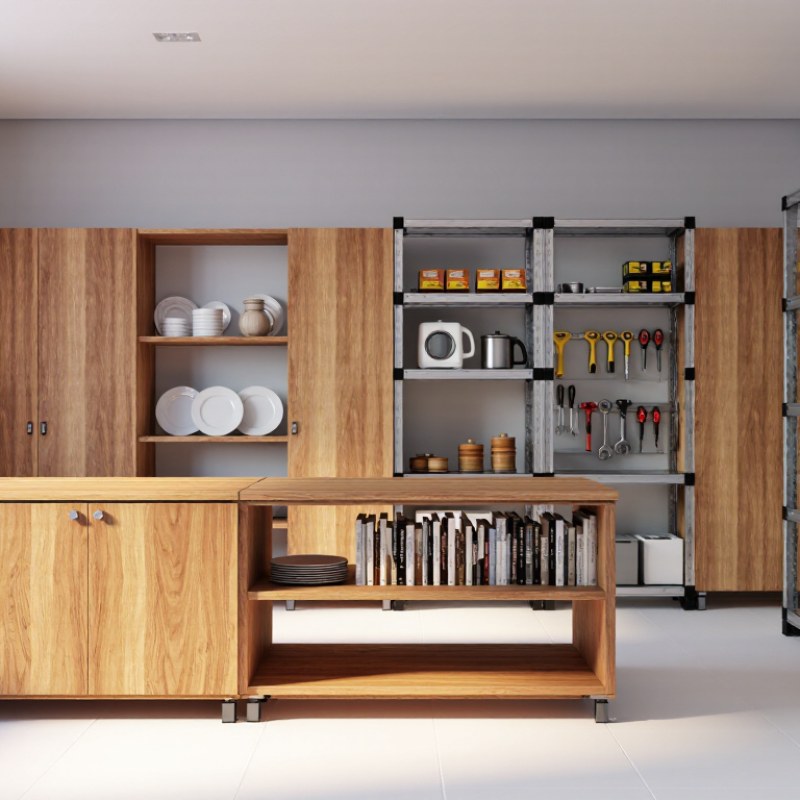
Choosing a shelf panel starts with understanding its load and span, not its appearance. Load includes the panel’s weight, stored items, and any concentrated force from a heavy box. Span means the clear distance between supports. A wider span creates more bending, even when the panel feels strong by hand.
Use the L/200–L/300 rule as a practical deflection check. For a 900-millimeter span, L/200 allows about 4.5 millimeters of deflection. L/300 allows only 3 millimeters. The stricter L/300 target suits visible shelves, books, or areas where alignment matters. Check the panel under realistic loading, including uneven weight near the center. Small details matter.
Do not rely on appearance alone. I once tested a shelf that seemed rigid when empty, yet it sagged noticeably after several days of stored files. That experience changed my process. I now measure the support spacing, estimate the heaviest load, and inspect the panel after loading. Still, this rule is only a screening method. Material stiffness, thickness, moisture, fasteners, and edge support can change the result. A structural professional should verify shelves carrying unusually heavy or sensitive items. Perfect calculations are not always practical. Careful measurement usually beats confident guessing.
7 Tips for Choosing the Best Shelf Panel?
Compare Panel Thickness: Choose 18–25 mm Boards for Standard Shelving
For standard household shelving, an 18–25 mm board offers a practical balance between strength, weight, and appearance. An 18 mm panel suits short spans with moderate loads, such as books, folded clothes, or storage boxes. A 25 mm board provides greater stiffness when the shelf is wider or heavily used. It also gives the front edge a more substantial look.
Thickness is not the only factor. Panel material, shelf width, support spacing, and moisture exposure all affect performance. A long 18 mm shelf may sag, even when its surface feels solid. Adding a central bracket can improve stability more effectively than choosing a much thicker board. Check the expected load before cutting. Measure twice.
A useful workshop test is simple. Place the panel on its planned supports, then apply weight gradually and inspect the center. Watch for visible bending, loose fixings, or cracking near screw holes. Pre-drill holes to reduce splitting, especially near the edges. I once assumed a thicker panel would solve every problem, but poor support placement still caused movement. That detail is easy to miss. For kitchens, garages, or humid rooms, sealed edges and suitable moisture-resistant materials deserve equal attention. Allow small clearance where seasonal expansion may occur.
| Tip | Comparison Dimension | Practical Recommendation | Useful Data for Selection |
|---|---|---|---|
| 1 | Panel thickness | Select an 18–25 mm panel for most standard indoor shelves. Thinner boards may be suitable for light-duty storage or short spans, while thicker boards provide greater stiffness and a more substantial appearance. | Common nominal thicknesses: 12, 15, 18, 22, and 25 mm. For a panel of the same material and width, bending stiffness increases approximately with the cube of thickness. |
| 2 | Shelf span between supports | Keep the unsupported span as short as practical. Add a center divider, rear cleat, or front stiffening strip when a long shelf must carry books, files, or other concentrated loads. | A shelf spanning 800 mm is substantially less prone to sag than the same shelf spanning 1,200 mm. Deflection is highly sensitive to span length. |
| 3 | Shelf depth | Match the depth to the stored items and avoid unnecessary overhang. Moderate depths improve accessibility and reduce the bending load on the front edge. | Typical indoor shelving depths are approximately 250–400 mm. Deeper shelves hold more weight and usually require stronger support or a shorter span. |
| 4 | Panel material and density | Compare the board’s material, density, and internal construction—not thickness alone. Higher-density panels generally offer better screw-holding and stiffness, but they also weigh more. | Approximate panel mass can be estimated as: Mass per m² = thickness × density. At 650 kg/m³, an 18 mm panel weighs about 11.7 kg/m², while a 25 mm panel weighs about 16.3 kg/m². |
| 5 | Edge support and finishing | Support all shelf edges where possible and protect exposed edges with edging, a solid lipping, or a suitable finish. A thicker front edge can also improve perceived rigidity. | A front stiffening strip or lipping increases the effective section depth. Fasteners should be selected according to panel type and installed without splitting or over-tightening. |
| 6 | Moisture and environment | Use panels intended for the installation environment. Seal cut edges in kitchens, utility rooms, garages, and other areas where humidity or occasional moisture is possible. | Dry indoor areas are generally less demanding. Moisture exposure can cause dimensional change, swelling, or loss of strength, especially at unsealed cut edges. |
| 7 | Load, safety, and appearance | Estimate the stored load, distribute heavy items, and verify the support hardware. Choose 22–25 mm when a shelf must look more substantial or carry heavier, frequently used contents. | Do not rely on thickness alone for a safe load rating. Actual capacity depends on material, span, depth, support spacing, fasteners, load distribution, and the allowable deflection specified for the project. |
Selection rule: For ordinary fixed indoor shelving, 18–25 mm is a practical starting range. Confirm the final design against the expected load, unsupported span, moisture conditions, and the manufacturer’s technical data for the selected panel type.
7 Tips for Choosing the Best Shelf Panel
Match Materials to Conditions: MDF, Plywood, Solid Wood, or Steel
Choosing a shelf panel starts with its environment, not its appearance. Measure the expected load, shelf span, humidity, and daily use. MDF offers a smooth, economical surface for dry rooms and painted storage. However, its edges can swell after water exposure. Seal them carefully. Plywood handles screws and moderate moisture better, making it practical for workshops, kitchens, and utility rooms. Check the number of layers and panel thickness. Thin plywood may flex under books or equipment.
Solid wood brings natural strength and visual warmth. It can also expand, shrink, or warp when humidity changes. Leave small movement gaps during installation. I once fitted a wooden shelf too tightly against a wall. It looked precise, but seasonal swelling created pressure. That mistake changed my measurements. Steel suits heavy loads, narrow supports, and industrial spaces. Choose a protected finish for damp areas, because untreated steel can rust around scratches and cut edges. Steel shelves may also transmit vibration and feel colder to touch.
Match the panel to the support spacing. A strong material still bends when the span is too wide. Inspect the panel edges, fastener grip, surface finish, and cleaning requirements. MDF needs gentler handling. Solid wood may need occasional refinishing. Plywood edges may require banding. Steel can be noisy without protective pads. I would not choose one material for every room. Conditions decide more than trends. Measure twice. Then test a small section before committing to a full installation.
Comparative guidance based on typical material properties. Ratings use a 1–5 scale, where 5 indicates stronger suitability for the stated condition.
How to read the chart: MDF is economical and easy to machine for dry indoor shelving. Plywood offers a balanced combination of strength and moisture tolerance. Solid wood provides a natural appearance and good load capacity but can expand or contract with humidity. Steel is the strongest and most moisture-resistant option, making it suitable for demanding environments and heavy loads.
A shelf panel should be judged by its declared standard, not its surface appearance. EN 312 classifies particleboard by use and performance. P2 suits general furniture in dry interiors, while P3 is intended for humid conditions. P4 and P5 provide load-bearing performance in dry or humid environments. Choosing P2 for a heavily loaded garage shelf may be a costly mistake.
Formaldehyde emissions deserve equal attention. Under EN 717-1, the E1 classification generally requires chamber emissions no higher than 0.124 mg/m³. The World Health Organization’s 2010 indoor-air guidance recommends keeping formaldehyde below 0.1 mg/m³ for a 30-minute exposure. These figures use different testing conditions, so they should not be treated as identical limits. Still, they show why ventilation and documented testing matter.
Ask for a current test report, including the panel thickness, production batch, test method, and laboratory accreditation. ISO/IEC 17025 accreditation adds useful confidence. Check every exposed edge, too. Unsealed cuts can absorb moisture and release more odor after installation. A low-emission label alone is not enough; storage conditions can affect results. I would also question vague claims such as “eco-safe” without EN 312 and E1 evidence. The practical choice combines the correct load class, moisture rating, and verified formaldehyde data.
Finish affects more than appearance. It influences cleaning, moisture resistance, edge durability, and daily handling. In site inspections, I have seen attractive panels lose their finish near sink areas and sunny windows.
Tip: check the surface under strong light. Look for consistent color, sealed edges, and a texture that hides small scratches. A smooth coating may clean easily, but it can reveal every mark.
Value should be measured against service life, not purchase price alone. Ask how the panel performs after years of loading, cleaning, and seasonal humidity changes.
Tip: compare expected service life with replacement effort. A cheaper panel may require earlier repairs, while a stronger panel may reduce disruption.
I once focused too heavily on initial cost. That decision looked efficient, but repeated edge repairs changed the calculation.
Installation details also protect long-term performance. Wood-based panels can expand or contract with humidity. Allow 2–3 mm of movement around fitted edges and avoid forcing tight joints.
Tip: confirm the recommended clearance before cutting. Support spacing matters too, especially for long shelves carrying books or appliances.
A panel can appear rigid in the showroom, yet sag after months of uneven loading. I still treat manufacturer data as a starting point, not a guarantee. Room humidity, ventilation, and workmanship can alter real results. Check those conditions before making a final comparison.
We use cookies on our website to give you an improved browser experience. View our Privacy Policy for more information. Please make your selection to opt in or out of ALL cookies here: Accept or Decline
Do you consent to the use of ALL cookies?
901 2nd Court West
Birmingham, AL 35204
Sales: 866.481.4036
Logistics/Ops: 866.481.4036
2101 Dralle Road
University Park, IL 60466
Sales: 708.813.9070
Logistics/Ops: 708.235.4200
400 E. 13th Street
Little Rock, AR 72114
Sales: 866.760.5344
Logistics/Ops: 866.760.5344
225 Collins Road
Elkhart, IN 46515
Sales: 574.295.0214
Logistics/Ops: 574.607.4611
601 Berryman Pike
Tipton, IN 46072
Sales: 800.897.7591
Logistics/Ops: 800.897.7591
3900 Uvalda Street
Denver, CO 80239
Sales: 303.706.8000
Ops/Logistics: 303.576.8398
510 3rd Street E
Milan, IL 61264
Sales: 800.322.1052
Logistics/Ops: 800.322.1052
1660 E. Aurora
Des Moines, IA 50313
Sales: 800.671.1660
Logistics: 800.671.1660
86554 Gene Lasserre Blvd.
Yulee, FL 32097
Sales: 904.253.3060
Logistics/Ops: 904.225.3000
694 S.E. County Road 245
Lake City, FL 32025
Sales: 800.727.6706
Logistics/Ops: 386.752.7412
210 Neptune Road
Auburndale, FL 33823
Sales: 863.967.1131
Logistics/Ops: 863.777.9814
4601 McCoy Drive
Pensacola, FL 32503
Sales: 850.308.7030
Logistics/Ops: 850.434.5502
815 South 56th Street
Tampa, FL 33619
Sales: 813.302.1940
Logistics/Ops: 813.621.1352
200 Hosea Road
Lawrenceville, GA 30046
Sales: 770.953.7575
Logistics/Ops: 770.513.6000
Branch Product Guide
Branch Line Card
Moulding Offering
Cedar Offering
Column Offering
8173 Hwy. 165 North
Monroe, LA 71211
Sales: 800.256.4165
Logistics/Ops: 800.256.4165
508 Warren Avenue
Portland, ME 04103
Sales: 207.888.2331
Logistics/Ops: 207.797.6565
4300 Georgia Pacific Blvd.
Frederick, MD 21704
Sales: 301.798.7474
Logistics/Ops: 301.874.8000
419 Maple Street
Bellingham, MA 02019
Sales: 508.449.0535
Logistics/Ops: 508.966.5500
825 Buchanan Ave SW
Grand Rapids, MI 49507
Sales: 877.800.1180
Logistics/Ops: 616.278.0909
995 Pacific St. NW
Aitkin, MN 56431
Sales: 800.432.3727
Logistics/Ops: 218.212.7770
1102 Port Terminal Drive
Duluth, MN 55802
Sales: 800.951.9899
Logistics/Ops: 800.851.9899
9110 83rd Ave. North
Brooklyn Park, MN 55445
Sales: 763.425.0204
Logistics/Ops: 763.425.0204
910 E. Railroad Street
Long Beach, MS 39560
Sales: 866.535.4135
Logistics/Ops: 228.205.2400
1727 Warren Street
North Kansas City, MO 64116
Sales: 800.621.2611
Logistics/Ops: 800.621.2611
2123 North Golden
Springfield, MO 65803
Sales: 800.375.7891
Logistics/Ops: 800.375.7891
13860 Corp. Woods Trail
Bridgeton, MO 63044
Sales: 314.209.0800
Logistics/Ops: 314.209.0800
1109 South 19th Street
Omaha, NE 68108
Sales: 800.489.6637
Logistics/Ops: 800.489.6637
1 Luger Road
Denville, NJ 07834
Sales: 973-339-3539
Logistics/Ops: 973.625.1461
3720 Jeffrey Blvd.
Blasdell, NY 14219
Sales: 716.235.5989
Logistics/Ops: 716.825.6557
319 Yaphank Ave.
Yaphank, NY 11980
Sales: 631.358.5714
Logistics/Ops: 631.924.7401
3300 Parkside Drive
Charlotte, NC 28208
Sales: 800.839.2588
Logistics/Ops: 704.394.3172
1712 East D Street
Butner, NC 27509
Sales: 984.389.8200
Logistics/Ops: 919.575.3700
128 Foothills Drive
Statesville, NC 28687
Sales: 800.222.1414
Logistics/Ops: 704.394.3172
550 Munroe Falls Rd.
Tallmadge, OH 44278
Sales: 330.357.4506
Logistics/Ops: 330.794.1141
10347 Toebben Dr.
Independence, KY 41051
Sales: 859.298.3926
Logistics/Ops: 859.746.2250
450 N. MacArthur
Oklahoma City, OK 73127
Sales: 800.375.6025
Logistics/Ops: 800.375.6025
1680 North Aspen
Broken Arrow, OK 74012
Sales: 918.272.2212
Logistics/Ops: 918.272.2212
522 Bridge Street
Hunker, PA 15639
Sales: 878.217.2001
Logistics/Ops: 724.925.7285
4290 Atlanta Street
Charleston, SC 29418
Sales: 843.371.1420
Logistics/Ops: 843.554.8192
1040 S. Industrial Dr.
Erwin, TN 37650
Sales: 423.641.1005
Logistics/Ops: 423.742.5911
4287 Pilot Drive
Memphis, TN 38118
Sales: 901.365.2101
Logistics/Ops: 901.365.2101
700 Myatt Drive
Madison, TN 37115
Sales: 615.327.9547
Logistics/Ops: 629.777.4949
4747 Mark IV Parkway
Fort Worth, TX 76106
Sales: 866.323.5117
Logistics/Ops: 817.625.9091
6990 Market Avenue
El Paso, TX 79915
Sales: 915.778.6356
Logistics/Ops: 915.265.7200
2502 Wilson Road
Harlingen, TX 78552
Sales: 800.580.6711
Logistics/Ops: 800.580.6711
10,000 North Loop East
Houston, TX 77029
Sales: 713.921.1977
Logistics/Ops: 713.675.3544
702 East 44th St.
Lubbock, TX 79404
Sales: 866.454.6010
Logistics/Ops: 866.454.6010
535 N. WW White Road
San Antonio, TX 78219
Sales: 800.284.0488
Logistics/Ops: 210.333.8112
142 Pine Haven Shores Rd.
Shelburne, VT 05482
Sales: 802.800.2540
Logistics/Ops: 802.985.2512
4700 Bethlehem Road,
Richmond, VA 23230
Sales: 804.201.2400
Logistics/Ops: 804.342.1161
4516 N Barker Road
Spokane Valley, WA 99027
Phone: 509.892.9420
Toll free: 800.728.6157
8365 N. 76th Street
Milwaukee, WI 53223
Sales: 800.356.9245
Logistics/Ops: 800.356.9245
312 S. Chester Street
Sparta, WI 54656
Sales: 800.362.5864
Logistics/Ops: 800.362.5864
899 Grossman Drive
Schofield, WI 54476
Sales: 800.472.0017
Logistics/Ops: 800.472.0017
