
We use cookies on our website to give you an improved browser experience. View our Privacy Policy for more information. Please make your selection to opt in or out of ALL cookies here: Accept or Decline
Choosing a Heavy Duty Storage Cabinet is not simply a matter of selecting the thickest steel. The right cabinet must match your tools, workspace, loading habits, and daily safety routines. A cabinet that looks impressive can still fail when shelves bend, doors obstruct walkways, or drawers become difficult to operate.
Dr. James Reason, a respected safety researcher, wrote, “We cannot change the human condition, but we can change the conditions under which humans work.” That idea applies directly to industrial storage. A well-designed cabinet creates better working conditions through stable shelves, secure locking systems, smooth access, and clear organization. However, product descriptions do not always reveal real-world weaknesses. I have seen storage decisions focus too heavily on weight capacity while ignoring floor levelness, cabinet depth, and operator reach.
This guide explores seven practical tips for choosing a Heavy Duty Storage Cabinet. It considers steel thickness, load ratings, shelf adjustment, corrosion resistance, security, mobility, and workplace fit. Small details matter. A shelf may hold heavy equipment but still become awkward when loaded by one person. A wheeled cabinet may improve flexibility but require reliable brakes. There is no perfect option for every facility.
Measure first.
Then question the marketing language.
Look for tested capacities, durable finishes, reinforced hinges, and accessible service information. Consider what the cabinet will hold today, but also what may be added next year. A careful choice should support productivity without creating unnecessary strain, wasted space, or avoidable maintenance.
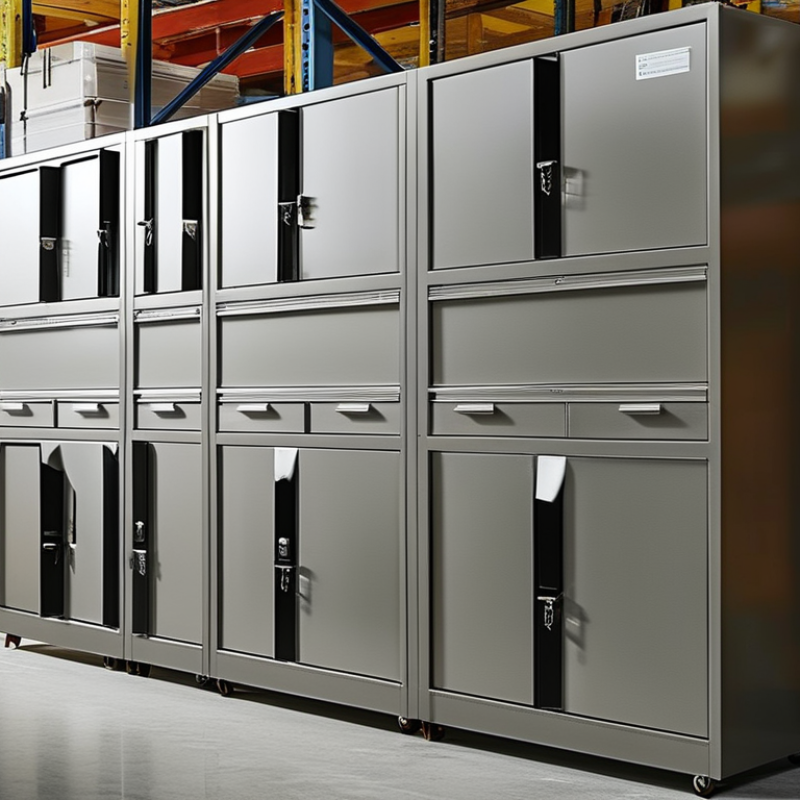
Choosing a heavy duty storage cabinet starts with understanding what it must hold. List the tools, containers, spare parts, and documents that need protection. Measure their height, width, and weight before comparing cabinet sizes. Guesswork often creates wasted space.
I once selected a cabinet by its maximum load rating alone. That assumption was wrong. Shelves still bent when weight gathered near the front edge. Check the capacity of each shelf, not only the entire unit. Consider how often staff will move items, and whether drawers or adjustable shelves improve access. Leave hand clearance around bulky equipment. Small details matter.
The work environment should guide the cabinet’s construction. A workshop may need a powder-coated steel body and lockable doors. A damp service area may require corrosion-resistant surfaces and raised legs. In a busy warehouse, doors must open without blocking walkways. Confirm floor strength, ceiling clearance, and anchoring requirements with a qualified professional. For shared workplaces, label shelves clearly and keep frequently used items between waist and shoulder height. Do not overlook noise. Slamming metal doors can disturb nearby workers. Safety rules may vary by location, so review applicable workplace guidance before installation. I would also revisit the plan after one week of use; real habits often expose storage mistakes that measurements miss.
A heavy-duty storage cabinet should feel stable before it feels impressive. Check the frame, welds, hinges, and base plates for visible distortion. Square doors matter. Misalignment can signal stress or poor assembly. The U.S. Bureau of Labor Statistics recorded 1,069 fatal workplace falls, slips, and trips in 2023. A cabinet that rocks, tips, or blocks walkways creates unnecessary risk. Secure tall units to suitable structural surfaces. Keep heavy items low.
Read the load rating carefully. A shelf rated for 500 pounds may require evenly distributed weight, not one concentrated machine. Ask whether the rating applies per shelf, per cabinet, or to the entire structure. Request test methods, deflection limits, and safety factors. Do not accept a dramatic number without documentation. My practical preference is clear labeling inside the cabinet. It prevents guesswork during busy maintenance work. OSHA’s General Industry standards emphasize stable storage and safe access, but they do not replace the manufacturer’s engineering data.
Compare construction materials honestly. Thick formed steel usually resists impact better than thin sheet metal. Reinforced shelves reduce bending under dense loads. Powder-coated surfaces can improve corrosion resistance, but coating quality still depends on preparation and environment. Check steel thickness, fastener type, ventilation, and floor compatibility. Review ASTM material specifications or independent test reports when available. One overlooked detail is the leveling foot. A strong cabinet can still fail its purpose on an uneven concrete floor. I have seen specifications look excellent, yet installation changed everything. Recheck capacity after adding drawers, dividers, or casters.
| Tip | Selection Area | What to Assess | Practical Data or Benchmark | How to Verify Before Purchase |
|---|---|---|---|---|
| 1 | Check Steel Thickness | Examine the thickness of the cabinet body, doors, shelves, frame, and reinforcement points. A thicker panel generally offers better resistance to denting and deformation. | For general heavy-duty use, cold-rolled steel panels around 0.8–1.2 mm are commonly more robust than light-duty panels below 0.7 mm. The actual design, bends, ribs, and reinforcements are equally important. | Request the material specification or product drawing. Check whether the stated thickness applies to the cabinet body, rather than only to a small reinforced component. |
| 2 | Confirm Total Load Capacity | Determine the maximum weight the complete cabinet can safely support, including the cabinet structure, shelves, drawers, and stored items. | Choose a cabinet with a rated total capacity that exceeds the planned load by at least 20–25%. For example, a planned 800 kg load should be matched with a rating of approximately 1,000 kg or more. | Review the manufacturer’s load rating and test conditions. Confirm whether the capacity is based on evenly distributed static loads and whether the floor, legs, or anchoring system limits the rating. |
| 3 | Evaluate Shelf Capacity | Assess the safe working load of each shelf and consider how tools, parts, or containers will be distributed across the shelf surface. | A useful heavy-duty range is approximately 80–200 kg per adjustable shelf, depending on shelf size, reinforcement, and support spacing. Shelf capacity must not be confused with total cabinet capacity. | Look for a shelf-by-shelf load rating. Check whether the rating applies to an evenly distributed load and whether shelf clips, brackets, or locking pins are included in the design. |
| 4 | Inspect Construction Quality | Review welded joints, folded edges, corner reinforcements, door frames, shelf supports, and the rigidity of the back and side panels. | Fully welded or mechanically reinforced frames usually provide greater rigidity than lightly assembled panels. Folded edges, boxed sections, and vertical stiffeners help reduce flexing under load. | Open and close the doors, press lightly against the side panels, and inspect joints for gaps, sharp edges, uneven welds, or visible distortion. Request assembly and structural details when possible. |
| 5 | Choose Suitable Materials and Finish | Consider the cabinet’s steel grade, corrosion protection, surface coating, and the environment in which it will be installed. | Powder-coated steel is commonly suitable for indoor workshops and warehouses when the coating is applied over properly prepared metal. Damp, chemical, or outdoor environments may require galvanized, stainless, or specially coated components. | Check the stated coating process, corrosion-resistance information, and recommended environment. Inspect the finish for complete coverage, especially around seams, edges, hinges, and mounting holes. |
| 6 | Assess Stability and Safety | Evaluate the cabinet’s center of gravity, anti-tip features, anchoring points, door arrangement, and resistance to tipping when drawers or doors are opened. | Tall cabinets and cabinets with pull-out drawers should have an anti-tip mechanism or a clearly defined anchoring method. Heavy items should be stored on lower shelves to keep the center of gravity low. | Check for wall or floor anchor holes, leveling feet, interlocking drawers, and door retainers. Confirm that the installation surface can support the filled cabinet and that the unit can be securely anchored. |
| 7 | Verify Dimensions and Usability | Match the cabinet’s external dimensions, usable internal space, shelf adjustment range, door swing, and access requirements to the storage area. | Allow clearance for doors and drawers to open fully, plus sufficient aisle space for safe handling. Adjustable shelves should accommodate the height of the stored items without forcing excessive point loading. | Measure the installation area, doorways, elevators, and access routes. Compare internal dimensions rather than relying only on external cabinet measurements, and confirm the weight of the empty cabinet for delivery planning. |
7 Tips for Choosing a Heavy Duty Storage Cabinet?
Choose the Right Size, Layout, and Internal Organization
Choosing a heavy-duty storage cabinet starts with accurate measurements, not optimistic guesses. Tip one: measure floor width, depth, ceiling height, and door clearance. Tip two: estimate the heaviest load on each shelf, not the average load. A shelf holding dense tools needs stronger support than one holding fabric boxes. Use a safety margin, because real workshops rarely stay tidy. Measure twice.
Tip three: match the cabinet layout to your daily movement. Place frequently used items between waist and shoulder height. Keep bulky containers low, and reserve upper shelves for lighter materials. Tip four: check door swing, aisle width, and access to nearby equipment. A cabinet can fit on paper yet block a walkway in practice. I have seen this mistake after installation, when moving it became expensive and awkward. That experience makes layout planning worth the extra ten minutes.
Tip five: divide the interior by task, size, and frequency of use. Adjustable shelves, drawers, and labeled bins reduce searching time. Tip six: leave empty space for future tools and safer handling. Tip seven: inspect steel thickness, shelf connections, locking points, and anchoring options. Reliable cabinets should remain stable under repeated loading, not only look strong. Check published load ratings and follow qualified installation guidance. I still revise storage plans after a few weeks; daily habits reveal flaws measurements miss. This is not failure.
Choose the right size, layout, and internal organization for safer and more efficient storage.
The chart uses representative cabinet planning dimensions. Values are calculated from width × depth × height: 36 × 18 × 72 inches, 48 × 24 × 72 inches, and 72 × 24 × 72 inches. Actual usable capacity will be lower because of doors, frames, shelves, and other internal components.
Choosing a heavy duty storage cabinet requires more than checking its weight capacity. Tip 1: Inspect the lock closely. A sturdy lock, protected cylinder, and tamper-resistant hinges help secure stored materials. Tip 2: Check the cabinet’s construction. Reinforced steel panels should resist dents, while smooth edges reduce hand injuries. Tip 3: Confirm the load rating for each shelf. Uneven weight can deform shelves or make doors difficult to close. I once trusted the total capacity without checking shelf limits. That decision looked efficient, but it created unnecessary risk.
Accessibility affects daily work. Tip 4: Choose handles that workers can reach without twisting their wrists. Tip 5: Look for adjustable shelves and clear labels. Employees should find supplies without unloading half the cabinet. Tip 6: Measure the doorway, aisle, and opening angle before purchase. A cabinet may fit the room but block a busy walkway. Small details matter here. A short trial with real users can reveal problems that specifications miss.
Workplace safety should remain visible during installation and use. Tip 7: Select a cabinet with anti-tip protection and secure anchoring options. Place heavier items on lower shelves. Keep doors closed when the cabinet is unattended. Inspect hinges, locks, shelf clips, and anchor points regularly. Ventilation may also matter for temperature-sensitive materials, depending on the storage environment. I still think appearance receives too much attention. A practical cabinet should support safe movement, quick access, and controlled storage every working day.
Tip 1: Inspect durability beyond appearance. Choose a cabinet made from thick steel with reinforced doors, strong hinges, and stable welds. Ask for its tested load capacity, not a vague “heavy duty” label. In busy storage rooms, drawers often receive sudden force. A weak runner may fail before the cabinet body shows damage. Check whether shelves adjust securely and remain level under weight. Small details matter.
Tip 2: Consider maintenance before purchase. A powder-coated surface can resist scratches and moisture, but it is not maintenance-free. Wipe away dust, oil, and spilled liquids promptly. Check hinges, locks, shelf clips, and drawer runners every few months. Look for smooth movement and loose fasteners. If rust appears near a damaged edge, treat it early. I once underestimated this small repair, and the affected area grew faster than expected.
Tip 3: Calculate long-term value, not only the initial price. Compare expected service life, repair access, replacement parts, energy-free operation, and usable storage space. A cabinet with fewer failures can reduce disruption and replacement costs. Measure your available floor area carefully; wasted space is also a cost. Review the warranty terms and maintenance instructions. Reliable documentation often reveals more than polished product photos. Still, predictions are imperfect, so leave room for changing workloads and future storage needs.
We use cookies on our website to give you an improved browser experience. View our Privacy Policy for more information. Please make your selection to opt in or out of ALL cookies here: Accept or Decline
Do you consent to the use of ALL cookies?
901 2nd Court West
Birmingham, AL 35204
Sales: 866.481.4036
Logistics/Ops: 866.481.4036
2101 Dralle Road
University Park, IL 60466
Sales: 708.813.9070
Logistics/Ops: 708.235.4200
400 E. 13th Street
Little Rock, AR 72114
Sales: 866.760.5344
Logistics/Ops: 866.760.5344
225 Collins Road
Elkhart, IN 46515
Sales: 574.295.0214
Logistics/Ops: 574.607.4611
601 Berryman Pike
Tipton, IN 46072
Sales: 800.897.7591
Logistics/Ops: 800.897.7591
3900 Uvalda Street
Denver, CO 80239
Sales: 303.706.8000
Ops/Logistics: 303.576.8398
510 3rd Street E
Milan, IL 61264
Sales: 800.322.1052
Logistics/Ops: 800.322.1052
1660 E. Aurora
Des Moines, IA 50313
Sales: 800.671.1660
Logistics: 800.671.1660
86554 Gene Lasserre Blvd.
Yulee, FL 32097
Sales: 904.253.3060
Logistics/Ops: 904.225.3000
694 S.E. County Road 245
Lake City, FL 32025
Sales: 800.727.6706
Logistics/Ops: 386.752.7412
210 Neptune Road
Auburndale, FL 33823
Sales: 863.967.1131
Logistics/Ops: 863.777.9814
4601 McCoy Drive
Pensacola, FL 32503
Sales: 850.308.7030
Logistics/Ops: 850.434.5502
815 South 56th Street
Tampa, FL 33619
Sales: 813.302.1940
Logistics/Ops: 813.621.1352
200 Hosea Road
Lawrenceville, GA 30046
Sales: 770.953.7575
Logistics/Ops: 770.513.6000
Branch Product Guide
Branch Line Card
Moulding Offering
Cedar Offering
Column Offering
8173 Hwy. 165 North
Monroe, LA 71211
Sales: 800.256.4165
Logistics/Ops: 800.256.4165
508 Warren Avenue
Portland, ME 04103
Sales: 207.888.2331
Logistics/Ops: 207.797.6565
4300 Georgia Pacific Blvd.
Frederick, MD 21704
Sales: 301.798.7474
Logistics/Ops: 301.874.8000
419 Maple Street
Bellingham, MA 02019
Sales: 508.449.0535
Logistics/Ops: 508.966.5500
825 Buchanan Ave SW
Grand Rapids, MI 49507
Sales: 877.800.1180
Logistics/Ops: 616.278.0909
995 Pacific St. NW
Aitkin, MN 56431
Sales: 800.432.3727
Logistics/Ops: 218.212.7770
1102 Port Terminal Drive
Duluth, MN 55802
Sales: 800.951.9899
Logistics/Ops: 800.851.9899
9110 83rd Ave. North
Brooklyn Park, MN 55445
Sales: 763.425.0204
Logistics/Ops: 763.425.0204
910 E. Railroad Street
Long Beach, MS 39560
Sales: 866.535.4135
Logistics/Ops: 228.205.2400
1727 Warren Street
North Kansas City, MO 64116
Sales: 800.621.2611
Logistics/Ops: 800.621.2611
2123 North Golden
Springfield, MO 65803
Sales: 800.375.7891
Logistics/Ops: 800.375.7891
13860 Corp. Woods Trail
Bridgeton, MO 63044
Sales: 314.209.0800
Logistics/Ops: 314.209.0800
1109 South 19th Street
Omaha, NE 68108
Sales: 800.489.6637
Logistics/Ops: 800.489.6637
1 Luger Road
Denville, NJ 07834
Sales: 973-339-3539
Logistics/Ops: 973.625.1461
3720 Jeffrey Blvd.
Blasdell, NY 14219
Sales: 716.235.5989
Logistics/Ops: 716.825.6557
319 Yaphank Ave.
Yaphank, NY 11980
Sales: 631.358.5714
Logistics/Ops: 631.924.7401
3300 Parkside Drive
Charlotte, NC 28208
Sales: 800.839.2588
Logistics/Ops: 704.394.3172
1712 East D Street
Butner, NC 27509
Sales: 984.389.8200
Logistics/Ops: 919.575.3700
128 Foothills Drive
Statesville, NC 28687
Sales: 800.222.1414
Logistics/Ops: 704.394.3172
550 Munroe Falls Rd.
Tallmadge, OH 44278
Sales: 330.357.4506
Logistics/Ops: 330.794.1141
10347 Toebben Dr.
Independence, KY 41051
Sales: 859.298.3926
Logistics/Ops: 859.746.2250
450 N. MacArthur
Oklahoma City, OK 73127
Sales: 800.375.6025
Logistics/Ops: 800.375.6025
1680 North Aspen
Broken Arrow, OK 74012
Sales: 918.272.2212
Logistics/Ops: 918.272.2212
522 Bridge Street
Hunker, PA 15639
Sales: 878.217.2001
Logistics/Ops: 724.925.7285
4290 Atlanta Street
Charleston, SC 29418
Sales: 843.371.1420
Logistics/Ops: 843.554.8192
1040 S. Industrial Dr.
Erwin, TN 37650
Sales: 423.641.1005
Logistics/Ops: 423.742.5911
4287 Pilot Drive
Memphis, TN 38118
Sales: 901.365.2101
Logistics/Ops: 901.365.2101
700 Myatt Drive
Madison, TN 37115
Sales: 615.327.9547
Logistics/Ops: 629.777.4949
4747 Mark IV Parkway
Fort Worth, TX 76106
Sales: 866.323.5117
Logistics/Ops: 817.625.9091
6990 Market Avenue
El Paso, TX 79915
Sales: 915.778.6356
Logistics/Ops: 915.265.7200
2502 Wilson Road
Harlingen, TX 78552
Sales: 800.580.6711
Logistics/Ops: 800.580.6711
10,000 North Loop East
Houston, TX 77029
Sales: 713.921.1977
Logistics/Ops: 713.675.3544
702 East 44th St.
Lubbock, TX 79404
Sales: 866.454.6010
Logistics/Ops: 866.454.6010
535 N. WW White Road
San Antonio, TX 78219
Sales: 800.284.0488
Logistics/Ops: 210.333.8112
142 Pine Haven Shores Rd.
Shelburne, VT 05482
Sales: 802.800.2540
Logistics/Ops: 802.985.2512
4700 Bethlehem Road,
Richmond, VA 23230
Sales: 804.201.2400
Logistics/Ops: 804.342.1161
4516 N Barker Road
Spokane Valley, WA 99027
Phone: 509.892.9420
Toll free: 800.728.6157
8365 N. 76th Street
Milwaukee, WI 53223
Sales: 800.356.9245
Logistics/Ops: 800.356.9245
312 S. Chester Street
Sparta, WI 54656
Sales: 800.362.5864
Logistics/Ops: 800.362.5864
899 Grossman Drive
Schofield, WI 54476
Sales: 800.472.0017
Logistics/Ops: 800.472.0017
