
We use cookies on our website to give you an improved browser experience. View our Privacy Policy for more information. Please make your selection to opt in or out of ALL cookies here: Accept or Decline
Choosing a Vehicle Spray Booth in 2026 involves more than comparing prices, dimensions, and delivery dates. Manufacturers now compete through airflow control, energy efficiency, filtration, curing performance, and digital monitoring. A booth may look impressive under showroom lights. Its real character appears during a busy repair cycle, when dust, humidity, and uneven temperatures challenge every painted panel.
Automotive refinishing consultant John Dwyer offers a practical reminder: “Airflow is the booth’s quiet language; poor balance appears first in the finish.” This observation deserves attention. Even a well-built enclosure can disappoint when filters clog, fans lose pressure, or technicians ignore maintenance schedules. The strongest suppliers therefore provide more than equipment. They offer airflow testing, installation guidance, replacement filters, operator training, and responsive technical support.
This guide examines leading 2026 Vehicle Spray Booth manufacturers and suppliers through those practical standards. It considers booth construction, ventilation design, safety controls, operating costs, customization, and after-sales reliability. It also separates marketing claims from measurable performance. That distinction matters.
Some rankings remain imperfect. Regional service quality can change quickly. A supplier praised by one workshop may frustrate another. Local climate, workload, building layout, and paint systems all influence the final choice. Buyers should verify specifications directly and request documented performance data before signing an order.
The best booth is not always the largest or most expensive. It is the one that supports consistent finishes, protects workers, controls emissions responsibly, and remains serviceable for years. Small details matter. A neglected filter can become an expensive lesson.
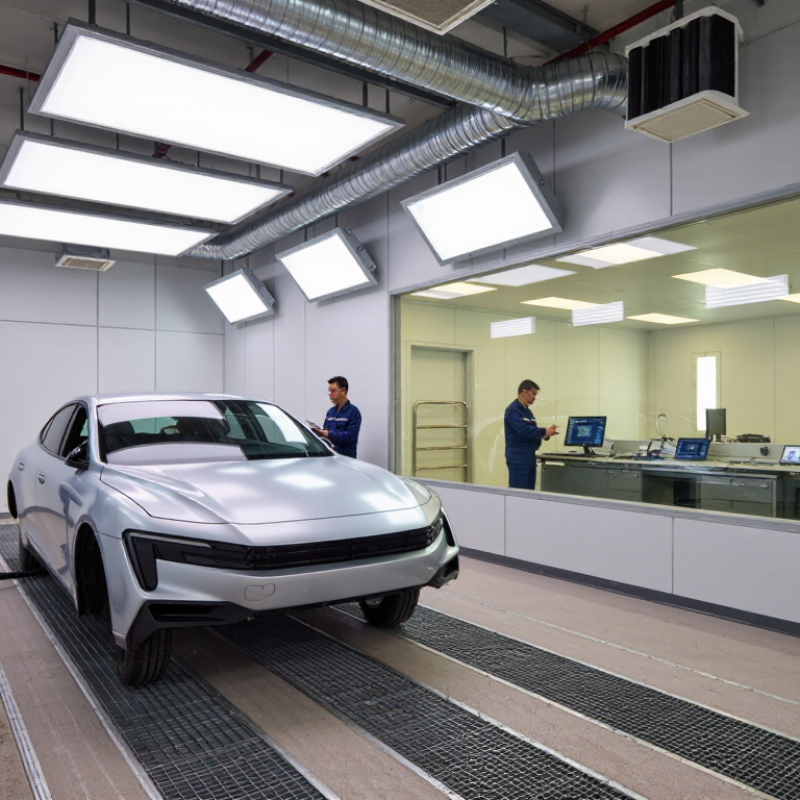
A vehicle spray booth is a controlled enclosure for painting and refinishing cars. It manages airflow, temperature, filtration, lighting, and exhaust. In 2026, it matters because finish quality and worker protection depend on stable conditions. A clean floor, bright lighting, and even airflow can prevent dust, overspray, and uneven curing. However, a modern booth is not automatically efficient. Poor maintenance can still create visible defects.
Grand View Research reported that the global automotive paints and coatings market was valued at approximately USD 10.8 billion in 2023. Its analysis also projected continued growth through 2030. This expansion increases pressure on repair centers to reduce rework and material waste. A booth aligned with NFPA 33 and applicable workplace ventilation requirements supports safer operations. EPA requirements also make emission control and recordkeeping important in many facilities. Yet, reports do not replace site testing. Actual performance depends on booth size, filter loading, climate, and technician habits.
Tips: Check airflow readings before trusting the finish. Replace loaded filters early. Inspect door seals and exhaust paths weekly. Use a calibrated temperature gauge, not guesswork. Ask suppliers for airflow data, energy figures, maintenance intervals, and documented compliance. A cheaper booth may cost more when repainting becomes routine. I would also question impressive efficiency claims without independent test results.
Key Types of Vehicle Spray Booths and Their Main Applications
Vehicle spray booths differ mainly in airflow design, working capacity, and finish requirements. Downdraft booths pull contaminated air downward through the floor. They support cleaner surfaces and are well suited to premium refinishing, complete vehicle repainting, and demanding collision repairs. Semi-downdraft booths combine ceiling supply with rear extraction. They offer a practical balance between finish quality and installation cost.
Crossdraft booths move air horizontally from the front toward filtered exhaust panels. Their simpler structure suits repair shops handling routine panel work, smaller vehicles, and moderate production volumes. Side-draft booths direct airflow across the vehicle and can provide stable visibility during spraying. However, filter placement and maintenance require close attention. Poor airflow can leave dust near doors, roof edges, or mirrors.
Open-front booths support spot repairs, parts coating, and frequent vehicle movement. Enclosed drive-through booths are more suitable for buses, trucks, agricultural equipment, and fleet maintenance. Some facilities add heated curing systems to shorten drying time and improve coating consistency. In daily use, technicians should check airflow indicators, filter loading, lighting, and temperature before spraying. Small details matter.
A larger booth is not automatically better. I have seen capacity estimates ignore vehicle height and door clearance. That mistake can reduce productivity. Booth selection should match coating volume, vehicle size, available space, and maintenance skills. A careful site assessment remains essential, even when the equipment specifications look convincing.
When evaluating vehicle spray booth manufacturers and suppliers, inspect more than catalog specifications. A 2024 Grand View Research analysis identifies energy efficiency and emission control as major growth drivers in automotive coating equipment. Ask suppliers for measured airflow, filter pressure loss, curing temperature accuracy, and annual energy consumption. Request test records, not estimates.
Safety evidence matters. NFPA 33, 2024 Edition, addresses spray application equipment, ventilation, electrical systems, and fire protection. Compare each supplier’s design against the applicable edition and local requirements. OSHA 29 CFR 1910.107 also emphasizes mechanical ventilation and fire-safe construction. A credible manufacturer should provide drawings, airflow calculations, maintenance access, and documented factory testing. Walk inside the booth. Check lighting shadows, floor grating strength, door sealing, and filter replacement time.
Supplier support often separates a reliable installation from an expensive problem. Ask for references from repair shops with similar vehicle volume and paint systems. Review warranty exclusions, spare-parts availability, technician response times, and commissioning procedures. The International Energy Agency’s Energy Efficiency 2024 report highlights the continuing importance of industrial efficiency, yet many buyers still compare only purchase prices. That is a weakness. I would calculate total ownership cost over five years, including fans, filters, heating, downtime, and training. Some suppliers provide impressive efficiency figures under ideal conditions. Real workshops are dustier, busier, and less disciplined. Verify performance after installation.
| Evaluation Dimension | Recommended Benchmark or Verifiable Requirement | Why It Matters | Evidence to Request from a Supplier |
|---|---|---|---|
| Booth Configuration | Select cross-draft, semi-downdraft, downdraft, or side-draft construction according to vehicle size, workshop layout, and paint process. | Airflow design directly affects overspray control, finish quality, installation cost, and floor requirements. | Dimensioned drawings, airflow diagrams, foundation requirements, and installation layout. |
| Internal Working Dimensions | The clear internal length, width, and height should provide safe clearance around the largest vehicle and allow doors, hoods, and lift equipment to operate. | Insufficient clearance can create uneven coating, accidental contact, and restricted technician movement. | Final internal dimensions, maximum vehicle envelope, door opening size, and usable working height. |
| Airflow and Air Changes | The supplier should provide tested airflow volume, face velocity, pressure balance, and air-change calculations for the proposed booth. | Stable, uniform airflow helps move overspray toward filters and reduces dirt, turbulence, and finish defects. | Airflow test report, fan curves, design calculations, commissioning records, and pressure readings. |
| Filtration System | Use staged intake and exhaust filtration appropriate for paint solids, solvent vapors, and the selected coating process. Filters must be accessible for replacement. | Correct filtration protects the finish, fan system, workers, and surrounding environment. | Filter grades, pressure-drop data, replacement intervals, filter area, disposal guidance, and spare-part availability. |
| Heating and Curing | Verify heating capacity, temperature uniformity, maximum operating temperature, ramp-up time, and compatibility with waterborne or solvent-based coatings. | Uniform curing supports coating performance and helps reduce rework and cycle-time variation. | Heat-balance calculations, temperature-mapping results, burner or electric-heater specifications, and control logic. |
| Lighting Quality | Provide shadow-minimizing, evenly distributed lighting with a color-rendering specification suitable for color matching and surface inspection. | Consistent lighting makes metallic, pearlescent, and solid-color defects easier to identify. | Lighting layout, illumination measurements, color-rendering data, fixture ingress protection, and cleaning instructions. |
| Safety and Hazardous-Area Design | Electrical, ventilation, heating, and control components must be selected for the applicable hazardous-location requirements and local fire regulations. | Paint vapors and overspray can create fire, explosion, inhalation, and electrical hazards. | Electrical classifications, conformity documents, safety-risk assessment, fire-system interface, and local approval support. |
| Applicable Standards | Confirm compliance with the standards and codes applicable to the installation country, such as NFPA 33 in the United States or relevant EN, ATEX, electrical, and workplace-safety requirements in other markets. | Compliance affects legal operation, insurance, worker safety, and project approval. | A standards matrix identifying the exact edition, clause, certificate, and responsibility for local permitting. |
| Energy Consumption | Compare fan motor power, heater input, heat-recovery options, standby controls, and operating energy per paint cycle rather than comparing purchase price alone. | Energy use is a major part of the total cost of ownership, especially for high-throughput facilities. | Rated electrical or fuel consumption, duty-cycle assumptions, estimated annual operating cost, and energy-monitoring method. |
| Controls and Monitoring | The control system should monitor temperature, operating mode, alarms, filter condition, fan status, and emergency shutdown functions. | Clear controls improve repeatability, troubleshooting, and operator safety. | Control-panel specification, alarm list, wiring diagrams, data-logging capability, software access, and training plan. |
| Build Quality and Materials | Assess panel construction, corrosion resistance, seals, doors, floor grating, filter frames, fasteners, and cleanable interior surfaces. | Durable and cleanable materials help maintain airflow performance and reduce contamination over the booth life. | Material specifications, panel thickness, coating system, corrosion protection, load ratings, and quality-inspection records. |
| Installation and Commissioning | Evaluate whether the supplier provides site surveys, mechanical and electrical installation guidance, start-up, balancing, testing, and operator training. | Professional commissioning is essential to achieve the performance shown in the proposal. | Project schedule, installation scope, commissioning checklist, acceptance criteria, and responsibility matrix. |
| Maintenance and Spare Parts | Prioritize suppliers that provide preventive-maintenance schedules, common replacement parts, technical manuals, and documented service procedures. | Accessible parts and service reduce unplanned downtime and help preserve safety performance. | Parts list, lead times, service coverage, maintenance intervals, warranty exclusions, and remote-support process. |
| Total Cost of Ownership | Calculate purchase, freight, installation, permitting, utilities, filters, maintenance, training, downtime, and end-of-life costs over the planned service period. | The lowest initial quotation may have higher operating and maintenance costs. | Itemized quotation, five-year or ten-year cost model, utility assumptions, consumables pricing, and renewal terms. |
| Supplier Capability | Compare relevant vehicle-refinish installations, engineering resources, manufacturing quality controls, financial stability, references, and after-sales response capacity. | A capable supplier is more likely to deliver a compliant system and support it throughout its operating life. | Reference projects, factory-quality procedures, service-area coverage, customer contacts, delivery history, and warranty-performance records. |
Note: Final requirements depend on the booth type, coating materials, vehicle dimensions, building conditions, local fire regulations, and the applicable edition of regional safety standards.
Leading vehicle spray booth manufacturers and suppliers in 2026 are being judged by measurable performance, not polished catalogs. Grand View Research reports continued growth in the global automotive coatings market, driven by vehicle production, refinishing demand, and stricter finish standards. That growth increases pressure on booth suppliers to deliver stable airflow, clean filtration, and repeatable curing results.
A practical booth should maintain even air movement across doors, hoods, and curved panels. Poor balance can leave dry edges, overspray deposits, or visible texture under bright inspection lamps. The U.S. Environmental Protection Agency highlights transfer efficiency and emission control as important factors in automotive coating operations. Suppliers should therefore provide documented airflow tests, filter specifications, and maintenance intervals.
Energy use also deserves closer attention. The International Energy Agency identifies motors and industrial ventilation as major electricity users across manufacturing facilities. Variable-speed fans, heat recovery, insulated panels, and efficient burners can reduce operating costs, although savings depend on local climate and work volume.
Buyers should request measured data, not attractive estimates. Service response, spare-filter availability, technician training, and installation support separate reliable suppliers from incomplete solutions.
I may be too optimistic about automation; skilled operators still influence finish quality. In 2026, the strongest manufacturers and suppliers will combine safer booth design, verifiable performance data, and practical after-sales support.
Choosing a vehicle spray booth requires more than comparing purchase prices. A reliable manufacturer or supplier should provide airflow data, booth dimensions, lighting specifications, filter grades, and electrical requirements. Ask for documented testing and clear warranty terms. Service response matters too. Replacement filters and control components should remain available for years. A low quote may look attractive, but missing installation support can create expensive delays. That lesson is easy to overlook.
Before installation, request a site survey. The installer should check floor strength, ceiling clearance, duct routes, power capacity, and emergency access. Air movement must match the coating process, vehicle size, and worker position. Poor duct design can leave uneven finishes and deposit overspray on clean surfaces. Qualified technicians should complete wiring, grounding, ventilation connections, and control checks. Local fire, electrical, and workplace requirements must guide the work. Commissioning should include airflow measurements, pressure checks, lighting tests, and written operating instructions.
Maintenance begins with a simple routine. Inspect filters, fan belts, seals, lamps, and pressure gauges at scheduled intervals. Replace loaded filters before airflow becomes visibly weak. Clean booth walls with suitable non-sparking tools and approved cleaning materials. Keep service records with dates, readings, replacement parts, and unusual noise reports. Small changes often reveal larger problems. Do not ignore them. Operators also need practical training, not only a manual. Even experienced teams can develop shortcuts, and those shortcuts may reduce finish quality or compromise safe booth performance.
We use cookies on our website to give you an improved browser experience. View our Privacy Policy for more information. Please make your selection to opt in or out of ALL cookies here: Accept or Decline
Do you consent to the use of ALL cookies?
901 2nd Court West
Birmingham, AL 35204
Sales: 866.481.4036
Logistics/Ops: 866.481.4036
2101 Dralle Road
University Park, IL 60466
Sales: 708.813.9070
Logistics/Ops: 708.235.4200
400 E. 13th Street
Little Rock, AR 72114
Sales: 866.760.5344
Logistics/Ops: 866.760.5344
225 Collins Road
Elkhart, IN 46515
Sales: 574.295.0214
Logistics/Ops: 574.607.4611
601 Berryman Pike
Tipton, IN 46072
Sales: 800.897.7591
Logistics/Ops: 800.897.7591
3900 Uvalda Street
Denver, CO 80239
Sales: 303.706.8000
Ops/Logistics: 303.576.8398
510 3rd Street E
Milan, IL 61264
Sales: 800.322.1052
Logistics/Ops: 800.322.1052
1660 E. Aurora
Des Moines, IA 50313
Sales: 800.671.1660
Logistics: 800.671.1660
86554 Gene Lasserre Blvd.
Yulee, FL 32097
Sales: 904.253.3060
Logistics/Ops: 904.225.3000
694 S.E. County Road 245
Lake City, FL 32025
Sales: 800.727.6706
Logistics/Ops: 386.752.7412
210 Neptune Road
Auburndale, FL 33823
Sales: 863.967.1131
Logistics/Ops: 863.777.9814
4601 McCoy Drive
Pensacola, FL 32503
Sales: 850.308.7030
Logistics/Ops: 850.434.5502
815 South 56th Street
Tampa, FL 33619
Sales: 813.302.1940
Logistics/Ops: 813.621.1352
200 Hosea Road
Lawrenceville, GA 30046
Sales: 770.953.7575
Logistics/Ops: 770.513.6000
Branch Product Guide
Branch Line Card
Moulding Offering
Cedar Offering
Column Offering
8173 Hwy. 165 North
Monroe, LA 71211
Sales: 800.256.4165
Logistics/Ops: 800.256.4165
508 Warren Avenue
Portland, ME 04103
Sales: 207.888.2331
Logistics/Ops: 207.797.6565
4300 Georgia Pacific Blvd.
Frederick, MD 21704
Sales: 301.798.7474
Logistics/Ops: 301.874.8000
419 Maple Street
Bellingham, MA 02019
Sales: 508.449.0535
Logistics/Ops: 508.966.5500
825 Buchanan Ave SW
Grand Rapids, MI 49507
Sales: 877.800.1180
Logistics/Ops: 616.278.0909
995 Pacific St. NW
Aitkin, MN 56431
Sales: 800.432.3727
Logistics/Ops: 218.212.7770
1102 Port Terminal Drive
Duluth, MN 55802
Sales: 800.951.9899
Logistics/Ops: 800.851.9899
9110 83rd Ave. North
Brooklyn Park, MN 55445
Sales: 763.425.0204
Logistics/Ops: 763.425.0204
910 E. Railroad Street
Long Beach, MS 39560
Sales: 866.535.4135
Logistics/Ops: 228.205.2400
1727 Warren Street
North Kansas City, MO 64116
Sales: 800.621.2611
Logistics/Ops: 800.621.2611
2123 North Golden
Springfield, MO 65803
Sales: 800.375.7891
Logistics/Ops: 800.375.7891
13860 Corp. Woods Trail
Bridgeton, MO 63044
Sales: 314.209.0800
Logistics/Ops: 314.209.0800
1109 South 19th Street
Omaha, NE 68108
Sales: 800.489.6637
Logistics/Ops: 800.489.6637
1 Luger Road
Denville, NJ 07834
Sales: 973-339-3539
Logistics/Ops: 973.625.1461
3720 Jeffrey Blvd.
Blasdell, NY 14219
Sales: 716.235.5989
Logistics/Ops: 716.825.6557
319 Yaphank Ave.
Yaphank, NY 11980
Sales: 631.358.5714
Logistics/Ops: 631.924.7401
3300 Parkside Drive
Charlotte, NC 28208
Sales: 800.839.2588
Logistics/Ops: 704.394.3172
1712 East D Street
Butner, NC 27509
Sales: 984.389.8200
Logistics/Ops: 919.575.3700
128 Foothills Drive
Statesville, NC 28687
Sales: 800.222.1414
Logistics/Ops: 704.394.3172
550 Munroe Falls Rd.
Tallmadge, OH 44278
Sales: 330.357.4506
Logistics/Ops: 330.794.1141
10347 Toebben Dr.
Independence, KY 41051
Sales: 859.298.3926
Logistics/Ops: 859.746.2250
450 N. MacArthur
Oklahoma City, OK 73127
Sales: 800.375.6025
Logistics/Ops: 800.375.6025
1680 North Aspen
Broken Arrow, OK 74012
Sales: 918.272.2212
Logistics/Ops: 918.272.2212
522 Bridge Street
Hunker, PA 15639
Sales: 878.217.2001
Logistics/Ops: 724.925.7285
4290 Atlanta Street
Charleston, SC 29418
Sales: 843.371.1420
Logistics/Ops: 843.554.8192
1040 S. Industrial Dr.
Erwin, TN 37650
Sales: 423.641.1005
Logistics/Ops: 423.742.5911
4287 Pilot Drive
Memphis, TN 38118
Sales: 901.365.2101
Logistics/Ops: 901.365.2101
700 Myatt Drive
Madison, TN 37115
Sales: 615.327.9547
Logistics/Ops: 629.777.4949
4747 Mark IV Parkway
Fort Worth, TX 76106
Sales: 866.323.5117
Logistics/Ops: 817.625.9091
6990 Market Avenue
El Paso, TX 79915
Sales: 915.778.6356
Logistics/Ops: 915.265.7200
2502 Wilson Road
Harlingen, TX 78552
Sales: 800.580.6711
Logistics/Ops: 800.580.6711
10,000 North Loop East
Houston, TX 77029
Sales: 713.921.1977
Logistics/Ops: 713.675.3544
702 East 44th St.
Lubbock, TX 79404
Sales: 866.454.6010
Logistics/Ops: 866.454.6010
535 N. WW White Road
San Antonio, TX 78219
Sales: 800.284.0488
Logistics/Ops: 210.333.8112
142 Pine Haven Shores Rd.
Shelburne, VT 05482
Sales: 802.800.2540
Logistics/Ops: 802.985.2512
4700 Bethlehem Road,
Richmond, VA 23230
Sales: 804.201.2400
Logistics/Ops: 804.342.1161
4516 N Barker Road
Spokane Valley, WA 99027
Phone: 509.892.9420
Toll free: 800.728.6157
8365 N. 76th Street
Milwaukee, WI 53223
Sales: 800.356.9245
Logistics/Ops: 800.356.9245
312 S. Chester Street
Sparta, WI 54656
Sales: 800.362.5864
Logistics/Ops: 800.362.5864
899 Grossman Drive
Schofield, WI 54476
Sales: 800.472.0017
Logistics/Ops: 800.472.0017
