
We use cookies on our website to give you an improved browser experience. View our Privacy Policy for more information. Please make your selection to opt in or out of ALL cookies here: Accept or Decline
Global buyers need more than attractive displays when sourcing a Fish Specimen in 2026. They need verifiable identity, stable preservation, and dependable documentation. A mislabeled specimen can weaken research, teaching, and museum credibility. It can also create expensive delays at customs.
Ichthyologist Dr. Prosanta Chakrabarty has said, “Fish are the most diverse group of vertebrates on Earth.” That diversity makes supplier evaluation difficult. A professional supplier should provide the scientific name, collection details, preservation method, and clear photographs. Buyers should also check whether specimens are ethically sourced and legally transferable. Export documents must match the destination country’s requirements. Protected species require special attention. Responsible purchasing is not optional.
Quality appears in small details. Look for intact fins, natural coloration, sealed containers, and readable labels. Ask how specimens were fixed, stored, and inspected. Resin displays may suit classrooms, while fluid-preserved examples can support closer anatomical study. The best supplier depends on the intended use. That sounds obvious. It is often overlooked.
This guide reviews leading Fish Specimen suppliers for global buyers. It considers scientific accuracy, product consistency, packaging, communication, and after-sales support. Supplier claims should not be accepted without evidence. Even experienced vendors may have occasional labeling or transit problems. Buyers should request sample records before placing large orders. A careful comparison can reduce risk, but it cannot remove every uncertainty. That limitation matters. Reliable sourcing is built through documentation, realistic expectations, and repeated verification.
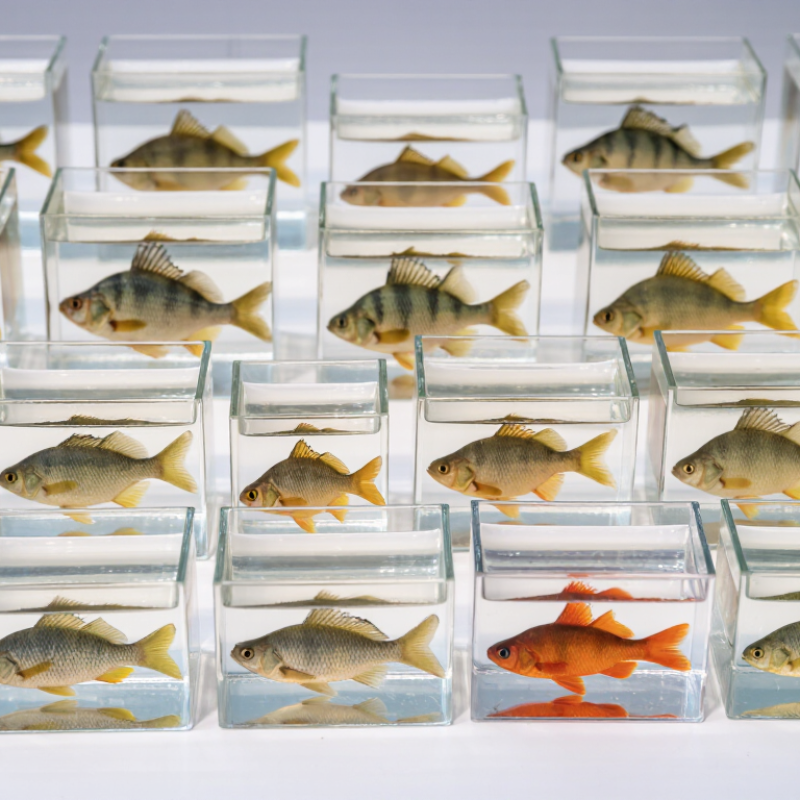
Global buyers are assessing fish specimen suppliers against a rapidly expanding aquatic economy. The FAO’s State of World Fisheries and Aquaculture 2024 reported 185.4 million tonnes of aquatic production in 2022. This figure includes aquatic animals and algae. Aquatic food reached 165.6 million tonnes for human consumption, showing the sector’s enormous scale.
That scale does not automatically guarantee reliable specimens. Serious suppliers should provide species identification, collection location, preservation method, and chain-of-custody records. The OECD-FAO Agricultural Outlook 2024–2033 identifies aquaculture as the main source of future growth in aquatic food production. Buyers may therefore find more farm-origin specimens entering educational, research, and reference markets. Documentation matters.
Details matter most.
A useful supplier evaluation includes clear photographs, stable packaging, export documentation, and responsive technical support. FAO data also shows that aquatic production is geographically diverse, so condition and identification standards may vary between regions. A polished catalogue can still hide inconsistent labeling. That weakness deserves attention. Buyers should request sample records, inspect preservation quality, and confirm applicable import rules before placing large orders. In my experience, the best supplier is not always the cheapest or the largest. Reliability often appears in small details, such as accurate Latin names and unchanged delivery conditions. Some market data remains incomplete, especially for informal specimen channels, so every comparison should retain a degree of caution.
| Market Dimension | 2022 Quantity | Share / Calculation | Relevance for Global Specimen Buyers |
|---|---|---|---|
| Global aquatic animal production | 185.4 million tonnes | 100.0% | Primary global market-size benchmark for fish and other aquatic animals. |
| Aquaculture production | 94.4 million tonnes | 50.9% of aquatic animal output | Useful for buyers seeking consistent supply, traceability, and repeatable specimen sizes. |
| Capture fisheries production | 91.0 million tonnes | 49.1% of aquatic animal output | Relevant for wild-origin specimens and species that are not commonly farmed. |
| Aquatic algae production | Approximately 36.1 million tonnes | Reported separately from aquatic animals | Important when specimen programs include algae, aquatic plants, or broader aquatic biodiversity. |
| Farmed output versus capture output | +3.4 percentage points | Aquaculture exceeded capture by approximately 3.7 million tonnes | Indicates that farm-based supply is a slightly larger global sourcing pool than wild capture. |
| Combined animal-output sourcing pool | 185.4 million tonnes | Aquaculture plus capture fisheries | Provides the appropriate baseline for comparing supplier capacity without naming individual companies or brands. |
| Recommended supplier-evaluation dimensions | Not a production statistic | Species identity, origin, legal harvest status, preservation method, documentation, packaging, and delivery capability | These criteria help convert global output data into a practical shortlist for museums, universities, laboratories, educators, and collectors. |
| Source: FAO, The State of World Fisheries and Aquaculture 2024, reporting global 2022 fisheries and aquaculture production. Aquatic animal output and aquatic algae output are reported as separate categories; the supplier-evaluation criteria are practical procurement dimensions rather than FAO production statistics. | |||
For global buyers, species coverage is more than a catalog number. FishBase documents more than 35,000 fish species, giving purchasers a broad reference for names, classifications, and distribution records. A reliable specimen supplier should connect each item with a current scientific name, collection location, date, and clear photographs. These details help museums, educators, and researchers reduce identification errors. Common names can vary widely between regions.
Tips: Request a specimen list with accepted names and synonyms. Check measurements, preservation methods, and storage conditions. Ask for collection records when available. Small gaps deserve attention.
Experienced buyers also compare supplier records with independent taxonomic references. Look for consistent labels, readable documentation, and careful packaging descriptions. A well-prepared specimen should arrive with enough information for future study, not just immediate display. Ethical sourcing matters equally. Suppliers should demonstrate lawful collection practices, appropriate permits, and respect for protected species regulations. Some records may be incomplete. That is a weakness, but honest disclosure is better than confident guesswork. Buyers should record uncertainties before placing large orders and seek expert review for rare or difficult specimens. A supplier’s real value appears in the quality of its evidence, not the size of its inventory.
Museums provide the strongest research documentation. Their specimens often include collection dates, locations, taxonomic notes, and preservation methods. However, museum holdings are limited and rarely support large commercial orders.
Aquaculture farms offer greater consistency, especially for cultured fish, skeletal samples, and educational materials. The FAO’s The State of World Fisheries and Aquaculture 2024 reported 185.4 million tonnes of aquatic animal production in 2022. Aquaculture supplied 94.4 million tonnes, slightly exceeding capture fisheries. That scale can improve availability, but farm-raised specimens may not represent wild morphology.
Commercial collectors can supply unusual regional specimens and flexible formats. Their quality varies widely. Buyers should request collection permits, chain-of-custody records, species identification, and preservation details. CITES requirements may apply to certain species or international shipments. Local wildlife and import rules still matter.
A label without coordinates is weak evidence. In practice, some suppliers provide attractive specimens but incomplete records. That is a serious weakness.
For global buyers, a reliable fish specimen supplier must prove legal origin before discussing price or availability.
The FAO State of World Fisheries and Aquaculture 2024 reported 185.4 million tonnes of aquatic animals produced in 2022. This scale increases the need for species-level verification, especially when specimens resemble protected relatives. Request the scientific name, collection location, date, method, and original ownership record. Common names are weak evidence.
Check CITES status using the CITES Trade Database and current national regulations.
CITES-listed specimens may require an export permit, re-export certificate, or import permit, depending on the species and country. Do not accept a scanned permit without checking its number, issuing authority, quantity, and validity dates. A mismatch of one digit can stop a shipment. Import rules may also require health documents, customs declarations, or non-detriment findings. Requirements differ by jurisdiction.
Chain-of-custody records should connect the specimen to every transfer.
Keep invoices, photographs, packing lists, transport documents, permit copies, and inspection notes together. For preserved specimens, record preservation chemicals and container labels. For fossils or archaeological material, use separate legal reviews; biological permits do not cover them. The CITES Secretariat emphasizes accurate reporting and documentation, yet paperwork alone cannot prove ethical sourcing. I would also request an independent review. Small suppliers may lack polished systems, but large files can hide gaps. Verify twice.
A reliable 2026 supplier ranking should measure more than catalog size. Quality begins with clear specimen photography, intact fins, stable preservation, and accurate labeling. Inspectors should check body shape, scale condition, color retention, and storage packaging. A strong supplier provides collection data, preparation methods, and traceable documentation for each specimen. Vague labels deserve caution.
Pricing requires a practical comparison. Buyers should calculate the specimen cost, preparation fee, protective case, documentation, and shipping separately. Low prices may reflect fragile materials or incomplete records. High prices are not automatic proof of quality. Requesting a sample inspection can reveal uneven curing, cloudy fluid, or weak mounting hardware. Small defects become expensive during classroom display or research handling.
Lead times should be tested against real purchase records, not optimistic promises. Ask how many days are needed for preparation, quality checks, packing, and customs paperwork. Species accuracy deserves the highest attention. Suppliers should verify scientific names, local names, collection locations, and distinguishing features. Reference keys, expert review, and laboratory confirmation can reduce identification errors. However, not every order needs advanced testing. That judgment should be documented.
A useful ranking can score quality, pricing, lead time, and species accuracy separately. Weighting should match the buyer’s purpose. Educational collections may value durability, while research teams may prioritize provenance. No ranking stays perfect. A spreadsheet cannot capture every flaw, especially after long-distance transport. Records should be updated after each delivery, including damaged corners, delayed parcels, and labeling mistakes.
Anonymous 2026 supplier-tier benchmark based on four practical purchasing criteria: quality consistency, pricing competitiveness, lead-time reliability, and species accuracy. Scores are normalized to a 100-point scale and are intended for market comparison without identifying individual companies or brands.
Higher scores indicate stronger overall performance. Pricing competitiveness reflects value for money, while lead-time reliability measures the consistency of delivery against quoted schedules.
We use cookies on our website to give you an improved browser experience. View our Privacy Policy for more information. Please make your selection to opt in or out of ALL cookies here: Accept or Decline
Do you consent to the use of ALL cookies?
901 2nd Court West
Birmingham, AL 35204
Sales: 866.481.4036
Logistics/Ops: 866.481.4036
2101 Dralle Road
University Park, IL 60466
Sales: 708.813.9070
Logistics/Ops: 708.235.4200
400 E. 13th Street
Little Rock, AR 72114
Sales: 866.760.5344
Logistics/Ops: 866.760.5344
225 Collins Road
Elkhart, IN 46515
Sales: 574.295.0214
Logistics/Ops: 574.607.4611
601 Berryman Pike
Tipton, IN 46072
Sales: 800.897.7591
Logistics/Ops: 800.897.7591
3900 Uvalda Street
Denver, CO 80239
Sales: 303.706.8000
Ops/Logistics: 303.576.8398
510 3rd Street E
Milan, IL 61264
Sales: 800.322.1052
Logistics/Ops: 800.322.1052
1660 E. Aurora
Des Moines, IA 50313
Sales: 800.671.1660
Logistics: 800.671.1660
86554 Gene Lasserre Blvd.
Yulee, FL 32097
Sales: 904.253.3060
Logistics/Ops: 904.225.3000
694 S.E. County Road 245
Lake City, FL 32025
Sales: 800.727.6706
Logistics/Ops: 386.752.7412
210 Neptune Road
Auburndale, FL 33823
Sales: 863.967.1131
Logistics/Ops: 863.777.9814
4601 McCoy Drive
Pensacola, FL 32503
Sales: 850.308.7030
Logistics/Ops: 850.434.5502
815 South 56th Street
Tampa, FL 33619
Sales: 813.302.1940
Logistics/Ops: 813.621.1352
200 Hosea Road
Lawrenceville, GA 30046
Sales: 770.953.7575
Logistics/Ops: 770.513.6000
Branch Product Guide
Branch Line Card
Moulding Offering
Cedar Offering
Column Offering
8173 Hwy. 165 North
Monroe, LA 71211
Sales: 800.256.4165
Logistics/Ops: 800.256.4165
508 Warren Avenue
Portland, ME 04103
Sales: 207.888.2331
Logistics/Ops: 207.797.6565
4300 Georgia Pacific Blvd.
Frederick, MD 21704
Sales: 301.798.7474
Logistics/Ops: 301.874.8000
419 Maple Street
Bellingham, MA 02019
Sales: 508.449.0535
Logistics/Ops: 508.966.5500
825 Buchanan Ave SW
Grand Rapids, MI 49507
Sales: 877.800.1180
Logistics/Ops: 616.278.0909
995 Pacific St. NW
Aitkin, MN 56431
Sales: 800.432.3727
Logistics/Ops: 218.212.7770
1102 Port Terminal Drive
Duluth, MN 55802
Sales: 800.951.9899
Logistics/Ops: 800.851.9899
9110 83rd Ave. North
Brooklyn Park, MN 55445
Sales: 763.425.0204
Logistics/Ops: 763.425.0204
910 E. Railroad Street
Long Beach, MS 39560
Sales: 866.535.4135
Logistics/Ops: 228.205.2400
1727 Warren Street
North Kansas City, MO 64116
Sales: 800.621.2611
Logistics/Ops: 800.621.2611
2123 North Golden
Springfield, MO 65803
Sales: 800.375.7891
Logistics/Ops: 800.375.7891
13860 Corp. Woods Trail
Bridgeton, MO 63044
Sales: 314.209.0800
Logistics/Ops: 314.209.0800
1109 South 19th Street
Omaha, NE 68108
Sales: 800.489.6637
Logistics/Ops: 800.489.6637
1 Luger Road
Denville, NJ 07834
Sales: 973-339-3539
Logistics/Ops: 973.625.1461
3720 Jeffrey Blvd.
Blasdell, NY 14219
Sales: 716.235.5989
Logistics/Ops: 716.825.6557
319 Yaphank Ave.
Yaphank, NY 11980
Sales: 631.358.5714
Logistics/Ops: 631.924.7401
3300 Parkside Drive
Charlotte, NC 28208
Sales: 800.839.2588
Logistics/Ops: 704.394.3172
1712 East D Street
Butner, NC 27509
Sales: 984.389.8200
Logistics/Ops: 919.575.3700
128 Foothills Drive
Statesville, NC 28687
Sales: 800.222.1414
Logistics/Ops: 704.394.3172
550 Munroe Falls Rd.
Tallmadge, OH 44278
Sales: 330.357.4506
Logistics/Ops: 330.794.1141
10347 Toebben Dr.
Independence, KY 41051
Sales: 859.298.3926
Logistics/Ops: 859.746.2250
450 N. MacArthur
Oklahoma City, OK 73127
Sales: 800.375.6025
Logistics/Ops: 800.375.6025
1680 North Aspen
Broken Arrow, OK 74012
Sales: 918.272.2212
Logistics/Ops: 918.272.2212
522 Bridge Street
Hunker, PA 15639
Sales: 878.217.2001
Logistics/Ops: 724.925.7285
4290 Atlanta Street
Charleston, SC 29418
Sales: 843.371.1420
Logistics/Ops: 843.554.8192
1040 S. Industrial Dr.
Erwin, TN 37650
Sales: 423.641.1005
Logistics/Ops: 423.742.5911
4287 Pilot Drive
Memphis, TN 38118
Sales: 901.365.2101
Logistics/Ops: 901.365.2101
700 Myatt Drive
Madison, TN 37115
Sales: 615.327.9547
Logistics/Ops: 629.777.4949
4747 Mark IV Parkway
Fort Worth, TX 76106
Sales: 866.323.5117
Logistics/Ops: 817.625.9091
6990 Market Avenue
El Paso, TX 79915
Sales: 915.778.6356
Logistics/Ops: 915.265.7200
2502 Wilson Road
Harlingen, TX 78552
Sales: 800.580.6711
Logistics/Ops: 800.580.6711
10,000 North Loop East
Houston, TX 77029
Sales: 713.921.1977
Logistics/Ops: 713.675.3544
702 East 44th St.
Lubbock, TX 79404
Sales: 866.454.6010
Logistics/Ops: 866.454.6010
535 N. WW White Road
San Antonio, TX 78219
Sales: 800.284.0488
Logistics/Ops: 210.333.8112
142 Pine Haven Shores Rd.
Shelburne, VT 05482
Sales: 802.800.2540
Logistics/Ops: 802.985.2512
4700 Bethlehem Road,
Richmond, VA 23230
Sales: 804.201.2400
Logistics/Ops: 804.342.1161
4516 N Barker Road
Spokane Valley, WA 99027
Phone: 509.892.9420
Toll free: 800.728.6157
8365 N. 76th Street
Milwaukee, WI 53223
Sales: 800.356.9245
Logistics/Ops: 800.356.9245
312 S. Chester Street
Sparta, WI 54656
Sales: 800.362.5864
Logistics/Ops: 800.362.5864
899 Grossman Drive
Schofield, WI 54476
Sales: 800.472.0017
Logistics/Ops: 800.472.0017
