
We use cookies on our website to give you an improved browser experience. View our Privacy Policy for more information. Please make your selection to opt in or out of ALL cookies here: Accept or Decline
Choosing the 2026 best Seamless Carbon Steel Pipe Supplier requires more than comparing prices. It requires evidence, field experience, and disciplined technical review. A reliable supplier should explain its steel grades, manufacturing route, heat-treatment records, dimensional tolerances, and inspection procedures. Certificates alone are not enough.
Quality expert W. Edwards Deming offered a useful warning: “Quality comes not from inspection, but from the improvement of the production process.” His principle fits seamless pipe procurement closely. Buyers should examine how billets are heated, pierced, rolled, treated, tested, and traceably marked. A strong supplier can connect one pipe to its material certificate, test report, and production batch.
Look closely.
This guide evaluates suppliers through practical details. It considers API and ASTM familiarity, ultrasonic testing, hydrostatic testing, surface condition, delivery consistency, and technical support. It also examines whether the supplier understands actual service conditions, including pressure, temperature, corrosion exposure, and installation limits.
The best supplier is not always the largest exporter. A smaller mill may offer better communication and tighter inspection control. However, that assumption can fail without independent verification. Procurement teams should request recent project references, sample documentation, and clear responses to nonconformance questions.
Some claims deserve skepticism. “Premium quality” means little without measurable acceptance criteria. A dependable Seamless Carbon Steel Pipe Supplier welcomes technical questions and identifies limitations honestly. That behavior matters when pipes arrive at a construction site, where a missed tolerance or unclear grade can delay welding, testing, and commissioning.
This article compares leading suppliers for 2026 using practical, evidence-based criteria. It aims to support careful decisions, not quick rankings.
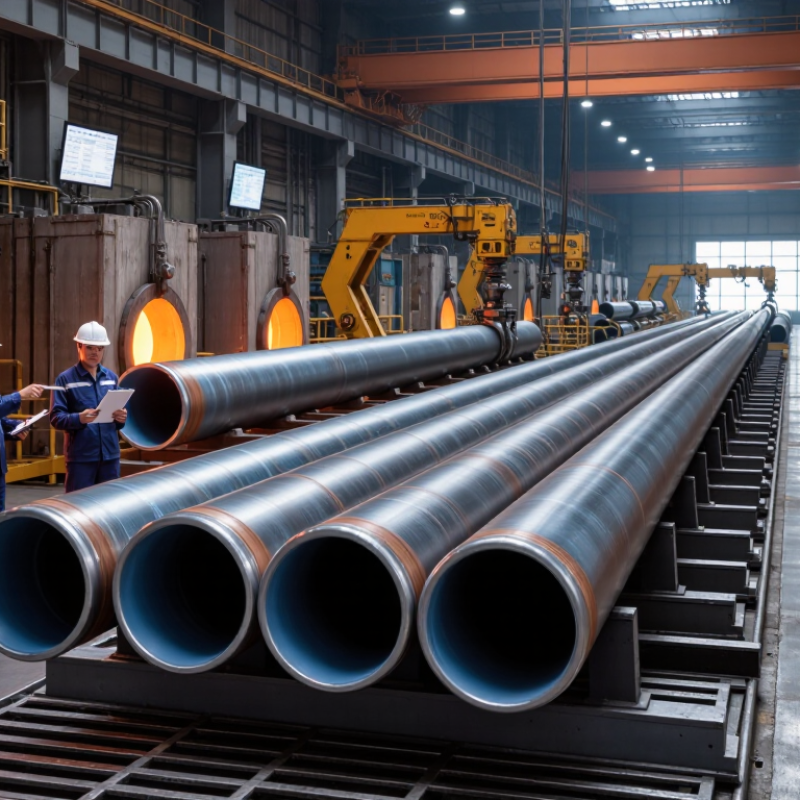
A seamless carbon steel pipe is formed without a welded seam. Manufacturers heat a solid steel billet, pierce it, then roll it into a hollow tube. This structure can provide consistent strength around the circumference. It is not automatically stronger in every application. Grade, wall thickness, heat treatment, and production quality still matter. Carbon steel mainly contains iron and carbon, with limited alloying elements. It offers good mechanical strength, machinability, and cost control. It also transfers heat efficiently in many industrial systems. However, moisture and aggressive chemicals can cause corrosion. That weakness is easy to underestimate. Surface protection or corrosion-resistant design may be necessary.
In practical use, these pipes carry oil, gas, water, steam, and process fluids. They appear in boilers, pressure lines, structural supports, and energy equipment. Engineers select them by pressure, temperature, fluid chemistry, diameter, and required service life. A pipe that suits a low-pressure water line may fail in a hot, pressurized system. Small details matter. Check dimensional tolerances, test records, heat numbers, and applicable standards before purchasing. Visual inspection can reveal dents, scale, or poor end preparation. Yet appearance alone proves little. Independent testing may verify chemical composition, tensile strength, hardness, and hydrostatic performance. In my view, supplier evaluation should include traceability and consistent documentation, not price alone. That judgment deserves review when project conditions change. Buyers should compare actual service requirements with the pipe specification.
| Data Dimension | Specification or Property | Verified Technical Data | Why It Matters When Selecting a Supplier |
|---|---|---|---|
| Product definition | Seamless carbon steel pipe | A tubular steel product manufactured without a longitudinal welded seam. It is generally produced by piercing a heated billet and reducing or sizing the hollow shell. | The absence of a welded seam can be advantageous for high-pressure, high-temperature, and cyclic-service applications, subject to the applicable standard and design conditions. |
| Typical chemical composition | Carbon steel chemistry | Primarily iron and carbon, with controlled amounts of manganese, silicon, phosphorus, and sulfur. Exact limits depend on the selected specification and grade. | A supplier should provide a heat-specific mill test certificate showing chemical analysis and compliance with the ordered standard. |
| Common specification | ASTM A106 Grade B | Seamless carbon steel pipe for high-temperature service. Minimum tensile strength: 415 MPa; minimum yield strength: 240 MPa. | Suitable for many refinery, power-generation, process, and high-temperature piping systems when the design code permits it. |
| Common specification | ASTM A53 Grade B, Type S | Type S designates seamless manufacture. Minimum tensile strength: 415 MPa; minimum yield strength: 240 MPa. | Often used for mechanical and pressure applications, water, air, steam, and general industrial piping, subject to project requirements. |
| Common specification | API 5L Grade B, PSL 1 | Line pipe grade with minimum tensile strength of 415 MPa and minimum yield strength of 245 MPa for Grade B. | Used for transportation of oil, gas, and other fluids. The purchaser must specify the required product specification level, testing, and delivery condition. |
| Low-temperature service | ASTM A333 Grade 6 | Seamless or welded carbon steel pipe for low-temperature service. Minimum tensile strength: 415 MPa; minimum yield strength: 240 MPa. Grade 6 is commonly specified with impact testing at −45 °C. | Useful for cold-service piping where impact toughness is required, provided the complete purchase specification confirms the test temperature and acceptance criteria. |
| European pressure-piping grade | EN 10216-2 P265GH | Non-alloy steel tube for pressure purposes. Typical specified minimum yield strength is 265 MPa; tensile strength is generally 410–570 MPa, depending on product conditions and dimensions. | Provides a European-standard option for pressure equipment and elevated-temperature service when the applicable design rules accept the material. |
| Outside diameter and wall thickness | Dimensional control | Pipe dimensions are normally ordered by nominal pipe size, outside diameter, and wall thickness or schedule. ASME B36.10M covers many dimensions for wrought steel pipe. | Confirm actual outside-diameter, wall-thickness, length, end-preparation, and dimensional-tolerance requirements before placing an order. |
| Wall-thickness options | Schedule 10 to XXS and custom thicknesses | Standard schedules include 10, 20, 30, 40, 60, 80, 100, 120, 140, and 160; XS and XXS are also used. Availability depends on size, standard, and production route. | The correct wall thickness must be calculated from pressure, temperature, corrosion allowance, external loads, and the governing design code. |
| Length supply | Random and fixed lengths | Common commercial descriptions include single random length, double random length, and fixed length. Exact ranges and tolerances are controlled by the applicable standard or purchase order. | Length accuracy affects installation time, cutting waste, welding quantities, and total project cost. |
| Manufacturing process | Hot-finished or cold-drawn | Hot-finished pipe is formed and sized at elevated temperature. Cold-drawn pipe is further processed at room temperature for tighter dimensional control and improved surface finish. | Select the process according to dimensional tolerance, surface finish, mechanical properties, and application requirements. |
| Inspection documentation | Mill test certificate and inspection report | A complete document package may include heat number, chemical analysis, tensile test, yield test, elongation, hardness where required, hydrostatic or nondestructive test results, and dimensional inspection. | Traceable documentation helps verify conformity, supports audits, and reduces the risk of receiving material that does not meet the purchase specification. |
| Pressure testing | Hydrostatic or approved nondestructive testing | Testing requirements vary by standard. Hydrostatic testing verifies pressure integrity; electromagnetic or ultrasonic examination may be required as an alternative or supplement. | The supplier should state the test method, test pressure or acceptance criteria, calibration status, and whether results are included in the inspection dossier. |
| End preparation | Plain, beveled, threaded, or grooved ends | Plain ends are commonly used for smaller sizes or mechanical connections; beveled ends support butt welding; threaded and grooved ends are used where specified by the piping system. | Correct end preparation improves fit-up and prevents additional machining, rework, or installation delays. |
| Primary applications | Industrial fluid and structural service | Common uses include process piping, oil and gas transportation, boilers, heat exchangers, water systems, mechanical components, structural columns, and pressure equipment. | The best supplier is determined by compliance with the required standard, grade, dimensions, testing, documentation, delivery capability, and service conditions—not by price alone. |
Note: Technical values shown are minimum or typical specification requirements and should be verified against the latest edition of the applicable standard and the project design code before procurement.
How to Evaluate Seamless Carbon Steel Pipe Suppliers in 2026
Choosing a seamless carbon steel pipe supplier requires more than comparing prices. Start by checking production experience, engineering qualifications, and documented quality procedures. A reliable supplier should provide current certificates for chemical composition, tensile strength, hardness, and hydrostatic or ultrasonic testing. Request sample inspection reports, not only standard templates. Real records reveal consistency.
Traceability is increasingly important in 2026. Each pipe bundle should connect to a heat number, manufacturing date, inspection result, and material certificate. Verify whether the supplier can control dimensions, wall thickness, surface condition, and end preparation across repeated orders. Ask about applicable standards and confirm that the stated grade matches your operating temperature, pressure, and corrosion conditions. Small mismatches can create expensive failures.
Audit communication and delivery discipline as carefully as technical data. Ask how nonconforming pipes are isolated, corrected, and reported. Review packaging methods, storage protection, export documents, and realistic lead times. A video audit helps, but an independent inspection may provide stronger evidence. No supplier is perfect. A polished brochure proves little. I would also examine a supplier’s after-sales response, because unanswered questions after delivery often expose weak controls. Price still matters, but unusually low pricing may reflect thinner inspection, uncertain traceability, or unstable raw-material sourcing. Allow room for doubt, and record every evaluation decision.
Compare suppliers by verifying whether their seamless carbon steel pipes consistently meet the minimum mechanical requirements of the specified standards.
The chart shows minimum tensile and yield strength requirements for commonly specified carbon steel pipe grades. Always confirm the applicable edition, heat-treatment requirements, chemical composition, dimensional tolerances, hydrostatic testing, traceability, and material test certificates before selecting a supplier.
Choosing a 2026 seamless carbon steel pipe supplier requires more than comparing prices. The World Steel Association reported global crude steel production of about 1.88 billion tonnes in 2024. This scale increases the need for disciplined quality control and reliable documentation.
Ask for ISO 9001 certification, current audit records, and documented corrective actions. ISO 14001 supports environmental management, while ISO 45001 addresses worker safety. These certificates matter only when factory practices match the paperwork. Inspectors should verify heat numbers, chemical analysis, tensile results, wall thickness, and hydrostatic testing. Each pipe should connect clearly to an EN 10204 3.1 material certificate.
Traceability is essential.
For pressure service, confirm compliance with the specified ASTM, ASME, or API requirements. Do not accept a general “meets standards” statement. Request the exact edition, test method, tolerance, and inspection level. Independent inspection can expose ovality, lamination, or inconsistent coating preparation before shipment. It costs more, sometimes painfully more, but rejected pipe costs more.
The IEA estimates that iron and steel production creates roughly 7–9% of global energy-related carbon dioxide emissions. Suppliers should therefore disclose energy sources, emissions data, and scrap usage where practical. A credible supplier explains limitations instead of promising perfect sustainability. Some certificates may be expired, translated poorly, or issued for another facility. Verify the certificate number, production address, and audit scope directly with the issuing body. Supplier selection is technical work, not a catalogue decision.
In 2026, the best seamless carbon steel pipe supplier is not simply the cheapest option. Buyers should compare four measurable areas: quality, pricing, production capacity, and delivery reliability. Quality begins with traceable heat numbers, verified chemical composition, and consistent wall thickness. A supplier should provide mill test certificates and support independent inspection before shipment. Hydrostatic testing, ultrasonic examination, and dimensional checks reveal defects that polished paperwork can hide. They do happen.
Pricing deserves a full landed-cost review. Request a clear quotation covering pipe grade, outside diameter, wall thickness, testing, packing, inland transport, and ocean freight. A low unit price may become expensive after inspection fees or schedule changes. Experienced purchasing teams compare several quantities and ask how prices change with repeat orders. Payment terms also matter when production requires a large deposit. I have seen attractive spreadsheets change after storage charges appeared.
Production capacity should be measured through practical evidence, not impressive claims. Ask for monthly output, current order backlog, heat-treatment capability, and records of similar dimensions. A capable mill can explain its bottlenecks honestly. That matters. Delivery performance depends on raw-material availability, testing queues, port schedules, and customs documents. Require a production timeline with inspection and dispatch milestones. Leave room for delays; steel schedules are rarely perfect. The strongest supplier communicates early, corrects errors openly, and provides evidence at each stage.
Choosing the best seamless carbon steel pipe supplier starts with your project conditions, not a catalog price. Define the required grade, outside diameter, wall thickness, pressure rating, temperature, and service medium. Consider corrosion exposure and installation limits. A pipe for a steam line needs different controls from one used in structural supports. Small details matter.
Ask suppliers for current quality certificates, heat numbers, chemical analysis, and mechanical test results. Confirm whether each pipe receives hydrostatic testing, ultrasonic inspection, or dimensional checks. Their documents should match the markings on the pipe bundles. Traceability should continue from steelmaking to delivery. Request sample inspection records, not only polished brochures. A serious supplier can explain tolerances in practical terms. Vague answers are warning signs.
Review production capacity, lead times, packaging, and replacement procedures. Pipes may arrive with damaged ends if protection is weak. Check how the supplier handles shortages, surface defects, and failed inspections. I have seen low prices become expensive after delayed testing and repeated deliveries. That experience changed my checklist. No checklist is perfect. Revisit it when the project changes. Include an independent inspection clause when quality risks are high. Compare total project cost, not only the price per tonne. Reliable communication also matters, especially when drawings or specifications change. A supplier who records decisions clearly can prevent avoidable site disputes.
We use cookies on our website to give you an improved browser experience. View our Privacy Policy for more information. Please make your selection to opt in or out of ALL cookies here: Accept or Decline
Do you consent to the use of ALL cookies?
901 2nd Court West
Birmingham, AL 35204
Sales: 866.481.4036
Logistics/Ops: 866.481.4036
2101 Dralle Road
University Park, IL 60466
Sales: 708.813.9070
Logistics/Ops: 708.235.4200
400 E. 13th Street
Little Rock, AR 72114
Sales: 866.760.5344
Logistics/Ops: 866.760.5344
225 Collins Road
Elkhart, IN 46515
Sales: 574.295.0214
Logistics/Ops: 574.607.4611
601 Berryman Pike
Tipton, IN 46072
Sales: 800.897.7591
Logistics/Ops: 800.897.7591
3900 Uvalda Street
Denver, CO 80239
Sales: 303.706.8000
Ops/Logistics: 303.576.8398
510 3rd Street E
Milan, IL 61264
Sales: 800.322.1052
Logistics/Ops: 800.322.1052
1660 E. Aurora
Des Moines, IA 50313
Sales: 800.671.1660
Logistics: 800.671.1660
86554 Gene Lasserre Blvd.
Yulee, FL 32097
Sales: 904.253.3060
Logistics/Ops: 904.225.3000
694 S.E. County Road 245
Lake City, FL 32025
Sales: 800.727.6706
Logistics/Ops: 386.752.7412
210 Neptune Road
Auburndale, FL 33823
Sales: 863.967.1131
Logistics/Ops: 863.777.9814
4601 McCoy Drive
Pensacola, FL 32503
Sales: 850.308.7030
Logistics/Ops: 850.434.5502
815 South 56th Street
Tampa, FL 33619
Sales: 813.302.1940
Logistics/Ops: 813.621.1352
200 Hosea Road
Lawrenceville, GA 30046
Sales: 770.953.7575
Logistics/Ops: 770.513.6000
Branch Product Guide
Branch Line Card
Moulding Offering
Cedar Offering
Column Offering
8173 Hwy. 165 North
Monroe, LA 71211
Sales: 800.256.4165
Logistics/Ops: 800.256.4165
508 Warren Avenue
Portland, ME 04103
Sales: 207.888.2331
Logistics/Ops: 207.797.6565
4300 Georgia Pacific Blvd.
Frederick, MD 21704
Sales: 301.798.7474
Logistics/Ops: 301.874.8000
419 Maple Street
Bellingham, MA 02019
Sales: 508.449.0535
Logistics/Ops: 508.966.5500
825 Buchanan Ave SW
Grand Rapids, MI 49507
Sales: 877.800.1180
Logistics/Ops: 616.278.0909
995 Pacific St. NW
Aitkin, MN 56431
Sales: 800.432.3727
Logistics/Ops: 218.212.7770
1102 Port Terminal Drive
Duluth, MN 55802
Sales: 800.951.9899
Logistics/Ops: 800.851.9899
9110 83rd Ave. North
Brooklyn Park, MN 55445
Sales: 763.425.0204
Logistics/Ops: 763.425.0204
910 E. Railroad Street
Long Beach, MS 39560
Sales: 866.535.4135
Logistics/Ops: 228.205.2400
1727 Warren Street
North Kansas City, MO 64116
Sales: 800.621.2611
Logistics/Ops: 800.621.2611
2123 North Golden
Springfield, MO 65803
Sales: 800.375.7891
Logistics/Ops: 800.375.7891
13860 Corp. Woods Trail
Bridgeton, MO 63044
Sales: 314.209.0800
Logistics/Ops: 314.209.0800
1109 South 19th Street
Omaha, NE 68108
Sales: 800.489.6637
Logistics/Ops: 800.489.6637
1 Luger Road
Denville, NJ 07834
Sales: 973-339-3539
Logistics/Ops: 973.625.1461
3720 Jeffrey Blvd.
Blasdell, NY 14219
Sales: 716.235.5989
Logistics/Ops: 716.825.6557
319 Yaphank Ave.
Yaphank, NY 11980
Sales: 631.358.5714
Logistics/Ops: 631.924.7401
3300 Parkside Drive
Charlotte, NC 28208
Sales: 800.839.2588
Logistics/Ops: 704.394.3172
1712 East D Street
Butner, NC 27509
Sales: 984.389.8200
Logistics/Ops: 919.575.3700
128 Foothills Drive
Statesville, NC 28687
Sales: 800.222.1414
Logistics/Ops: 704.394.3172
550 Munroe Falls Rd.
Tallmadge, OH 44278
Sales: 330.357.4506
Logistics/Ops: 330.794.1141
10347 Toebben Dr.
Independence, KY 41051
Sales: 859.298.3926
Logistics/Ops: 859.746.2250
450 N. MacArthur
Oklahoma City, OK 73127
Sales: 800.375.6025
Logistics/Ops: 800.375.6025
1680 North Aspen
Broken Arrow, OK 74012
Sales: 918.272.2212
Logistics/Ops: 918.272.2212
522 Bridge Street
Hunker, PA 15639
Sales: 878.217.2001
Logistics/Ops: 724.925.7285
4290 Atlanta Street
Charleston, SC 29418
Sales: 843.371.1420
Logistics/Ops: 843.554.8192
1040 S. Industrial Dr.
Erwin, TN 37650
Sales: 423.641.1005
Logistics/Ops: 423.742.5911
4287 Pilot Drive
Memphis, TN 38118
Sales: 901.365.2101
Logistics/Ops: 901.365.2101
700 Myatt Drive
Madison, TN 37115
Sales: 615.327.9547
Logistics/Ops: 629.777.4949
4747 Mark IV Parkway
Fort Worth, TX 76106
Sales: 866.323.5117
Logistics/Ops: 817.625.9091
6990 Market Avenue
El Paso, TX 79915
Sales: 915.778.6356
Logistics/Ops: 915.265.7200
2502 Wilson Road
Harlingen, TX 78552
Sales: 800.580.6711
Logistics/Ops: 800.580.6711
10,000 North Loop East
Houston, TX 77029
Sales: 713.921.1977
Logistics/Ops: 713.675.3544
702 East 44th St.
Lubbock, TX 79404
Sales: 866.454.6010
Logistics/Ops: 866.454.6010
535 N. WW White Road
San Antonio, TX 78219
Sales: 800.284.0488
Logistics/Ops: 210.333.8112
142 Pine Haven Shores Rd.
Shelburne, VT 05482
Sales: 802.800.2540
Logistics/Ops: 802.985.2512
4700 Bethlehem Road,
Richmond, VA 23230
Sales: 804.201.2400
Logistics/Ops: 804.342.1161
4516 N Barker Road
Spokane Valley, WA 99027
Phone: 509.892.9420
Toll free: 800.728.6157
8365 N. 76th Street
Milwaukee, WI 53223
Sales: 800.356.9245
Logistics/Ops: 800.356.9245
312 S. Chester Street
Sparta, WI 54656
Sales: 800.362.5864
Logistics/Ops: 800.362.5864
899 Grossman Drive
Schofield, WI 54476
Sales: 800.472.0017
Logistics/Ops: 800.472.0017
