
We use cookies on our website to give you an improved browser experience. View our Privacy Policy for more information. Please make your selection to opt in or out of ALL cookies here: Accept or Decline
Choosing among the 2026 Top Flag Pole Types for Global Buyers requires more than comparing prices and finishes. A suitable Flag Pole must match local wind conditions, soil, corrosion exposure, shipping limits, and installation skills. Aluminum poles remain popular because they are lightweight, recyclable, and relatively simple to transport. Fiberglass models suit coastal areas and locations requiring low maintenance. Steel offers impressive strength, yet its weight and corrosion protection deserve closer attention.
“ A flag is not a decoration; it is a symbol.” — Ted Kaye, respected flag-display expert and vexillologist.
His observation gives this buying decision a useful human dimension. A pole supports more than fabric. It represents a school, company, public institution, or community. Buyers should examine tapered, sectional, telescoping, wall-mounted, and internal-halyard designs with equal care. Each type solves a different problem. Telescoping poles can simplify access. Internal halyards create a cleaner appearance. Sectional poles may reduce freight costs. Sometimes, however, the cheapest option becomes expensive after installation.
There is no universal best Flag Pole. That sounds obvious, but many purchasing guides ignore it. A coastal buyer may need marine-grade fittings and stronger coatings. A contractor in a high-wind region may require engineered calculations and deeper foundations. Global buyers should verify material grades, replacement parts, warranty terms, packaging quality, and installer support before ordering. Product photographs can mislead. Real performance depends on engineering, maintenance, and the site itself. This guide compares the leading types with practical details, while recognizing one uncomfortable truth: specifications alone cannot replace local experience.
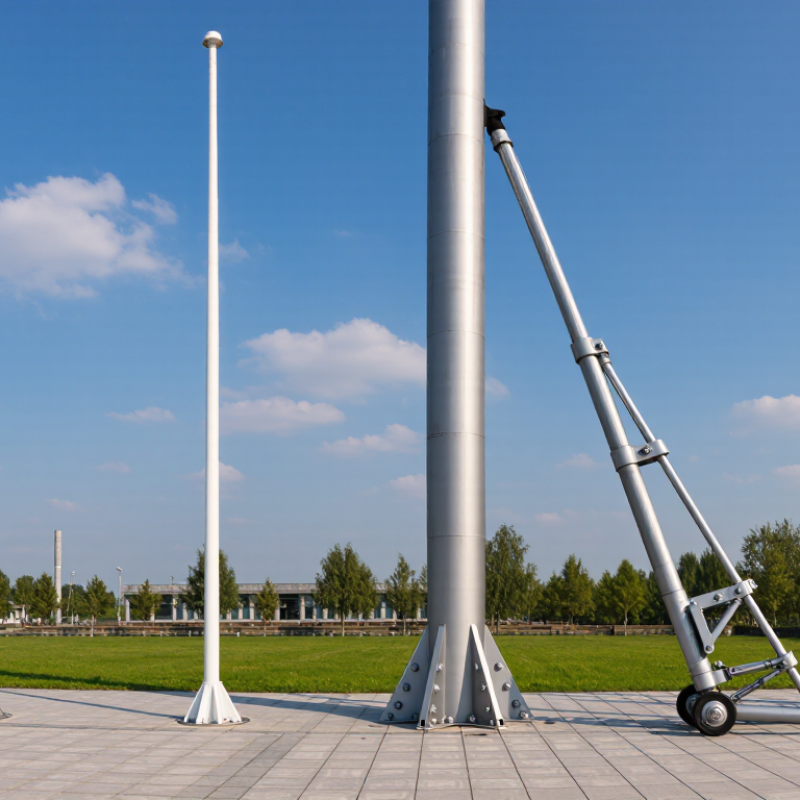
In 2026, a flag pole type means more than height or appearance. It describes how the pole is made, installed, operated, and maintained. Buyers now compare fixed, telescoping, sectional, and mobile designs by real site conditions. Wind exposure matters. So do soil strength, transport limits, and access for maintenance.
A professional evaluation starts with material and structural details. Aluminum offers light handling, while steel provides strong support for demanding locations. Telescoping poles suit temporary displays and restricted transport routes. Fixed poles often fit permanent entrances, campuses, and public facilities. Rotation systems can reduce fabric twisting, but moving parts need regular inspection. In field projects, small installation errors can cause vibration, leaning, or premature wear. I have also seen specifications overlook drainage around the foundation. That mistake is easy to make, yet expensive to correct.
Tips: Ask for wind-load data, corrosion protection, foundation guidance, and replacement-part availability. Check the installation surface before choosing a pole type. Do not select only by price. A cheaper pole may require more labor and earlier repairs. Local weather records should guide the decision, although they may not predict every extreme condition. Eco-friendly coatings and recyclable materials are becoming more important, but their actual service life still deserves careful verification.
| Flag Pole Type | What Defines the Type | Common Materials | Typical Height Range | Flag-Raising System | Typical Installation | Main Advantages | Common Applications | Key Buyer Considerations |
|---|---|---|---|---|---|---|---|---|
| Tapered Ground-Set Pole | A single tapered shaft permanently installed in a foundation below ground level. | Aluminum, galvanized steel, or stainless steel | 6–15 m (20–49 ft) | External halyard or internal halyard | Concrete foundation with a ground sleeve or direct embedment | Clean profile Long service life Good public visibility | Commercial buildings, schools, public facilities, hotels, and entrance plazas | Foundation design, local wind requirements, shaft diameter, corrosion protection, and access for maintenance |
| Sectional Flag Pole | A pole assembled from two or more separate sections at the installation site. | Aluminum, fiberglass, or steel | 5–12 m (16–39 ft) | Usually external halyard; internal systems are also available | Ground sleeve, base plate, or direct installation depending on the design | Efficient shipping Simpler handling Flexible sizing | Residential developments, retail sites, sports grounds, and institutional properties | Joint strength, section alignment, packaging dimensions, assembly instructions, and spare hardware |
| Telescoping Flag Pole | A multi-section pole that collapses or extends vertically without requiring separate assembly of long sections. | Aluminum or fiberglass | 4.5–9 m (15–30 ft) | Integrated sleeve, locking collar, or internal rope system | Ground sleeve, surface base, or portable weighted base | Easy deployment Compact storage Convenient flag changes | Homes, events, temporary installations, dealerships, and seasonal displays | Locking mechanism reliability, section overlap, maximum operating wind, portability, and security against unauthorized lowering |
| Internal-Halyard Pole | The rope and counterweight system is contained inside the shaft, keeping the exterior free of hanging rope. | Aluminum or stainless steel | 6–15 m (20–49 ft) | Internal halyard with winch, cleat, or counterweight | Permanent concrete foundation or engineered base plate | Tamper resistance Neat appearance Reduced rope noise | Corporate campuses, government sites, premium commercial properties, and urban entrances | Internal component access, lock type, service procedure, drainage, and compatibility with flag size and weight |
| External-Halyard Pole | The raising rope runs outside the shaft and is secured with a cleat, allowing a simple and visible operating system. | Aluminum, galvanized steel, fiberglass, or stainless steel | 5–15 m (16–49 ft) | External rope, pulley, snap hooks, and cleat | Ground sleeve, direct embedment, or base plate | Simple maintenance Lower initial complexity Easy inspection | Schools, residential properties, farms, community facilities, and general-purpose sites | Rope durability, cleat security, pulley quality, vandalism exposure, and clearance from pedestrians or vehicles |
| Fiberglass Flag Pole | A non-metallic pole manufactured from glass fibers embedded in a polymer resin, often with a molded or pultruded shaft. | Fiberglass composite | 6–12 m (20–39 ft) | Internal or external halyard | Ground sleeve or concrete foundation | Corrosion resistant Electrical non-conductivity Low maintenance | Coastal locations, marinas, industrial areas, utility sites, and decorative landscapes | UV stability, resin quality, color consistency, impact resistance, bending behavior, and local disposal requirements |
| Aluminum Flag Pole | A lightweight metal pole using aluminum alloy for the shaft and associated fittings. | Aluminum alloy with anodized, powder-coated, or painted finish | 5–15 m (16–49 ft) | Internal or external halyard | Ground sleeve, direct embedment, or base plate | Lightweight Recyclable material Good corrosion resistance | Commercial sites, schools, residential properties, retail centers, and public spaces | Alloy grade, wall thickness, surface finish, galvanic contact with other metals, and wind-load calculations |
| Steel Flag Pole | A higher-strength steel shaft designed for applications requiring substantial structural capacity or larger dimensions. | Galvanized steel, painted steel, or stainless steel | 6–18 m (20–59 ft) | Internal or external halyard; motorized systems may be specified for large installations | Engineered concrete foundation, anchor bolts, or direct embedment | High structural strength Suitable for large flags Stable in demanding sites | Industrial facilities, civic centers, ports, stadium surroundings, and large institutional developments | Steel grade, galvanizing thickness, coating system, lifting equipment, foundation loads, and long-term corrosion control |
| Wall-Mounted Flag Pole | A short angled or horizontal pole fixed to a building façade, balcony, wall, or structural post. | Aluminum, stainless steel, or powder-coated steel | 0.6–3 m (2–10 ft) | Manual sleeve, clips, or small external halyard | Wall brackets, façade anchors, or structural-post clamps | Minimal ground work Space efficient Fast installation | Retail storefronts, apartments, offices, restaurants, balconies, and heritage buildings | Wall strength, anchor type, projection clearance, façade waterproofing, local permissions, and pedestrian safety |
| Banner or Street Flag Pole | A pole configured to display a vertical banner, often with a top arm, bottom arm, or flexible banner support. | Aluminum, fiberglass, or steel | 3–8 m (10–26 ft) | Fixed banner hardware, sleeve, clips, or rotating arm system | Ground sleeve, base plate, or removable event base | High visual impact Advertising flexibility Suitable for repeated campaigns | Shopping districts, event venues, campuses, tourism areas, and temporary promotions | Banner dimensions, wind-release design, fabric permeability, arm clearance, replacement frequency, and pedestrian access |
| Portable Event Flag Pole | A lightweight, reusable pole designed for temporary setup and removal, usually with a transportable base. | Aluminum, fiberglass, carbon-fiber composite, or steel base components | 2–6 m (6.5–20 ft) | Sleeve, clips, elastic cord, or compact halyard | Water-fill base, cross base with ballast, ground spike, or weighted plate | Reusable Easy transport Fast setup | Trade shows, festivals, sporting events, markets, ceremonies, and temporary construction sites | Base stability, packed dimensions, total weight, setup time, wind limitations, and fabric replacement options |
2026 Top Flag Pole Types for Global Buyers
How Major Flag Pole Types Differ
Flag pole design changes with site, wind, transport, and maintenance access. A one-piece aluminum pole offers a clean appearance and strong rigidity. It suits permanent grounds where cranes or long delivery vehicles can reach the site. However, its length can increase freight costs and complicate installation.
Sectional poles use joined pieces, making shipping easier for distant buyers. They work well for schools, public facilities, and commercial entrances. Joint quality matters. Poorly fitted connections may loosen after repeated wind movement. Telescoping poles collapse into shorter sections and need less installation equipment. They are practical for temporary displays, but their moving collars require regular inspection.
Steel poles provide substantial strength for larger flags and exposed locations. Their weight demands stronger foundations and careful corrosion protection, especially near saltwater. Fiberglass poles resist rust and offer useful flexibility. They can be a sensible choice in coastal areas, though surface damage may be harder to notice. Wall-mounted poles save ground space and suit narrow streets or building entrances. They cannot replace a freestanding pole where high visibility is essential.
From field checks, the flag size often matters more than buyers expect. A large flag creates heavy pull during gusts. Pole height, foundation depth, fittings, and local wind data should be assessed together. Global buyers should also confirm material grades, installation guidance, and regional safety requirements. A perfect choice rarely exists. I have seen attractive poles fail because drainage and access were ignored. That lesson remains easy to overlook.
Global buyers should match a flagpole to climate, soil, and maintenance access, not appearance alone. In coastal zones, marine air attacks unprotected steel quickly. Powder-coated aluminum resists rust and remains relatively light. However, thin aluminum can flex noticeably under strong, shifting winds. Galvanized steel offers greater stiffness for large flags and exposed sites. Its protective zinc layer still needs inspection after scratches or drilling. Stainless steel performs well near saltwater, but its higher cost may strain smaller projects. The choice is never universal.
Material selection is only half the decision. A sectional pole suits permanent sites where transport and replacement access are simple. Telescoping designs reduce installation time and can lower lifting requirements. Yet their joints need careful cleaning, lubrication, and locking checks. In freezing regions, trapped water may expand inside fittings and create hidden damage. Hot, sunny climates demand UV-stable ropes, pulleys, and flag fabric. In sandy areas, grit can wear moving parts faster than expected. Small details matter.
Foundation design should reflect local wind records and soil-bearing conditions. A deep concrete footing may be unsuitable where groundwater, frost, or weak soil is present. Engineers should verify embedment depth, drainage, fasteners, and allowable flag size. Field inspections often reveal simple failures: loose cleats, frayed halyards, or water around the base. Attractive installations can underperform when maintenance becomes an afterthought. That assumption deserves reconsideration. A practical specification allows for seasonal storms, uncertain soil data, and imperfect servicing schedules.
2026 Top Flag Pole Types for Global Buyers?
How to Match Pole Types to Site, Use, and Budget
Start with the site. An exposed coastal plaza needs a different pole from a sheltered school courtyard. NOAA’s 2023 Billion-Dollar Weather and Climate Disasters report recorded 28 U.S. events, showing why weather exposure deserves careful planning. For windy locations, choose a tapered aluminum or galvanized steel pole. Check local wind-speed records and the structural requirements in ASCE 7-22. A larger flag creates greater loading. That detail is often missed.
Telescoping poles suit temporary displays, retail entrances, and smaller properties. They install quickly and reduce climbing during flag changes. However, their joints need careful inspection after repeated movement. Sectional fiberglass poles can resist corrosion near saltwater, but their appearance and repair options may differ. Ground-set poles offer stronger visual presence for civic sites and corporate campuses. They also demand deeper foundations, lifting equipment, and accurate soil assessment.
Budget changes everything. Aluminum usually offers a practical balance between weight, corrosion resistance, and installation cost. Steel suits demanding applications, but transport and foundation work can increase the final price. The International Code Council’s 2024 building guidance reinforces the need to consider site conditions and structural safety. I would not select a pole from catalog height alone. Soil, wind, flag size, access, and maintenance shape the real cost. That shortcut fails. A smaller, well-engineered pole may outperform a taller one when budgets are tight.
Ground-set poles provide the greatest height and wind stability for permanent outdoor displays. Wall-mounted poles suit buildings and restricted spaces, while telescoping and portable poles offer faster deployment and easier transport. Scores use a practical 1–5 planning scale: higher values indicate stronger performance or a greater budget requirement.
Global buyers should choose flag pole types by site conditions, not appearance alone.
Aluminum sectional poles suit many commercial sites because they are light and easier to ship. Fiberglass poles resist corrosion near saltwater, but they can be less forgiving after impact. Steel offers stiffness for larger displays, although its weight raises freight and foundation costs. Telescoping designs simplify maintenance. They may require closer checks on locking hardware.
Before ordering, request the pole’s design wind speed, projected area, and foundation drawing. ASCE 7-22 shows that wind pressure depends on speed, exposure, height, and terrain. Do not accept a single “wind-rated” number without its test conditions.
The World Meteorological Organization reported that 2023 was about 1.45°C above the pre-industrial average. That figure does not size a pole, but it supports careful review of severe-weather assumptions. Local wind records matter more than global averages.
Material certificates, coating details, and installation instructions should be included in the quotation. ISO 12944 corrosion categories can help buyers compare protective finishes in coastal or industrial environments.
NOAA recorded 28 U.S. billion-dollar weather and climate disasters in 2023, a useful reminder that rare events deserve practical attention. Check container dimensions, spare fittings, customs documents, and replacement availability before payment.
I would not rely on a polished catalogue image. Soil strength, drainage, and installer skill can change the outcome. One uncertainty remains: supplier data is sometimes incomplete. Ask for calculations, then have a qualified local engineer review them.
We use cookies on our website to give you an improved browser experience. View our Privacy Policy for more information. Please make your selection to opt in or out of ALL cookies here: Accept or Decline
Do you consent to the use of ALL cookies?
901 2nd Court West
Birmingham, AL 35204
Sales: 866.481.4036
Logistics/Ops: 866.481.4036
2101 Dralle Road
University Park, IL 60466
Sales: 708.813.9070
Logistics/Ops: 708.235.4200
400 E. 13th Street
Little Rock, AR 72114
Sales: 866.760.5344
Logistics/Ops: 866.760.5344
225 Collins Road
Elkhart, IN 46515
Sales: 574.295.0214
Logistics/Ops: 574.607.4611
601 Berryman Pike
Tipton, IN 46072
Sales: 800.897.7591
Logistics/Ops: 800.897.7591
3900 Uvalda Street
Denver, CO 80239
Sales: 303.706.8000
Ops/Logistics: 303.576.8398
510 3rd Street E
Milan, IL 61264
Sales: 800.322.1052
Logistics/Ops: 800.322.1052
1660 E. Aurora
Des Moines, IA 50313
Sales: 800.671.1660
Logistics: 800.671.1660
86554 Gene Lasserre Blvd.
Yulee, FL 32097
Sales: 904.253.3060
Logistics/Ops: 904.225.3000
694 S.E. County Road 245
Lake City, FL 32025
Sales: 800.727.6706
Logistics/Ops: 386.752.7412
210 Neptune Road
Auburndale, FL 33823
Sales: 863.967.1131
Logistics/Ops: 863.777.9814
4601 McCoy Drive
Pensacola, FL 32503
Sales: 850.308.7030
Logistics/Ops: 850.434.5502
815 South 56th Street
Tampa, FL 33619
Sales: 813.302.1940
Logistics/Ops: 813.621.1352
200 Hosea Road
Lawrenceville, GA 30046
Sales: 770.953.7575
Logistics/Ops: 770.513.6000
Branch Product Guide
Branch Line Card
Moulding Offering
Cedar Offering
Column Offering
8173 Hwy. 165 North
Monroe, LA 71211
Sales: 800.256.4165
Logistics/Ops: 800.256.4165
508 Warren Avenue
Portland, ME 04103
Sales: 207.888.2331
Logistics/Ops: 207.797.6565
4300 Georgia Pacific Blvd.
Frederick, MD 21704
Sales: 301.798.7474
Logistics/Ops: 301.874.8000
419 Maple Street
Bellingham, MA 02019
Sales: 508.449.0535
Logistics/Ops: 508.966.5500
825 Buchanan Ave SW
Grand Rapids, MI 49507
Sales: 877.800.1180
Logistics/Ops: 616.278.0909
995 Pacific St. NW
Aitkin, MN 56431
Sales: 800.432.3727
Logistics/Ops: 218.212.7770
1102 Port Terminal Drive
Duluth, MN 55802
Sales: 800.951.9899
Logistics/Ops: 800.851.9899
9110 83rd Ave. North
Brooklyn Park, MN 55445
Sales: 763.425.0204
Logistics/Ops: 763.425.0204
910 E. Railroad Street
Long Beach, MS 39560
Sales: 866.535.4135
Logistics/Ops: 228.205.2400
1727 Warren Street
North Kansas City, MO 64116
Sales: 800.621.2611
Logistics/Ops: 800.621.2611
2123 North Golden
Springfield, MO 65803
Sales: 800.375.7891
Logistics/Ops: 800.375.7891
13860 Corp. Woods Trail
Bridgeton, MO 63044
Sales: 314.209.0800
Logistics/Ops: 314.209.0800
1109 South 19th Street
Omaha, NE 68108
Sales: 800.489.6637
Logistics/Ops: 800.489.6637
1 Luger Road
Denville, NJ 07834
Sales: 973-339-3539
Logistics/Ops: 973.625.1461
3720 Jeffrey Blvd.
Blasdell, NY 14219
Sales: 716.235.5989
Logistics/Ops: 716.825.6557
319 Yaphank Ave.
Yaphank, NY 11980
Sales: 631.358.5714
Logistics/Ops: 631.924.7401
3300 Parkside Drive
Charlotte, NC 28208
Sales: 800.839.2588
Logistics/Ops: 704.394.3172
1712 East D Street
Butner, NC 27509
Sales: 984.389.8200
Logistics/Ops: 919.575.3700
128 Foothills Drive
Statesville, NC 28687
Sales: 800.222.1414
Logistics/Ops: 704.394.3172
550 Munroe Falls Rd.
Tallmadge, OH 44278
Sales: 330.357.4506
Logistics/Ops: 330.794.1141
10347 Toebben Dr.
Independence, KY 41051
Sales: 859.298.3926
Logistics/Ops: 859.746.2250
450 N. MacArthur
Oklahoma City, OK 73127
Sales: 800.375.6025
Logistics/Ops: 800.375.6025
1680 North Aspen
Broken Arrow, OK 74012
Sales: 918.272.2212
Logistics/Ops: 918.272.2212
522 Bridge Street
Hunker, PA 15639
Sales: 878.217.2001
Logistics/Ops: 724.925.7285
4290 Atlanta Street
Charleston, SC 29418
Sales: 843.371.1420
Logistics/Ops: 843.554.8192
1040 S. Industrial Dr.
Erwin, TN 37650
Sales: 423.641.1005
Logistics/Ops: 423.742.5911
4287 Pilot Drive
Memphis, TN 38118
Sales: 901.365.2101
Logistics/Ops: 901.365.2101
700 Myatt Drive
Madison, TN 37115
Sales: 615.327.9547
Logistics/Ops: 629.777.4949
4747 Mark IV Parkway
Fort Worth, TX 76106
Sales: 866.323.5117
Logistics/Ops: 817.625.9091
6990 Market Avenue
El Paso, TX 79915
Sales: 915.778.6356
Logistics/Ops: 915.265.7200
2502 Wilson Road
Harlingen, TX 78552
Sales: 800.580.6711
Logistics/Ops: 800.580.6711
10,000 North Loop East
Houston, TX 77029
Sales: 713.921.1977
Logistics/Ops: 713.675.3544
702 East 44th St.
Lubbock, TX 79404
Sales: 866.454.6010
Logistics/Ops: 866.454.6010
535 N. WW White Road
San Antonio, TX 78219
Sales: 800.284.0488
Logistics/Ops: 210.333.8112
142 Pine Haven Shores Rd.
Shelburne, VT 05482
Sales: 802.800.2540
Logistics/Ops: 802.985.2512
4700 Bethlehem Road,
Richmond, VA 23230
Sales: 804.201.2400
Logistics/Ops: 804.342.1161
4516 N Barker Road
Spokane Valley, WA 99027
Phone: 509.892.9420
Toll free: 800.728.6157
8365 N. 76th Street
Milwaukee, WI 53223
Sales: 800.356.9245
Logistics/Ops: 800.356.9245
312 S. Chester Street
Sparta, WI 54656
Sales: 800.362.5864
Logistics/Ops: 800.362.5864
899 Grossman Drive
Schofield, WI 54476
Sales: 800.472.0017
Logistics/Ops: 800.472.0017
